
A hot pan, a splash of boiling water, a moment of distraction near the grill. Burns happen fast, and the first few minutes after matter. It matters whether you seek urgent care for burns or head straight to an emergency room. That choice shapes how well your skin heals and how fast you recover.
Understanding Burn Severity
Doctors classify burns by how deep they go into the skin. First-degree burns affect only the outer layer, causing redness and mild pain, similar to a sunburn. Second-degree burns go deeper, producing blisters, swelling, and sharper pain. Third-degree burns destroy all layers of skin and may feel numb because the nerve endings are damaged.
The size of the burn matters as much as its depth. Clinicians estimate severity in part by how much of the body surface area is affected. A small blister on your finger is a different situation than a burn covering your entire forearm. When you are unsure how serious a burn is, a clinician can assess it and point you in the right direction. That uncertainty alone is often a good reason to get checked.
The location of the burn also affects how you should respond. Burns on the face, hands, feet, or over a major joint carry higher risk of complications than burns on the trunk. Because skin in those areas is thinner and more active, professional wound care matters more, even for burns that look minor at first.
When Urgent Care for Burns Is the Right Choice
Most burns that happen at home or at work respond well to treatment at an urgent care clinic. You do not need an emergency room for every burn. Waiting days for a scheduled appointment is also wrong when a wound needs attention today.
Urgent care for burns makes sense in situations like these:
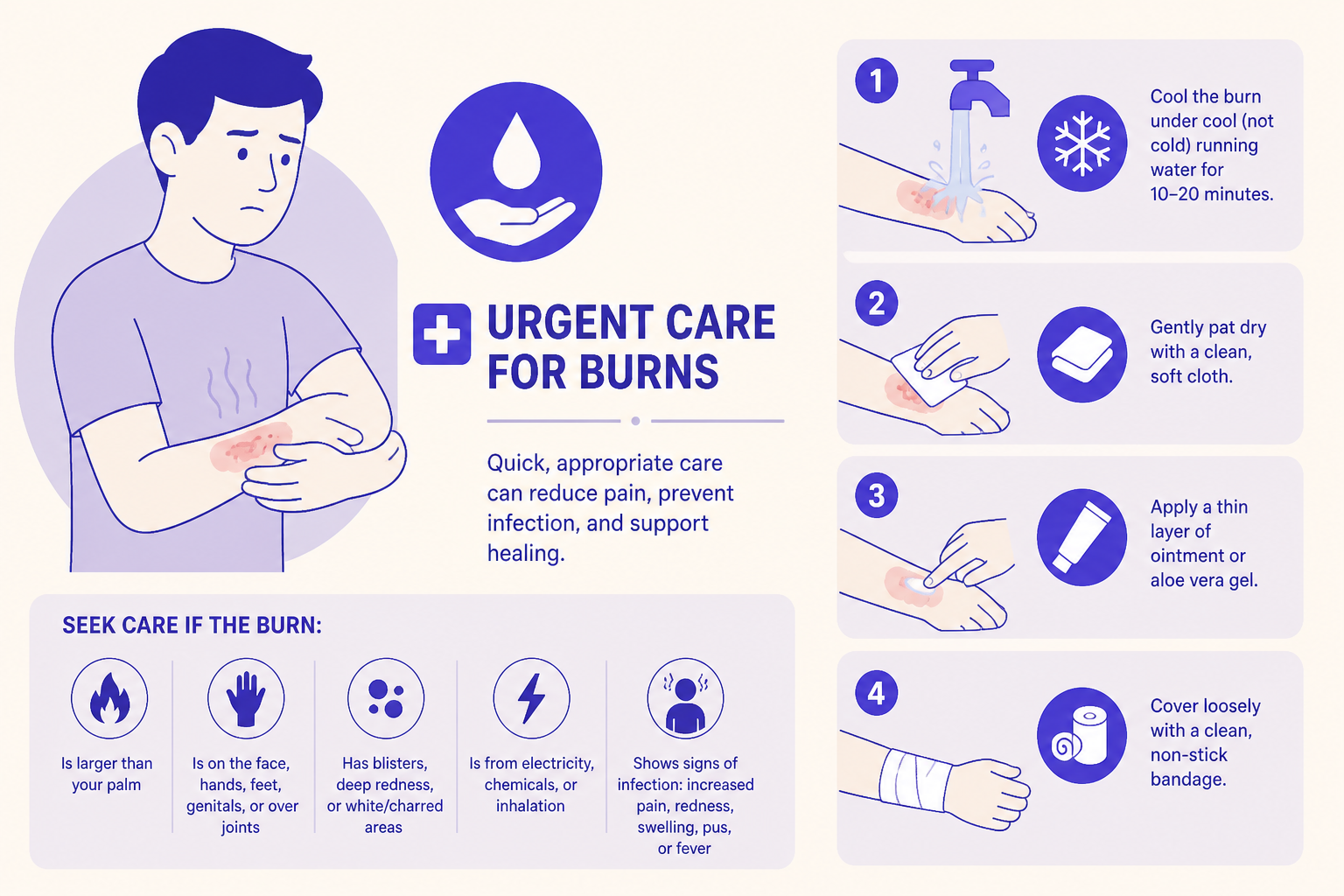
- Small to moderate second-degree burns with blistering, roughly the size of your palm or smaller
- First-degree burns that cover a larger area of the body or are causing significant pain
- Burns on the hands, feet, or face that need professional assessment
- Burns showing early signs of infection, such as increasing redness, warmth, swelling, or discharge
- Mild chemical burns from household products
- Burns that need proper wound dressing, antibiotic treatment, or a tetanus booster
- Burns in otherwise healthy adults where the injury is painful but not affecting breathing or consciousness
Walk-in clinics can treat, dress, and monitor burns without an appointment. They fill the gap between home first aid and a lengthy ER visit. You get professional care on the same day, without a referral and without the wait times that come with an emergency department.
What Happens at an Urgent Care Visit for a Burn
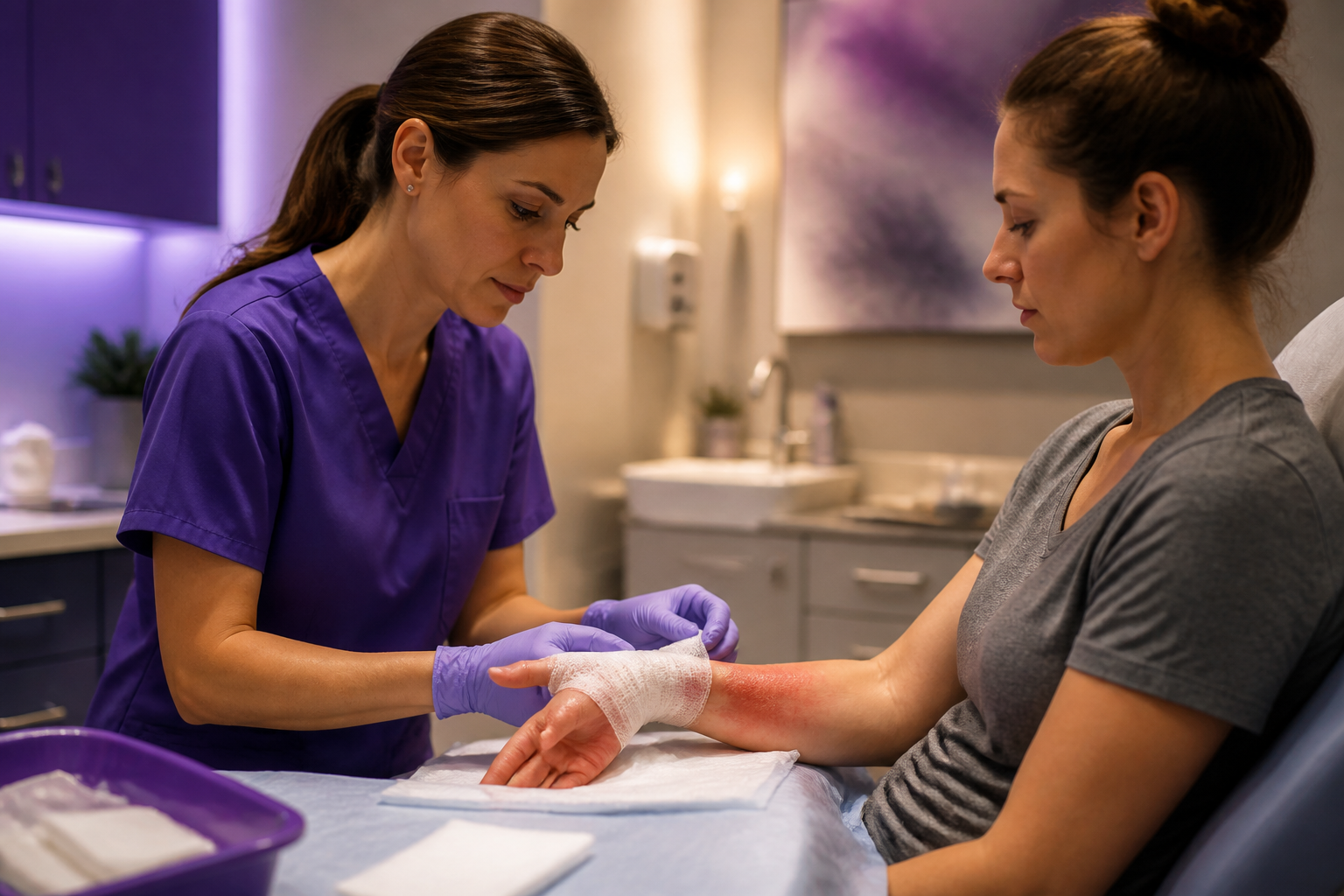
When you walk in with a burn, a provider will assess the depth and size of the wound. They then clean it thoroughly to lower infection risk. Depending on what they find, they may apply a professional dressing, prescribe a topical antibiotic, or recommend oral pain relief. If your tetanus vaccination is not current, you can receive a booster during the same visit.
Burn wounds can become infected as they heal. MedlinePlus burn guidance identifies infection as one of the primary risks after a burn injury. Professional wound care, including correct dressing technique and scheduled follow-up, reduces that risk. Your provider can also give you clear instructions for caring for the wound at home between visits.
Burns sometimes look worse on day two or three than right after the injury. Follow-up care is often part of the plan from the start. A walk-in clinic can check wound progress, change dressings, and catch complications early, before they require a more intensive intervention.
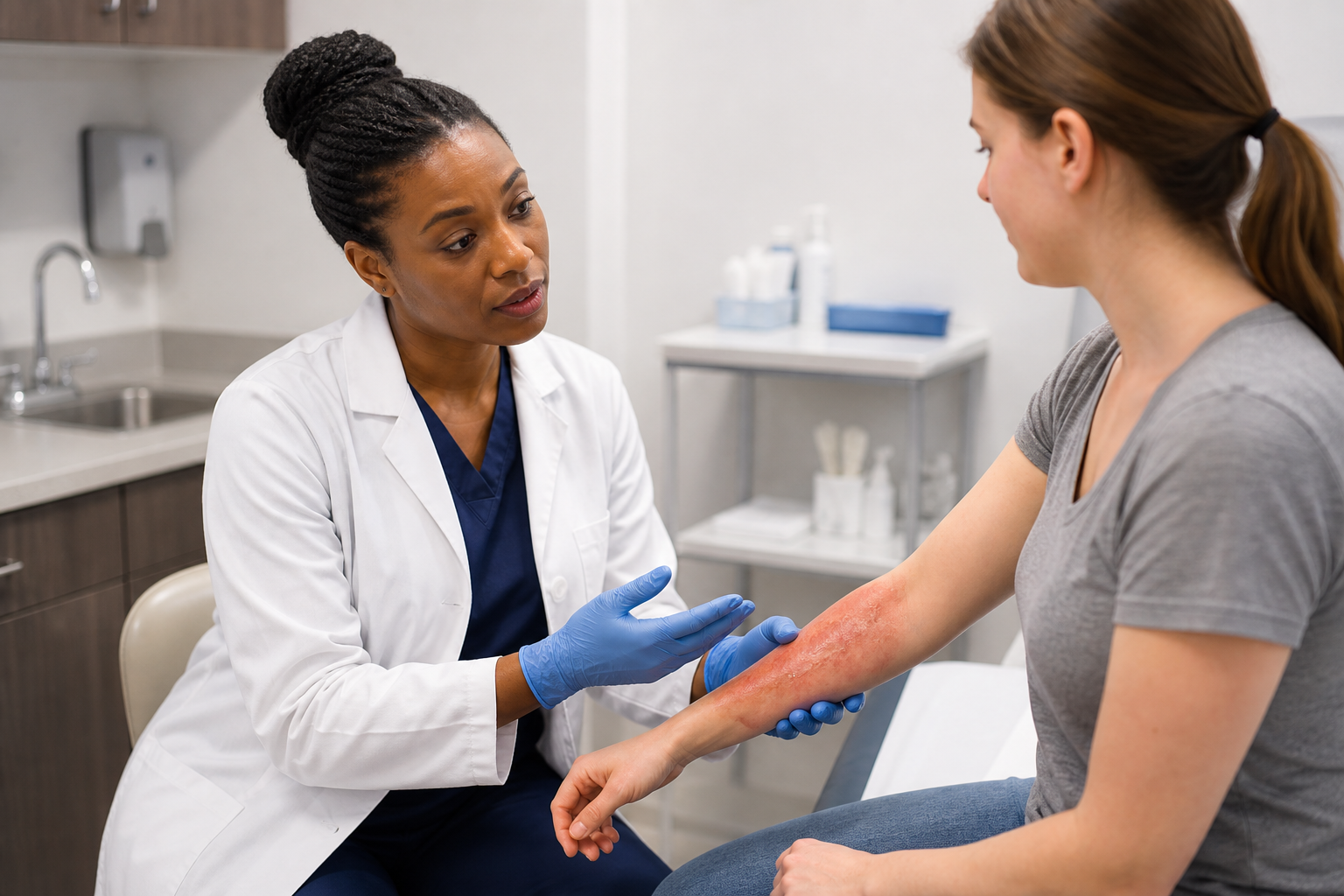
When to Go to the ER Instead of Urgent Care for Burns
Some burns require emergency care, and recognizing those signs quickly is important. Call 911 or go to an emergency room if the burn involves any of the following:
- Third-degree burns of any size, particularly those that appear white, brown, leathery, or charred
- Burns covering a large portion of the body
- Burns caused by electrical current, including lightning
- Burns to the face, airway, or hands from a high-heat or chemical source
- Burns combined with smoke inhalation, difficulty breathing, or signs of carbon monoxide exposure
- Burns in young children, older adults, or people with conditions that affect immune function, when the burn is moderate or larger
- Any burn where the person is unconscious, in shock, or showing confusion
If you are not sure whether your situation requires the ER, getting checked at urgent care is a reasonable first step for non-life-threatening situations. A provider who sees something more serious than expected can help you get to the right level of care quickly.
First Steps After a Burn
Before you arrive anywhere for care, a few immediate actions help limit damage and set up the wound for better healing. Run cool water over the burn for at least ten to twenty minutes. Do not use ice, butter, or toothpaste, because those can worsen tissue damage and increase infection risk. Remove jewelry or tight clothing near the burn before swelling sets in.
Cover the wound loosely with a clean bandage or cloth. Do not pop blisters, since doing so removes the protective barrier and raises the risk of infection. Over-the-counter pain relief such as ibuprofen or acetaminophen can help manage discomfort while you make your way to the clinic.
Avoid wrapping the burn tightly. The goal at this stage is to protect the area, not compress it. Once you are at urgent care, your provider can take over with proper wound management.
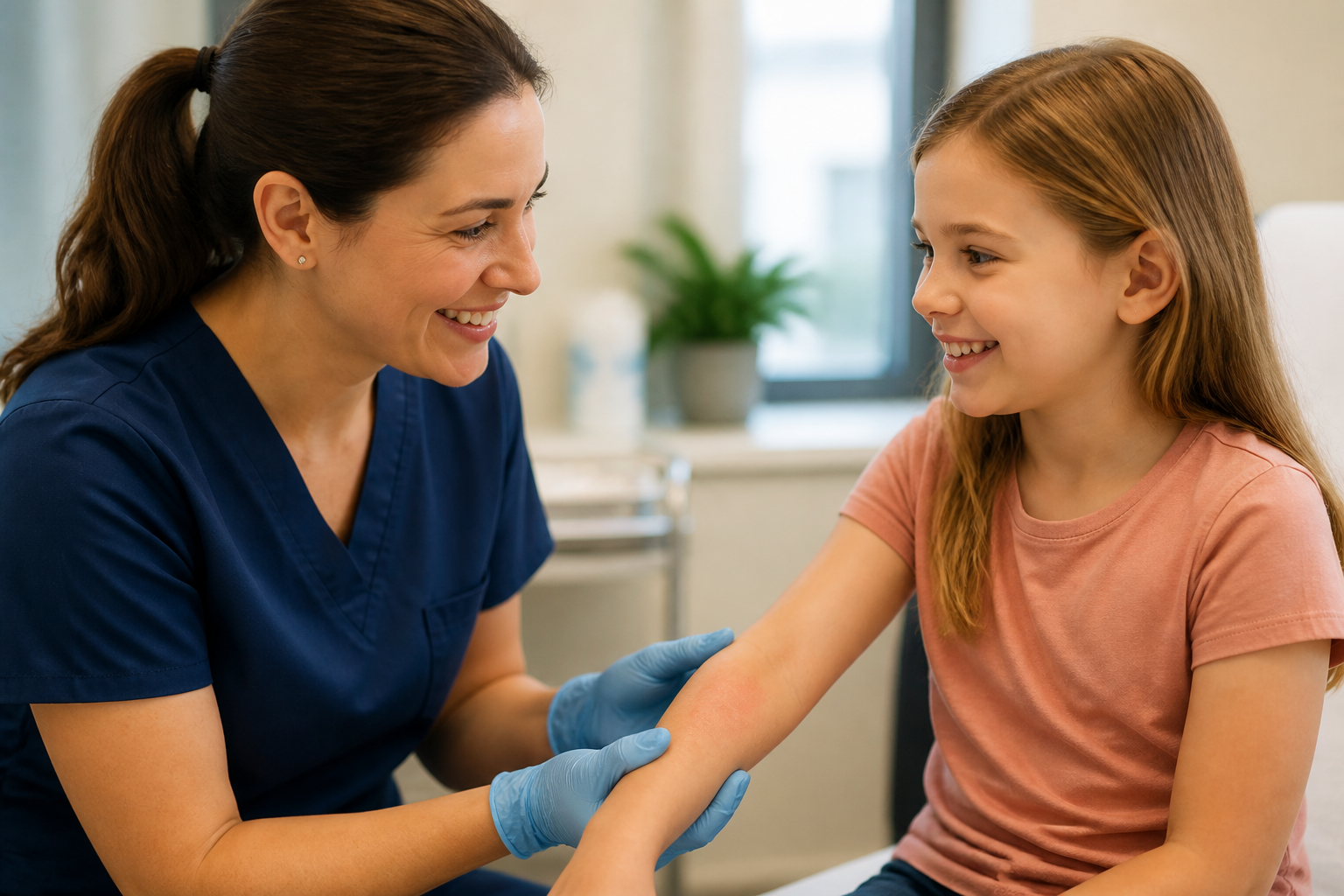
Frequently Asked Questions About Urgent Care for Burns
Can urgent care treat second-degree burns?
Yes, urgent care clinics can treat many second-degree burns, particularly those that are small to moderate in size. A provider will assess the wound, clean it, apply appropriate dressing, and advise on follow-up care. Larger second-degree burns, or those covering high-risk areas of the body, may require a transfer to an emergency setting. Speaking with a clinician about your specific situation is always the most reliable way to know.
How do I know if my burn is getting infected?
Signs of burn infection include increasing redness or warmth spreading around the wound, unusual swelling, cloudy or foul-smelling discharge, and fever. If you notice any of those signs in the days following a burn, see a clinician promptly. Urgent care is a good option for infected burns that are not causing broader symptoms like chills, high fever, or confusion.
Do I need a tetanus shot after a burn?
Burns can carry tetanus risk, especially those that involve contact with metal, soil, or significant tissue damage. If your last tetanus booster was more than five years ago, a clinician may recommend an updated shot. Your provider can review your vaccination history and give a booster at the same visit if it is indicated. No separate appointment needed.
How soon should I seek care for a burn?
For any burn with blistering, significant pain, or an uncertain cause, seeking care the same day is the right approach. Prompt treatment reduces infection risk and gives the wound the best chance to heal cleanly. Do not wait several days to see whether it resolves on its own, particularly for burns on the hands, face, feet, or over a joint.
Walk-In Burn Treatment at CityHealth San Leandro
When a burn needs professional attention, you do not have to schedule an appointment days out or spend hours in an emergency room. CityHealth in San Leandro provides urgent care for burns and other injuries with no appointment required. Our team can assess the wound, clean it, dress it properly, and follow up with you as it heals, all during your walk-in visit.
Walk in for burn treatment at CityHealth San Leandro. No appointment needed. We are located at 201 Dolores Ave, San Leandro, CA 94577. You can reach us at (510) 984-2489. Hours are Monday 10 a.m. to 7 p.m., Tuesday through Friday 9 a.m. to 7 p.m., and Saturday and Sunday 9 a.m. to 5 p.m.