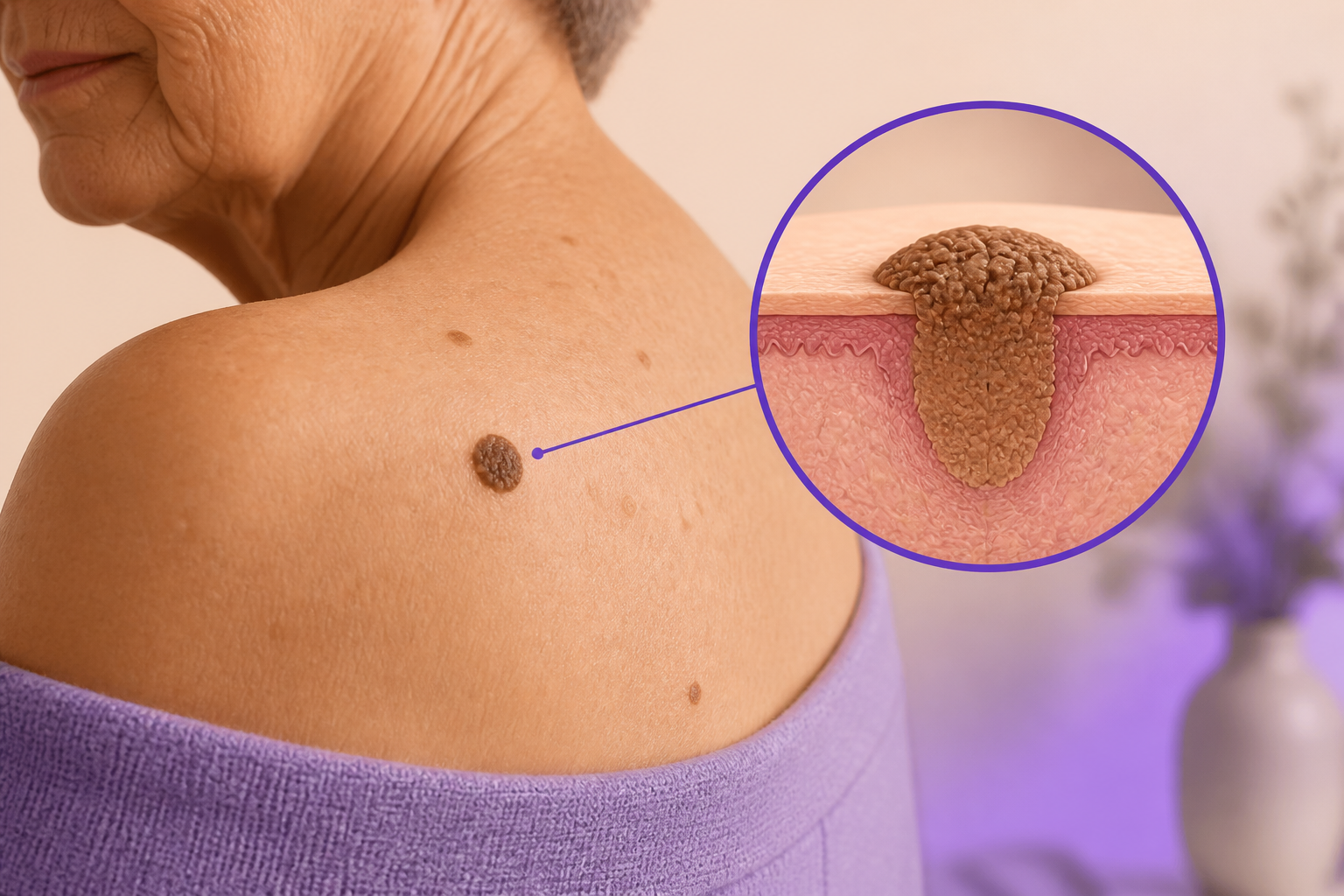

That rough, brownish patch on your shoulder has a name: seborrheic keratosis. It is the one that looks like it was pressed on from the outside. These growths are among the most common benign skin conditions that dermatologists see. If you have one, you almost certainly have more, or will. They can look alarming at first glance, but they are harmless.
What Is Seborrheic Keratosis?
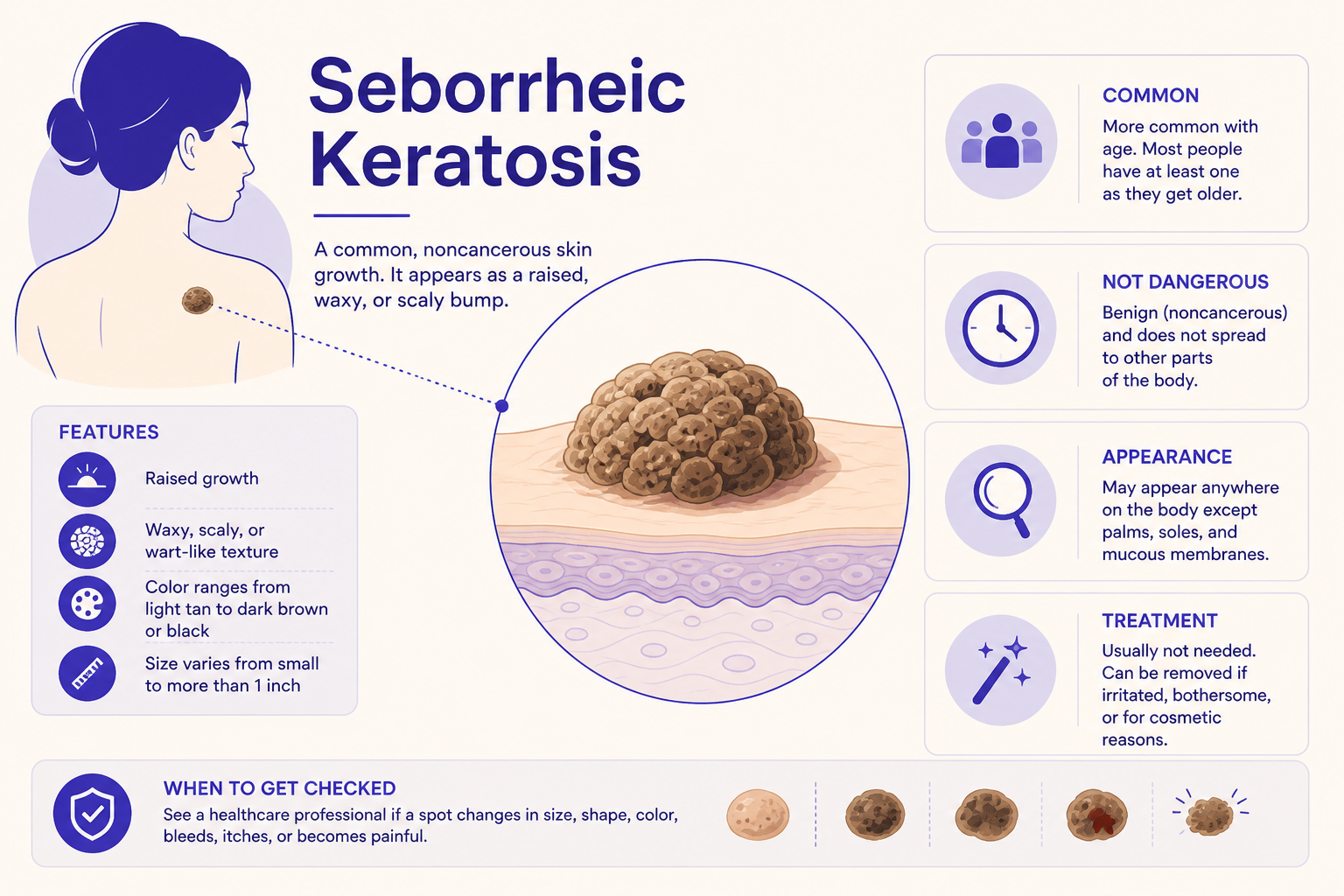
A seborrheic keratosis is a noncancerous skin growth that develops from the outer layer of skin cells. The word “seborrheic” refers to the greasy or waxy texture, while “keratosis” means a thickening of the skin. Together, they describe something that looks almost artificial, as if someone pressed a small piece of brown cork onto the surface of your skin.
These growths can appear tan, light brown, dark brown, or nearly black. They typically range from the size of a pencil eraser to roughly the size of a quarter, though they can be smaller or larger. Their surface is often rough and raised, with a crumbly or warty texture that sets them apart from moles or other spots.
Seborrheic keratoses vary widely in color and shape. That is why they are sometimes mistaken for moles, warts, or even skin cancer. That is one reason a clinician’s eye matters. If you are unsure what you are looking at, do not guess.
Who Gets Seborrheic Keratosis and Why?
Age is the biggest factor. Seborrheic keratosis becomes much more common after age 50, though it can appear earlier. By the time most people reach their 60s or 70s, they have at least a few. Some people develop dozens over the course of their lifetime.
Family history also plays a role. If a parent or sibling has them, you are more likely to develop them too. Researchers believe these growths arise from a buildup of normal skin cells, called keratinocytes, that multiply faster than the surrounding skin. The exact trigger is not fully understood, but genetics appears to be the main driver.
A few things worth clarifying about seborrheic keratoses:
- They are not caused by sun exposure. That distinguishes them from actinic keratoses, which are sun-related and can become cancerous.
- They are not contagious. You cannot spread them to another person or to another part of your own body by touch.
- They are not a sign of skin cancer, though a growth that looks similar can sometimes be something more serious.
- They can appear almost anywhere on the body, including the chest, back, face, scalp, and neck, but not on the palms of the hands or soles of the feet.
Hormonal changes may also influence their development. Some people notice new growths during pregnancy or after starting hormone therapy. This connection is not fully settled in the research, but clinicians sometimes see the pattern in practice.
How to Recognize Seborrheic Keratosis
The hallmark of a seborrheic keratosis is what dermatologists call the “stuck-on” appearance. The growth looks like it could be peeled off, even though it cannot. The surface is typically rough and irregular, with small bumps or a wart-like texture. Color ranges from light tan to nearly black, and the borders are usually well defined.
Some growths stay flat and barely noticeable. Others become thick and raised, developing deep surface grooves or a crusty texture. Many people describe a slightly itchy sensation, especially when clothing rubs against them. Occasionally a growth becomes irritated from friction and may bleed a little.
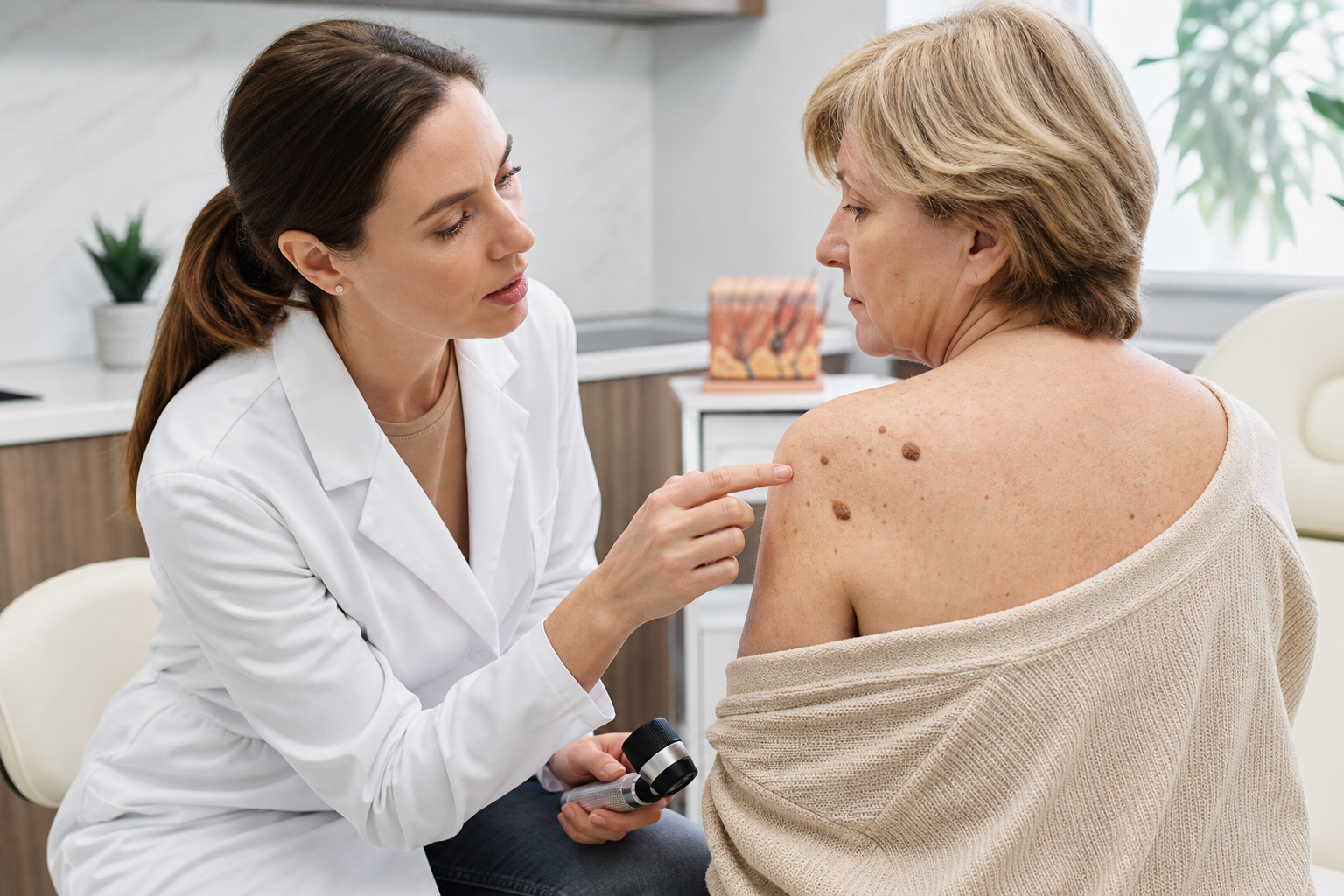
Seborrheic keratoses do not transform into cancer on their own. However, a melanoma or other serious skin condition can resemble one closely enough that professional evaluation is worthwhile. The American Academy of Dermatology recommends that you have any new or changing skin growth examined by a dermatology provider. You can read more at the American Academy of Dermatology’s patient resource on seborrheic keratoses.
When You Should See a Provider
Most seborrheic keratoses never need treatment. That said, a provider may recommend a closer evaluation if a growth has certain features:
- It changed size, shape, or color over a short period.
- The borders look irregular or unclear.
- It bleeds without being scratched or irritated.
- It looks noticeably different from your other growths.
- You are not certain whether it is a seborrheic keratosis at all.
A sudden appearance of many new growths is sometimes called the sign of Leser-Trélat. The medical literature has linked it to internal malignancy, though this is uncommon. If you notice a rapid crop of new spots alongside other unexplained symptoms, bring it up with a clinician rather than waiting.
For growths that itch persistently, snag on clothing, or bother you, removal is an option. Your provider can walk you through the available choices and advise on your specific situation. The dermatology team at CityHealth can examine your skin. They will help you determine whether what you have is a seborrheic keratosis or something that needs different attention. No referral is required.
What Removal Looks Like
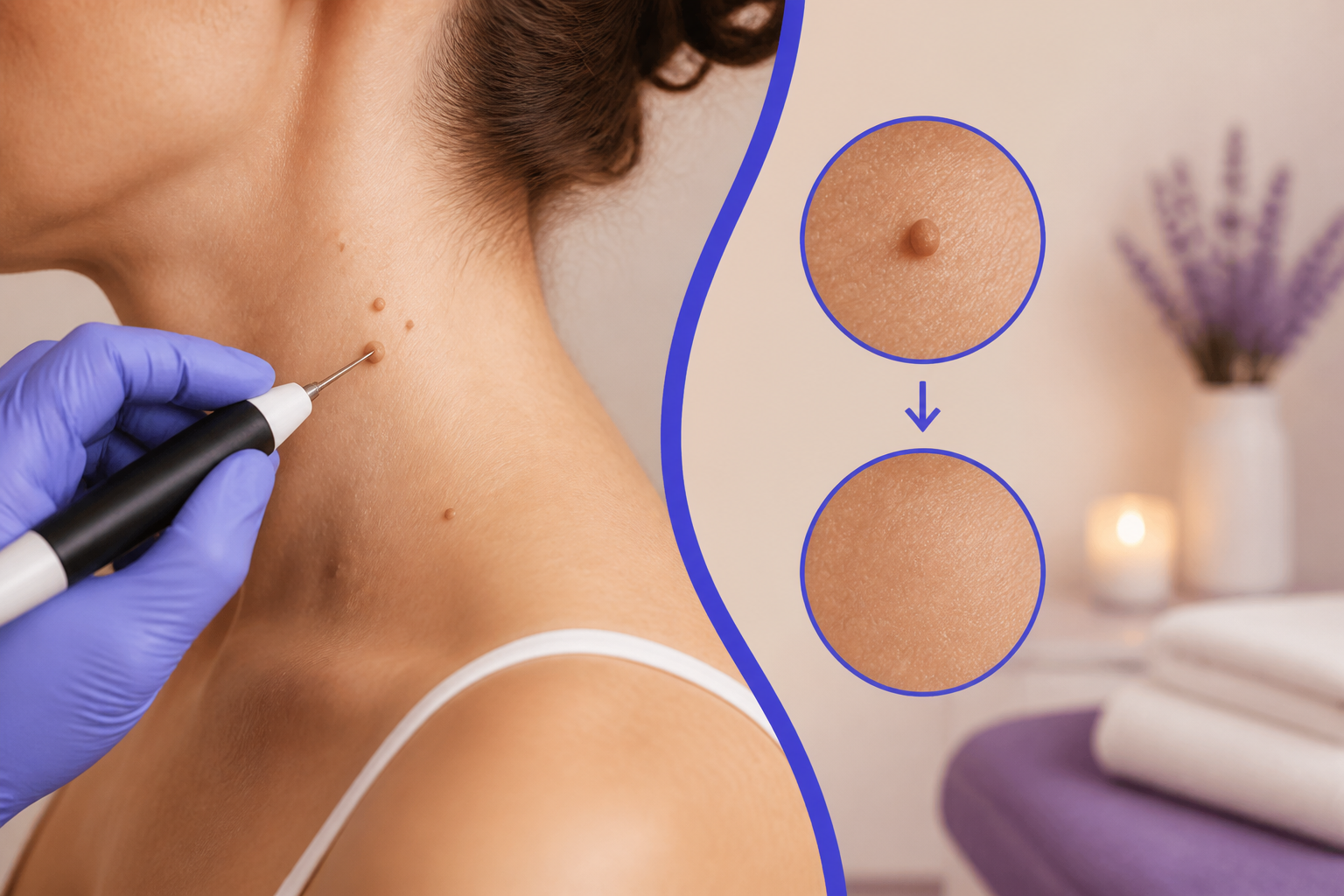
Removal of a seborrheic keratosis is not medically necessary in most cases. It is still a reasonable choice if a growth causes discomfort or if you want it gone. Several techniques are in common use:
- Cryotherapy : a quick freeze with liquid nitrogen that causes the growth to blister and fall off over days to weeks.
- Electrosurgery or curettage : burning or scraping the growth away under local anesthetic.
- Laser treatment : used less often, but effective for flat or facial growths.
- Shave excision : a thin blade removes the growth from the skin surface.
Each approach leaves different results. A dermatology provider will consider the size and location of the growth, your skin type, and what outcome matters most to you. Most procedures take only a few minutes in the office, and recovery time is minimal.
There is no single right answer for everyone. The best approach is a conversation with a provider who can look at your specific growths.

Frequently Asked Questions About Seborrheic Keratosis
Can a seborrheic keratosis turn into skin cancer?
A seborrheic keratosis does not become cancerous on its own. However, a growth that looks like one can sometimes turn out to be a melanoma or another form of skin cancer. The two can be difficult to distinguish without a professional examination. Have any concerning or rapidly changing growth evaluated by a dermatology provider rather than assuming it is benign.
Will seborrheic keratoses go away on their own?
In general, no. Seborrheic keratoses tend to persist once they form, and most people develop more of them over time. Occasionally a growth will fall off on its own after repeated irritation, but they do not typically resolve without some form of treatment. If a growth bothers you, a dermatology provider can discuss the removal options that fit your situation.
Is there anything I can do to prevent new ones from forming?
There is no proven way to prevent seborrheic keratoses, since genetics and aging are the primary drivers. Maintaining overall skin health, including sun protection and consistent moisturizing, supports your skin in general, but it will not stop these growths from developing. Regular skin checks, however, help you stay aware of new or changing spots so you can act on anything that warrants attention.
Does insurance cover seborrheic keratosis removal?
Coverage depends on your insurance plan and the reason for removal. When a growth is cosmetic, most insurers do not cover the procedure. However, if a provider determines that removal is medically necessary, for instance because a growth requires a biopsy to rule out something serious, coverage may apply. Check with your insurer before scheduling, and ask your provider how the visit will be coded so there are no surprises.
See a Dermatology Provider at CityHealth Montclair, Tuesdays
If you have a spot you want looked at, you do not need a referral, and you do not need to wait weeks for an appointment. CityHealth offers dermatology services at our Montclair location at 1970 Mountain Blvd, Oakland, CA 94611, every Tuesday. Walk in, or call us at (510) 984-2489.
A dermatology provider can examine your skin and identify what you are dealing with. From there you can talk through options: monitoring a growth, removing it, or investigating something that needs a closer look. Visit our dermatology page to learn more about what we offer and how to prepare for your visit.