

Something shifts, and at first you might not name it. You’re sleeping enough but waking up flat. Your workouts feel harder than they should, your mood has dropped, and your interest in sex has faded. If several of these sound familiar, they could be signs of low testosterone, a common hormonal change that affects men of all ages and responds well to medical attention.
Testosterone drives more than sex drive. It helps regulate energy, muscle growth, bone density, mood, and fat metabolism. When levels fall, the effects spread across your body and your daily life. Because the symptoms overlap with stress, depression, and simply getting older, many men go years without identifying the actual cause.
What Makes Testosterone Drop?
Testosterone production peaks in early adulthood and declines gradually after age 30. According to the American Academy of Family Physicians, most men lose about 1% of their testosterone per year as they age. That gradual change is normal. However, some men experience a steeper decline, and several factors can accelerate the drop.
Common contributors include:
- Chronic stress: Elevated cortisol suppresses testosterone production over time.
- Poor sleep: The body releases most of its testosterone during deep sleep cycles.
- Obesity: Fat tissue converts testosterone into estrogen, reducing the amount available.
- Chronic illness: Type 2 diabetes, thyroid conditions, and hypogonadism all affect hormone output.
- Certain medications: Opioids, corticosteroids, and some antidepressants can suppress testosterone.
Age alone doesn’t always explain low levels. If you’re in your 30s or 40s and noticing symptoms, bloodwork can give you a clear picture of what’s happening.
Common Signs of Low Testosterone
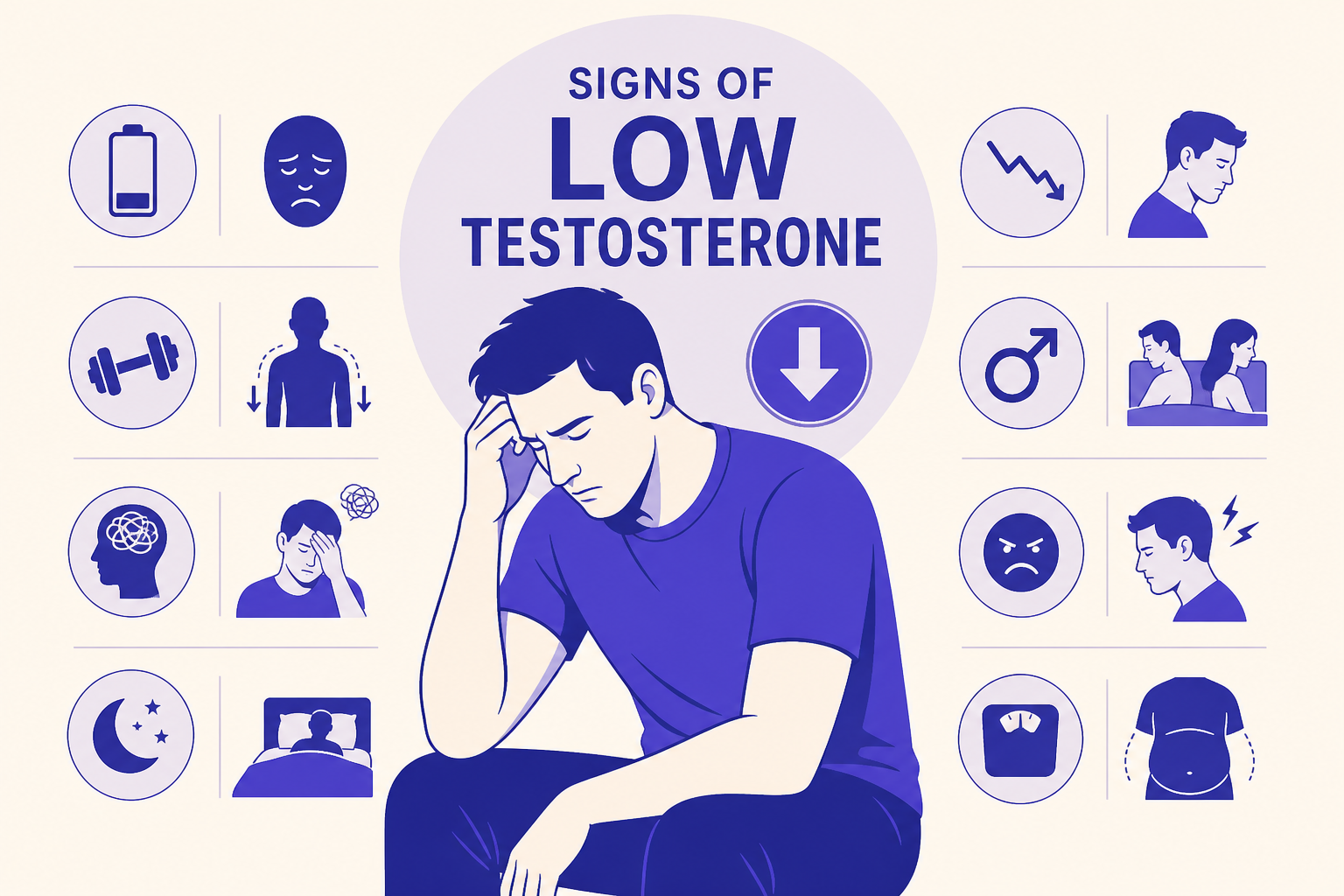
The signs of low testosterone tend to appear gradually, which makes them easy to dismiss individually. Taken together, though, they paint a recognizable picture. Here are the symptoms clinicians see most often.
Fatigue That Rest Doesn’t Fix
Persistent tiredness is one of the earliest and most consistent signals. You might sleep eight hours and still feel drained by midday. Because testosterone plays a role in cellular energy production, low levels create a kind of fatigue that ordinary rest can’t resolve.
Low Sex Drive
Libido is directly tied to testosterone. A notable drop in sexual interest, especially one that has lasted for months, is worth discussing with a clinician. While desire fluctuates naturally in response to stress or life circumstances, a sustained decline is a meaningful change worth paying attention to.
Difficulty Building or Keeping Muscle
Testosterone helps your body synthesize protein and build lean muscle. When levels fall, your workouts may stop producing results, or you may lose muscle mass even while staying active. Fat accumulation around the abdomen often accompanies this shift, since testosterone also influences how your body stores fat.
Mood Changes and Irritability
Testosterone affects neurotransmitter activity in the brain. Low levels are associated with increased irritability, a flat or low mood, and reduced motivation. Some men describe it as an emotional distance from things they used to enjoy. Since these feelings overlap with depression, a blood test can help clarify whether hormones are contributing.
Trouble Concentrating
Brain fog, slow recall, and difficulty staying focused are reported often by men with low testosterone. Many men notice improvement in mental clarity once their levels are treated. If you feel mentally slower than you used to, add this to the list of symptoms you share with a clinician.
Signs of Low Testosterone That Are Easy to Overlook
Several symptoms fall outside the list that most men expect. Because they don’t seem obviously hormonal, people often attribute them to other causes entirely.
- Sleep problems: Low testosterone is linked to disrupted sleep, including insomnia and sleep apnea. Poor sleep in turn suppresses testosterone further, creating a cycle that’s hard to break without addressing both issues.
- Reduced bone density: Testosterone supports bone strength. Men with chronically low levels face a higher long-term risk of osteoporosis and fractures.
- Hot flashes or night sweats: Men can experience hot flashes when testosterone drops sharply, though this symptom is less widely recognized in men than it is in women.
- Hair changes: While genetics drive most male hair loss, testosterone also plays a role in body and facial hair growth. Some men notice changes in hair patterns alongside other symptoms.
- Reduced semen volume: Testosterone helps regulate seminal fluid production. Lower levels can reduce volume noticeably.
No single symptom proves low testosterone on its own. However, when several of these signs appear together, that pattern is a clear reason to get tested. You can explore the men’s health services at CityHealth, including what to expect when you come in for an evaluation.
How Low Testosterone Gets Diagnosed
Symptoms point you in the right direction, but a blood test confirms the diagnosis. A clinician measures total testosterone and, in some cases, free testosterone. Reference ranges vary slightly by lab, but levels below 300 nanograms per deciliter (ng/dL) in a man with consistent symptoms are generally considered clinically low.
A proper diagnosis also involves a review of your medical history, other relevant lab values, and a conversation about how the symptoms are affecting your daily life. The National Library of Medicine’s MedlinePlus offers a clear overview of testosterone and how it affects the body, which is a useful starting point before your visit.
If bloodwork confirms low levels and you have symptoms that affect your quality of life, testosterone replacement therapy (TRT) is one option a clinician may discuss with you. TRT works best as a supervised, monitored program tailored to your individual situation, not a shortcut.


Frequently Asked Questions
At what age do signs of low testosterone typically appear?
Testosterone declines gradually after age 30, so signs of low testosterone can show up at any point in midlife. Some men notice symptoms in their 30s, particularly when risk factors like obesity, chronic stress, or sleep disorders are present. Age matters, but it is not the only factor, and symptoms at any age are worth a conversation with a clinician.
Can lifestyle changes raise low testosterone on their own?
In some men, improving sleep, reducing stress, losing excess weight, and staying physically active can raise testosterone levels meaningfully. These changes are worth pursuing regardless of whether medical treatment ends up being needed. However, when levels are significantly low or symptoms are affecting your daily life, lifestyle changes alone may not be enough, and a clinician can help you assess what options fit your situation.
How soon after starting treatment do signs of low testosterone improve?
Response times vary by individual and by symptom. Many men report improvements in energy and mood within the first few weeks of starting testosterone replacement therapy. Changes in muscle mass and body composition typically take longer, often several months of consistent treatment and monitoring. A clinician can give you a clearer timeline based on your specific lab results and health profile.
Is testosterone replacement therapy safe?
TRT is considered appropriate for men who qualify based on confirmed low bloodwork and symptoms, when a clinician manages the process with regular follow-up. Like any medical treatment, it carries considerations and potential side effects that your clinician should review with you before you begin. Ongoing monitoring through lab work and in-office visits is a standard part of any responsible TRT program.
Ready to Find Out Where You Stand?
If the signs of low testosterone described here sound familiar, the clearest next step is a blood test. Knowing your actual levels removes the guesswork and gives you and a clinician something concrete to work with.
Starting September 1, 2026, CityHealth Montclair at 1970 Mountain Blvd in Oakland offers testosterone replacement therapy for men. The program is run by Kurtis Op, PA, and begins with an in-person consult and bloodwork. Men who qualify receive monthly testosterone, in-office monitoring visits, and ongoing lab testing for $299 per month. The approach is clinical and supervised, structured around your results and monitored over time.
TRT starts September 1 at CityHealth Montclair. Call (510) 984-2489 to schedule a consult. You can also learn more about all available men’s health services at CityHealth before your visit.