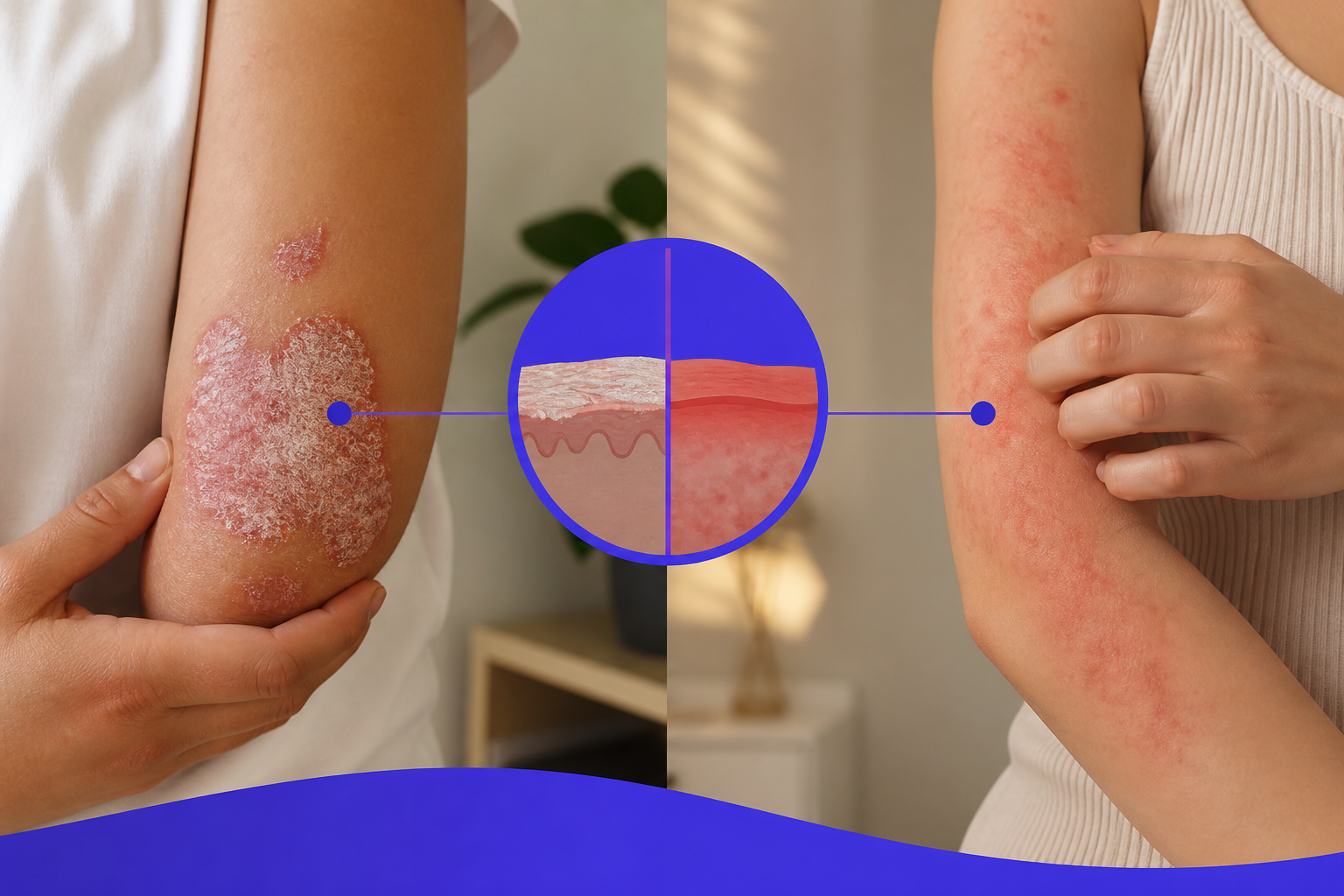

Your skin has been acting up for weeks. The patches are red, they itch, and they keep coming back. When you search your symptoms, you find two conditions that look nearly identical in photos. Understanding psoriasis vs eczema can help you have a more productive conversation with a clinician and get to the right treatment faster.
Why Psoriasis vs Eczema Confuses So Many People
Both conditions cause red, inflamed skin, and both tend to flare up and calm down over time. Because they look so similar at a glance, even experienced clinicians sometimes need a closer look to tell them apart. Knowing a few key differences, however, makes the distinction much clearer.
Psoriasis and eczema both fall under the umbrella of chronic skin conditions, meaning they can persist for years and require ongoing management. Neither one is contagious. While they share some surface-level similarities, they have different underlying causes and respond to different treatments.
What Is Psoriasis?
Psoriasis is an autoimmune condition. The immune system accelerates the skin cell cycle, causing cells to build up on the surface faster than the body can shed them. This creates thick, scaly patches known as plaques.
Where Psoriasis Appears
Psoriasis most commonly shows up on the elbows, knees, scalp, and lower back. However, it can also affect the nails, palms, and the soles of the feet. In some cases, it appears in skin folds like the armpits or groin.
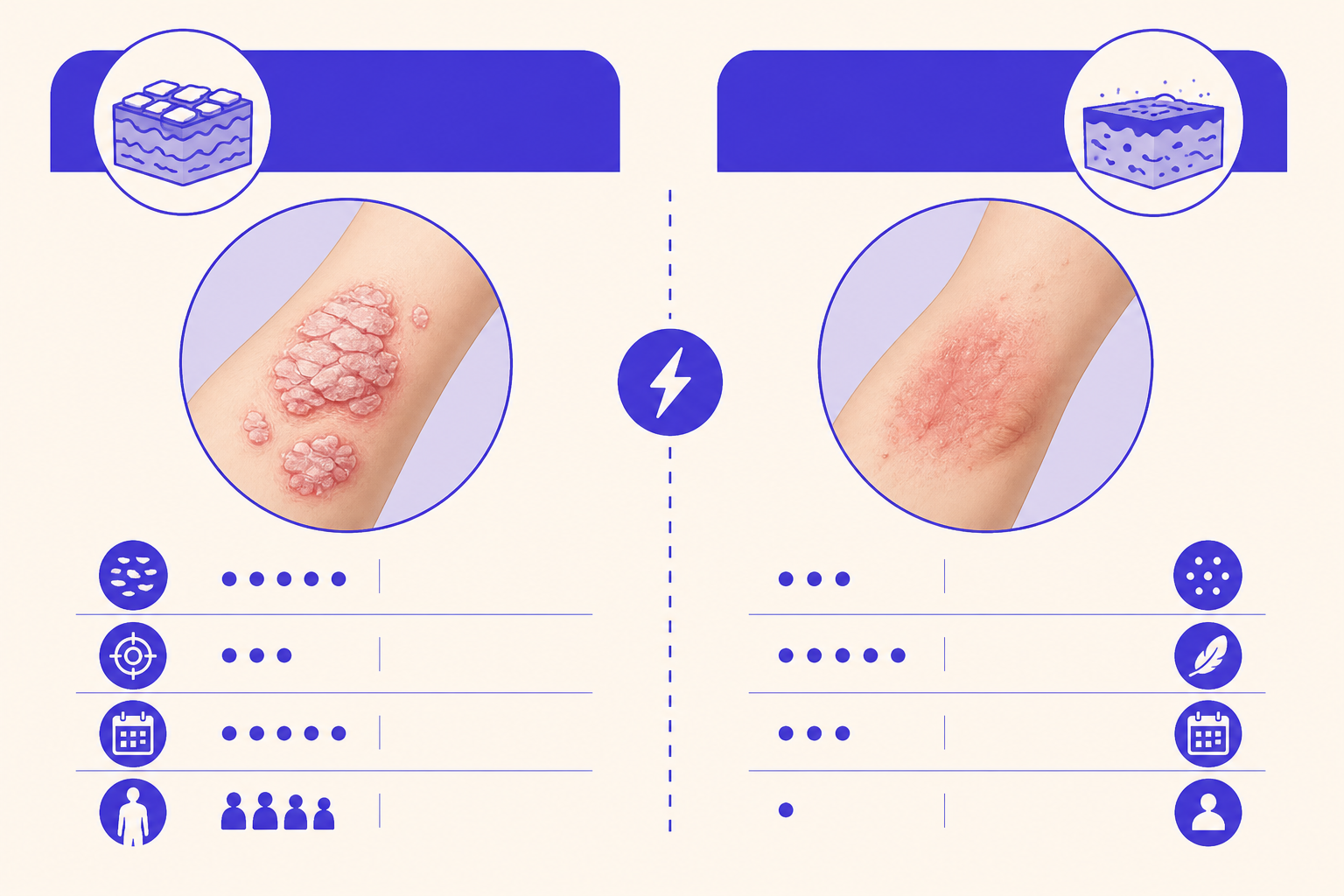
The plaques from psoriasis tend to have a well-defined border and often appear silvery-white or carry a thick scale over reddened skin. Psoriasis also frequently affects both sides of the body symmetrically, which can help clinicians identify it.
How Psoriasis Feels
Itching is common with psoriasis, though some people also describe burning or soreness. In addition, psoriasis is associated with psoriatic arthritis in a significant number of people, which causes joint pain and swelling. If your skin symptoms come with stiff or tender joints, mention that to your provider.
What Is Eczema?
Eczema, also called atopic dermatitis, is a condition where the skin barrier breaks down, making it more reactive to irritants and allergens. The result is dry, inflamed, intensely itchy skin. It tends to run in families alongside asthma and hay fever.
Where Eczema Appears
In children, eczema often appears on the face, scalp, and the fronts of the knees and elbows. In adults, it tends to settle into skin creases: the inside of the elbows, behind the knees, and on the wrists and neck. However, it can show up anywhere on the body.
The rash from eczema looks different from psoriasis in texture. Instead of thick, defined plaques, eczema patches are often thinner, more blurred at the edges, and may weep or crust over during an active flare. The skin can look raw after scratching.
How Eczema Feels
Eczema itching can be severe, and many people describe it as relentless, especially at night. Scratching makes the skin worse, which triggers more inflammation, which causes more itching. Breaking that cycle often requires treatment rather than willpower alone.
Psoriasis vs Eczema: The Key Differences
When you compare psoriasis vs eczema side by side, several features stand out. The distinctions below are the most useful ones to know.
- Scale appearance: Psoriasis produces thicker, silvery scales. Eczema skin is drier and thinner, without the heavy buildup.
- Borders: Psoriasis patches have clear, defined edges. Eczema patches fade at the edges and blend into surrounding skin.
- Typical age of onset: Eczema often starts in childhood and may improve with age. Psoriasis can begin at any age but has two peak periods, one in young adulthood and one in middle age.
- Triggers: Eczema flares in response to irritants, allergens, dry air, and stress. Psoriasis can be triggered by infections, skin injury, certain medications, and stress.
- Associated conditions: Eczema often comes with asthma and allergic rhinitis. Psoriasis is linked to psoriatic arthritis and higher cardiovascular risk.
- Itch intensity: Both conditions itch, but eczema is generally known for more intense, hard-to-ignore itching.
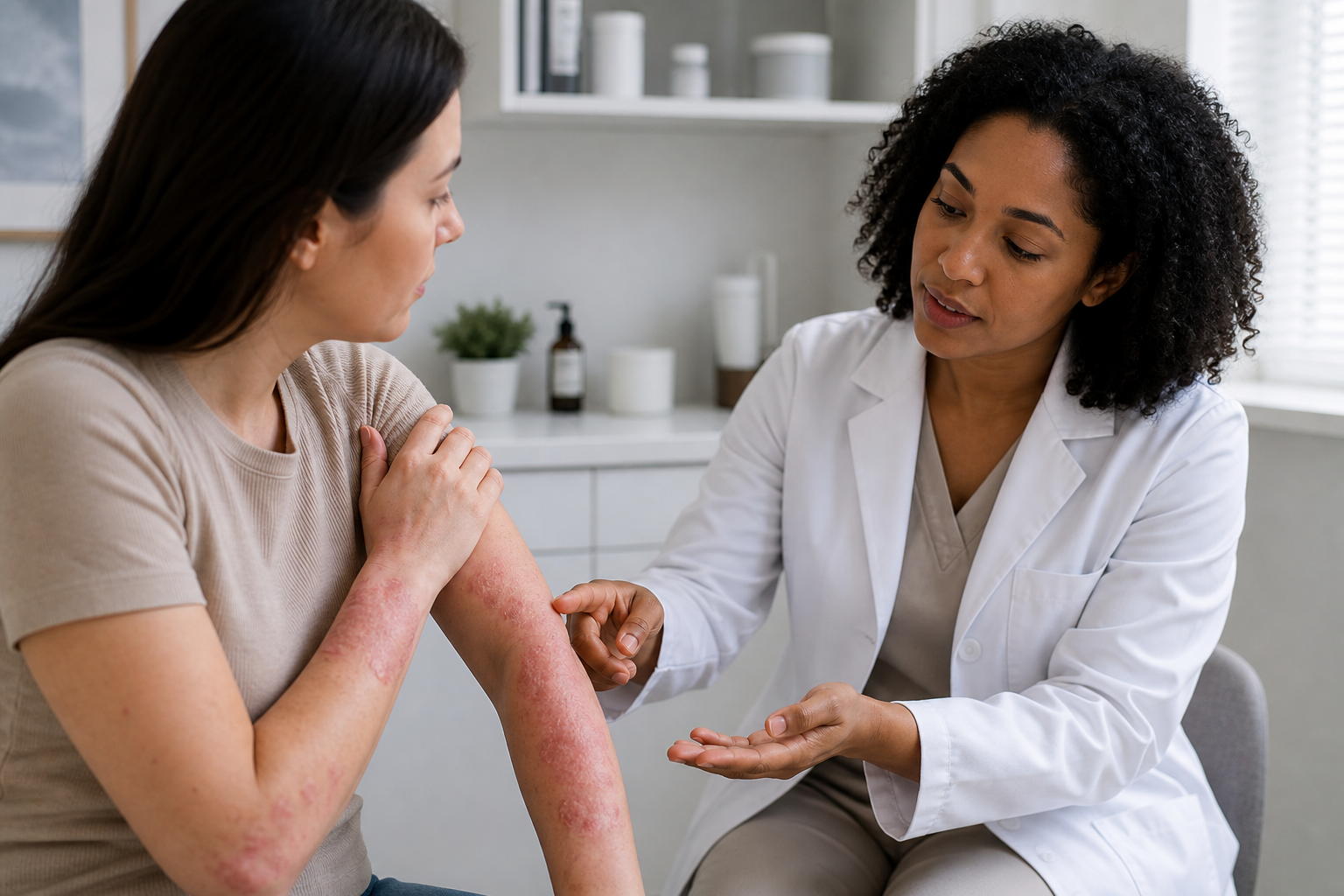
These distinctions are helpful, but they are not diagnostic. A clinician can examine your skin up close, ask about your personal and family history, and in some cases perform a skin biopsy to confirm the diagnosis. Because the treatments differ, getting the right answer matters.
What Triggers Each Condition
Knowing your triggers helps you manage flares, regardless of which condition you have. Since psoriasis is immune-driven, triggers often involve things that activate the immune system. A strep infection, for example, can set off a type of psoriasis called guttate psoriasis. Stress is a trigger for both conditions.
Eczema triggers tend to be more environmental. Common ones include harsh soaps, wool fabrics, hot showers, fragrances, and seasonal allergens. Sweat can also trigger a flare. Therefore, identifying and avoiding your personal triggers is a cornerstone of eczema management.
The CDC’s psoriasis resource page notes that psoriasis affects millions of Americans and can have a significant impact on quality of life. The same is true for eczema. Both conditions are treatable, and neither one is something you should manage on your own without guidance.
Treatment Approaches
Treatments for psoriasis and eczema overlap in some ways and diverge in others. Both conditions often respond to topical corticosteroids for short-term relief, and consistent moisturizing helps with both.
Beyond that, the paths differ. Psoriasis treatments can include vitamin D analogs, phototherapy, and biologics that target specific immune pathways. Eczema treatments often focus on repairing the skin barrier with emollients, reducing trigger exposure, and using calcineurin inhibitors or newer targeted therapies for moderate to severe cases.
Because the treatment landscape has expanded considerably in recent years, a provider at CityHealth’s dermatology clinic can help you identify the option that fits your skin, your health history, and your daily routine.

When to See a Provider
If you have persistent red, scaly, or itchy skin that does not improve with basic moisturizing, getting a clinical opinion is a reasonable next step. You should also see a provider if your symptoms affect your sleep, your ability to work, or your mental health. Both psoriasis and eczema respond better to treatment when addressed early.
In addition, see a provider if your skin becomes infected. Signs of infection include increased warmth, pus, spreading crusting, or fever. Scratched eczema skin is especially vulnerable to bacterial infections, including Staphylococcus aureus. A clinician can assess whether you need additional treatment for the infection itself.
Frequently Asked Questions About Psoriasis vs Eczema
Can you have psoriasis and eczema at the same time?
Yes, it is possible to have both conditions simultaneously, though it is uncommon. Because the two conditions can look similar, a clinician will examine the skin carefully and may order additional testing to confirm which condition, or combination of conditions, is present before recommending a treatment plan.
Does telling psoriasis vs eczema apart require a dermatologist?
A dermatology provider is often the most reliable person to distinguish between the two, especially when the presentation is unclear. In some cases, a skin biopsy is the most definitive way to confirm a diagnosis. However, many urgent care and walk-in clinic providers can also make an initial assessment and refer you appropriately if needed.
Does diet affect psoriasis or eczema?
For some people, certain foods seem to worsen eczema flares, particularly dairy, eggs, and gluten in those with sensitivities. With psoriasis, an anti-inflammatory diet may help reduce overall disease activity, though it does not replace medical treatment. Talk with your clinician before making significant dietary changes based on your skin symptoms alone.
Can psoriasis or eczema go away on its own?
Eczema in children sometimes improves significantly or resolves by adulthood, though it can persist into later years. Psoriasis tends to be a lifelong condition with periods of remission and flare. Both conditions are manageable with the right treatment plan, and many people achieve long stretches of clear or nearly clear skin with consistent care.
See a Dermatology Provider at CityHealth Montclair
If you are living with skin symptoms and want a clearer picture of what you are dealing with, you do not have to guess. Starting September 1, CityHealth Montclair at 1970 Mountain Blvd in Oakland offers dermatology provider visits on Tuesdays. You can get an accurate assessment and a treatment plan that fits your life.
CityHealth’s San Leandro location at 201 Dolores Ave also welcomes walk-ins with no appointment required, Monday through Sunday. Whether you are sorting out psoriasis, eczema, or another skin concern, our team is here to help. Call us at (510) 984-2489 or visit cityhealth.com/dermatology to learn more and plan your visit.