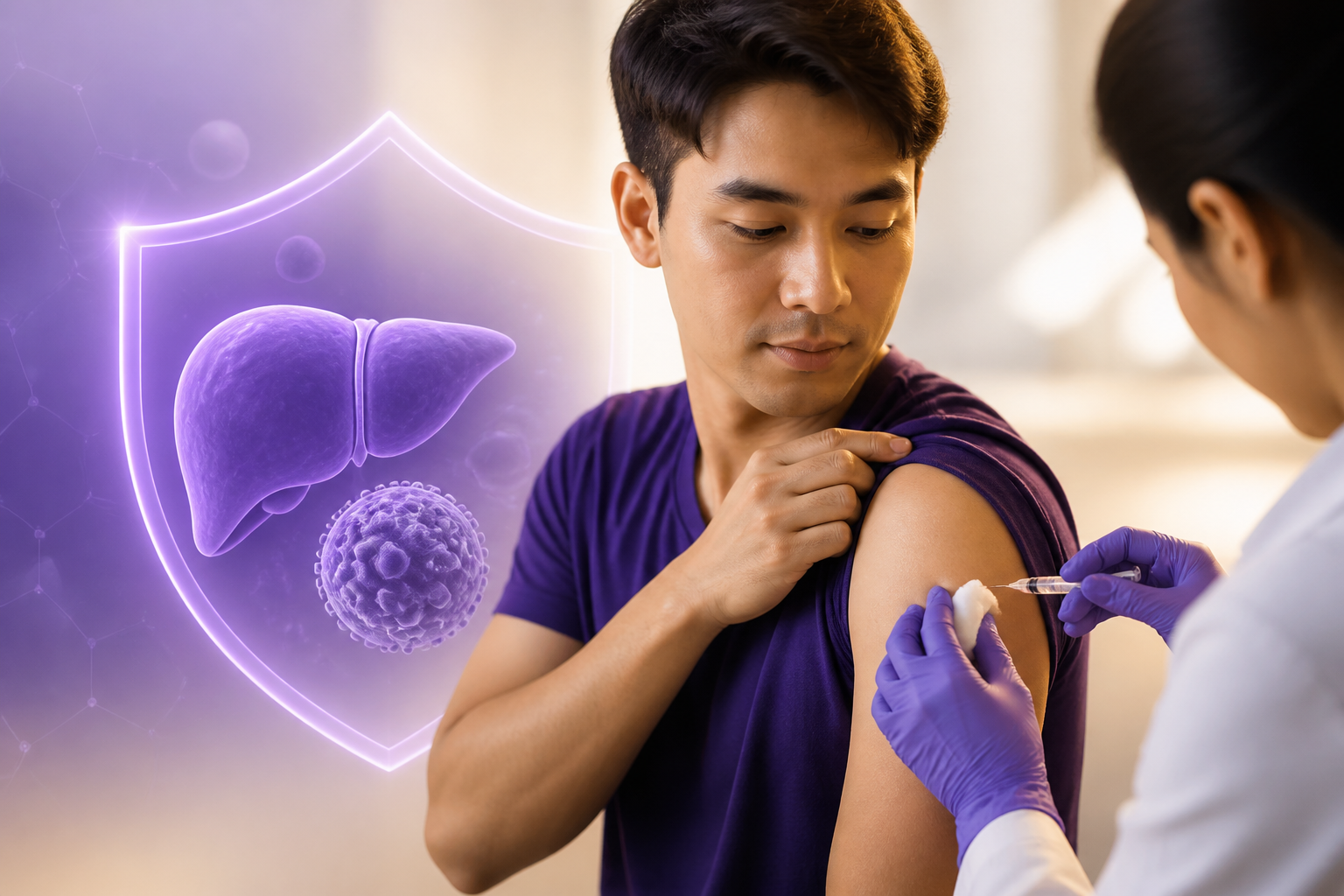

Millions of American adults have never completed the hepatitis B vaccine series. If you received your childhood vaccinations before 1991, you almost certainly missed it, because routine childhood vaccination for hepatitis B did not begin in the United States until that year. The hepatitis B vaccine for adults is safe, effective, and widely available, and catching up is easier than most people expect.
What Hepatitis B Does to the Body
Hepatitis B is a viral infection that attacks the liver. For most healthy adults, an acute infection resolves on its own within a few months. However, some people develop chronic hepatitis B, where the virus remains active in the body and causes ongoing damage over years or decades.
Chronic hepatitis B can lead to serious complications, including cirrhosis, liver failure, and liver cancer. Because many people carry the virus without symptoms, transmission often occurs without anyone realizing the exposure. The virus spreads through contact with infected blood, sexual contact, and from a mother to her child during birth.
Since symptoms are often absent, many people with chronic hepatitis B do not know they have it. That gap in awareness makes vaccination even more important. You cannot always know when you have been exposed.
Who Should Get the Hepatitis B Vaccine for Adults
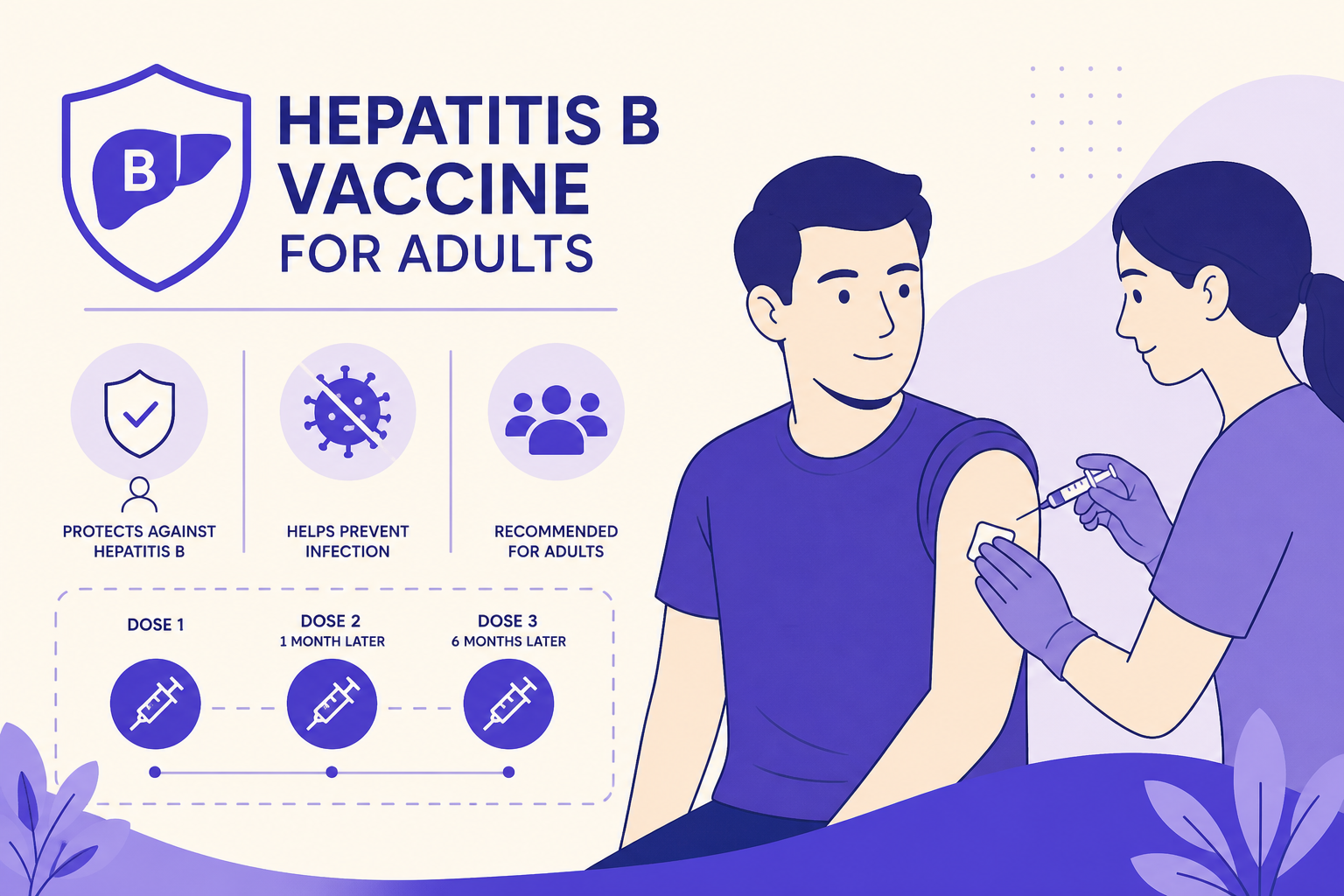
The CDC recommends that all unvaccinated adults through age 59 receive the hepatitis B vaccine series. For adults 60 and older, the vaccine is recommended based on individual risk and personal preference, ideally after a conversation with a clinician. If you have never completed the series or are unsure of your vaccination history, you have a gap worth addressing.
Certain groups carry higher risk and should be especially proactive:
- People with diabetes, especially those newly diagnosed
- Healthcare workers, first responders, and anyone who may contact blood or body fluids at work
- People living with chronic liver disease or HIV
- People who inject drugs or share needles or other equipment
- People with more than one sexual partner in the past six months
- People living with or providing care for someone who has chronic hepatitis B
- Anyone traveling to regions where hepatitis B is more common, including parts of Asia, Africa, and Eastern Europe
- People receiving hemodialysis
That said, you do not need to fall into a high-risk category to benefit. The hepatitis B vaccine for adults protects against a preventable infection. Because exposure can come from sources that feel unlikely, protection before the fact is always easier than treatment after.
The Vaccine Schedule: What to Expect
There are several options for completing the hepatitis B series, and the schedule depends on which vaccine you receive. A clinician at a walk-in clinic can help you choose the right fit based on your health history and scheduling needs.
The Three-Dose Series
The traditional hepatitis B vaccine series uses three doses given at months zero, one, and six. Engerix-B and Recombivax HB both follow this schedule. These vaccines have a long safety record, and most adults who complete all three doses develop strong, lasting immunity.
The Two-Dose Option
Heplisav-B is a newer vaccine approved for adults 18 and older. It requires only two doses, given one month apart. The shorter timeline makes the series easier to complete, which is especially helpful if follow-up visits are a challenge.
The Combination Vaccine
If you also need protection against hepatitis A, Twinrix combines both vaccines into a three-dose series. This option is worth considering if you travel internationally or if your clinician identifies risk factors for both infections.

What Happens When You Get the Shot
The hepatitis B vaccine for adults is an intramuscular injection, usually given in the upper arm. Side effects are generally mild and brief. You might notice soreness at the injection site, mild fatigue, or a low-grade headache in the day or two afterward.
Serious allergic reactions are rare. Before your vaccination, let your clinician know about any past reactions to vaccines, including any prior dose of the hepatitis B series. A quick pre-vaccination screening helps flag anything that needs attention.
Protection builds over the course of the series. Once you finish all doses, immunity typically lasts many years, and most healthy adults do not need a booster. However, people at ongoing high risk, such as healthcare workers, may benefit from a follow-up antibody test to confirm that their immune response was adequate. Ask a clinician whether that applies to your situation.
Why Adults Are Still Catching Up on Hepatitis B Vaccination
Many adults assume that their risk for hepatitis B is low because they do not fit the categories they associate with the infection. However, exposure can come from a medical procedure, a new relationship, or a household member who carries the virus without knowing it.
There is also the long-term health picture to consider. Hepatitis B treatment exists, but it is demanding and does not work for everyone. The hepatitis B vaccine for adults is one of the clearest examples of prevention being easier than the alternative.
Adults who received vaccines as children or teenagers may wonder whether they still need protection. For most people, a completed childhood series provides lasting immunity. However, if your records are incomplete or you are not sure whether you received all three doses, repeating the series is safe. Alternatively, a blood test can check your immunity status before you commit to a new series. A clinician can point you in the right direction either way.
CityHealth San Leandro offers vaccination and immunization services for adults, including the hepatitis B series, so you can address this during a walk-in visit without scheduling months in advance.

Frequently Asked Questions About the Hepatitis B Vaccine for Adults
Is it too late to get the hepatitis B vaccine if I am over 60?
No, it is not too late. The CDC recommends vaccination for adults 60 and older based on individual risk factors or personal preference. If you have not been vaccinated and want protection, speaking with a clinician is a straightforward next step. Age alone is not a reason to skip it.
Do I need all three doses for the vaccine to work?
Completing the full series provides the strongest and most lasting protection. However, if you miss a scheduled dose, you do not need to start over. You can simply resume where you left off, and a clinician can help you stay on track. Partial vaccination offers some benefit, but finishing the series is always the goal.
Can I get the hepatitis B vaccine at a walk-in urgent care clinic?
Yes. Walk-in clinics that provide vaccination services can administer the hepatitis B series without a referral from a primary care provider. You do not need a prior relationship with the clinic or a scheduled appointment. You can walk in, confirm your vaccination history with the staff, and receive your first dose the same day.
What should I do if I think I have been exposed to hepatitis B?
If you believe you have had a recent exposure to hepatitis B and you are not vaccinated, seek care right away. Hepatitis B immune globulin combined with the first dose of the vaccine can prevent infection if given within a short window after exposure. This situation calls for an urgent care visit rather than a wait-and-see approach. Do not delay.
Walk In for Your Hepatitis B Vaccine at CityHealth San Leandro
CityHealth San Leandro provides vaccinations and immunization services for adults, including the full hepatitis B series. The clinic is located at 201 Dolores Ave, San Leandro, CA 94577. Hours are Monday 10 a.m. to 7 p.m., Tuesday through Friday 9 a.m. to 7 p.m., and Saturday and Sunday 9 a.m. to 5 p.m. You can also call ahead at (510) 984-2489 with any questions before you come in.
Walk in for vaccinations at CityHealth San Leandro. No appointment needed.