

Flu season in the Bay Area tends to creep up quietly, and by November it can arrive in full force. Understanding when to get a flu shot is one of the most practical things you can do for your health each year. Get it too early and protection may fade before peak season. Get it too late and the virus may reach you before your immune system has had time to respond.
This guide breaks the timing down by month, by life stage, and by situation. Use it to decide for yourself and your family.
Why Flu Shot Timing Matters More Than the Season
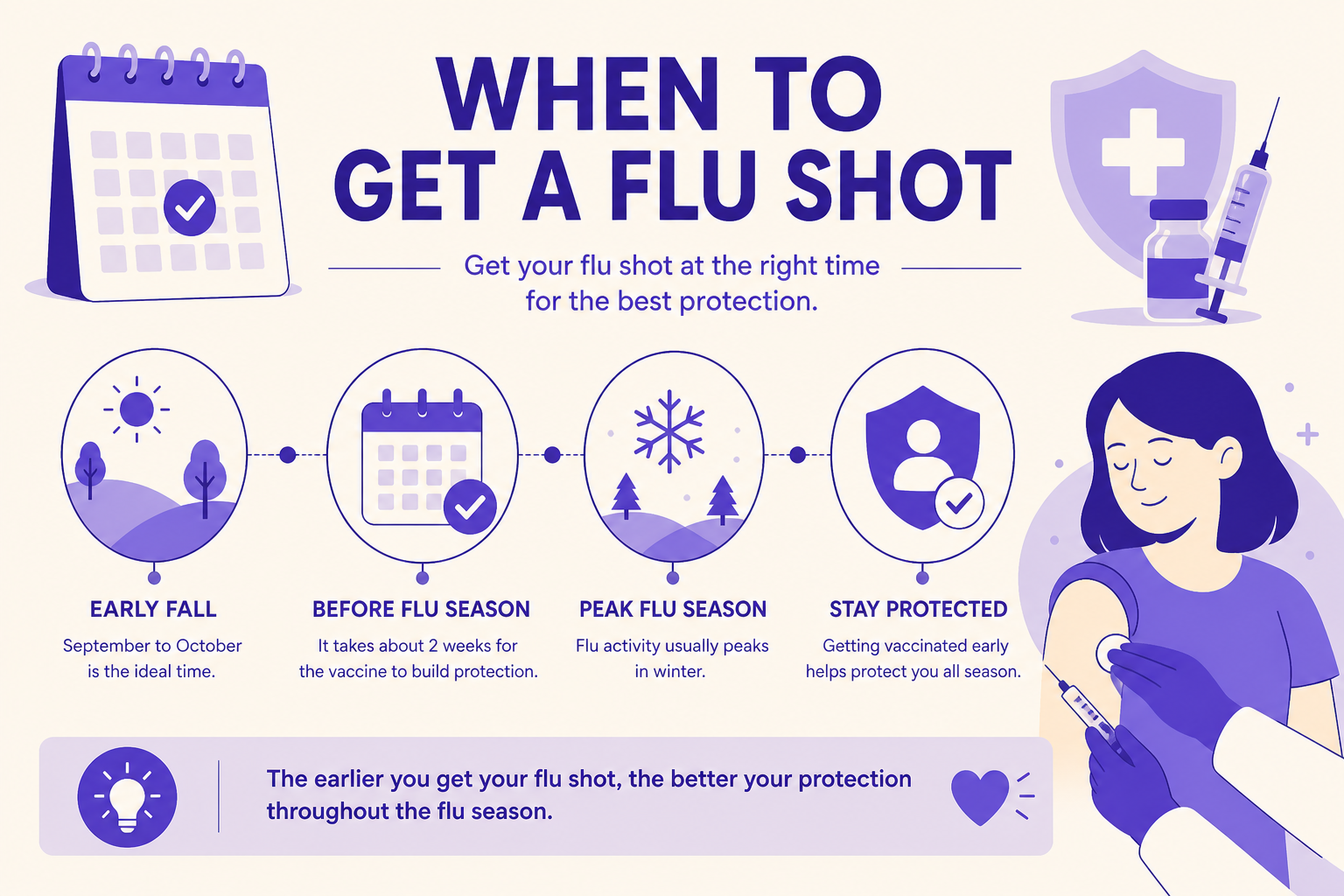
After you receive a flu shot, your body needs about two weeks to build the antibodies that fight off infection. That gap between vaccination and full protection is the main reason timing matters. If you get vaccinated in late December during a strong flu year, you’re covered for what may still be weeks of active circulation. However, you’ll spend those first two weeks more vulnerable than if you had vaccinated in October.
Flu activity in the United States rises in November and peaks between December and February. It can linger into March or April. Because the season has a long tail, even a late shot offers real benefits. The goal is to have your immunity built before the peak, and the CDC’s recommended window makes that possible for most people.
When to Get a Flu Shot: What the CDC Recommends
The CDC recommends that most people get vaccinated by the end of October. September and October together form the preferred window for adults and children who are not in a special category. Vaccination during this stretch means your immune system is primed and ready before flu activity typically begins climbing in your area.
That said, the CDC also makes clear that getting vaccinated in November, December, or later is still worthwhile. Flu circulates for months, and even partial coverage through the tail end of the season can reduce the severity of illness if you do get infected. Therefore, a late shot beats no shot.
- Ideal window: September through October
- Still beneficial: November, December, and into January while flu is active
- Too early: July or August for most adults, since protection may wane before peak season arrives
- Too late: After flu has stopped circulating in your community
Vaccine supplies at walk-in clinics can run low by mid to late October. Getting vaccinated early in the window also helps you avoid the rush and ensures the formulation you need is in stock.
Timing by Life Stage: Who Has Different Needs
Most people follow the same fall calendar. However, a few groups benefit from adjusted timing, a different vaccine formulation, or additional doses. If you fall into one of these categories, it’s worth a quick conversation with a clinician to confirm the right approach for your situation.
Pregnant People
Flu vaccination during pregnancy protects both you and your newborn. Infants under six months old are too young to receive a flu shot, so maternal antibodies passed during pregnancy give newborns their earliest protection. The CDC recommends flu vaccination at any stage of pregnancy, with September and October remaining the preferred target. Because flu illness can be more severe during pregnancy, earlier in the window is generally better.
Adults 65 and Older
Older adults face a higher risk of serious complications from flu, including hospitalization. The CDC recommends that adults 65 and older receive a high-dose or adjuvanted flu vaccine rather than a standard dose. These formulations produce a stronger immune response, which is important because immune function naturally changes with age. The timing target remains the same as for other adults, with September or October as the preferred window.
Children Receiving Their First Flu Vaccine
Children who have never been vaccinated against flu require two doses, spaced at least four weeks apart. For these children, the first dose should happen in August or early September so that both doses can be completed before flu season begins. After the first year, children need only one annual dose. Because of this two-dose requirement, parents of newly eligible children should plan ahead rather than waiting until October.

When to Get a Flu Shot If You Missed October
October slips by quickly, and many people find themselves in November or December wondering whether it’s still worth getting vaccinated. The answer is almost always yes. Flu season is long, and the risk of infection doesn’t disappear after the holidays. A shot in December or even January can still protect you through significant weeks of active flu circulation.
The only moment vaccination stops making sense is after flu has ended in your region. Since that endpoint is difficult to identify in real time, getting vaccinated anytime flu is still present in your community remains a reasonable choice. The vaccination team at CityHealth can confirm availability and help you decide whether a shot still makes sense for your situation.
One thing to know: even in years when the vaccine formulation doesn’t perfectly match all circulating strains, vaccination reduces the risk of serious illness, hospitalization, and complications. A partial match still offers protection worth having.
What Happens When You Get a Flu Shot
The visit itself is fast. You’ll answer a short health screening, receive the injection in your upper arm, and wait a few minutes before leaving. Most people feel mild arm soreness for a day or two. Some notice a low-grade fatigue or slight achiness in the hours after vaccination. These responses are your immune system doing exactly what it’s supposed to do.
Standard flu shots do not contain live virus, so you cannot catch flu from the vaccine. However, because immunity takes about two weeks to build, you could still get sick during that initial window if you were already exposed. If you have questions about how the flu vaccine interacts with specific health conditions or medications you take, talk to a clinician before or during your visit.
- Protection develops in approximately two weeks
- Common side effects: arm soreness, brief fatigue
- No live virus in standard injectable flu vaccines
- Annual vaccination recommended because flu strains change each season
- Most visits take under ten minutes from check-in to exit

Your Questions About When to Get a Flu Shot, Answered
Can I get a flu shot if I already had the flu this season?
Yes, getting vaccinated after a flu illness still makes sense. Each year’s flu vaccine covers multiple strains, and recovering from one strain does not protect you against others that may still be circulating. Since flu seasons routinely involve more than one active strain, vaccination after illness can still reduce your risk for the remainder of the season.
Is August too early for most adults?
For most adults, August is on the early side. Some research suggests that vaccine-induced immunity may begin to wane after several months, which could leave you less protected at the tail end of a long flu season. Unless you have a specific reason to vaccinate in August, waiting until September or October gives you stronger coverage aligned with the period of highest risk.
Do I need a flu shot every single year?
Yes. The CDC recommends annual flu vaccination for everyone six months and older. Flu viruses mutate each season, and vaccine formulations are updated annually to match the strains expected to circulate. Even if the match between vaccine and circulating virus isn’t perfect, vaccinated people who do get sick tend to experience milder illness and lower rates of hospitalization compared with unvaccinated people.
What if I’m not sure which flu vaccine is right for me?
The best flu vaccine for you can depend on your age, health history, and personal preference between injection and nasal spray. A clinician can walk you through the available formulations and recommend the right one. When you arrive at CityHealth for your flu shot, the team can answer these questions on the spot so you leave with the right vaccine for your needs.
Walk In for Your Flu Shot at CityHealth
Walk in for a flu shot at CityHealth San Leandro. No appointment needed. The clinic is located at 201 Dolores Ave, San Leandro, CA 94577. Hours are Monday 10 a.m. to 7 p.m., Tuesday through Friday 9 a.m. to 7 p.m., and Saturday and Sunday 9 a.m. to 5 p.m. You can also call ahead at (510) 984-2489 with any questions before you come in.
Flu season doesn’t wait. Getting vaccinated now means your body has time to build full protection before the busiest weeks of the season arrive.