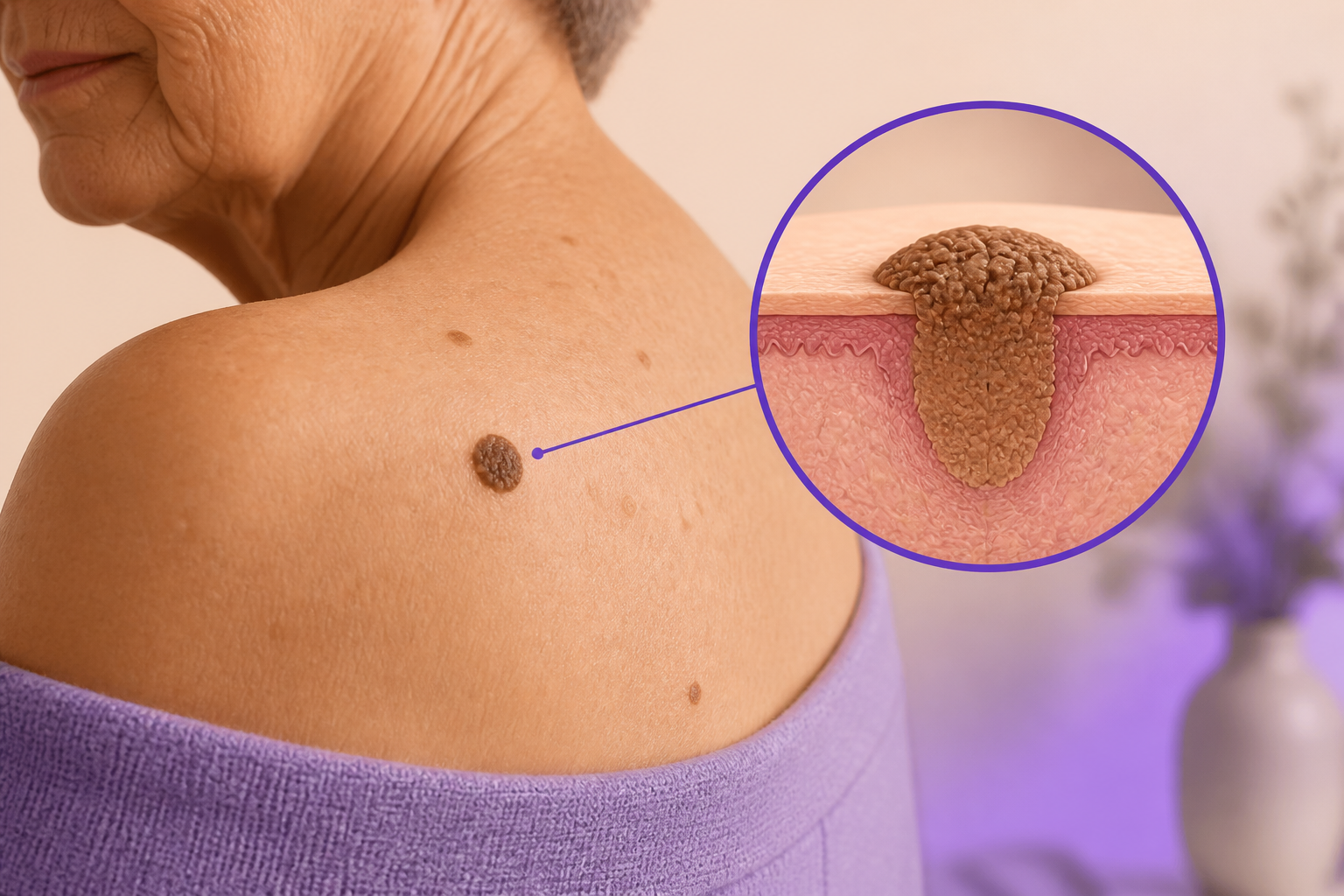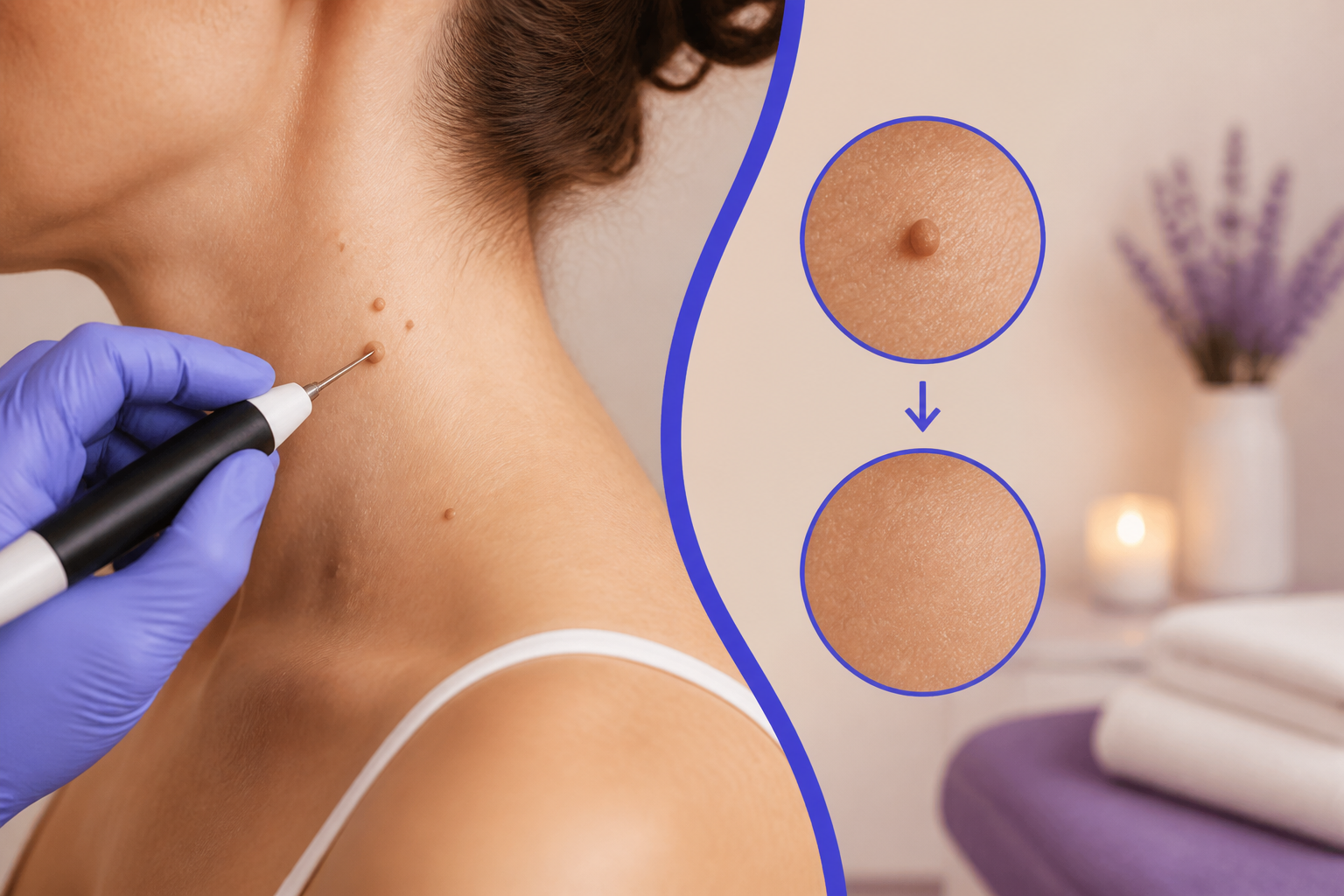

Small bumps of skin near your collar, armpit, or waistband might seem like a minor annoyance. But when they catch on clothing and jewelry dozens of times a day, that annoyance builds fast. Those bumps are often skin tags, and skin tag removal is one of the most requested procedures in dermatology for exactly that reason. Removal is quick, safe, and far simpler than most people expect.
What Are Skin Tags?
Skin tags are small, soft growths that hang from the skin by a thin stalk called a peduncle. Doctors call them acrochordons. They form from loose collagen fibers and tiny blood vessels covered by skin, and they are almost always benign.
They are not warts, moles, or cysts, and they are not contagious. However, any growth that bleeds spontaneously, changes color, or has an irregular border deserves a clinical evaluation before you assume it is harmless. Not everything that looks like a skin tag is one, and that distinction matters.
Skin tags form in areas where skin rubs against skin or against fabric, day after day. Common locations include:
- The neck, especially under collars and necklaces
- The armpits
- Under the breasts
- The groin and inner thighs
- The eyelids
They affect people of all ages, but they become more common after age 40. Pregnancy, diabetes, and carrying extra weight all raise the likelihood of developing them, according to the American Academy of Dermatology. Some estimates suggest that more than half of adults develop at least one skin tag during their lifetime.
Because skin tags are benign, removal is a personal choice. Many people leave them alone. Others prefer to have them removed because they snag on clothing, irritate surrounding skin, or bother them when they look in the mirror. Both choices are valid, and neither requires a justification.
Skin Tag Removal: What a Clinician Can Do
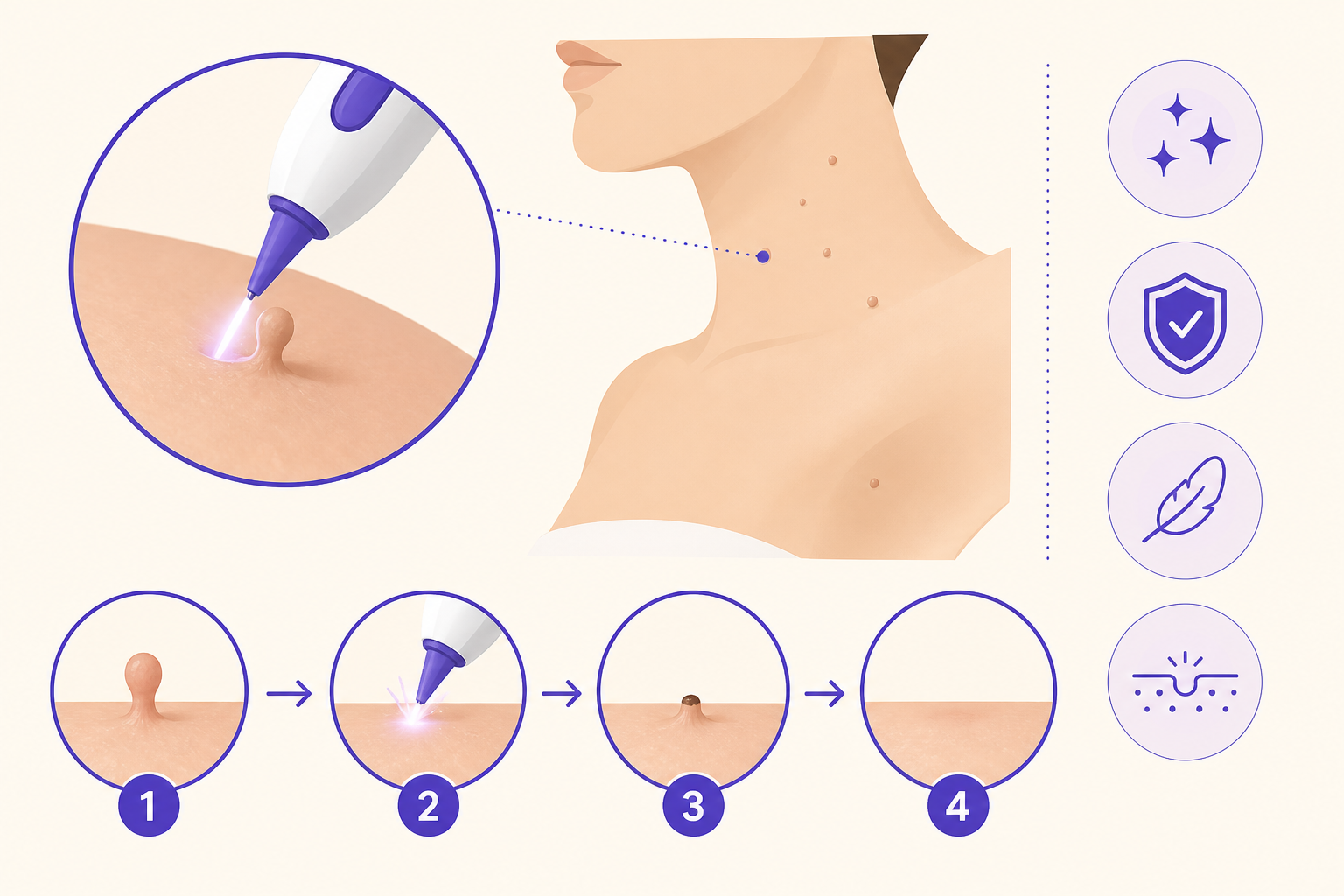
A dermatology provider has several safe, proven methods for skin tag removal. The right approach depends on the size and location of the tag, your skin type, and how many you want addressed in a single visit.
Cryotherapy
The provider applies liquid nitrogen to freeze the tag. The tissue dies and falls off over the following days. Cryotherapy works well for small to medium tags and typically causes minimal scarring. It is also one of the faster techniques for treating multiple tags in one session.
Cauterization
An electrical device burns through the base of the tag and seals the wound at the same time. This approach controls bleeding well, which makes it a strong choice for tags located in skin folds where other methods can be harder to apply cleanly.
Surgical excision
After numbing the area with a local anesthetic, the provider cuts the tag off with medical scissors or a scalpel. Excision works for tags of any size. Larger tags may get a small stitch to close the site, and because the area is fully numb beforehand, most people feel nothing during the procedure itself.
Ligation
A sterile suture is tied tightly around the stalk, cutting off the blood supply to the tag. The tag dies and detaches within several days. Providers sometimes combine ligation with excision for larger or more stubborn tags.
All four methods are brief office procedures. The local anesthetic injection may sting briefly, but the removal itself is typically painless. Most people leave the office within minutes and return to their normal schedule the same day.
What Skin Tag Removal Costs
Cost depends on the clinic, the method, and how many tags you remove at one visit. Most health insurance plans treat skin tag removal as cosmetic, which means they do not cover it. The exception is when a tag causes a documented medical problem, such as chronic bleeding, repeated infections, or interference with vision on an eyelid.
Out-of-pocket fees at a dermatology office generally range from around $100 to a few hundred dollars, depending on the number of tags and the technique used. Removing several tags in one visit often reduces the cost per tag. Because walk-in clinics typically carry lower overhead than traditional specialty offices, the visit cost may be more affordable than you assume.
Call ahead to ask about pricing so there are no surprises. CityHealth can be reached at (510) 984-2489.

What Not to Try at Home
Online searches for skin tag removal turn up many home remedies: apple cider vinegar, tea tree oil, dental floss, rubber bands, and over-the-counter freeze kits. These approaches carry real risks, and most do not deliver reliable results.
Cutting a tag yourself with nail scissors or a razor is the riskiest option. Without sterile instruments and proper technique, you can introduce bacteria and cause an infection. You can also cut too deep, nick a small blood vessel, and create a bleeding wound that is far more difficult to manage at home than the original tag was. The resulting scar is often more visible than the tag itself.
Tying a thread or rubber band around the stalk at home seems harmless, but it is not. You cannot see how close the stalk is to a nerve or blood vessel. In addition, the days it takes for the tissue to die create an open window for infection, especially in areas like the groin or armpit.
Over-the-counter freeze products are formulated for warts, not for skin tags. The temperature ranges they achieve are often insufficient, and improper application can blister the healthy skin surrounding the tag.
Beyond the physical risks, home removal skips the most important step: confirming the growth is a skin tag. A clinician can tell the difference between a skin tag, a seborrheic keratosis, a molluscum lesion, or, in rare cases, a growth that needs a biopsy. If you are uncertain about what a growth is, have a clinician evaluate it before you do anything else.
When to See a Clinician
You do not need a referral or a weeks-long wait to address a skin tag. A dermatology provider at a walk-in clinic can evaluate your skin and remove tags in the same visit, on your schedule.
Consider coming in sooner if:
- A tag bleeds without being snagged or rubbed
- A growth changes color, size, or shape
- A tag near the eyelid irritates your vision or causes discomfort
- You notice a growth that looks different from other skin tags you have had before
- You want multiple tags removed at the same time
These situations call for a clinical evaluation before any removal attempt. A provider can give you an accurate diagnosis and a clear plan, rather than leaving you to guess. Speaking with a clinician about your specific skin concerns is always the safest and most efficient starting point.

Skin Tag Removal: Frequently Asked Questions
Does skin tag removal hurt?
Most procedures begin with a local anesthetic injection, which stings briefly, and then the treated area goes numb. The removal itself is usually painless. You may notice mild tenderness at the site for a day or two afterward, but most people resume their normal routine the same day and do not need prescription pain relief.
Will the skin tag grow back after removal?
A tag that is fully removed at the base will not regrow in that exact spot. However, you can develop new skin tags in other areas over time, especially if you are prone to them. Reducing skin friction and maintaining a healthy weight may help slow their recurrence, though no method prevents them entirely. Your clinician can advise you based on your personal history.
Is skin tag removal safe during pregnancy?
Hormonal shifts during pregnancy raise the likelihood of skin tags forming, since elevated hormone levels can stimulate skin cell growth. Most providers recommend deferring removal until after delivery unless a tag is causing significant pain or irritation. A clinician can review your situation and help you weigh the timing options given your specific health circumstances and stage of pregnancy.
How do I know if a growth is a skin tag and not something else?
Skin tags are typically soft, flesh-colored, and attached by a narrow stalk. They move freely when touched and have a smooth surface. Growths that are hard, darkly pigmented, irregular in outline, or that bleed without being touched should be evaluated by a clinician before you attempt any removal on your own.
Get Skin Tags Looked At by a Dermatology Provider at CityHealth Montclair, Tuesdays
If you have skin tags you want removed, walk-in visits are welcome and no referral is required. CityHealth’s dermatology services are available at the Montclair location on Tuesdays, at 1970 Mountain Blvd, Oakland CA 94611. Come in, get a professional evaluation, and leave with a clear plan, without waiting weeks for a specialist appointment.
Call us at (510) 984-2489 with questions about dermatology availability or pricing before your visit.