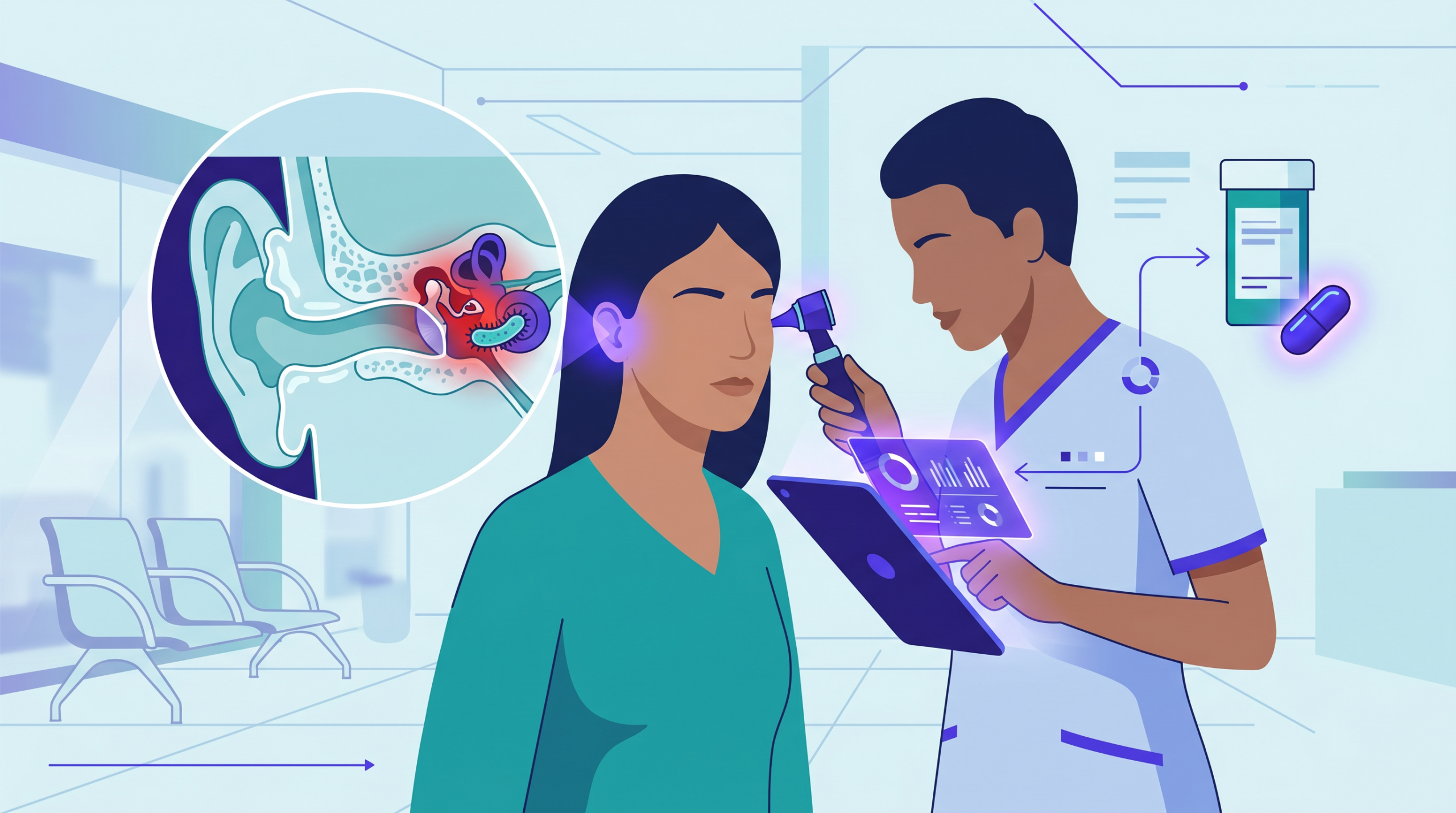

When Should I Go to Urgent Care for Ear Pain? Red Flags, Exam, and Same-Day Relief
Ear pain has a way of arriving at the worst time. So if you are wondering when should I go to urgent care for ear pain, you are not alone. It builds through the afternoon and peaks after dinner. By midnight, you are asking whether to tough it out or drive somewhere. Knowing the right moment to act helps you avoid an unnecessary ER visit — and days of untreated pain.

Common Causes of Ear Pain Worth Treating
Not all ear pain means infection. However, several conditions respond well to prompt treatment.
- Outer ear infection (swimmer’s ear): Pain that worsens when you pull the ear. Often caused by trapped water or aggressive cleaning.
- Middle ear infection (otitis media): Pressure and aching behind the eardrum. This is common after a cold or sinus infection.
- Eustachian tube dysfunction: Muffled hearing and fullness without obvious infection. It often follows air travel or altitude change.
- Earwax buildup: A dull ache and reduced hearing that comes on gradually.
- Referred pain: Pain from a tooth, jaw, or throat that the ear picks up instead.
Because several of these look alike without an otoscope, a same-day exam removes the guesswork.
When Should I Go to Urgent Care for Ear Pain? Signs That It Is Time
So when is waiting the wrong call? Here are the key situations:
- Pain rated 7 out of 10 or higher
- Symptoms lasting more than 48 to 72 hours
- Fever over 100.4°F in adults or 102°F in children
- Fluid draining from the ear canal
- Muffled hearing or a noticeable drop in hearing on one side
- Recent head injury followed by ear pain
- Ear pain in a child under 6 months old
- Redness or swelling around or behind the ear
Also consider same-day care if pain keeps returning once ibuprofen wears off. That pattern usually means an infection that needs more than over-the-counter relief.
Urgent Care for Ear Pain or the ER: How to Decide
Most ear pain is not an emergency. However, some symptom combinations are. Go directly to the ER if you notice any of the following alongside ear pain:
- Sudden or complete hearing loss in one or both ears
- Severe vertigo with vomiting or inability to stand
- Facial weakness or drooping on one side
- Stiff neck with headache and fever
- Swelling behind the ear that is red, warm, and pushing the ear forward (possible mastoiditis)
- Fever above 104°F
- Confusion or altered mental state
These symptoms can point to a serious infection spreading beyond the ear. They may also suggest a neurological event. In either case, urgent care is not equipped for that level of care. The ER is the right call.
For most ear pain, though, those symptoms are absent. In those cases, urgent care handles the exam quickly and at a lower cost than an ER visit.
According to the CDC, acute otitis media is one of the most common diagnoses leading to antibiotic prescriptions in the United States. So proper evaluation matters — it determines whether antibiotics are actually needed.
What Happens During an Urgent Care Ear Exam
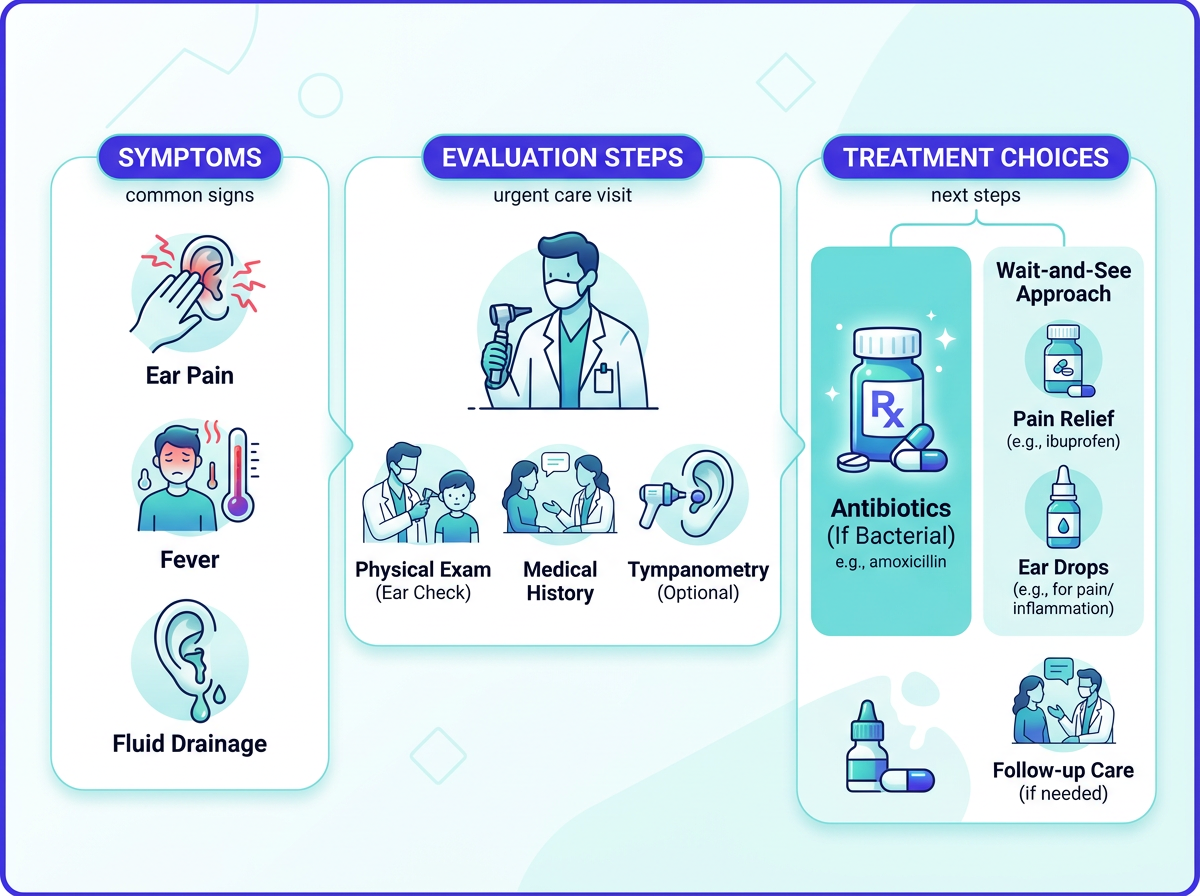
At CityHealth in San Leandro, a provider examines your ear with an otoscope. The visit typically covers:
- Visual inspection of the outer ear and canal
- Otoscope exam of the eardrum for redness, bulging, perforation, or fluid
- Review of related symptoms such as congestion, sore throat, or tooth pain
- Temperature check and vital signs
Based on findings, the provider may recommend watchful waiting, prescribe antibiotics, or suggest a follow-up. Many middle ear infections in healthy adults clear up on their own. So not every visit ends with a prescription. Still, the exam is valuable — it confirms what is happening and rules out causes that need different treatment.
For confirmed bacterial infections, CityHealth urgent care can prescribe antibiotics for ear infections the same day.
Ear pain that has lasted more than two days? Get examined today in San Leandro.
Book a Same-Day Appointment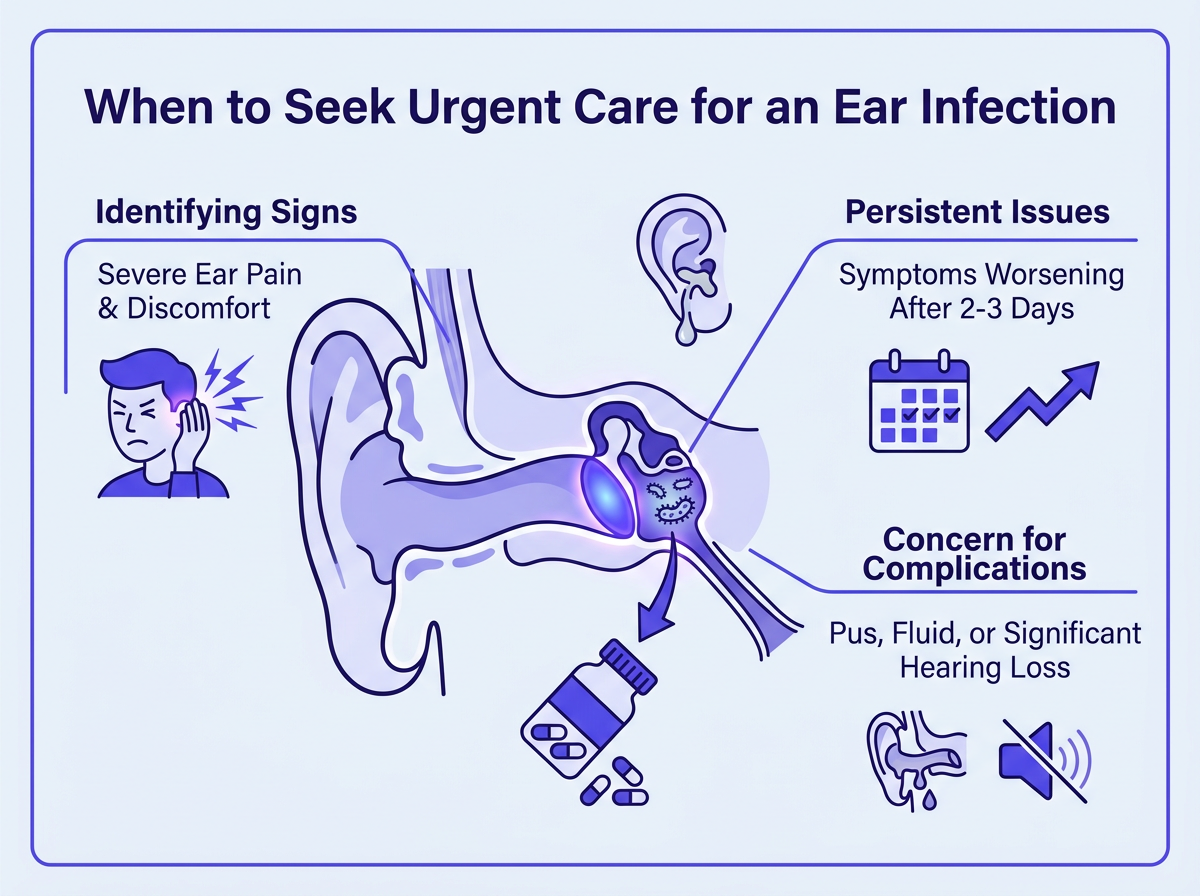
Ear Pain in Children: A Different Situation
Children get middle ear infections more often than adults. That is because their eustachian tubes are shorter and sit at a flatter angle. As a result, bacteria and fluid settle behind the eardrum more easily.
Take a child to urgent care for ear pain when:
- The child is under 2 and has been tugging at one or both ears for more than a day
- Fever is present alongside ear complaints
- The child is very irritable, not sleeping, or refusing to eat
- You see fluid draining from the ear
- The child is 6 months or younger with any ear symptoms
For infants under 6 months, err toward the ER if you cannot reach a provider quickly. Young infants can decline faster. So evaluation should not wait for hours.
What You Can Do Before Your Appointment
First, take ibuprofen or acetaminophen at the right dose for your age and weight. Also, apply a warm cloth over the ear for short periods. Next, sleep with your head elevated rather than flat. Finally, avoid putting anything into the ear canal — including cotton swabs.
Also, skip over-the-counter ear drops unless a provider has confirmed the eardrum is intact. Some drops can cause damage if there is a perforation you do not know about.
Why Waiting Too Long Costs More Than a Visit
Untreated ear infections can spread. For example, the mastoid bone behind the ear can develop an infection called mastoiditis. Though rare, it requires hospitalization and IV antibiotics. More commonly, repeated untreated infections lead to a perforated eardrum or temporary hearing loss.
So same-day urgent care is built for exactly this situation. It is not an emergency, but it is also not something to put off.
Frequently Asked Questions
Can urgent care treat ear pain on the same day?
Yes. CityHealth in San Leandro offers same-day urgent care appointments for ear pain. A provider can examine your ear, find the cause, and prescribe treatment during the same visit. Also, you do not need a referral to be seen.
How do I know if my ear pain is an infection or something else?
Often, you cannot tell from symptoms alone. Outer ear infections cause pain when you touch or pull the ear. Middle ear infections cause pressure and fullness deeper inside, sometimes with muffled hearing. Meanwhile, referred pain from a jaw or tooth problem can mimic both. So an otoscope exam is the only reliable way to confirm what is happening. That is why an in-person visit is worth it when pain is significant or lasting.
Should I go to the ER or urgent care for ear pain?
Urgent care is the right choice for most ear pain — infections, wax buildup, swimmer’s ear, and eustachian tube problems. However, go to the ER if you have sudden hearing loss, facial drooping, stiff neck with fever, severe dizziness with vomiting, or swelling behind the ear pushing the ear forward. Those symptoms suggest a complication that needs emergency resources.
Will urgent care prescribe antibiotics for an ear infection?
A provider will prescribe antibiotics if the exam shows a bacterial infection that needs treatment. That said, not every ear infection requires antibiotics right away. For mild cases in healthy adults, watchful waiting is sometimes the right approach. Either way, the provider will explain the reasoning and give you a clear plan. You can learn more on CityHealth’s page about whether urgent care can prescribe antibiotics for ear infections.
If you are in the East Bay and your ear pain has not improved in two or three days, CityHealth San Leandro is open for same-day urgent care visits. Visit cityhealth.com/urgent-care to learn about what we treat, or book an appointment online now and get seen today.