

ER or Urgent Care for Vomiting: When Same-Day Care Is Enough and When It Is Not
Most vomiting belongs in urgent care, not the ER. Go to urgent care if you can hold down small sips and have no chest pain, bloody vomit, or severe abdominal pain. Go to the ER if vomiting comes with chest pain, confusion, bloody vomit, or you cannot stay awake.
If you are weighing ER or urgent care for vomiting, the answer is often simpler than you think. Most cases belong in urgent care. However, a few red-flag symptoms change that quickly. Knowing the difference protects your health and saves you time.

When Urgent Care Is the Right Call for Vomiting
Urgent care handles vomiting every day. For example, stomach flu, food poisoning, and mild dehydration all fit within same-day urgent care. So, most adults with vomiting can skip the ER entirely.
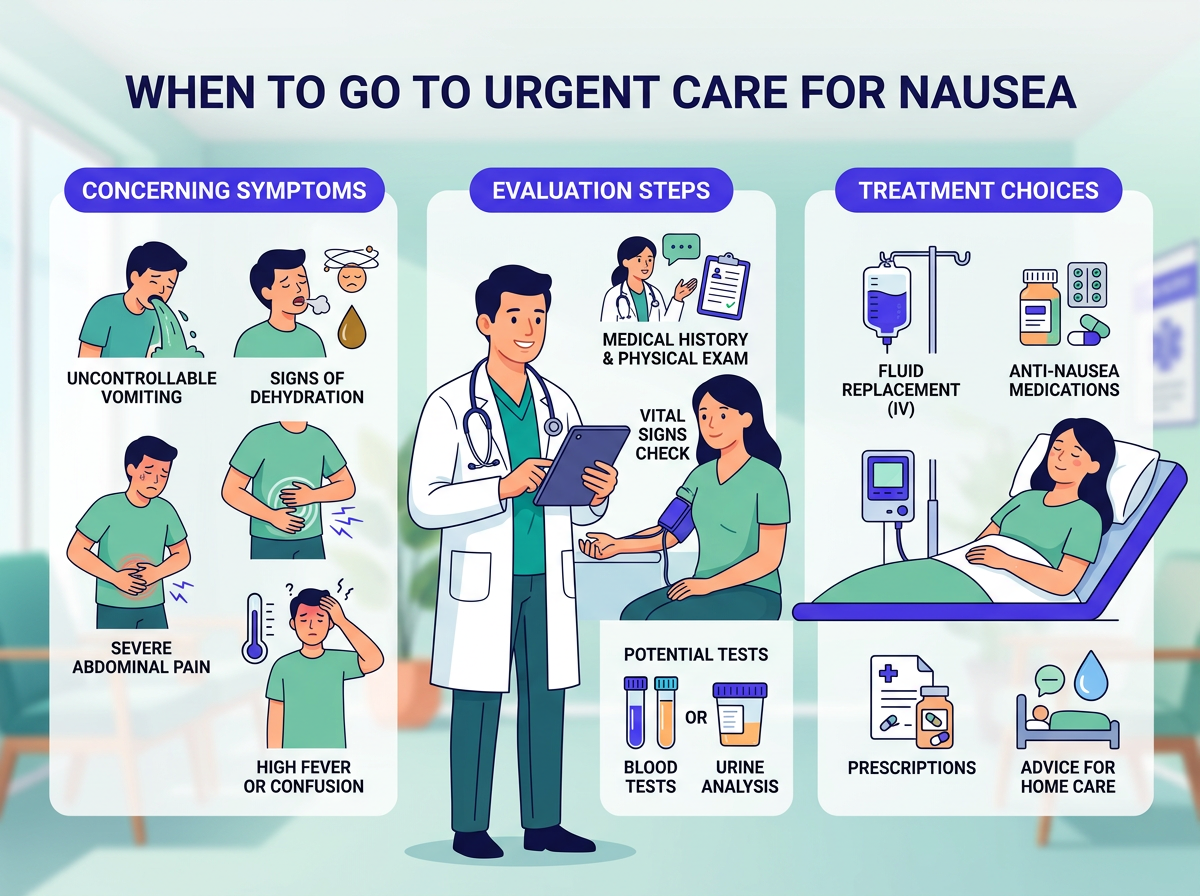
Urgent care is the right choice when:
- Vomiting started in the last 24 to 48 hours
- You have mild to moderate dehydration, such as dry mouth, dark urine, or fatigue
- Nausea, stomach cramps, or diarrhea come with the vomiting
- You want IV fluids or anti-nausea medicine without a long ER wait
- You have a low-grade fever but no alarming symptoms
- You suspect a stomach bug or food poisoning
Also, urgent care is a smart first stop if you want a clinical opinion. Providers can check your hydration and run basic labs. Then, they can tell you whether you need more care.
For stomach bugs, see our guide on urgent care for stomach flu. For dehydration concerns, our article on urgent care for dehydration covers what to expect from a same-day visit.
ER or Urgent Care for Vomiting: Warning Signs That Point to the ER
Some symptoms that come with vomiting are true emergencies. So, do not drive to urgent care if any of these apply. Instead, go to the nearest ER or call 911.
- Vomit contains blood or looks like coffee grounds
- Severe, sudden abdominal pain that does not ease
- Chest pain or pressure
- Confusion, extreme drowsiness, or trouble staying awake
- No urination for 8 or more hours, sunken eyes, or a racing heartbeat
- Stiff neck with fever and sensitivity to light
- A head injury happened before vomiting started
- You cannot keep any liquid down for more than 8 hours
These symptoms can signal bleeding in the digestive tract, appendicitis, a heart attack, meningitis, or a brain emergency. None of those belong in urgent care. For a trusted reference, Mayo Clinic’s guide to nausea and vomiting outlines when to seek immediate care.
What Causes Vomiting That Urgent Care Can Evaluate?
Most vomiting in healthy adults comes from a short list of causes. So, urgent care providers can assess and treat most cases quickly on-site.
Common causes urgent care handles:
- Viral gastroenteritis (stomach flu)
- Bacterial food poisoning
- Dehydration
- Migraine with nausea
- Medication side effects
- Vertigo-related nausea
- Mild allergic reactions without throat swelling or breathing trouble
Still, some causes look alike at first. They only separate with lab work or imaging. Fortunately, an urgent care provider can order those tests. Also, they can decide right away whether you need a higher level of care.
For a closer look at nausea alongside vomiting, see our article on nausea and vomiting at urgent care.
What CityHealth San Leandro Can Do for Vomiting
CityHealth urgent care in San Leandro accepts walk-in patients and same-day online appointments. Also, you do not need a referral to be seen.
At a same-day visit, the care team can:
- Take a full history and check your vitals
- Assess your hydration with a physical exam and basic labs
- Give IV fluids if you are significantly dehydrated
- Prescribe anti-nausea medication
- Order abdominal imaging if your symptoms suggest something beyond stomach flu
- Check for UTI, kidney stones, or other contributing factors
However, urgent care cannot perform emergency surgery, manage a cardiac event, or treat a neurological emergency. If your symptoms need a higher level of care, your provider will send you to the right facility.
Not sure where to go?
CityHealth San Leandro can evaluate your vomiting and nausea the same day. Walk in or book ahead.
Book a Same-Day AppointmentVomiting in Children, Older Adults, and Pregnant Women
For some groups, the bar to seek care is lower. Vomiting dehydrates certain people faster. Also, it carries different risks based on age and health status.
Children
Go to the ER for any infant under 3 months who is vomiting. Also go if a child has had no urination for 8 hours, looks limp, or cannot be woken. For older children with mild symptoms and no red flags, urgent care is the right call.
Older adults
Dehydration moves faster in older adults. In addition, medications can mask or change typical symptoms. So, see a provider the same day if vomiting is new, unexplained, or comes with dizziness or confusion.
Pregnant women
Severe pregnancy vomiting, called hyperemesis gravidarum, can require IV fluids and monitoring. Vomiting that starts in the third trimester needs prompt evaluation. Because pregnancy symptoms are complex, contact your OB or go to a facility with obstetric care.

ER or Urgent Care for Vomiting: How to Decide Fast
Use this quick check. If any ER item fits, skip urgent care entirely.
Go to the ER if:
- There is blood in your vomit
- You have severe or worsening abdominal pain
- You have chest pain or trouble breathing
- You feel confused or cannot stay awake
- You have had no urination in 8 or more hours
- A head injury came before the vomiting
- You have a stiff neck and a fever
Urgent care is right if:
- You suspect a stomach bug or food poisoning
- You want IV fluids or anti-nausea medication
- Your symptoms are uncomfortable but not alarming
- You have mild to moderate dehydration you cannot manage at home
For most adults, urgent care is the faster, lower-cost option. However, for any situation with the red flags listed above, the ER is the right destination.
What to Expect at an Urgent Care Visit for Vomiting
When you arrive, your provider will ask when vomiting started. They will also ask how often it has happened and whether you can keep fluids down. Because dehydration is the main risk, they will check your hydration status early in the visit.
Depending on what they find, the visit may include:
- Blood or urine testing
- IV fluids and electrolyte replacement
- Anti-nausea medicine given by mouth or through an IV
- Imaging if a structural cause is suspected
- Clear discharge instructions for home recovery
Also, your provider will give you specific signs to watch for after you leave. If your symptoms change or worsen, they will tell you exactly when to return or go to the ER.
If you need same-day care for vomiting, CityHealth urgent care in San Leandro is ready to help. Visit our urgent care page to see what we treat, or book an appointment online right now.
Frequently Asked Questions
Should I go to urgent care for vomiting?
Yes, in most cases. If vomiting started recently and you can hold down small sips, urgent care is the right call. Also, if you have none of the red-flag symptoms, such as chest pain, bloody vomit, severe abdominal pain, or confusion, urgent care can handle your care fully. Providers can check your hydration, give IV fluids, and prescribe anti-nausea medicine the same day.
Can urgent care give IV fluids for vomiting?
Yes. Most urgent care facilities, including CityHealth in San Leandro, can give IV fluids for dehydration from vomiting. This is one of the most common reasons patients come in after a stomach bug or food poisoning. In fact, IV fluids rehydrate faster than sipping alone, especially when nausea makes drinking hard.
How long is too long to be vomiting before seeing a doctor?
See a provider if vomiting has lasted more than 24 hours in adults or more than 12 hours in young children. Also seek care sooner if you cannot keep any liquid down, feel dizzy or lightheaded, or notice dark urine or dry mouth. For infants under 3 months, do not wait. Go to the ER right away.
What is the difference between urgent care and the ER for vomiting?
Urgent care is built for stable patients who need same-day care for conditions that are not life-threatening. In contrast, the ER handles emergencies that need surgery, cardiac monitoring, or intensive care. For vomiting without red-flag symptoms, urgent care is faster and handles the condition fully. For vomiting with warning signs such as blood, severe pain, or confusion, the ER is the right place to go.