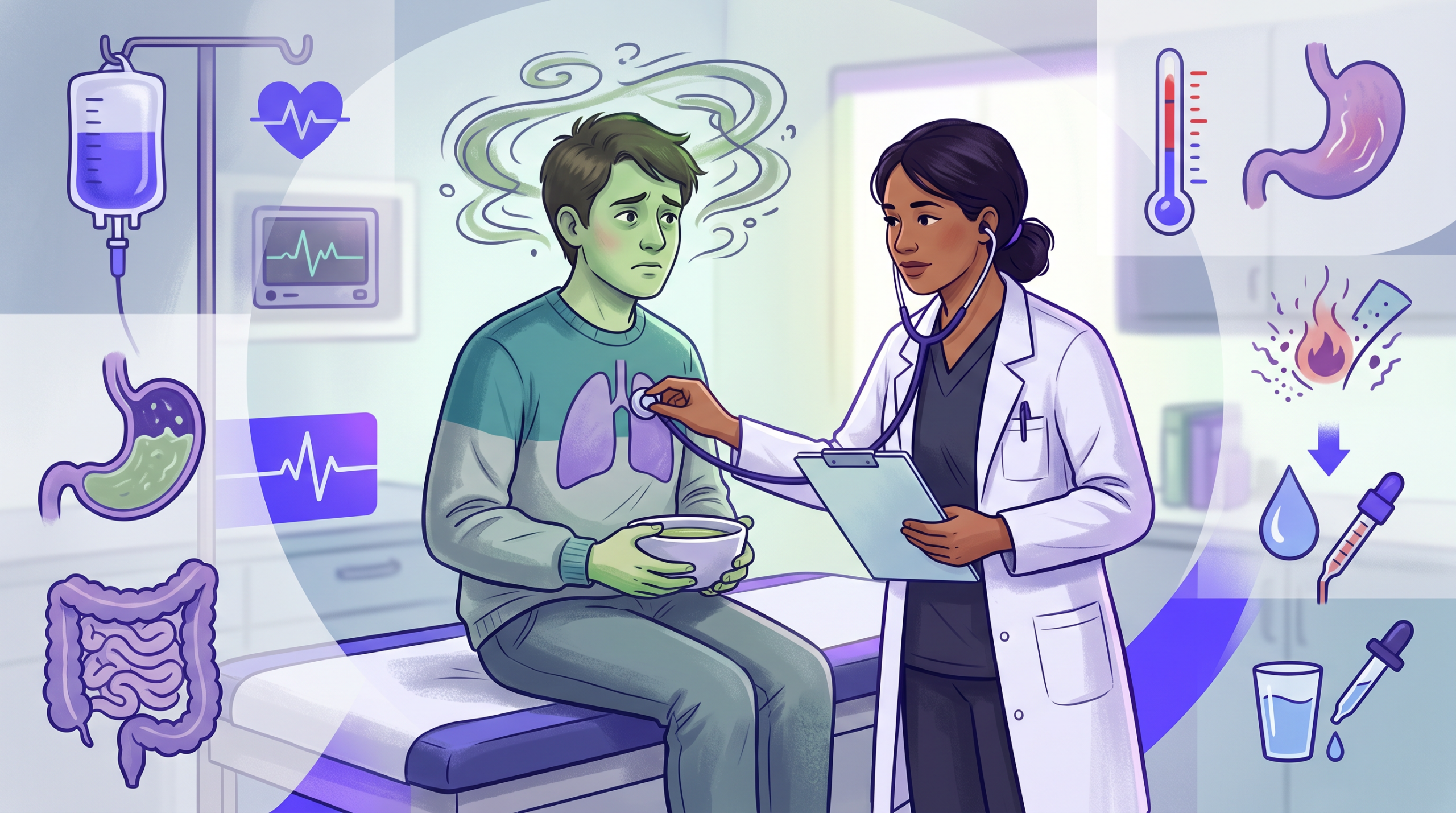

Urgent Care for Vomiting and Diarrhea: When Same-Day Treatment Helps and When to Go to the ER
Vomiting and diarrhea hit fast. They also feel awful from the first hour. Most people try to wait them out. For mild cases, that works fine. But when symptoms drag past a day or start getting worse, waiting is not always safe. Knowing when to seek urgent care for vomiting and diarrhea can keep you out of a long ER wait and ahead of serious dehydration.
What Causes Vomiting and Diarrhea Together
Both symptoms often share the same trigger. In fact, your gut is trying to clear something out. The cause shapes how fast you recover and whether you need treatment.
Common causes include:
- Viral gastroenteritis (stomach flu): This is the most frequent cause. Norovirus alone causes millions of US cases each year. Symptoms usually clear within one to three days on their own.
- Food poisoning: Bacteria or toxins from bad food trigger this. Symptoms often start within a few hours of eating. Some cases clear alone, but others need antibiotics.
- Bacterial infections: Salmonella, campylobacter, and some E. coli strains cause severe GI illness with fever and cramping.
- Parasitic infections: Giardia and cryptosporidium often come from untreated water. They can last days or weeks. Plus, they do not clear without targeted treatment.
- Medication side effects: Antibiotics, NSAIDs, and some blood pressure drugs can irritate the stomach lining. As a result, they sometimes cause both vomiting and diarrhea.
Viral infections are the most common cause. So many cases do resolve on their own. However, bacterial and parasitic infections will not clear without the right treatment. Also, any cause can lead to dehydration if fluids are not replaced quickly enough.
According to the CDC, norovirus causes 19 to 21 million cases of acute gastroenteritis in the US each year. Still, symptoms alone cannot tell a viral infection from a bacterial one. That is exactly where a same-day provider visit makes a real difference.
When to Go to Urgent Care for Vomiting and Diarrhea
You do not need to wait for a crisis before getting help. In fact, same-day urgent care is the right step when any of these fit your situation.
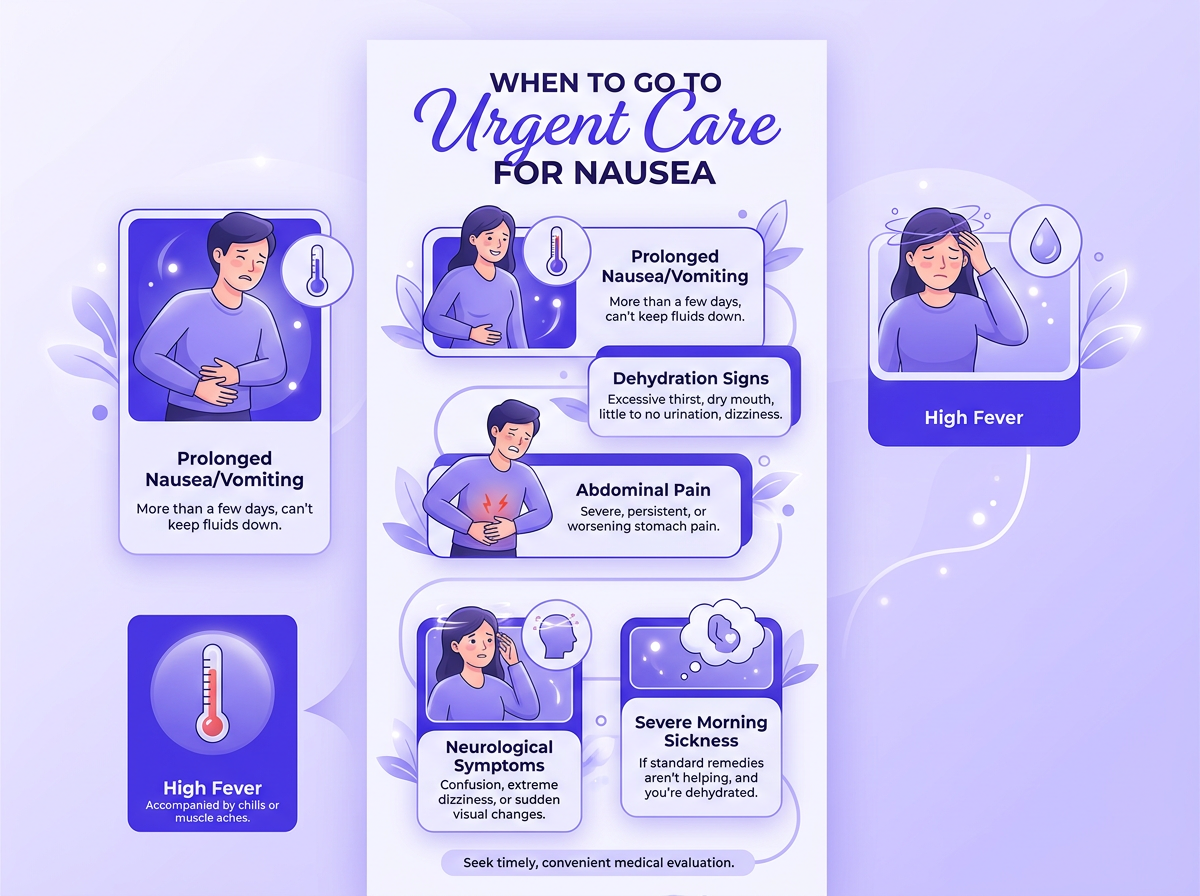
Symptoms have lasted longer than expected:
- Adults: vomiting or diarrhea lasting more than 24 hours
- Children: symptoms lasting more than 12 hours, or sooner for very young children
- Any age: symptoms that improved briefly but then came back or got worse
You suspect the source:
- You ate at a restaurant and others in your group got sick too
- You traveled abroad recently and developed GI symptoms after returning
- You handled raw poultry, eggs, or shellfish before symptoms started
- You drank untreated water from a lake, stream, or unknown source
Early dehydration signs are present:
- Dry or sticky mouth
- Dark yellow urine or urinating less than usual
- Dizziness when you stand up
- Fatigue or lightheadedness beyond a normal stomach bug
You have a condition that raises your risk: Diabetes, bowel disease, kidney disease, and weakened immune systems all make GI illness more dangerous. So in those cases, early care beats waiting.
For same-day care in the East Bay, CityHealth in San Leandro is ready to help with no appointment needed. For more reading, see our guides on nausea and vomiting: when to go to urgent care and urgent care for stomach flu.
Red Flags: When the ER Is the Right Choice
Urgent care handles moderate illness well. But some signs point to something serious. Those signs call for an emergency room, not a walk-in clinic.
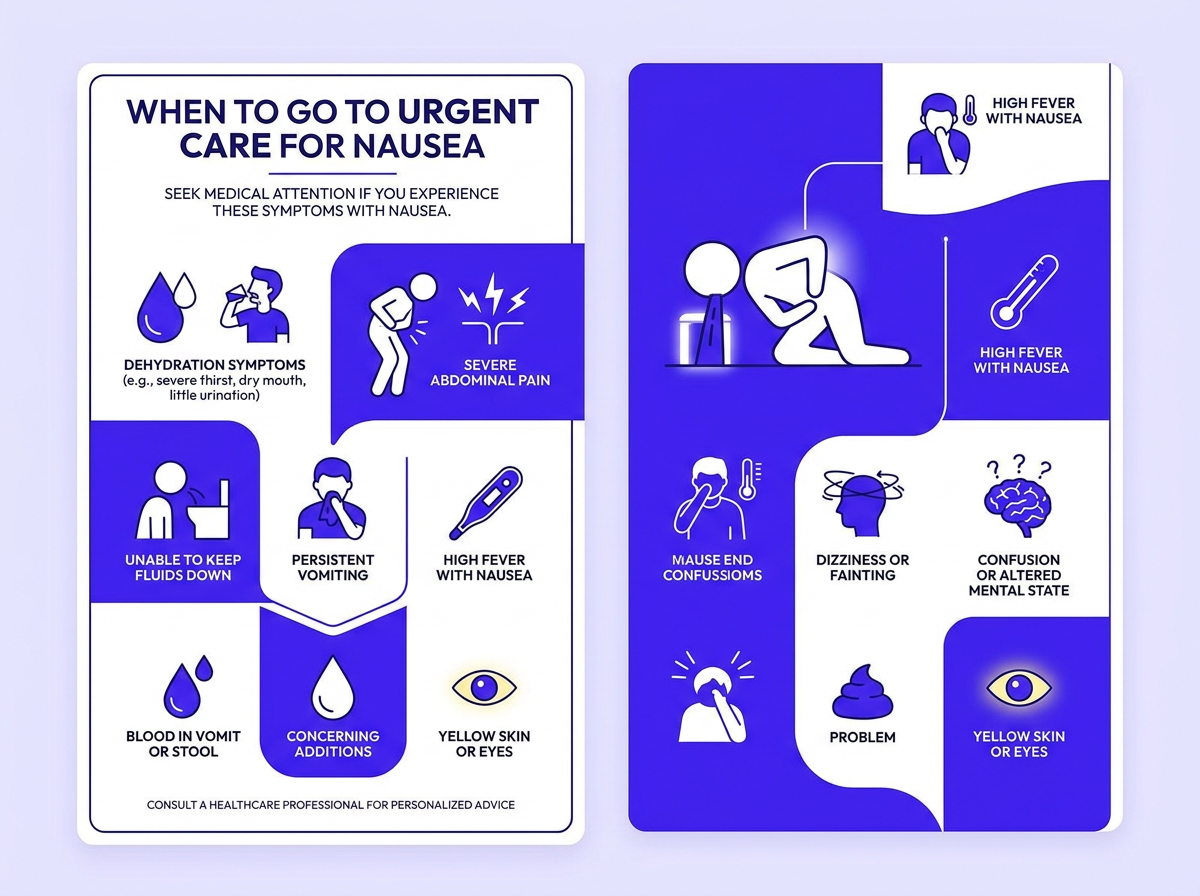
Go to the ER right away if you have any of these:
- Blood in your vomit or stool
- Vomit that looks dark or like coffee grounds
- Severe abdominal pain, especially on one side or lower right
- Fever above 103°F (39.4°C)
- No urine output for 8 or more hours
- Rapid heart rate, sunken eyes, or confusion
- No liquids kept down for 12 or more hours
Also go to the ER for an infant under 3 months, a pregnant person, or anyone over 70 with serious GI illness.
Blood in vomit or stool can signal GI bleeding. Severe right-sided pain may point to appendicitis. These are not cases for a walk-in visit. Similarly, severe dehydration with confusion or a racing heart needs IV fluids in an ER, not a clinic.

Not sure if your symptoms need same-day care?
CityHealth San Leandro offers walk-in urgent care for GI illness. No appointment required.
Book an AppointmentWhat CityHealth San Leandro Evaluates Same Day
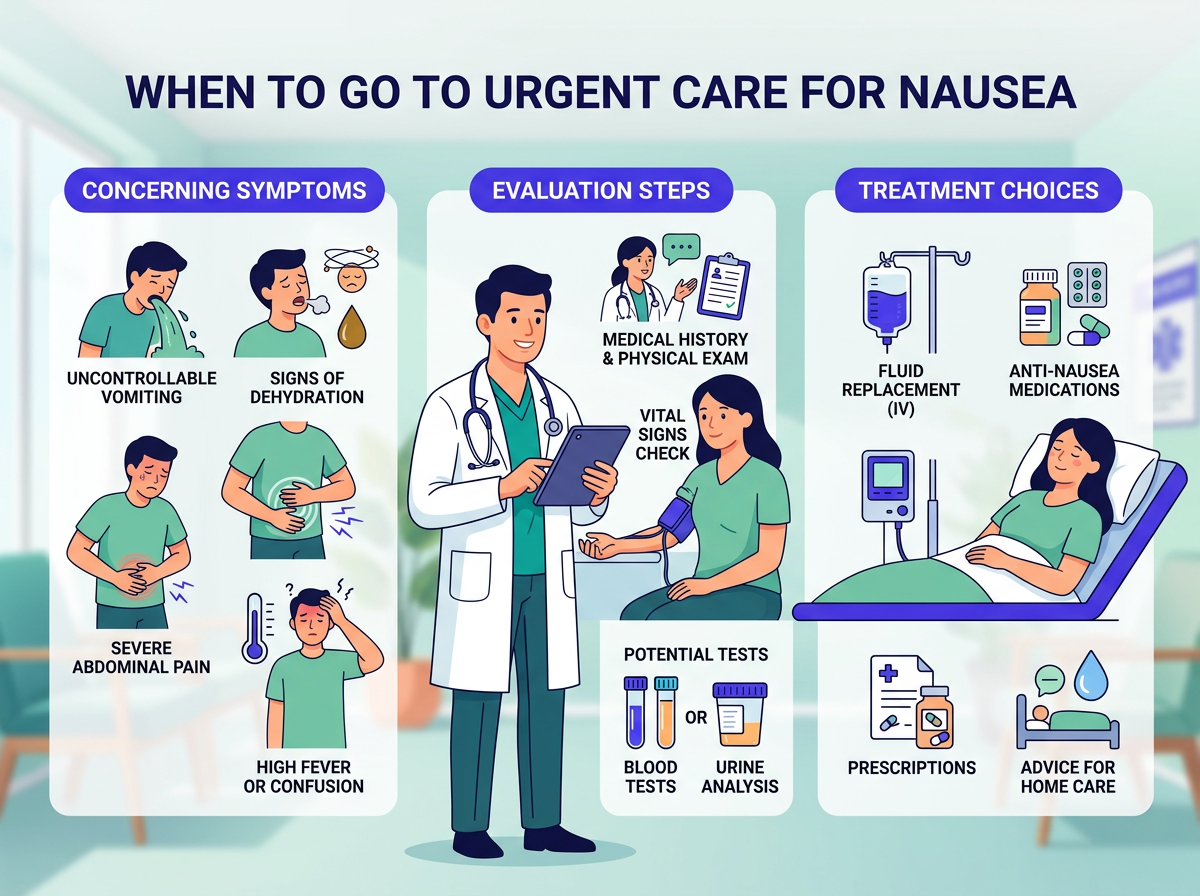
At CityHealth in San Leandro, a same-day GI visit focuses on three key questions. What is causing your symptoms? How dehydrated are you? What treatment do you need?
A typical visit includes:
- Symptom and history review: Timeline of symptoms, recent food and travel history, and sick contacts in your home
- Physical exam: Providers check hydration status, abdominal tenderness, and vital signs
- Stool testing: When a bacterial or parasitic infection is likely, stool culture or antigen testing can find the cause and guide treatment
- Rehydration: Oral rehydration for mild to moderate dehydration; IV fluids when that is not enough
- Medications: Antiemetics to ease vomiting, antidiarrheal agents when right, and antibiotics for confirmed bacterial infections
Of course, urgent care does not replace the ER when red flag symptoms are present. However, for most adults and older children, same-day care is faster and more focused than an ER visit for mild to moderate illness.
If dehydration is your main concern, our guide on urgent care for dehydration explains what treatment looks like and when IV fluids become necessary. For cases where diarrhea is the main complaint, see our page on urgent care for diarrhea.

Home Care During and After a Visit
For mild symptoms without dehydration signs, home care can keep things from getting worse. These steps also help during recovery after an urgent care visit.
Fluids first:
- Sip water, broth, or an oral rehydration drink such as Pedialyte
- Take small sips often rather than large amounts at once
- Avoid juice, soda, and alcohol, which can worsen diarrhea
Food when ready:
- Wait until vomiting stops before eating solid food
- Then start with bland foods: toast, crackers, plain rice, bananas, or boiled chicken
- Skip dairy, fried food, and high-fiber foods until your gut recovers
Rest and hygiene:
- Rest helps your body fight the infection faster
- Wash hands often, especially before handling food or touching others
- Also disinfect shared surfaces like toilet handles and bathroom faucets
Home care helps with mild cases. But it does not treat bacterial infections. And it cannot reverse moderate or severe dehydration. So if you are not improving within 24 hours, or if symptoms get worse, same-day urgent care is a faster path to answers than waiting another day.
If your symptoms have lasted more than a day, you show early signs of dehydration, or you are unsure what is causing your illness, same-day care can help. Learn more about what CityHealth offers at cityhealth.com/urgent-care, or book an appointment at CityHealth San Leandro today.
Frequently Asked Questions
When should I go to urgent care for vomiting and diarrhea?
Go when symptoms have lasted more than 24 hours in adults, or more than 12 hours in children. Also go when you show early signs of dehydration such as dry mouth, dark urine, or dizziness. Additionally, seek same-day care if you have a chronic condition like diabetes or a weakened immune system, since GI illness is riskier in those cases.
Can urgent care treat dehydration from vomiting and diarrhea?
Yes. Urgent care can treat mild to moderate dehydration with oral fluids. In some cases, IV fluids are also available on site. However, severe dehydration with confusion, no urination for 8 or more hours, or a rapid heart rate needs the emergency room instead.
How long is too long to have vomiting and diarrhea before seeing a doctor?
For adults, more than 24 hours of vomiting or diarrhea warrants a visit. For children, act sooner, especially for kids under 5 or when dehydration signs appear. For infants under 3 months, seek care the same day symptoms begin.
What is the difference between stomach flu and food poisoning?
Stomach flu comes from a virus such as norovirus. It usually clears on its own within one to three days. Food poisoning, however, comes from bacteria or toxins in contaminated food. Symptoms often start within hours of eating. Some food poisoning cases need antibiotics, while others resolve on their own. Both can cause vomiting and diarrhea, and both can lead to dehydration. So a provider visit helps tell them apart and guides the right treatment.