An asthma flare-up can range from mildly uncomfortable to genuinely frightening. Understanding when to seek urgent care for asthma — and when to call 911 — can protect your health. CityHealth San Leandro offers same-day urgent care for asthma, including nebulizer treatments and breathing evaluations.
Understanding Asthma: What’s Actually Happening
Asthma is a chronic condition where the airways become inflamed and narrowed in response to triggers. During an asthma attack (also called an exacerbation or flare), three things happen simultaneously:
- Bronchospasm — the muscles around the airways contract, narrowing the airway
- Inflammation — the airway lining swells, further reducing the opening
- Mucus production — extra mucus clogs the already-narrowed airways
The result is the classic asthma symptom: wheezing, chest tightness, shortness of breath, and coughing — especially at night or early morning, or after exercise.
Common Asthma Triggers
Knowing your triggers is the most effective way to prevent attacks. The most common include:
- Respiratory infections (colds, flu, COVID-19) — the #1 trigger for most people
- Allergens: pollen, pet dander, dust mites, mold
- Air pollution, smoke (tobacco, wildfire), and strong odors
- Exercise (exercise-induced bronchoconstriction)
- Cold air or weather changes
- Gastroesophageal reflux (GERD)
- Stress and strong emotions
- Aspirin and NSAIDs in some patients
- Occupational exposures (chemicals, dust, fumes)
When to Go to Urgent Care for Asthma
Urgent care is appropriate for mild to moderate asthma flares — situations where your breathing is significantly compromised but not immediately life-threatening. CityHealth urgent care can evaluate you, administer nebulizer treatments, and prescribe the medications you need to recover.
Come to urgent care if:
- Your rescue inhaler isn’t providing relief — or relief lasts less than 4 hours
- You’ve used your rescue inhaler more than twice in the past 24 hours
- Wheezing, coughing, or chest tightness is getting worse despite medication
- Asthma is disrupting sleep — nighttime symptoms more than twice per week suggests poor control
- You need a refill on your controller inhaler (ICS or ICS/LABA) or rescue inhaler
- You suspect a respiratory infection is triggering your asthma — we can test for flu and COVID and treat both
- Symptoms came on suddenly but you’re still able to speak in full sentences and your breathing is not severe
When to Call 911 / Go to the ER
Some asthma emergencies go beyond urgent care. Call 911 if:
- You can’t speak in full sentences — too breathless to complete a sentence
- You’re using accessory muscles to breathe — neck muscles, between ribs visibly pulling in
- Oxygen saturation below 92% on a pulse oximeter
- Lips or fingernails turning bluish (cyanosis)
- No improvement after 2 back-to-back rescue inhaler treatments — 8–12 puffs or 2 nebulizer treatments
- Altered mental status — confusion, drowsiness, unable to follow instructions
- Rapid deterioration — getting markedly worse within minutes
Never drive yourself to the ER during a severe asthma attack. Call 911.
What Urgent Care Does for an Asthma Flare
When you come to CityHealth for asthma, you’ll receive:
- Pulse oximetry — immediate check of your oxygen saturation
- Lung auscultation — listening for wheeze, air entry, and signs of severity
- Peak flow measurement if available — objective measure of airway obstruction
- Nebulizer treatment — albuterol (and ipratropium if needed) delivered through a mist for maximum airway penetration; often more effective than an MDI during a flare
- Systemic corticosteroids — oral prednisone or methylprednisolone to reduce airway inflammation; a standard part of treating moderate flares
- Re-assessment after treatment — we check your response before deciding next steps
- Prescriptions for home — rescue inhaler refill, prednisone taper, and evaluation of whether you need a controller medication adjustment
- Referral to pulmonologist or allergist if your asthma isn’t well-controlled
Asthma Action Plan: The Traffic Light System
If you have asthma, every patient should have an individualized asthma action plan. Most use a traffic light framework:
- 🟢 Green Zone (doing well) — no symptoms, peak flow 80–100% of personal best; continue controller medications
- 🟡 Yellow Zone (caution) — coughing, wheezing, tight chest, or peak flow 50–79%; use rescue inhaler, call provider if not improving in 24 hours, consider urgent care
- 🔴 Red Zone (medical alert) — rescue inhaler not helping, can’t do normal activities, peak flow under 50%; use rescue inhaler and go to urgent care or ER immediately
Preventing Future Attacks
Acute care treats the flare; the real goal is preventing the next one. Work with your provider to:
- Use your controller medication consistently — inhaled corticosteroids (ICS) like fluticasone (Flovent) or budesonide (Pulmicort) reduce baseline inflammation and are the cornerstone of asthma management. Don’t skip them when you’re feeling well.
- Get your flu shot annually — respiratory infections are the leading trigger for asthma flares
- Identify and minimize your triggers — dust covers for mattresses, HEPA air filters, quitting smoking
- Check your inhaler technique — a majority of inhaler users have poor technique; a provider or pharmacist can show you the right way
- Monitor peak flow at home — especially if you have moderate-to-severe asthma
Same-Day Asthma Care at CityHealth
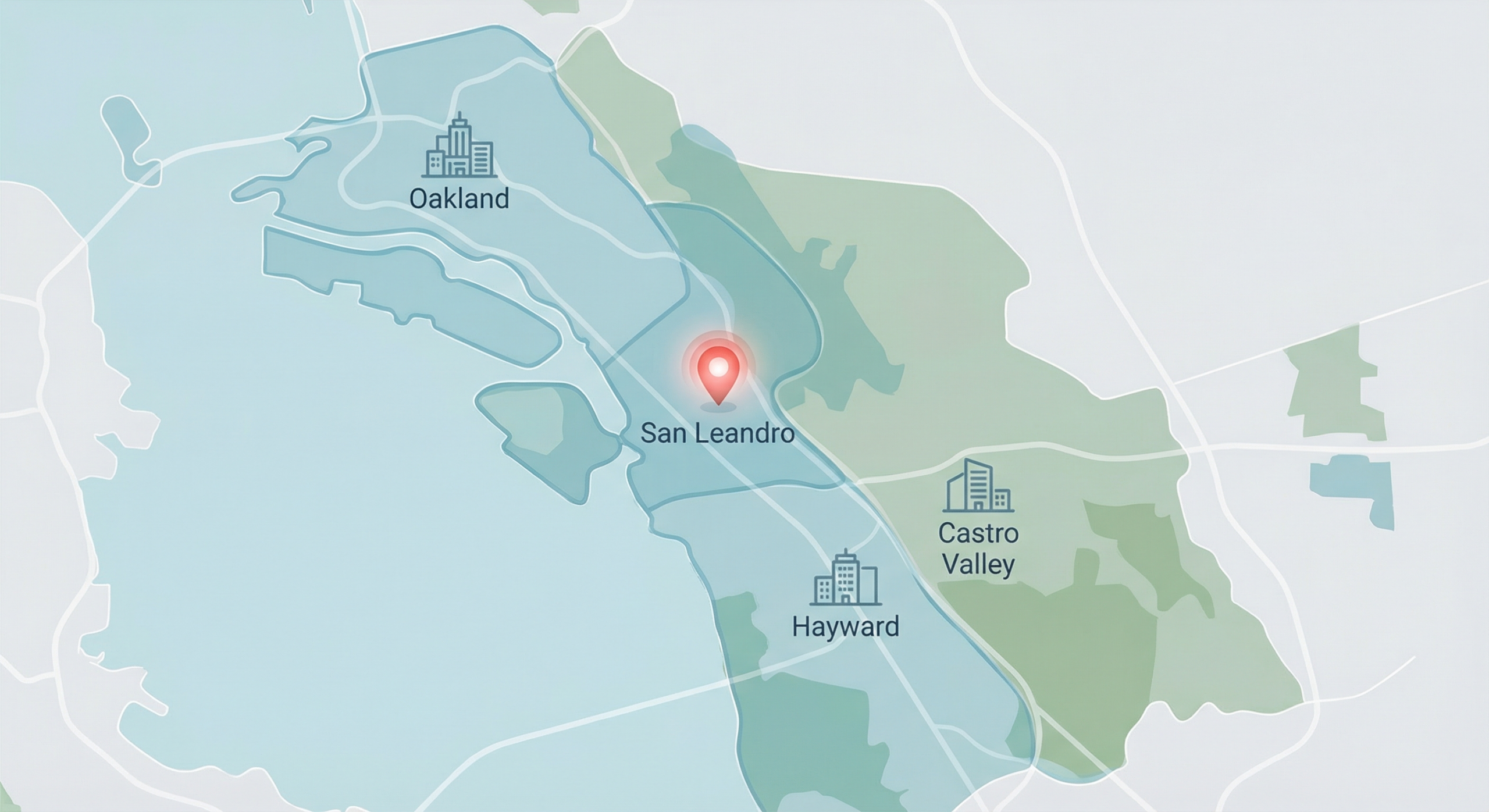
Whether you need a nebulizer treatment, a prednisone prescription, an inhaler refill, or a lung evaluation after a respiratory infection — CityHealth handles it same day at our Oakland Montclair and San Leandro locations. Walk in anytime or book an appointment online.
Resources: the CDC on asthma
See also: asthma attack treatment in San Leandro
Inhaler not cutting it? Come in today.
CityHealth serves Oakland (Montclair Village) and San Leandro — nebulizer treatments, steroid prescriptions, and same-day respiratory evaluation available now. Book online · Find a location · All urgent care services.
Need same-day care?
CityHealth San Leandro offers walk-in urgent care 7 days a week with on-site lab and X-ray. Book an appointment online or visit our San Leandro clinic.
See our complete guide: what can urgent care treat.