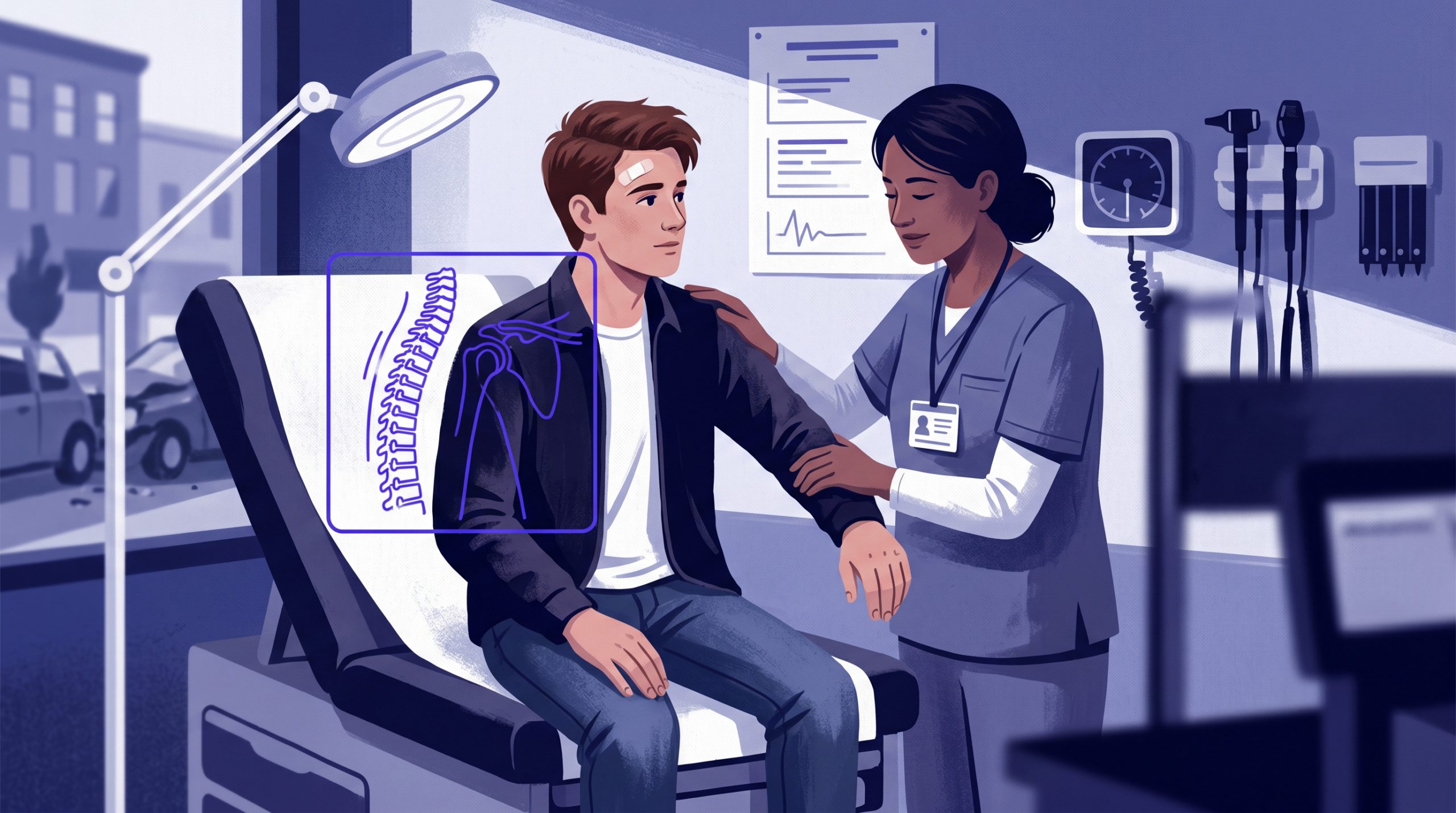

Urgent Care After a Car Accident: What to Check Right Away and When to Go to the ER
Quick answer: Urgent care after a car accident is the right choice for whiplash, soft tissue injuries, sprains, rib pain, and minor cuts that are not life-threatening. Go to the ER for chest pain, trouble breathing, loss of consciousness, signs of internal bleeding, or a suspected spinal injury. For other crash injuries, CityHealth urgent care in San Leandro can evaluate and treat you the same day.
The adrenaline is fading. Your neck aches, your shoulder feels stiff, and a bruise is spreading across your ribs. You walked away from the crash, but you still need care. Choosing urgent care after a car accident is the right move for most non-emergency injuries. It saves you hours in a waiting room and connects you with treatment faster. CityHealth in San Leandro is open same-day for this kind of visit.

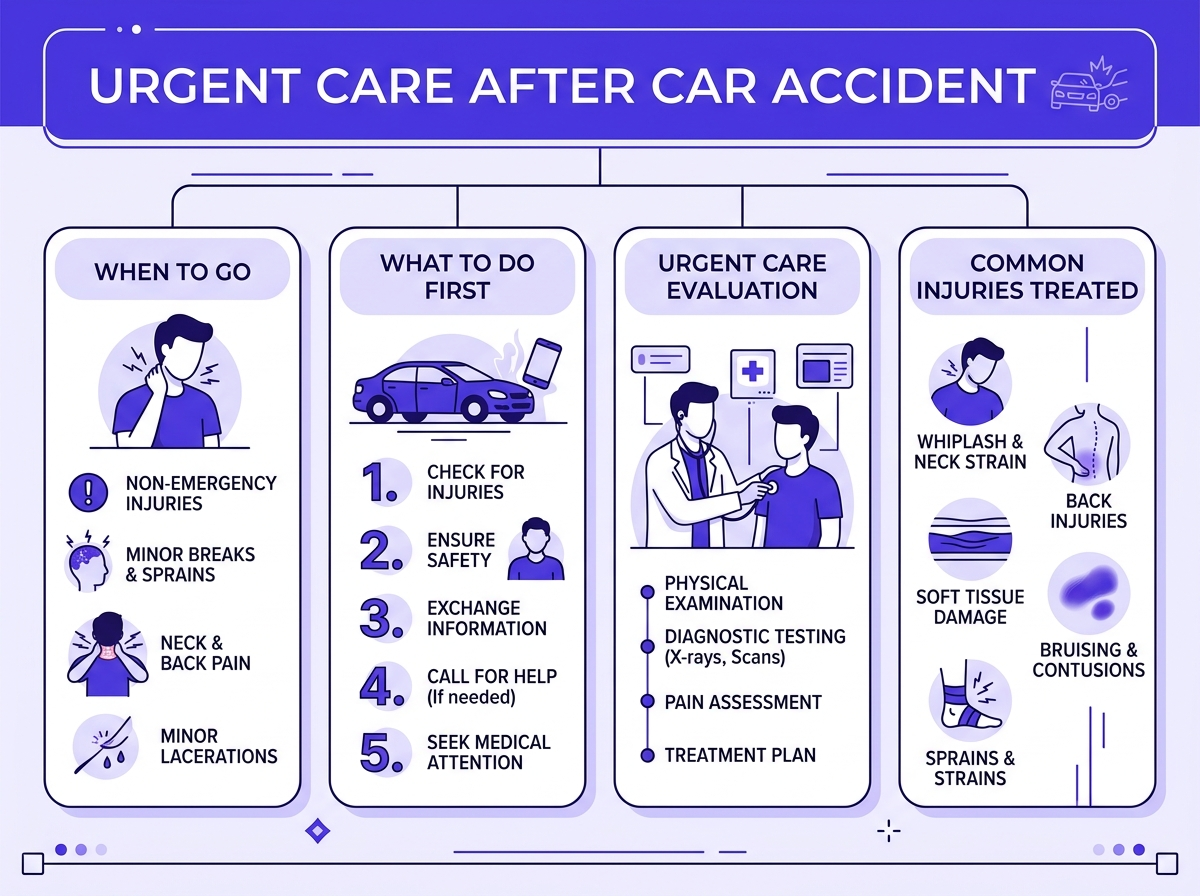
ER or Urgent Care After a Car Accident: How to Decide
First, figure out which level of care fits your symptoms. Most car accident injuries fall into two groups: emergencies that need the ER and non-emergency injuries that urgent care handles well. Getting this right protects both your health and your time.
Go to the ER right away if you have any of these:
- Chest pain or pressure
- Difficulty breathing
- Loss of consciousness, even for a moment
- Severe confusion, disorientation, or slurred speech
- Numbness or weakness in your arms or legs
- Suspected spinal injury or inability to move your neck
- Signs of internal bleeding: a rigid abdomen, blood in urine, or a rapid, weak pulse
- Cuts that will not stop bleeding
- Suspected fracture of the femur, pelvis, or hip
- Sudden vision changes or severe vomiting after head impact
These symptoms need trauma teams, advanced imaging, and surgery. Those are resources only an ER provides. So do not drive yourself. Call 911 or have someone take you right away.
Urgent care after a car accident is the right choice for:
- Neck pain and stiffness (whiplash)
- Upper and lower back pain
- Shoulder and arm soreness
- Sprains, strains, and ligament injuries
- Rib pain or bruising without breathing trouble
- Wrist or ankle pain from bracing during impact
- Minor cuts, scrapes, and lacerations that need closure
- Headache without loss of consciousness
- Soft tissue swelling and bruising
These injuries are real and they deserve fast treatment. Also, waiting even a day or two lets inflammation build and symptoms worsen. In addition, a gap in your medical record can create problems for insurance claims later.

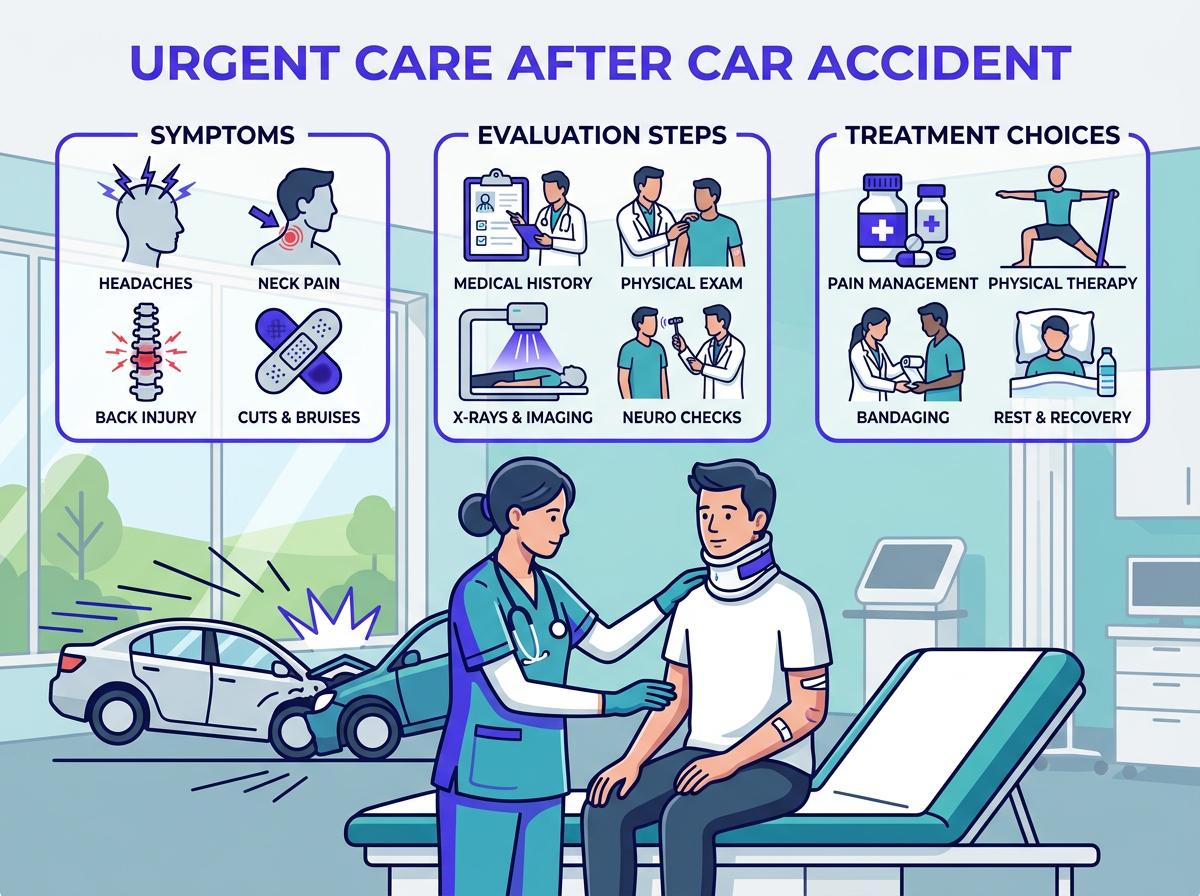
What Urgent Care After a Car Accident Can Treat
At CityHealth urgent care in San Leandro, clinicians evaluate and treat the injuries most common after a motor vehicle crash. Here is what a typical visit covers.
Whiplash and neck pain
Whiplash is the most common injury in a car accident. The neck snaps forward and back, straining muscles and ligaments. Symptoms often take 24 to 48 hours to develop. So some patients feel fine at the scene but wake up in pain the next morning. A provider checks your range of motion, looks for neurological signs, orders imaging when needed, and sets up a treatment plan before inflammation peaks.
X-rays for bone injuries
Bone pain after a crash needs imaging. CityHealth offers urgent care X-ray on-site. As a result, you can be evaluated and imaged in one visit — no separate radiology appointment needed. Common post-crash X-rays include the cervical spine, ribs, wrists, clavicle, and ankles.
Rib injuries
A seatbelt or steering wheel can bruise or crack ribs. Bruised ribs are painful and take weeks to heal. However, they do not always require a hospital stay. If breathing is not affected, urgent care for bruised rib injuries is the right level of care. Imaging rules out complications, such as a collapsed lung, before you go home.
Sprains and ligament injuries
Bracing yourself at impact can stretch or tear ligaments in the knee, ankle, or wrist. A clinician examines the joint, rules out fracture with X-ray, and builds a treatment plan. For more details, see the CityHealth page on urgent care for torn ligament injuries.
Cuts and lacerations
Glass, airbag deployment, and blunt impact cause cuts that need cleaning. Some need sutures, staples, or skin glue. Urgent care handles these without an ER wait. Plus, a provider checks whether a tetanus update is needed.
Medical documentation
A same-day visit creates a medical record of your injuries. Insurance carriers ask for this documentation after a crash. According to the CDC Motor Vehicle Safety program, crash injuries generate millions of emergency and outpatient visits each year. Therefore, payers expect treatment records that align with the reported injury timing.
Hurt in a car accident? Get evaluated today.
CityHealth urgent care in San Leandro sees patients for whiplash, rib pain, sprains, lacerations, and on-site X-ray — all in one visit.
Book an AppointmentWhy Timing Matters When You Seek Urgent Care After a Car Accident
Waiting too long is one of the most common mistakes after a crash. Many patients feel okay at the scene. Then they wake up the next morning unable to turn their head.
Soft tissue injuries tend to peak in pain 24 to 72 hours after impact. Inflammation builds, muscles spasm, and mild stiffness becomes significant pain. So seeing a provider in the first day or two gives you real advantages:
- A baseline exam before symptoms fully develop
- Earlier access to anti-inflammatory treatment
- Imaging to catch injuries you may not yet feel
- A dated medical record tied to the accident
Still, if several days have passed since your crash, go anyway. A provider can evaluate you, document your condition, and rule out anything that needs urgent attention.

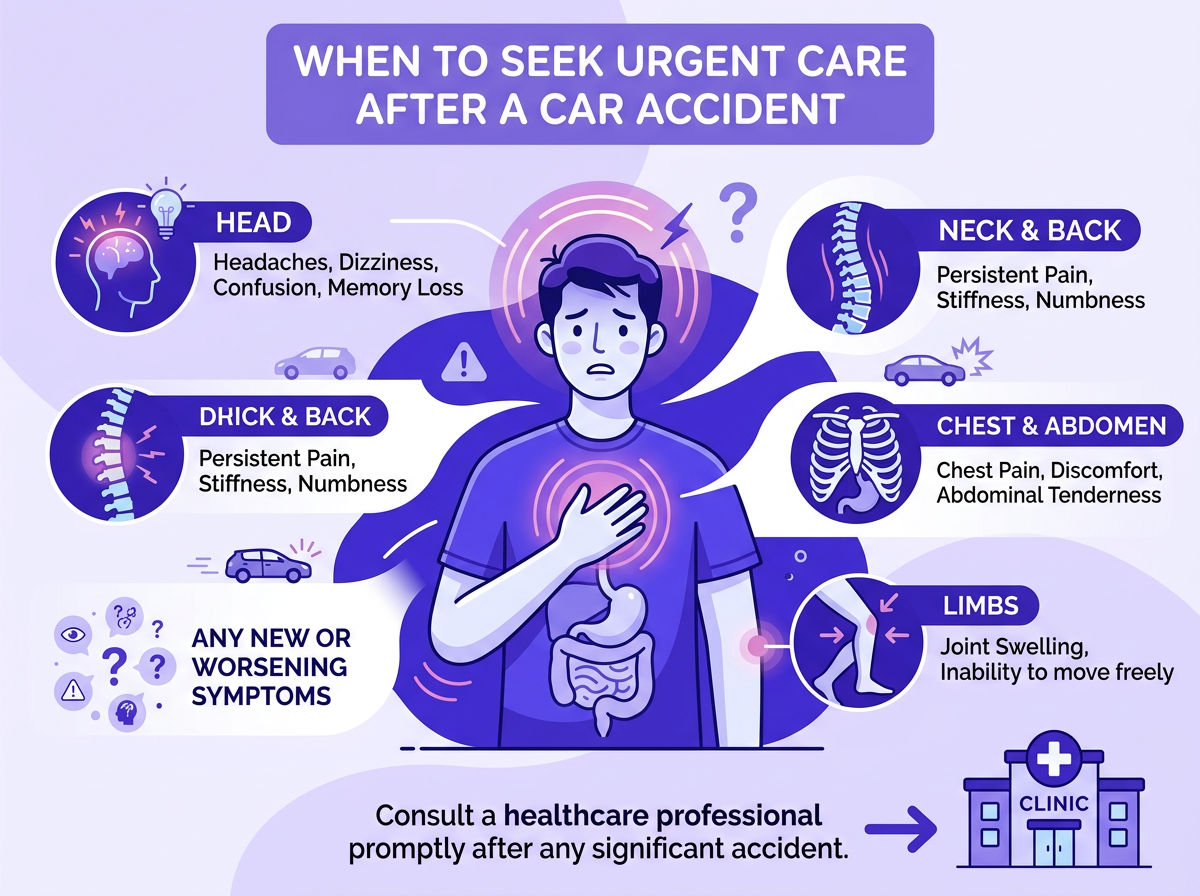
What to Expect at Urgent Care After a Car Accident
Many patients are unsure what a post-accident visit involves. Here is the step-by-step process at CityHealth in San Leandro:
- Check-in: You provide your name, insurance information, and a description of the accident and your current symptoms.
- Vitals and intake: A medical assistant records your blood pressure, heart rate, oxygen level, and pain level.
- Provider evaluation: The clinician reviews your symptoms, checks your range of motion, palpates areas of pain, and tests neurological function when your case calls for it.
- Imaging: If bone injury is suspected, X-rays are ordered and read on-site during the same visit.
- Treatment plan and documentation: You leave with a diagnosis, a treatment plan, referral instructions if follow-up is needed, and a visit record for insurance purposes.
Also, bring a photo ID, your health insurance card, and your auto insurance information. Some auto policies include medical payments coverage or personal injury protection. That coverage can apply to urgent care visits after a crash. Ask the front desk about your options when you check in.
Frequently Asked Questions
Should I go to urgent care after a car accident even if I feel okay?
If you have any pain, stiffness, or tenderness, yes. Soft tissue injuries are often delayed by hours, and a same-day evaluation gives you a baseline before symptoms build. However, if you feel no symptoms at all, you are not required to go. Still, watch for changes in the next 24 to 72 hours. If anything develops — headache, neck tightness, or back pain — seek care right away.
Can urgent care treat whiplash after a car accident?
Yes. Clinicians evaluate neck pain and stiffness, order X-rays to rule out fracture, prescribe anti-inflammatory medication, and recommend activity changes. They also refer you to physical therapy if needed. In fact, whiplash is one of the most common conditions treated at urgent care after a car accident. Early treatment lowers the risk of chronic neck pain.
What is the difference between urgent care and the ER for car accident injuries?
The ER has trauma teams, CT scanners, and surgery resources for life-threatening emergencies. In contrast, urgent care handles non-life-threatening injuries faster and at lower cost. For most car accident injuries — whiplash, sprains, rib bruising, and minor cuts — urgent care is the right level of care. When in doubt, choose the ER. You can always follow up at urgent care, but delayed emergency care can cause serious harm.
Will urgent care document my injuries for an insurance claim?
Yes. Every visit creates a record with the date, your symptoms, the provider’s findings, imaging results, and the treatment plan. Insurance adjusters and attorneys use these records for personal injury claims. Therefore, seeking care soon after the accident matters. Be thorough when describing your symptoms — that detail strengthens your documentation.
If you have pain or stiffness after a crash, do not wait. Visit CityHealth urgent care in San Leandro for same-day evaluation, on-site X-ray, and a clear treatment plan — or book your appointment online now to hold your spot.