
What to bring to urgent care is one of those questions you Google in a panic. You woke up with a fever that will not break, or your kid twisted an ankle at practice. You know you need care now. But in the rush to get out the door, most people forget half the items that speed up their visit. As a result, they waste time at check-in or make a second trip home. This guide covers everything you need to grab before you leave.
Medically reviewed by Sean Parkin, PA — CEO & Founder, CityHealth Urgent Care

Your Photo ID and Insurance Card Come First
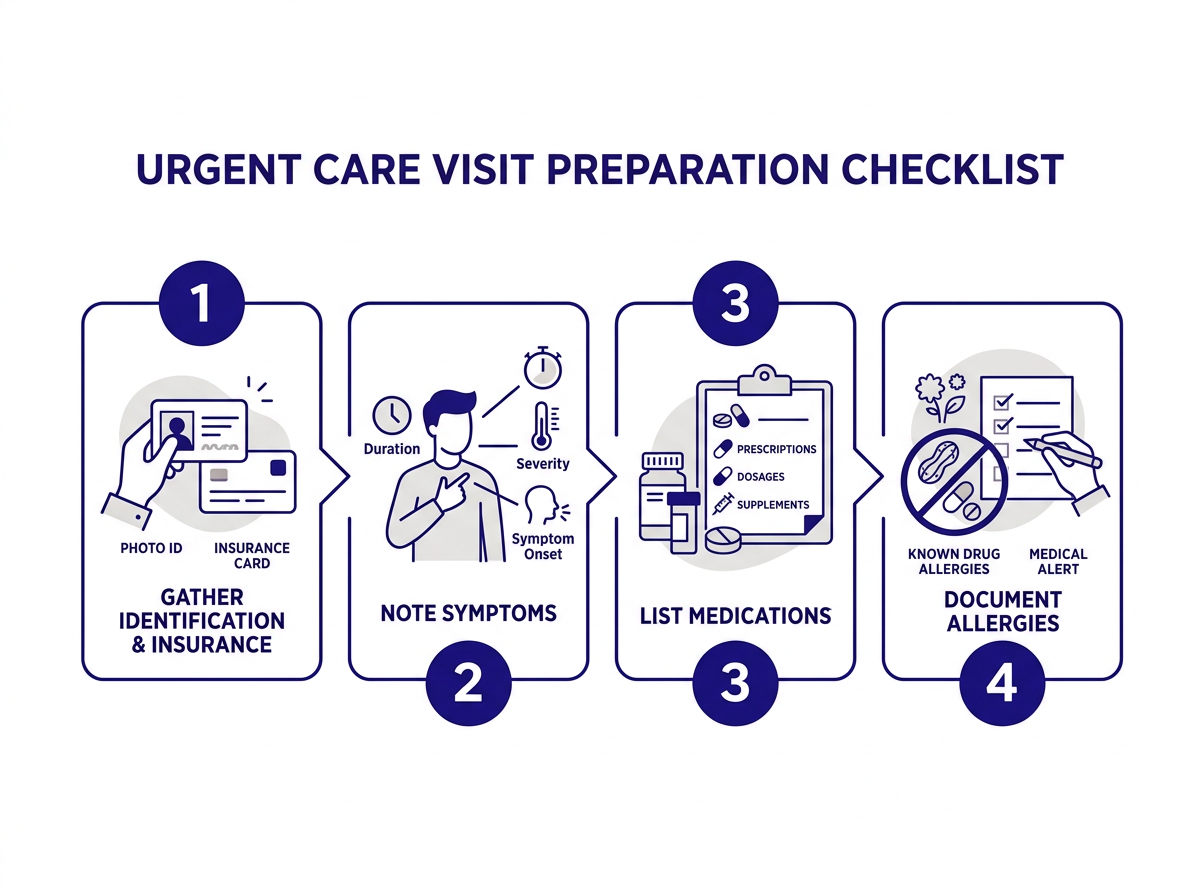
These two items matter more than anything else. A valid photo ID confirms who you are. Your insurance card lets the front desk verify your coverage and copay on the spot. Without them, staff may need to make phone calls or ask you to pay the full self-pay rate upfront. Specifically, accepted forms of ID include a driver’s license, state ID, passport, or military ID. For children, bring a birth certificate or school ID if one is available. In addition, if you have insurance through your employer, bring any supplemental cards. For example, a separate pharmacy benefit card or a secondary insurance card. Having both the front and back of each card ready to scan will speed things up.What to Bring to Urgent Care Without Insurance
No insurance card? You can still walk in. Urgent care clinics treat everyone, regardless of coverage status. However, you should bring a valid form of payment because most clinics collect at the time of service. Cash, debit cards, and credit cards all work. Furthermore, some clinics also offer payment plans or sliding-scale fees. At CityHealth, we keep self-pay pricing transparent so there are no surprise bills. You can learn more about how much urgent care costs without insurance to plan ahead. Also bring your photo ID. Even without insurance, the clinic still needs to confirm your identity for accurate records.Your Current Medication List
This item gets overlooked constantly. Your provider needs to know every medication you take. That includes prescription drugs, over-the-counter supplements, and vitamins. Because drug interactions are a real risk, your provider cannot prescribe safely without this list. Here is the fastest approach. Snap a photo of each medication bottle before you leave. That captures the drug name, dosage, and prescribing doctor in one step. If you use a pharmacy app, pull up your medication list on your phone instead. For parents bringing a child, also note any recent doses of fever reducers or pain relievers. Specifically, record the exact time you gave the last dose. This helps the provider determine when the next safe dose can happen.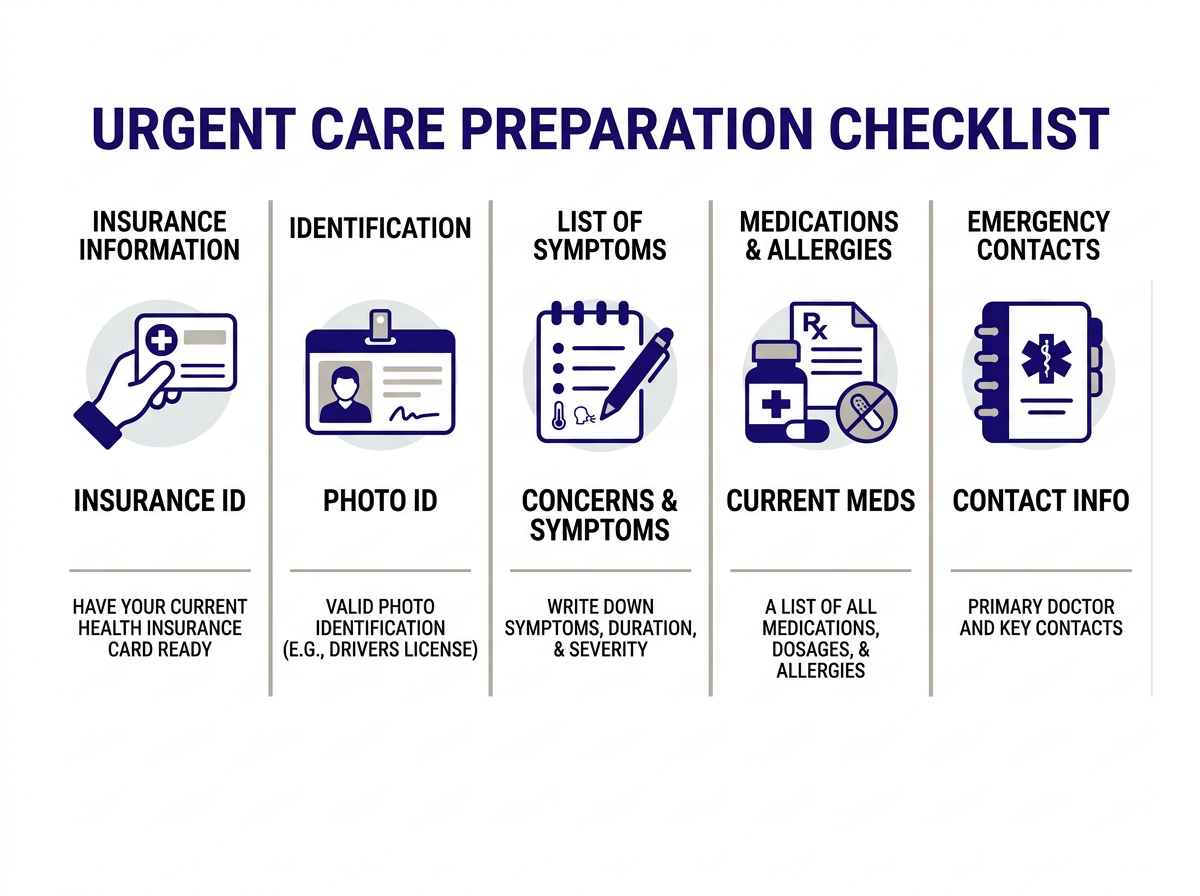
A List of Your Allergies and Medical History
Allergies to medications, latex, or specific foods can change a treatment plan in seconds. Therefore, write them down or keep a note on your phone. Include the type of reaction you had. For example, note whether you experienced hives, swelling, or difficulty breathing. The severity determines which alternatives your provider will choose. Your medical history matters too. Bring notes on any chronic conditions like diabetes, asthma, or high blood pressure. Also include past surgeries and recent hospitalizations. If you visited another provider for the same concern, bring discharge papers or test results from that visit. As a result, you prevent duplicate testing and give your provider the full picture.What to Bring to Urgent Care for a Child
Bringing a child adds a few extra items to the list. A parent or legal guardian must be present for anyone under 18 in most states. If you are sending your child with another adult, for example a grandparent or babysitter, provide a signed authorization form that grants permission for medical treatment. In addition to the items above, bring:- Your child’s immunization records or access to them through a patient portal
- Their pediatrician’s name and phone number so the urgent care provider can coordinate follow-up
- A comfort item like a favorite toy or blanket, because a calm child makes the exam faster
Your Phone (Charged) and a Way to Take Notes
Your smartphone is a medical tool now. It stores insurance photos, medication lists, allergy notes, and pharmacy details. Make sure it is charged before you leave. Otherwise, a dead phone at check-in means you rely on memory for details that need to be exact. Moreover, your phone lets you:- Look up your primary care provider’s contact info for referrals
- Access a patient portal with your medical records
- Take notes on discharge instructions and follow-up steps
- Show photos of a rash or injury that may have changed since it first appeared
What to Bring for a Work-Related Injury
Workplace injuries involve a different paperwork process. Consequently, if you are visiting urgent care for an on-the-job injury, bring your employer’s name, address, and phone number along with your supervisor’s contact details. You should also have:- Your worker’s compensation claim number if one has been assigned
- The date and time of the injury
- The name of your worker’s compensation insurance carrier
What to Wear to Urgent Care
This sounds minor. However, it affects your visit. Wear loose, comfortable clothing that gives easy access to the area of concern. For example, if you have a knee injury, shorts work better than jeans. If you have a rash on your torso, a button-down shirt beats a tight pullover. In addition, avoid jewelry or accessories around the affected area. Rings on a swollen finger, for instance, may need to be removed. Also, wear shoes you can slip on and off if your visit involves a foot or ankle concern.What NOT to Bring to Urgent Care
On the other hand, leave these at home:- Valuables you do not need. Urgent care waiting rooms are shared spaces. Therefore, leave expensive jewelry, large amounts of cash, and extra electronics at home.
- Outside food for the exam room. Bring a snack for the waiting room if needed. However, some procedures require a clear stomach area.
- An entourage. One support person is helpful. Five family members crowd the exam room and slow things down. Most clinics limit visitors to one or two per patient.
The Complete What to Bring to Urgent Care Checklist
Here is the full list. Print this or screenshot it for your next visit:- ☑ Photo ID (driver’s license, passport, state ID, or military ID)
- ☑ Insurance card (front and back) or self-pay payment method
- ☑ Secondary insurance or pharmacy benefit card
- ☑ List of current medications with dosages
- ☑ List of known allergies and reaction types
- ☑ Medical history notes (chronic conditions, past surgeries)
- ☑ Recent test results or discharge papers if relevant
- ☑ Primary care provider’s name and contact info
- ☑ Phone (charged) or notebook for taking notes
- ☑ Comfortable, loose clothing
- ☑ For children: immunization records, guardian authorization, comfort item
- ☑ For work injuries: employer info, worker’s comp claim number, injury details


