That painful, swollen lump on your skin just got bigger overnight. It throbs when you move. It looks angry and red. Now you are wondering if you need urgent care for boils or if you can ride it out at home. You are not alone. In fact, boils are one of the most common skin infections. They send thousands of people to walk-in clinics every year because the pain becomes too much to ignore.
Medically reviewed by Sean Parkin, PA — CEO & Founder, CityHealth Urgent Care
What Is a Boil and Why Does It Hurt So Much?
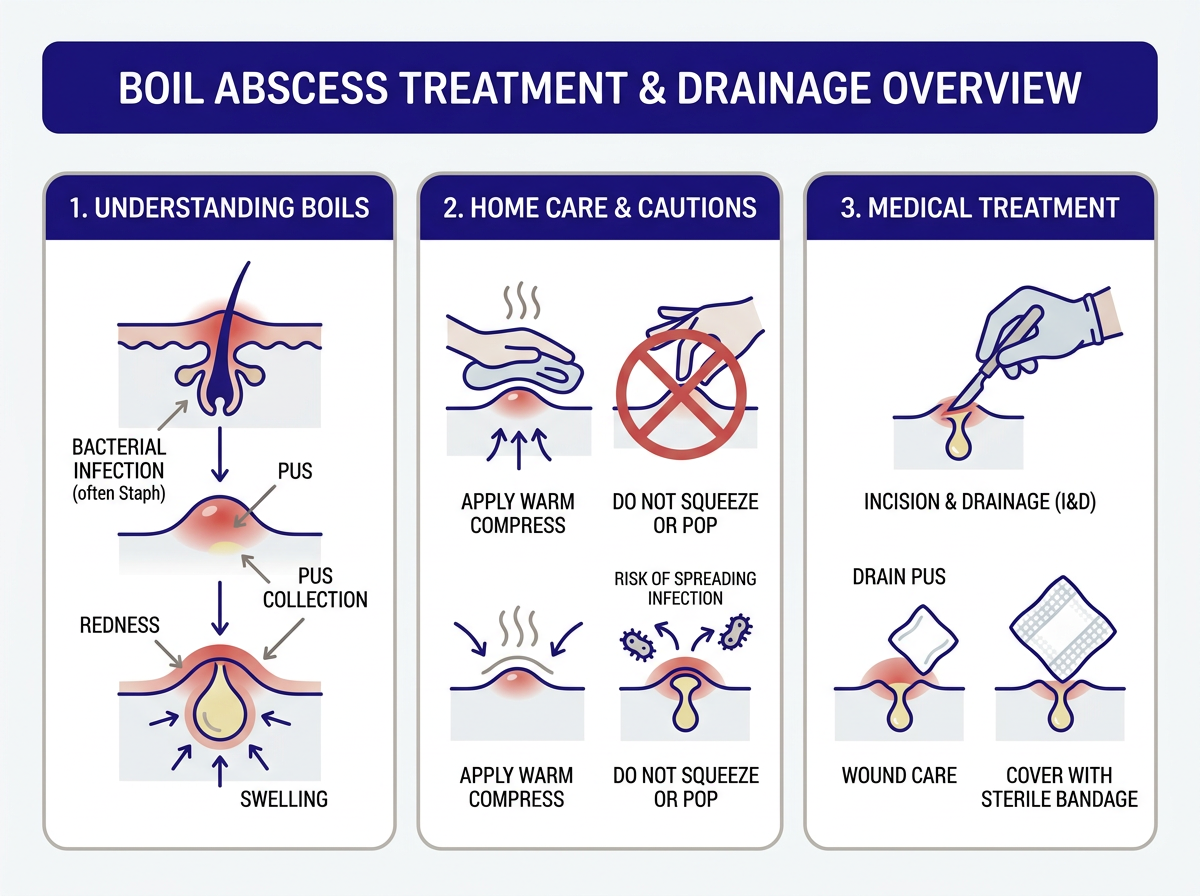
A boil, also called a furuncle, is a deep skin infection that starts in a hair follicle or oil gland. Specifically, bacteria like Staphylococcus aureus invade the follicle and trigger an inflammatory response. As a result, your body walls off the infection with a pocket of pus. That pocket grows as the infection progresses.
Because the pus sits under pressure beneath your skin, boils hurt. They typically appear as a firm, red, tender lump. Over several days, the lump gradually softens. Common locations include the face, neck, armpits, thighs, and buttocks. However, a boil can form anywhere you have hair follicles.
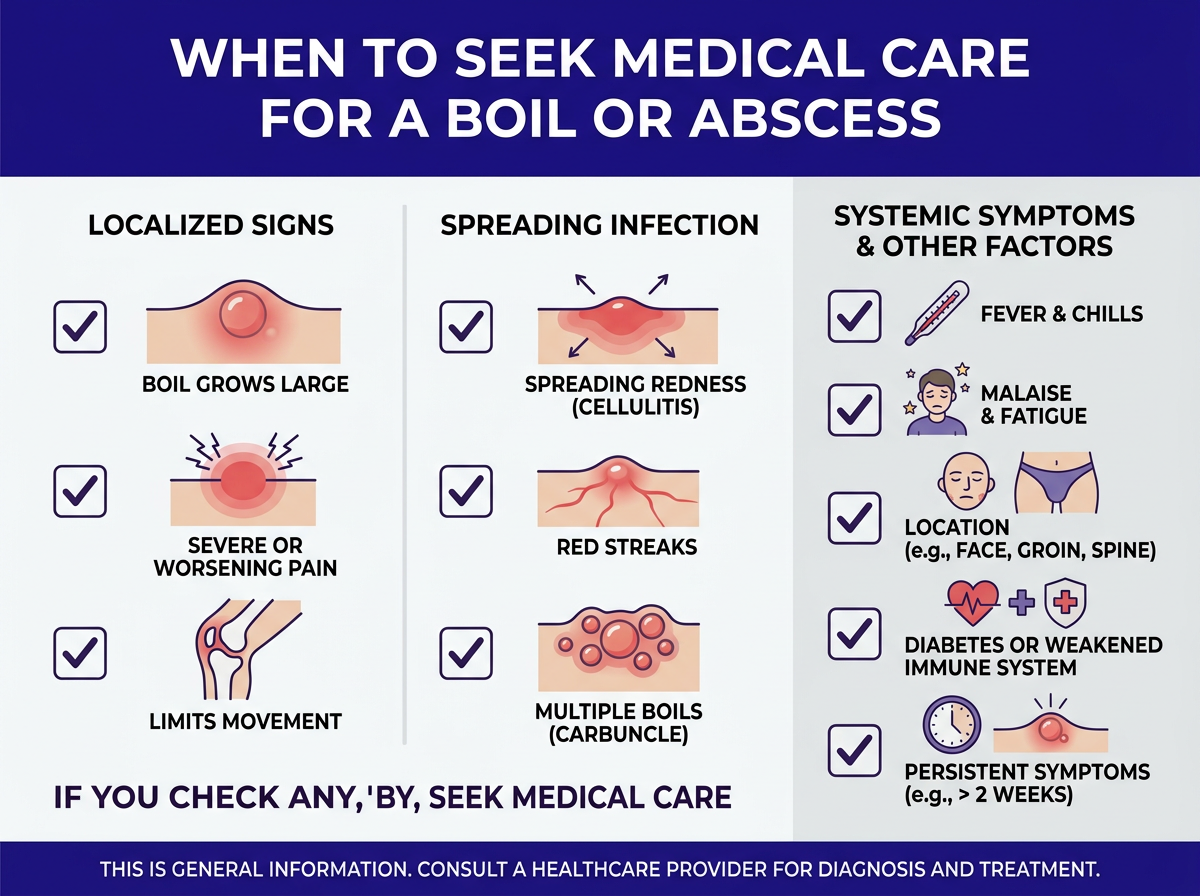
When multiple boils connect beneath the skin surface, the result is a carbuncle. This is a deeper and more serious infection. Carbuncles often produce fever and fatigue because the infection is more widespread. Therefore, if you notice a cluster of boils merging together, you should seek medical care the same day.
When to Visit Urgent Care for Boils
Not every boil requires a clinic visit. Small boils often drain on their own within two weeks. However, you should visit urgent care for boils when any of these situations apply:
- The boil is larger than a golf ball or growing fast
- You have a fever or chills along with the boil
- Red streaks spread outward from the lump
- The boil sits on your face, spine, or groin
- Pain is severe and interferes with daily activities
- The boil has not improved after 14 days of home care
- You have diabetes, cancer, or a weakened immune system
- You keep getting boils in the same area
In addition, you should not attempt to squeeze or lance a boil at home. Doing so can push bacteria deeper into the tissue. It can also spread the infection into your bloodstream. According to the American Academy of Dermatology (AAD), home lancing is one of the most common mistakes people make with boils.
What Happens When Urgent Care Treats Your Boil
Walking into an urgent care clinic for a boil is straightforward. The provider will examine the lump and check for signs of spreading infection. Then they will decide on the best approach. Here is what the process typically looks like.
1. Assessment and Diagnosis
First, your provider will ask how long the boil has been present. They will also ask whether you have had boils before. Moreover, they will ask about any underlying health conditions. Furthermore, they will check for cellulitis, which is a spreading skin infection that sometimes develops around a boil. If cellulitis is present, you may need oral antibiotics in addition to drainage.
2. Incision and Drainage
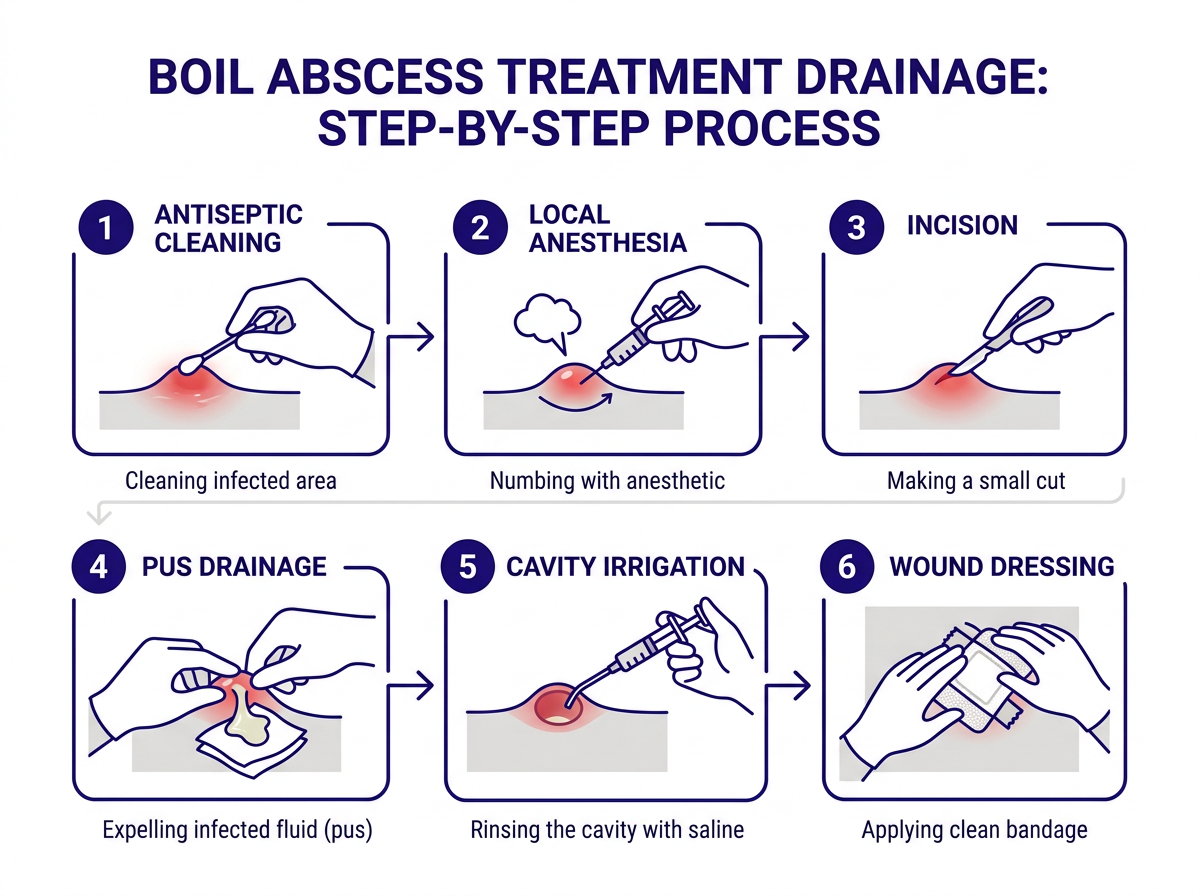
The gold-standard treatment for a mature boil is incision and drainage (I&D). Your provider will numb the area with a local anesthetic. Then they will make a small cut and drain the pus. This procedure usually takes less than 15 minutes. It provides fast pain relief because it removes the pressure trapped under your skin.
After draining the boil, the provider may pack the wound with sterile gauze. Specifically, packing keeps the wound open so it can continue draining. As a result, the wound heals from the inside out. You will typically return in one to two days for a packing change.
3. Antibiotics When Needed
Not every drained boil requires antibiotics. However, your provider will prescribe them if the infection has spread into surrounding tissue or if you have a fever. Also, antibiotics are needed if the boil is caused by MRSA (methicillin-resistant Staphylococcus aureus). MRSA boils look the same as regular boils, but they resist common antibiotics. Therefore, your provider may send a wound culture to the lab.
4. Wound Care Instructions
Before you leave, the urgent care team will explain how to care for the wound at home. Proper wound care is critical for preventing the boil from coming back. For example, typical instructions include keeping the area clean, changing bandages daily, and watching for signs of re-infection.
Home Treatment for Boils: What Works and What Does Not
If your boil is small and you do not have any warning signs listed above, you can try home care first. The most effective home treatment is a warm compress. Soak a clean washcloth in warm water and wring it out. Then hold it against the boil for 20 to 30 minutes. Repeat this three to four times per day.
Warm compresses work because the heat increases blood flow to the area. Consequently, your body can fight the infection more effectively. In many cases, the boil will soften, form a visible head, and drain on its own.
What does not work:
- Squeezing or popping the boil pushes bacteria deeper
- Applying toothpaste, garlic, or other home remedies can irritate the skin
- Using leftover antibiotics may not target the right bacteria
If warm compresses have not helped after five to seven days, it is time to visit urgent care. Similarly, if the boil is getting worse, do not wait any longer.
Urgent Care for Boils vs. the Emergency Room
Many people wonder whether they should go to urgent care or the ER for a boil. In most cases, urgent care is the better choice. Here is why:
- Shorter wait times: ER visits for boils often involve hours of waiting. Urgent care typically gets you in and out faster.
- Lower cost: An urgent care visit costs a fraction of an ER visit. For example, the copay difference alone can be $100 to $300.
- Same procedure: Urgent care providers perform incision and drainage just as effectively as ER physicians.
On the other hand, go to the emergency room if you have a high fever above 103 degrees. Also go if the boil is near your eye, if you feel dizzy, or if you have rapidly spreading redness.
Why Boils Come Back and How to Prevent Them
Recurring boils are frustrating. In fact, some people get them over and over in the same spots. There are several reasons why this happens:
- Staph colonization: About 30% of people carry Staphylococcus aureus on their skin. This colonization can seed repeated infections.
- Friction and moisture: Tight clothing and sweating create an environment where bacteria thrive.
- Weakened immunity: Diabetes, obesity, and immune-suppressing medications increase your risk.
- Hidradenitis suppurativa (HS): If your boils recur in the armpits, groin, or under the breasts, you may have HS. This chronic condition requires a different treatment approach.
Prevention strategies that work:
- Shower daily with an antibacterial cleanser, especially after exercise
- Wear loose, breathable clothing
- Never share towels, razors, or athletic equipment
- Apply a warm compress at the first sign of a bump
- Talk to your provider about nasal decolonization if you keep getting staph infections
What to Expect After Boil Drainage at Urgent Care
Recovery after incision and drainage is usually fast. Most people feel significant pain relief within hours because the pressure is gone. However, the wound itself takes one to three weeks to fully heal.
During recovery, follow these steps for the best outcome:
- Keep the wound clean and dry between bandage changes
- Take all prescribed antibiotics as directed, even if you feel better
- Return for your follow-up visit so your provider can check the healing progress
- Watch for warning signs such as fever, increased redness, or new drainage
As a result, most patients return to normal activities within a day or two. The wound will heal with a small scar that fades over time.
Get Same-Day Boil Treatment at CityHealth Urgent Care
If you have a painful boil that needs professional treatment, CityHealth Urgent Care in San Leandro can help. Our providers perform incision and drainage procedures every week. Because of this, you can get relief the same day you walk in. No appointment is necessary.
In addition, we offer dermatology services in Oakland on Wednesdays for patients dealing with recurring boils or suspected hidradenitis suppurativa.
Stop waiting for a boil to fix itself. Book your visit online or walk in today. The sooner you get treatment, the faster you heal.