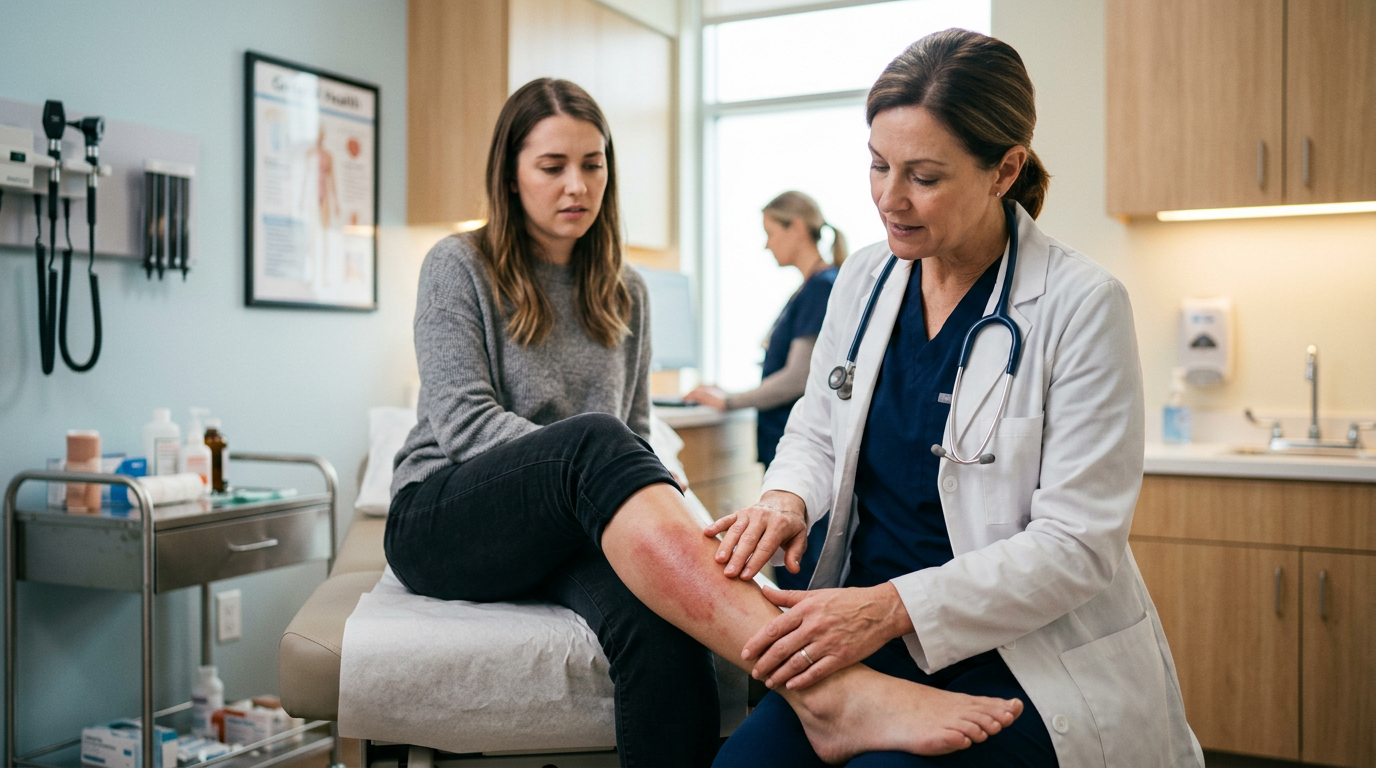

A small cut on your shin turns red and swollen overnight. By morning, the skin feels hot and the redness has spread. You wonder whether you need urgent care for cellulitis or can wait it out. That spreading redness signals a bacterial skin infection that can get worse fast. Indeed, cellulitis affects about 14.5 million Americans each year. Visiting urgent care for cellulitis gives you same-day antibiotics before the infection grows.
Medically reviewed by Sean Parkin, PA — CEO & Founder, CityHealth Urgent Care
What Is Cellulitis?
Cellulitis is a bacterial infection of the deeper layers of skin. Group A Streptococcus and Staphylococcus aureus bacteria cause most cases, according to the CDC. These germs enter through breaks in the skin. Cuts, scrapes, insect bites, and dry cracked skin all create openings.
The infection usually starts in the lower legs and feet. However, it can show up anywhere on the body. Cellulitis spreads through tissue beneath the skin surface. Because it sits deeper than surface infections like impetigo, you cannot always judge how far it has moved by looking at the skin alone.
Also, cellulitis is not contagious. You cannot catch it from someone else or spread it through contact. In many cases, doctors cannot even pinpoint how the bacteria got in.
How to Recognize Cellulitis Symptoms
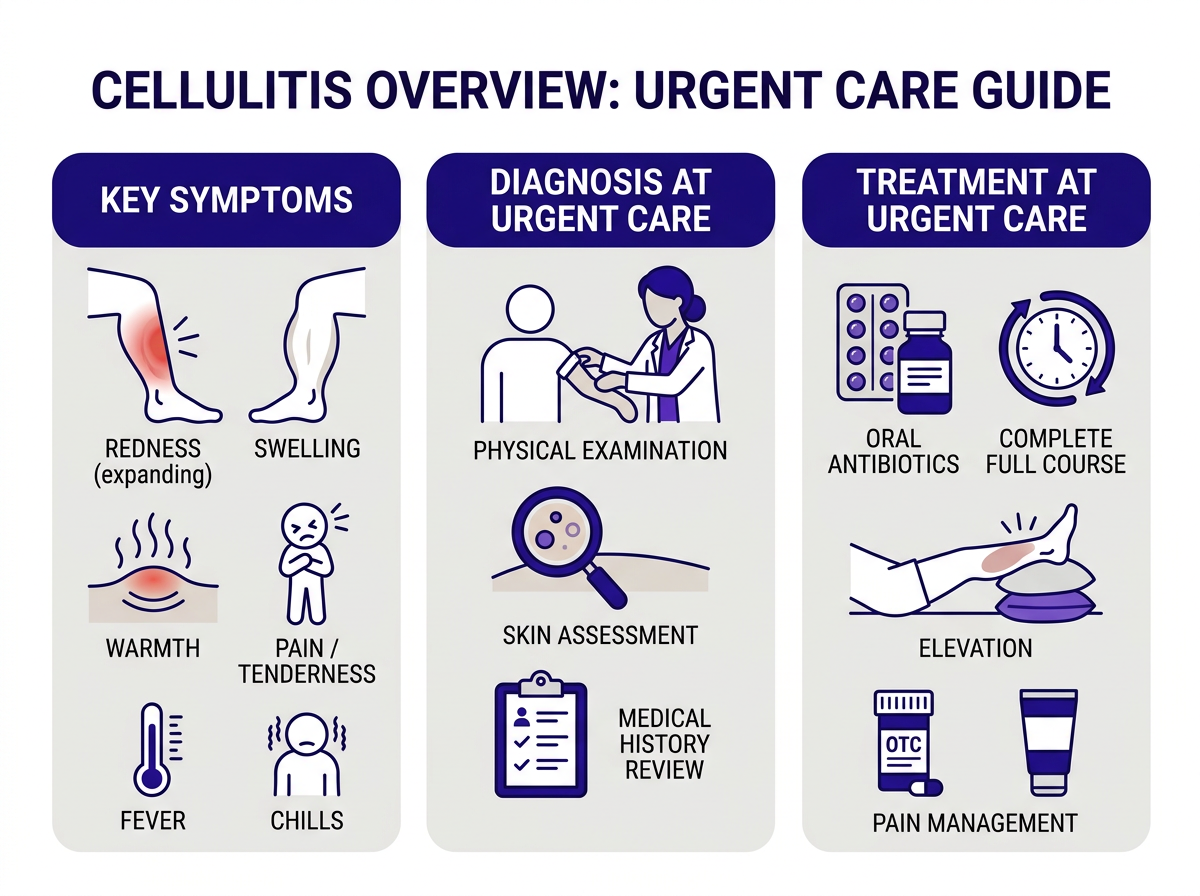
Cellulitis usually starts near a wound and spreads outward. Still, some people get it with no visible injury. Here are the key signs to watch for:
- Redness that grows over hours or days
- Swelling around the site
- Warmth when you touch the skin
- Pain or tenderness that gets worse
- Tight, glossy skin over the area
- Fever and chills as it advances
Sometimes the skin takes on a pitted texture like an orange peel. Blisters may form over the infected spot. Red streaks running away from the wound mean the infection is moving toward your lymph nodes. Therefore, you should seek care right away if you see streaking.
Because these signs can look like a skin rash or allergic reaction, a provider needs to check the area and confirm the diagnosis.
Who Is at Higher Risk for Cellulitis?
Anyone with a break in the skin can get cellulitis. However, certain factors raise your risk:
- Weakened immune system from diabetes, HIV, or immune-suppressing drugs
- Chronic skin conditions such as eczema or athlete’s foot
- Lymphedema or lasting swelling in the limbs
- Obesity, which raises the chance of skin breakdown
- Past cellulitis infections, since the condition often returns
- Recent surgery or wounds that give bacteria a way in
Notably, people with repeat infections below the knee should get tested for fungal problems. Athlete’s foot creates tiny cracks between the toes. These cracks let bacteria slip through. Similarly, people who inject drugs face a higher risk due to repeated skin punctures.
When You Need Urgent Care for Cellulitis
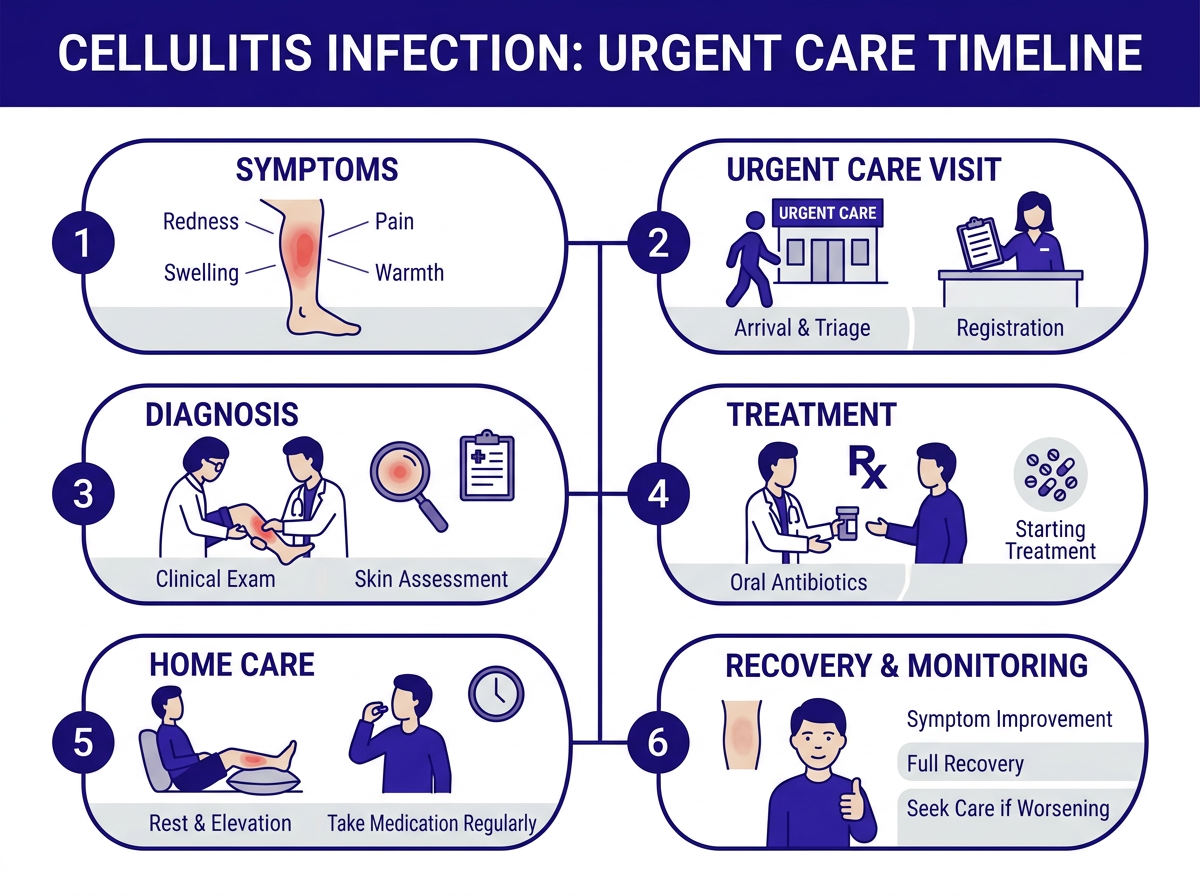
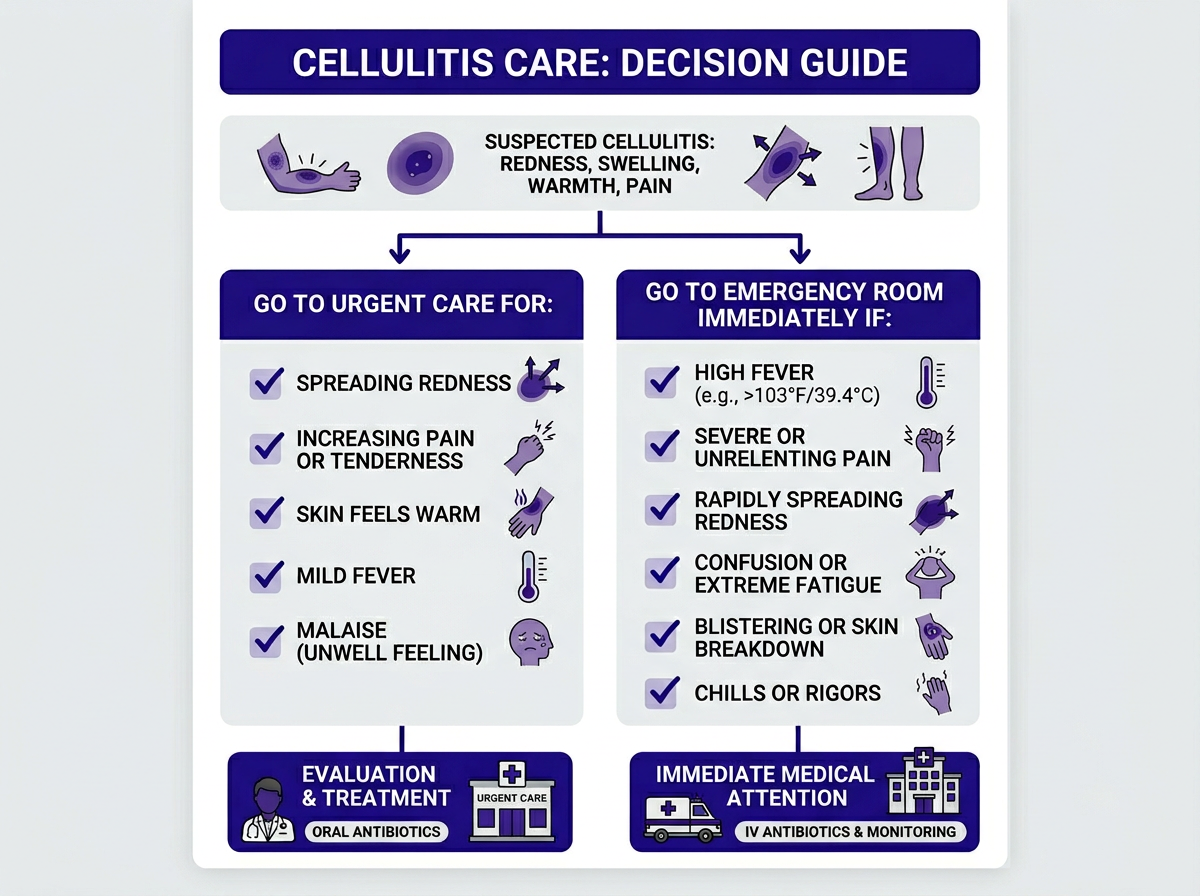
Mild redness around a fresh cut may clear up with basic wound care. However, you should visit urgent care for cellulitis when redness keeps spreading, pain gets worse, or you run a fever. Waiting too long lets bacteria reach deeper tissues and enter the blood.
Specifically, seek same-day care if you notice:
- Redness that grows within 24 hours
- Warmth and swelling that ice and rest do not help
- Fever above 100.4°F or chills
- Red streaks moving away from the wound
- Pain that keeps getting worse
For instance, try drawing a line around the red border with a pen. Then check it after a few hours. If the redness has moved past that line, the infection is actively spreading. This simple trick helps you and your provider track how fast the cellulitis is growing.
Conversely, go to the ER if you notice blackening skin, numbness in the limb, confusion, or a racing heart. These signs point to a severe infection that may need IV drugs or surgery.
Cellulitis vs. Other Skin Conditions
Several skin problems look like cellulitis but need different treatment. For example, contact dermatitis causes redness and swelling after touching an irritant, yet it does not involve bacteria. Likewise, a deep vein thrombosis (DVT) can make the leg red, warm, and swollen. However, DVT is a blood clot problem rather than an infection.
An abscess also differs from cellulitis. While both involve bacteria, an abscess forms a pocket of pus under the skin that usually needs draining. Cellulitis spreads through tissue without forming a walled-off pocket. Your urgent care provider can tell these apart during the exam. Getting the correct diagnosis shapes the treatment plan and speeds your recovery.
What Happens During a Cellulitis Urgent Care Visit
At CityHealth Urgent Care, a provider will look at the infected area and ask about your health history. Typically, the visit includes:
- Visual check of redness, swelling, and any wound
- Area measurement to set a baseline for tracking progress
- Vital signs including temperature
- Health history review, especially diabetes or past cellulitis
Usually, the provider can diagnose cellulitis from the exam alone. Sometimes blood tests or wound cultures are needed if the case looks severe. Additionally, your provider will check for an abscess. An abscess needs draining along with antibiotics.
If you also have a cut or wound that needs care, the provider will clean and dress it during the same visit.
Cellulitis Treatment at Urgent Care
Oral antibiotics treat most cellulitis cases. Your provider will prescribe a course lasting 5 to 14 days based on the severity. Most people feel better within 48 to 72 hours of starting their pills. However, if redness keeps spreading after two days, call your provider. You may need a different drug or more testing.
In addition to antibiotics, your provider may suggest:
- Lifting the limb above heart level to cut swelling
- Over-the-counter pain meds like ibuprofen
- Warm compresses for comfort
- Marking the red border so you can watch for changes
If the provider suspects a staph or MRSA infection, they will pick a drug that targets those germs. MRSA needs different antibiotics than standard strep cellulitis. Therefore, getting the right diagnosis matters.
Finish all your antibiotics even if you feel fine. Stopping early lets leftover bacteria grow back and cause a relapse. Moreover, keep the follow-up visit your provider schedules. They will want to confirm the infection has cleared.
How to Prevent Cellulitis
You can lower your risk with good wound care habits:
- Clean all cuts and bites with soap and water right away
- Apply antibiotic ointment and a bandage to open wounds
- Moisturize dry, cracked skin on your hands and feet daily
- Treat athlete’s foot and eczema early to prevent cracks
- Wear shoes outdoors and at pools or gyms
- Trim your nails to avoid scratches
Especially for people with diabetes, daily foot checks are a must. Because diabetes dulls feeling in the feet, small wounds can go unnoticed. As a result, cellulitis may set in before you feel any pain.
Get Urgent Care for Cellulitis at CityHealth
Cellulitis responds well to early treatment. Delaying care gives the infection time to spread. CityHealth Urgent Care in San Leandro offers walk-in visits seven days a week. No appointment is needed. Our providers diagnose cellulitis, prescribe antibiotics, and handle wound care in a single visit.
Walk in today or book your visit online to get treated fast.