A dull ache in your lower back, a fever that won’t break, and a burning feeling every time you use the bathroom. If that sounds familiar, you might be dealing with more than a simple UTI. In fact, kidney infections affect about 200,000 Americans each year. As a result, they demand fast treatment. The good news is that urgent care for kidney infection symptoms can get you diagnosed, tested, and started on antibiotics the same day. Also, you can avoid the long wait and high cost of an emergency room visit.
Medically reviewed by Sean Parkin, PA — CEO & Founder, CityHealth Urgent Care

What Is a Kidney Infection and How Does It Start?
A kidney infection, also called pyelonephritis, happens when bacteria travel up from your bladder into one or both kidneys. In most cases, the cause is E. coli. In fact, this is the same bacteria behind most urinary tract infections. Because a kidney infection is a type of upper UTI, it often begins as a simple bladder infection that goes untreated.
Women are more likely to get kidney infections than men. This is because the female urethra is shorter, so bacteria have a shorter path to the bladder. However, men with enlarged prostates or kidney stones also face higher risk. In addition, pregnancy, a weak immune system, and catheter use can raise your chances.
Kidney Infection Symptoms You Should Not Ignore
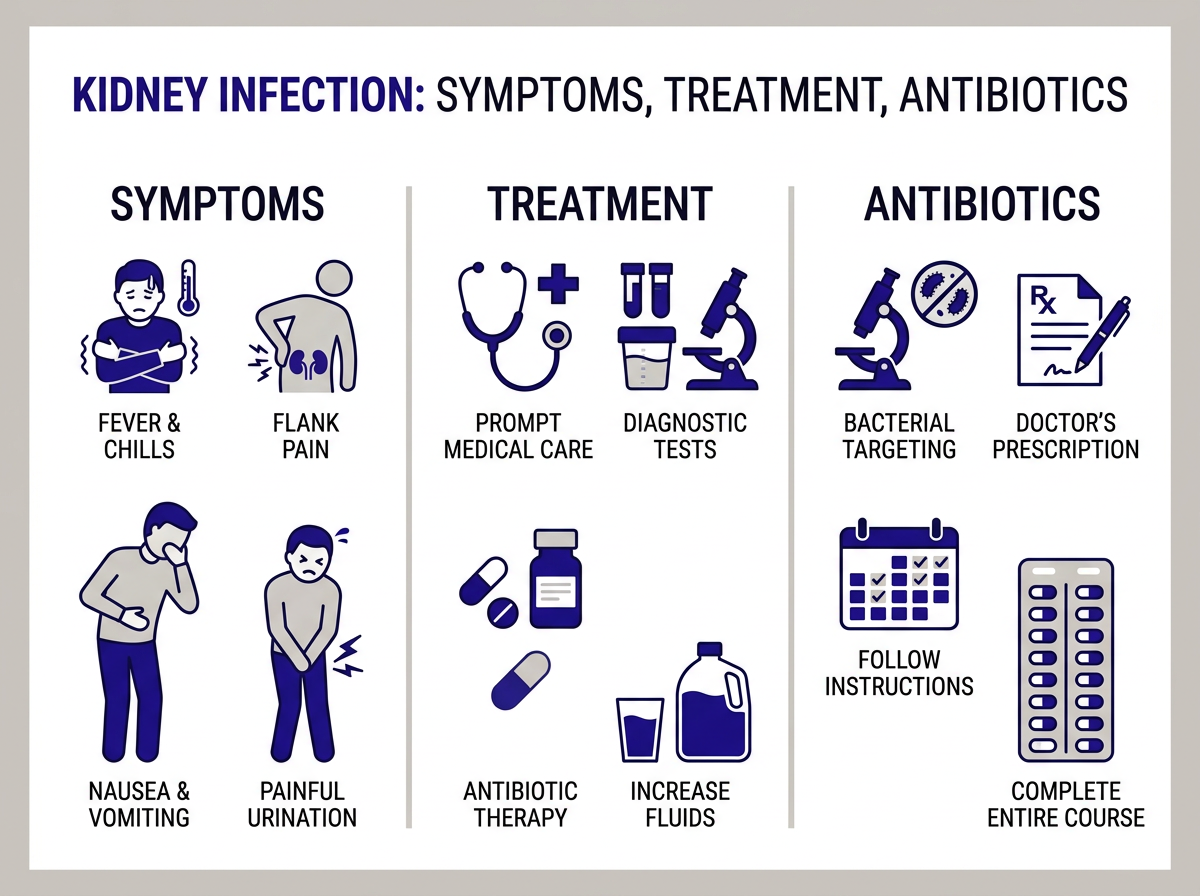
Kidney infections share some symptoms with bladder infections. However, they also produce distinct warning signs that point to a more serious problem. Specifically, you should watch for:
- Flank or lower back pain on one or both sides
- Fever of 101°F or higher, often with chills
- Nausea or vomiting
- Burning or pain during urination
- Frequent, urgent need to urinate (even when little comes out)
- Cloudy, dark, or bad-smelling urine
- Blood or pus in your urine
If you notice back pain combined with fever, that pairing alone is a strong signal that the infection has reached your kidneys. Similarly, if you finished antibiotics for a UTI but symptoms came back or got worse, the bacteria may have spread upward. In either case, you need medical care the same day.
Urgent Care for Kidney Infection: What to Expect
Many people wonder whether they should go to urgent care or the ER for a kidney infection. For mild to moderate cases, urgent care is the right choice. As a result, you get the same tests and prescriptions without the 3-5 hour ER wait or the inflated bill.
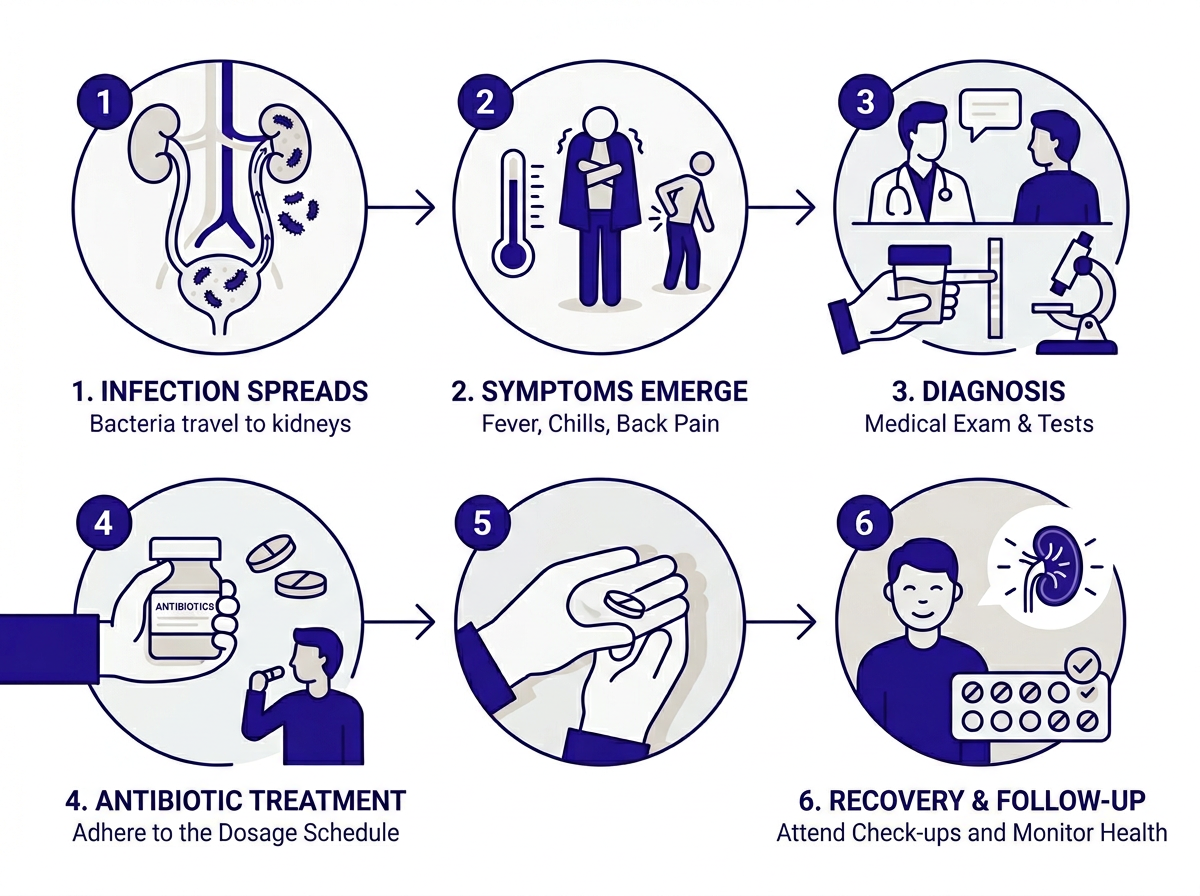
Here is what a typical urgent care visit for a kidney infection looks like:
1. Urine Testing
First, your provider will collect a urine sample and run a urinalysis. This test checks for white blood cells, red blood cells, bacteria, and nitrites. Results come back in minutes. However, in some cases, a urine culture is also sent to a lab to find the specific bacteria causing the infection. Consequently, your provider can choose the most effective antibiotic. CityHealth offers on-site lab work for fast results.
2. Physical Exam and Symptom Review
Next, your provider will check your vital signs and press on your back and abdomen to locate pain. They will also ask about your symptom timeline. For example, they will want to know if you had a recent UTI, if you have a history of kidney infections, and how long you have had a fever.
3. Antibiotic Prescription
Kidney infections require prescription antibiotics. Common choices include ciprofloxacin, Bactrim, and cephalosporins. Your provider will pick the right one based on your symptoms, health history, and local resistance patterns. Most courses last 7 to 14 days. If you have ever wondered whether urgent care can prescribe antibiotics, the answer is yes. In fact, it is one of the most common things we do.
4. Follow-Up Plan
Before you leave, your provider will explain what to expect during recovery. Furthermore, they will tell you when to return if symptoms do not improve. They will also flag red signs that should send you to the ER. You may also receive a prescription for pain relief or anti-nausea medication.
When to Go to the ER Instead of Urgent Care for a Kidney Infection
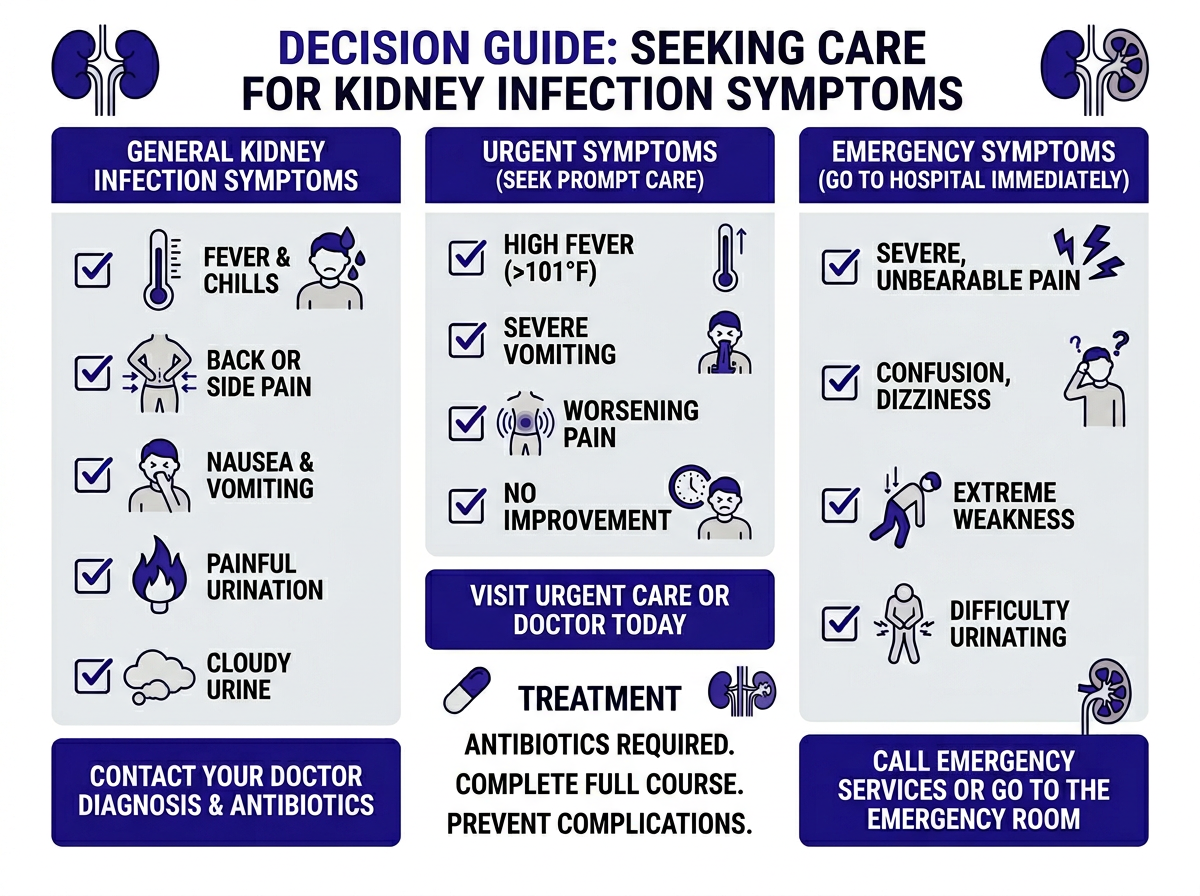
Urgent care handles most kidney infections. However, some situations need emergency care. Specifically, go to the ER if you have:
- Fever above 103°F that does not go down with medication
- Severe vomiting that stops you from keeping fluids or oral antibiotics down
- Signs of sepsis: rapid heart rate, confusion, trouble breathing, or extreme fatigue
- Pregnancy combined with a suspected kidney infection
- Only one working kidney
- Symptoms that keep getting worse after 48-72 hours on antibiotics
These cases may require IV antibiotics, IV fluids, or hospital admission. On the other hand, for everything else, urgent care gives you the treatment you need at a fraction of the cost.
UTI vs. Kidney Infection: How to Tell the Difference
Because kidney infections often start as UTIs, the symptoms overlap. However, there are key differences to help you figure out what you are dealing with.
A bladder infection (lower UTI) causes burning during urination, frequent bathroom trips, and pelvic pressure. You may also notice cloudy or strong-smelling urine. Moreover, fever is rare with a simple bladder infection.
A kidney infection (upper UTI), on the other hand, adds back or flank pain, high fever, chills, nausea, and vomiting. The pain usually sits below your ribs on one side of your back.
If your UTI symptoms suddenly include fever, back pain, or nausea, the infection has likely moved to your kidneys. Therefore, do not wait for it to clear on its own. Untreated kidney infections can cause permanent kidney damage, scarring, or sepsis. Visit urgent care that same day. You can also read more about how urgent care treats UTIs to learn about the full range of options.
How Kidney Infections Are Treated
Oral antibiotics are the standard treatment for most kidney infections caught early. Your provider will prescribe a 7-14 day course. As a result, you should start feeling better within 48-72 hours. However, it is critical that you finish the full course of antibiotics, even if you feel better sooner. Stopping early lets surviving bacteria grow and can lead to a repeat or drug-resistant infection.
In addition to antibiotics, these steps help your recovery:
- Drink plenty of water. Aim for 8-10 glasses per day. Specifically, water helps flush bacteria from your urinary tract.
- Use a heating pad on your belly or lower back to ease pain.
- Take over-the-counter pain relievers like acetaminophen (Tylenol). However, avoid NSAIDs like ibuprofen unless your provider says they are safe for your kidneys.
- Rest. Your body is fighting a serious infection, so give it the energy it needs.
According to the National Institute of Diabetes and Digestive and Kidney Diseases (NIDDK), most people with mild to moderate kidney infections recover fully with prompt antibiotic treatment. Therefore, getting tested and treated early is the single most important step you can take.
How to Prevent Kidney Infections
Prevention starts with stopping bacteria before they reach your kidneys. For example, these habits can lower your risk:
- Treat UTIs right away. Do not wait to see if symptoms fade. A bladder infection can turn into a kidney infection in days.
- Stay hydrated. Water dilutes your urine and also helps flush bacteria from your urinary tract.
- Urinate after sex. This clears bacteria that may have entered the urethra during intercourse.
- Wipe front to back. Consequently, you prevent bacteria from the bowel from reaching the urethra.
- Avoid holding your urine. Emptying your bladder on a regular basis keeps bacteria from growing.
- Skip irritating products. For instance, douches, scented sprays, and harsh soaps near the genital area can disrupt your natural bacterial balance.
If you get repeat UTIs or kidney infections, talk to a healthcare provider. They may suggest a low-dose preventive antibiotic or further testing to check for structural issues in your urinary tract.
Why Choose CityHealth for Urgent Care for Kidney Infection Treatment
At CityHealth Urgent Care in San Leandro, we see kidney infections on a regular basis. Our providers can run urine tests on site, prescribe the right antibiotic, and get you on the path to recovery in a single walk-in visit. Furthermore, you do not need an appointment or a referral.
Here is what sets CityHealth apart:
- Walk-in convenience. No appointment required. Show up when you need care.
- On-site lab testing. Urine results in minutes, not days.
- Same-day prescriptions. Leave with your antibiotic prescription in hand.
- Transparent pricing. No surprise ER bills.
A kidney infection is not something to push through or treat with home remedies alone. The sooner you start antibiotics, the lower your risk of complications. If you are experiencing symptoms, walk into CityHealth or book an appointment online to skip the wait. We are here to help you feel better, fast.