You ate something bad six hours ago. Now you are curled up on the bathroom floor at 2 a.m. with stomach cramps that will not quit. Your gut is churning. You feel nauseous. So one question keeps looping: should I go to urgent care for stomach pain, or is this a real emergency? The answer depends on a few clear factors. Also, knowing them can save you hours of waiting and hundreds of dollars.
Medically reviewed by Sean Parkin, PA, CEO & Founder — Urgent Care
At CityHealth Urgent Care in San Leandro and Oakland, we treat stomach pain every single day. Most cases do not need an ER visit. In fact, urgent care for stomach pain is often the fastest and cheapest path to relief. Here is how to decide where to go and what we can do for you.
Common Causes of Stomach Pain That Urgent Care Treats
Not all stomach pain signals a serious problem. However, that does not mean you should tough it out. Specifically, urgent care clinics handle the most common stomach issues quickly. These include:
- Food poisoning — nausea, vomiting, diarrhea, and cramps that hit within hours of eating bad food. Also, urgent care can provide anti-nausea meds, IV fluids, and stool testing. For more details, see our guide on food poisoning treatment.
- Gastritis — burning pain in your upper stomach, bloating, and nausea. Essentially, this results from overuse of ibuprofen, alcohol, or bacterial infections.
- Acid reflux and heartburn — a burning feeling behind the breastbone that gets worse after meals. Similarly, urgent care providers can prescribe meds and suggest lifestyle changes.
- Stomach flu — watery diarrhea, cramps, nausea, vomiting, and sometimes fever. Although most stomach bugs pass on their own, urgent care helps if you get dehydrated.
- Constipation — painful bowel movements with bloating and lower belly pain. Indeed, we can rule out blockages and prescribe relief.
- Mild to moderate cramps — pain from gas, stress, periods, or food triggers like lactose intolerance.
Because these issues are so common, urgent care providers see them daily. Therefore, they can usually diagnose them with a physical exam and basic testing.
When to Go to Urgent Care for Stomach Pain
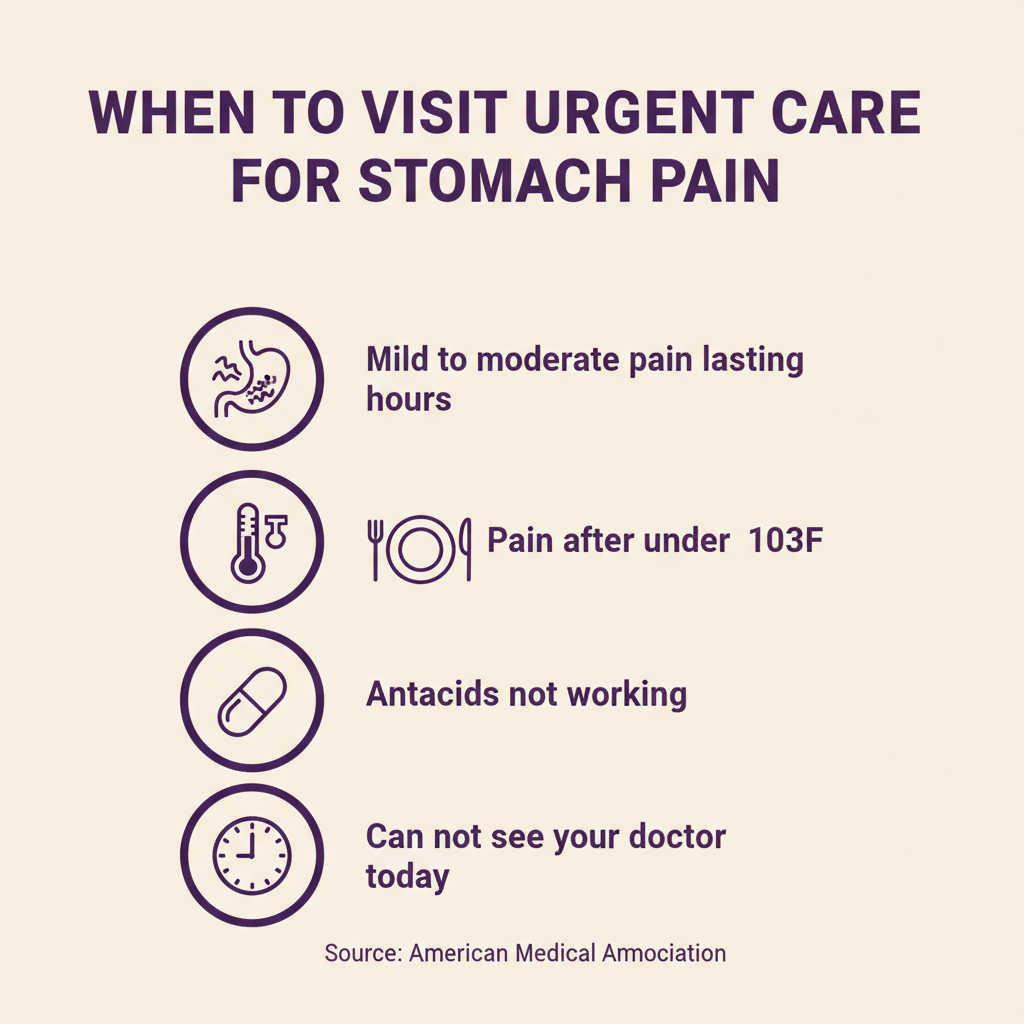
Visit urgent care for stomach pain when your symptoms bother you but are not life-threatening. As a general rule, urgent care is the right choice when:
- Your stomach pain is mild to moderate and has lasted more than a few hours
- You have nausea, vomiting, or diarrhea that makes it hard to keep fluids down
- Also, you notice a low-grade fever (under 103 F) along with stomach pain
- Pain started after eating and you suspect food poisoning
- You have heartburn or acid reflux that antacids are not fixing
- Cramps come with bloating, gas, or changes in bowel habits
- Finally, you cannot get a same-day visit with your regular doctor
In addition, consider urgent care if your stomach pain has come and gone for several days. Waiting too long can allow a treatable condition to get worse.
What Happens at an Urgent Care Visit for Stomach Pain
Knowing what to expect can ease your anxiety. At CityHealth, the process is simple.
First, a provider asks about your symptoms. They want to know where the pain is, when it started, and how bad it feels. Then, they do a physical exam. They press on your belly to check for tenderness or swelling.
Next, depending on findings, we may run basic lab work. For example, this can include a urine test to rule out UTIs that mimic stomach pain. Also, we may order blood tests or stool samples. For instance, a stool culture can pinpoint the bacteria behind food poisoning.
After diagnosis, treatment usually includes one or more of these options:
- Anti-nausea meds (ondansetron or promethazine)
- IV fluids for dehydration from vomiting or diarrhea
- Antacids or proton pump inhibitors for reflux and gastritis
- Pain relief medication
- Diet tips, including the BRAT diet (bananas, rice, applesauce, toast)
- Referral to a GI specialist if we suspect a chronic condition
Consequently, most urgent care visits for stomach pain take just 30 to 60 minutes. You walk in, get treated, and leave with a plan.
Urgent Care for Stomach Pain vs. the Emergency Room
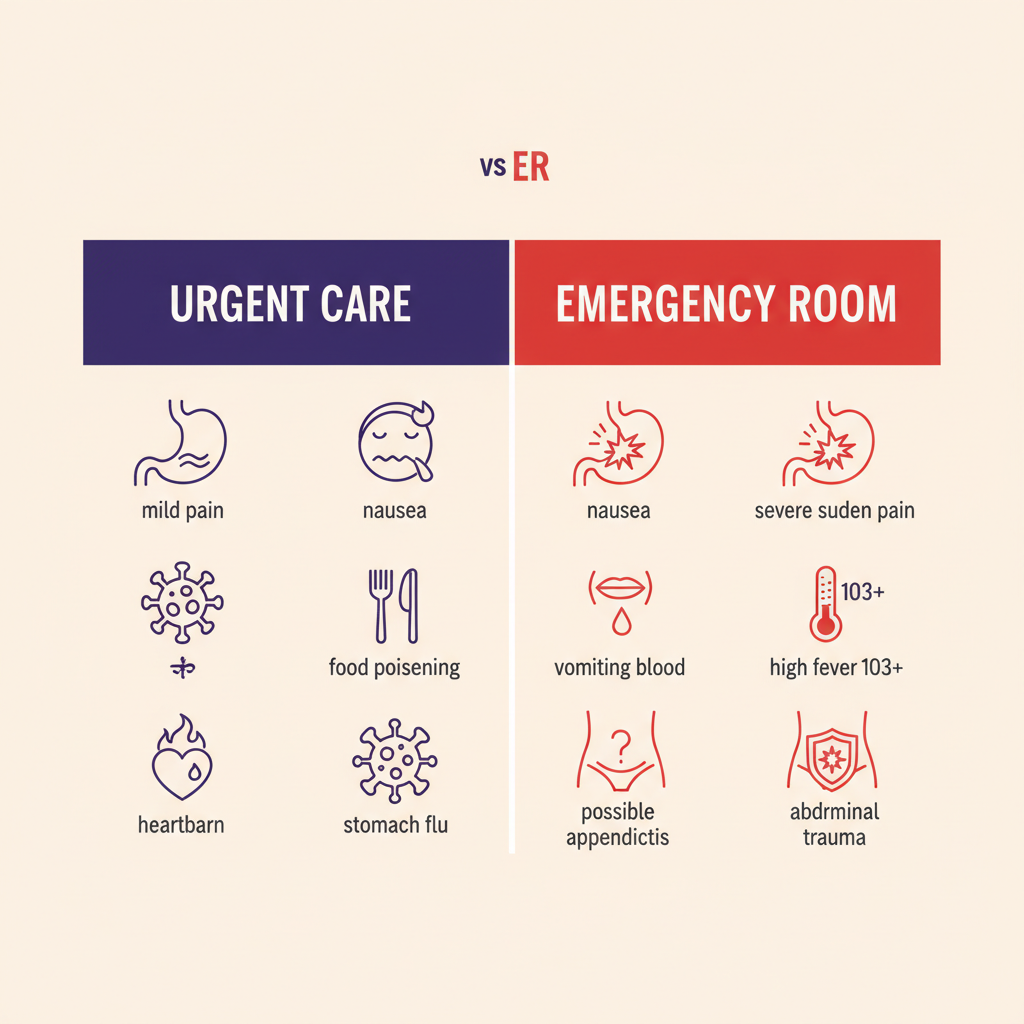
This is the question that matters most. Therefore, here is a clear breakdown of when each option makes sense.
Go to the ER if you have any of these symptoms:
- Severe, sudden stomach pain that stops you from standing or walking
- Vomiting blood or blood in your stool
- Also, high fever (103 F or above) with stomach pain
- Sharp pain in the lower right belly (a sign of appendicitis)
- Belly pain after an injury, fall, or car crash
- Severe dehydration: dizziness, confusion, dark urine, or fainting
- Chest pain or pressure along with stomach pain
- Rigid, hard belly that hurts to touch
- Similarly, pregnancy with belly pain and bleeding
These symptoms may point to appendicitis, a bowel blockage, or internal bleeding. As a result, they need imaging, surgery, or care only a hospital can provide. For a deeper look, read our article on urgent care for abdominal pain.
Go to urgent care if:
- Pain is uncomfortable but you can still function
- Symptoms have lasted hours or days without getting much worse
- You suspect food poisoning, gastritis, or a stomach bug
- Meanwhile, you need care faster than your regular doctor can offer
On the other hand, if you are not sure, call us first. Our team at CityHealth can help you decide over the phone.
Home Remedies to Try Before Your Visit
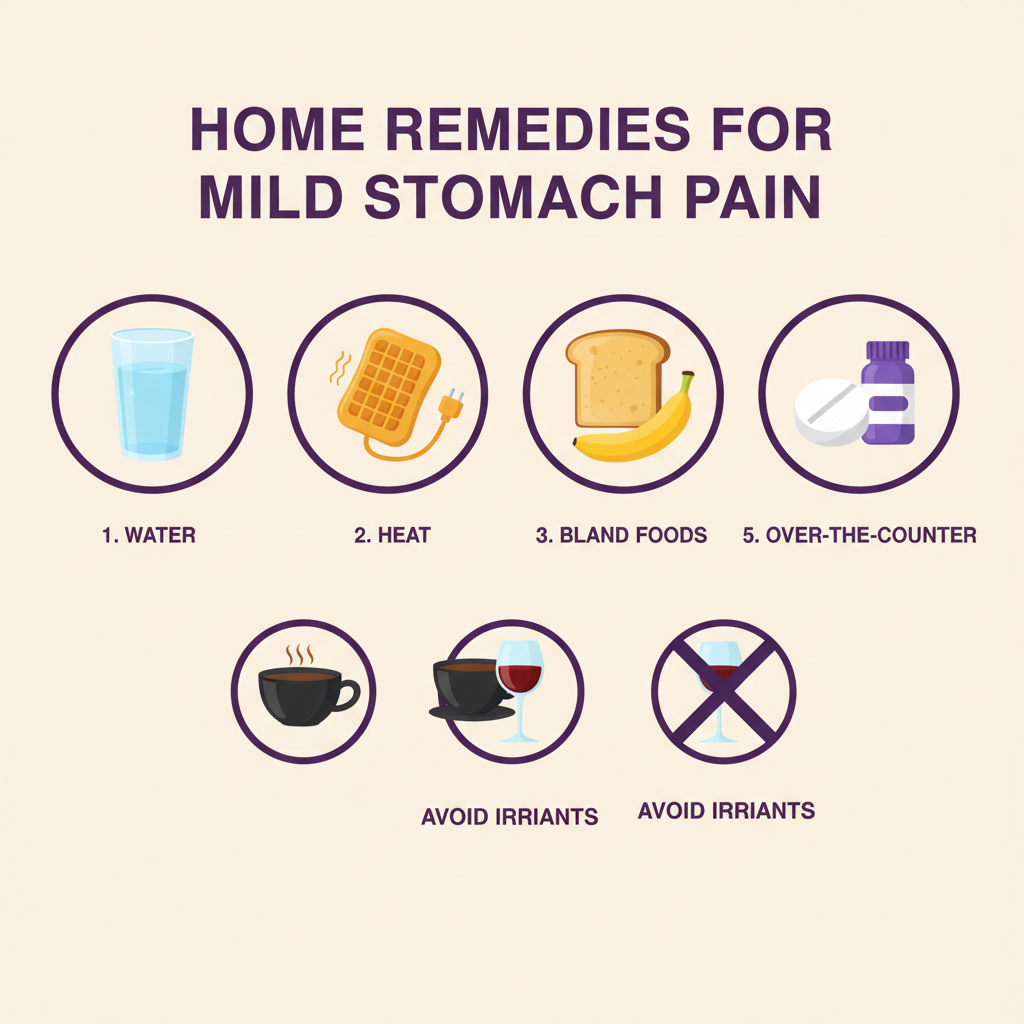
While you decide whether to seek care, a few simple steps may help with mild stomach pain at home.
- First, sip clear fluids — water, broth, or an electrolyte drink. Small sips work better than big gulps.
- Then, use a heating pad on your belly for 15 to 20 minutes. This eases cramping.
- Also, eat bland foods — toast, rice, bananas, and applesauce are gentle on your stomach.
- Skip triggers — avoid alcohol, caffeine, spicy food, and fatty meals.
- Finally, try antacids if you think acid reflux or heartburn is the cause.
Although these tips help with mild pain, they do not replace a medical visit. If symptoms last more than 48 hours or get worse, visit urgent care right away.
Why Choose CityHealth Urgent Care for Stomach Pain
At CityHealth, we know stomach pain can wreck your whole day. That is why we offer walk-in care with no appointment needed at our San Leandro and Oakland clinics. Here is what sets us apart:
- Short wait times — most patients are seen in minutes, not hours
- On-site testing — we run labs in-house for faster results
- Lower cost — urgent care costs a fraction of an ER visit
- Skilled providers — our team treats stomach pain, nausea, food poisoning, and gut issues every day
According to the American College of Emergency Physicians, the average ER visit costs over $2,000. In contrast, urgent care gives you the same quality care for stomach issues at a much lower price.
Do Not Wait When Stomach Pain Gets Worse
Ultimately, stomach pain is one of the top reasons people visit urgent care. Most causes are treatable. But some can turn serious if ignored. Therefore, the key is knowing where to go.
If your pain is mild to moderate and you suspect food poisoning, a stomach bug, acid reflux, or gastritis, CityHealth Urgent Care can help fast. Just walk in — no appointment needed.
However, if your pain is sudden and severe, or you see red flags like vomiting blood, high fever, or confusion, go to the nearest ER right away.
Your stomach is telling you something. Listen to it. Then, get the right care at the right place.