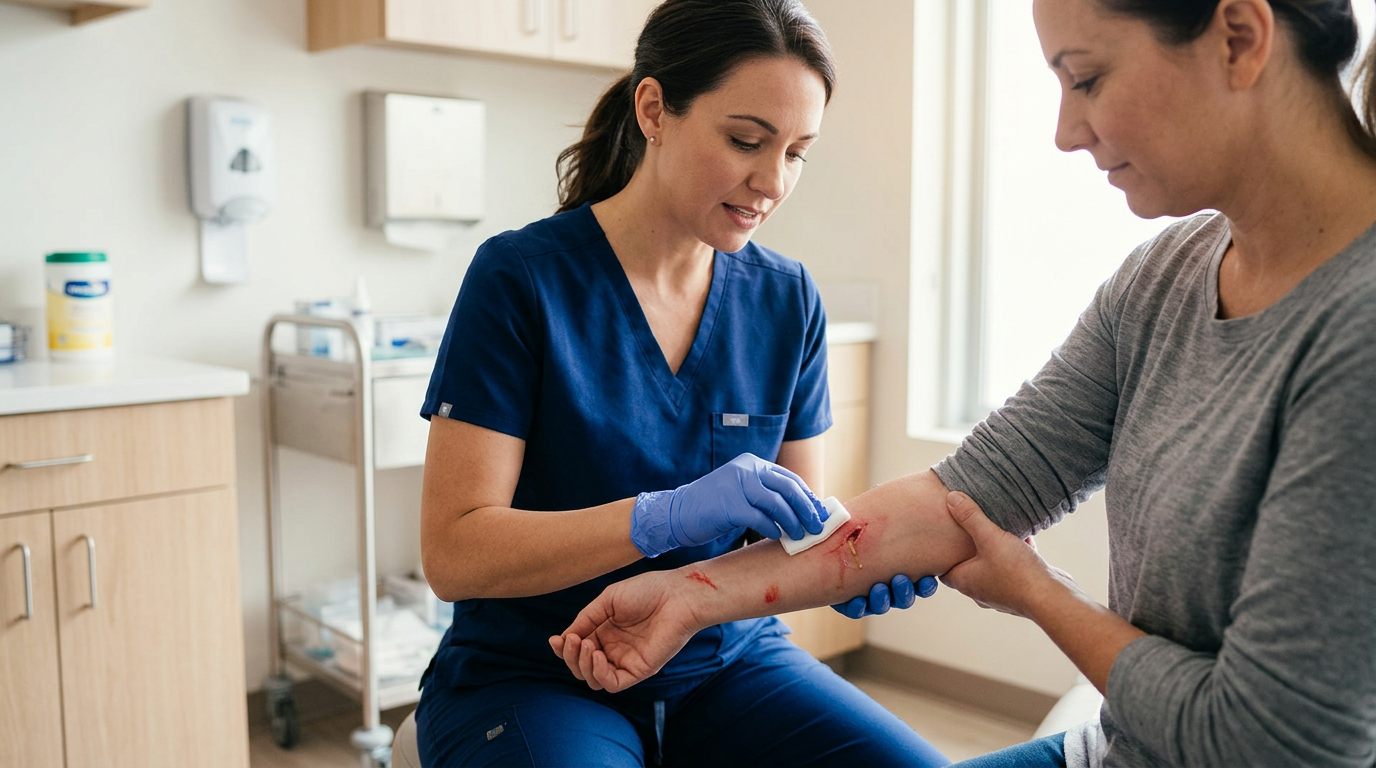

A cat bite may look small, but it is one of the most dangerous animal bites you can get. If you have been bitten by a cat, urgent care for a cat bite is often the right first step — and it is important to act quickly. Cat bites become infected in up to 80% of cases, and infections can develop within hours. At CityHealth Urgent Care in San Leandro, we treat cat bites with same-day wound care, antibiotics, tetanus assessment, and rabies risk evaluation.
This guide explains why cat bites are so dangerous, what treatment involves, and when you need to go to the emergency room instead.
Why Cat Bites Are More Dangerous Than Dog Bites
Most people assume dog bites are more dangerous because they cause more visible damage. But cat bites actually carry a much higher risk of infection. Here is why:
Related: can urgent care prescribe antibiotics urgent care for a dog bite.
Deep Puncture Wounds
Cat teeth are long, thin, and sharp. When a cat bites, its teeth penetrate deeply into tissue — sometimes reaching tendons, joint spaces, or bone — while leaving a very small entry wound on the skin surface. The small opening closes quickly, trapping bacteria deep inside where the body cannot flush them out easily.
Pasteurella multocida
The primary bacterium responsible for cat bite infections is Pasteurella multocida. It is present in the mouths of nearly all cats. Pasteurella infections progress rapidly. Within 24 to 48 hours of a bite, you may develop significant swelling, redness, warmth, and pus at the bite site. Left untreated, these infections can spread to tendons, joints, and bones — a condition called septic arthritis or osteomyelitis — which may require hospitalization and surgery.
The 80% Infection Rate
Research published in the Journal of Hand Surgery found that cat bites to the hand resulted in hospitalization in 30% of cases. Overall, cat bites become infected in approximately 50 to 80% of cases — a rate far higher than dog bites (5 to 15%) or human bites (10 to 15%). The combination of deep puncture wounds and Pasteurella multocida makes cat bites uniquely dangerous.
The 48-Hour Window: Why You Should Not Wait
Cat bite infections can develop very quickly — sometimes within just a few hours. The first 48 hours after a bite are critical. If you wait until you see obvious signs of infection before seeking care, the infection may already be more difficult to treat.
Seek urgent care for a cat bite as soon as possible — ideally within hours of the injury. Do not wait and see. Even if the bite looks minor, the risk of infection is high enough that most medical guidelines recommend prompt evaluation and antibiotic prophylaxis (preventive antibiotics) for cat bites, especially on the hands or near joints.
What Treatment Looks Like at Urgent Care
When you come to CityHealth Urgent Care in San Leandro for a cat bite, here is what your visit will include:
Wound Cleaning and Care
The most important first step is thorough wound irrigation. Your provider will flush the wound with a large volume of saline solution under pressure to wash out bacteria. The wound will then be examined for depth, signs of tendon or joint involvement, and foreign material. In most cases, cat bite puncture wounds are left open (not sutured) to allow drainage and reduce the risk of trapping bacteria inside.
Antibiotics: Amoxicillin-Clavulanate
The first-choice antibiotic for cat bites is amoxicillin-clavulanate (brand name Augmentin). This combination antibiotic is effective against Pasteurella multocida as well as other bacteria commonly found in cat mouths. A typical course is 5 to 7 days. If you are allergic to penicillin, your provider will prescribe an appropriate alternative such as doxycycline or a fluoroquinolone.
Tetanus Assessment
Your provider will check your tetanus immunization history. If you have not had a tetanus booster in the past 5 years, or if you are unsure of your last tetanus shot, you will receive a booster at your visit. Tetanus is a serious bacterial infection that can enter the body through puncture wounds.
Rabies Risk Evaluation
Rabies is rare in domestic cats in the United States, but it cannot be ignored. Your provider will ask about the cat — was it a stray or feral cat, or a known pet with vaccination records? If the cat is a known, vaccinated pet, the rabies risk is very low. If the cat was a stray or its vaccination status is unknown, your provider will discuss the situation with you and may consult with your local public health department about whether post-exposure prophylaxis (PEP) is needed.
According to the CDC, animal bites require prompt evaluation to assess rabies risk. If the cat is available, local animal control authorities may quarantine it for observation. If PEP is recommended, you will be referred to an emergency department or public health clinic, as PEP requires a series of injections given over 14 days.
What to do at the scene of a cat bite: If possible, get the contact information of the cat’s owner and ask about the cat’s vaccination history. Take a photo of the vaccination records if available. This information will help your urgent care provider assess your rabies risk.
Signs of Serious Cat Bite Infection
Even after receiving treatment, watch the bite site closely for the next 24 to 72 hours. Return to urgent care or go to the ER immediately if you notice:
- Rapidly spreading redness, swelling, or warmth around the bite
- Red streaks moving away from the bite site (a sign of spreading infection called lymphangitis)
- Increasing pain rather than improvement
- Pus or discharge from the wound
- Fever above 100.4°F
- Swollen lymph nodes near the bite (in the armpit if the bite was on the hand or arm)
- Difficulty moving fingers, hand, or the affected joint
First Aid: What to Do Before You Get to Urgent Care
While you are getting ready to go to CityHealth, take these first aid steps at home:
- Wash the wound immediately — Run clean water over the bite for at least 5 minutes. Use soap if available. Thorough washing is the single most effective thing you can do to reduce infection risk.
- Apply gentle pressure — If the wound is bleeding, apply gentle pressure with a clean cloth.
- Do not close the wound — Do not apply super glue or attempt to close the puncture. Closing puncture wounds traps bacteria inside.
- Cover loosely — Place a clean bandage or cloth over the wound, but do not wrap it tightly.
- Get information about the cat — If you can do so safely, get the owner’s contact information and vaccination records.
- Head to urgent care — Do not wait for symptoms to develop.
Cat Scratch Disease: A Related Risk
In addition to bite injuries, cats can also transmit Bartonella henselae — the bacterium that causes cat scratch disease — through scratches and bites. Cat scratch disease typically causes swollen, tender lymph nodes near the scratch site, along with low-grade fever and fatigue. It usually resolves on its own in healthy people but can be more serious in people with weakened immune systems. If you develop swollen lymph nodes days to weeks after a cat scratch or bite, mention it to your provider.
When to Go to the ER Instead of Urgent Care
Urgent care is appropriate for most cat bites that are not immediately life-threatening. Go to the emergency room if:
- The bite is on the face, neck, or near the eye
- The bite is deep enough to potentially involve a tendon or joint (especially on the hand)
- You are already showing signs of a rapidly spreading or severe infection at the time of your first visit
- You are immunocompromised (HIV, diabetes, on chemotherapy, taking immunosuppressants)
- You have signs of systemic infection: fever above 103°F, chills, confusion, rapid heartbeat
- Rabies post-exposure prophylaxis is recommended (PEP requires emergency department or public health coordination)
Cat Bites on the Hand: A Special Warning
Bites on the hand carry the highest risk of serious complication. The hand has many small joint spaces, tendon sheaths, and tight anatomical compartments. A Pasteurella infection in a tendon sheath — called septic tenosynovitis — can destroy tendons within hours. Hand bites that show any sign of infection, or that penetrated near a knuckle or joint, should be treated aggressively. Your urgent care provider may consult a hand surgeon or refer you to an orthopedic specialist if they are concerned about tendon or joint involvement.
Book Same-Day Care at CityHealth
CityHealth San Leandro — open 7 days a week. Walk-ins welcome, most insurance accepted. On-site lab and X-ray.
Frequently Asked Questions
Do I need stitches for a cat bite?
Usually not. Puncture wounds from cat bites are typically left open to prevent trapping bacteria. Lacerations (cuts) may be sutured depending on their size and location. Your provider will make this determination during your exam.
How long does a cat bite take to get infected?
Infections from cat bites can develop within 3 to 6 hours. Most infections are apparent within 24 to 48 hours. That is why prompt treatment is so important.
My cat bit me but seemed healthy. Do I still need antibiotics?
Yes. Even a bite from a healthy, vaccinated, indoor cat should be evaluated for preventive antibiotics. The risk comes from the bacteria in the cat’s mouth, not from the cat’s overall health. Most medical guidelines recommend antibiotic prophylaxis for all cat bites, particularly on the hand or near a joint.
What if I was bitten by a stray cat?
Seek care immediately. A stray cat cannot have its vaccination status confirmed. Your provider will assess the rabies risk and may involve public health authorities. Do not ignore a bite from a stray animal.
Treat Your Cat Bite at CityHealth Urgent Care in San Leandro
Cat bites are medical emergencies that most people underestimate. If you have been bitten by a cat — no matter how small the wound looks — come to CityHealth Urgent Care in San Leandro right away. Our providers will clean the wound properly, prescribe antibiotics to prevent infection, assess your tetanus status, and evaluate your rabies risk. We handle everything in a single visit.
Walk in any time or book online for faster check-in.
Walk in or Book Your Appointment Online. Same-day cat bite treatment including wound care, antibiotics, tetanus, and rabies assessment.
Need care today?
CityHealth urgent care in San Leandro offers same-day walk-in care — no appointment required. Book online or walk in.