Burns are among the most common household injuries — and one of the most commonly mishandled. Knowing how to respond in the first few minutes after a burn can make a real difference in how well you heal. This guide covers everything you need to know about urgent care for burns: how to classify them, what first aid actually works, and when to head to CityHealth in San Leandro vs. the emergency room.
Whether it’s a cooking splash, a curling iron contact, or a workplace accident, CityHealth Urgent Care in San Leandro is equipped to evaluate and treat minor to moderate burns — no appointment needed.
Understanding Burn Degrees: First, Second, and Third
Not all burns are equal. The severity depends on how deep the burn goes into the skin layers. Proper classification helps determine the right treatment.
First-Degree Burns (Superficial Burns)
First-degree burns affect only the outer layer of skin (the epidermis). They are the mildest type of burn.
- Red, dry skin — similar to a sunburn
- Painful to touch
- No blistering
- Heal on their own within 3-5 days
Examples: brief contact with a hot pan, mild sunburn, quick steam exposure. Most first-degree burns can be treated at home.
Second-Degree Burns (Partial Thickness Burns)
Second-degree burns go through the epidermis and into the dermis (the layer beneath). These are more serious.
- Blistering is the hallmark sign
- Intense pain and swelling
- Wet, shiny appearance beneath broken blisters
- May appear red, white, or splotchy
- Take 2-3 weeks to heal; may leave scarring
Second-degree burns smaller than 3 inches (about the size of your palm) can typically be treated at urgent care. Larger burns, or burns on the face, hands, feet, genitals, or joints, need more specialized care.
Third-Degree Burns (Full Thickness Burns)
Third-degree burns destroy both layers of skin and may damage deeper tissues including fat, muscle, and bone.
- Skin appears white, brown, or black and leathery
- Often painless in the burn area because nerve endings are destroyed
- Require immediate emergency treatment
- Always require hospital care — not urgent care
According to the Mayo Clinic, third-degree burns require immediate emergency medical care and should never be treated at home or at an urgent care center.
Urgent Care for Burns: The First Aid Steps That Actually Work
What you do in the first few minutes after a burn matters. Here’s what to do — and what to avoid.
Step 1: Cool the Burn With Running Water
Run cool (not cold) water over the burned area for 10-20 minutes. This is the single most effective first aid step for burns. It stops the burning process, reduces pain, and limits tissue damage.
Do NOT use ice or ice water. Ice can cause frostbite on top of the burn and actually makes outcomes worse. Do not use butter, toothpaste, egg whites, or any home remedy — these increase infection risk and delay healing.
Step 2: Remove Jewelry and Tight Clothing
Remove rings, bracelets, belts, and tight clothing near the burn area before swelling begins. Do not try to remove clothing that is stuck to burned skin.
Step 3: Cover the Burn
Cover the burn loosely with a clean, non-fluffy material — a sterile bandage or clean plastic wrap works well. Avoid cotton wool or anything that will stick. Do not wrap tightly.
Step 4: Manage Pain
Over-the-counter ibuprofen or acetaminophen can help with pain and inflammation. Follow dosing instructions on the label.
What NOT to Do
- Do not pop blisters — they protect against infection
- Do not apply ice, butter, toothpaste, or any oil-based product
- Do not use fluffy cotton that can stick to the wound
- Do not cover with an adhesive bandage directly on the burn
When to Go to Urgent Care for Burns
Head to CityHealth Urgent Care in San Leandro if your burn:
- Is second-degree (blistering) and smaller than 3 inches
- Is on the arm, leg, or torso (but not the face, hands, feet, genitals, or joints)
- Is from a chemical or electrical source (even if it looks minor)
- Shows signs of infection: increasing redness, swelling, pus, or fever
- Is from an unknown source or occurred in an enclosed space (possible inhalation concern)
- Has not healed after 2 weeks
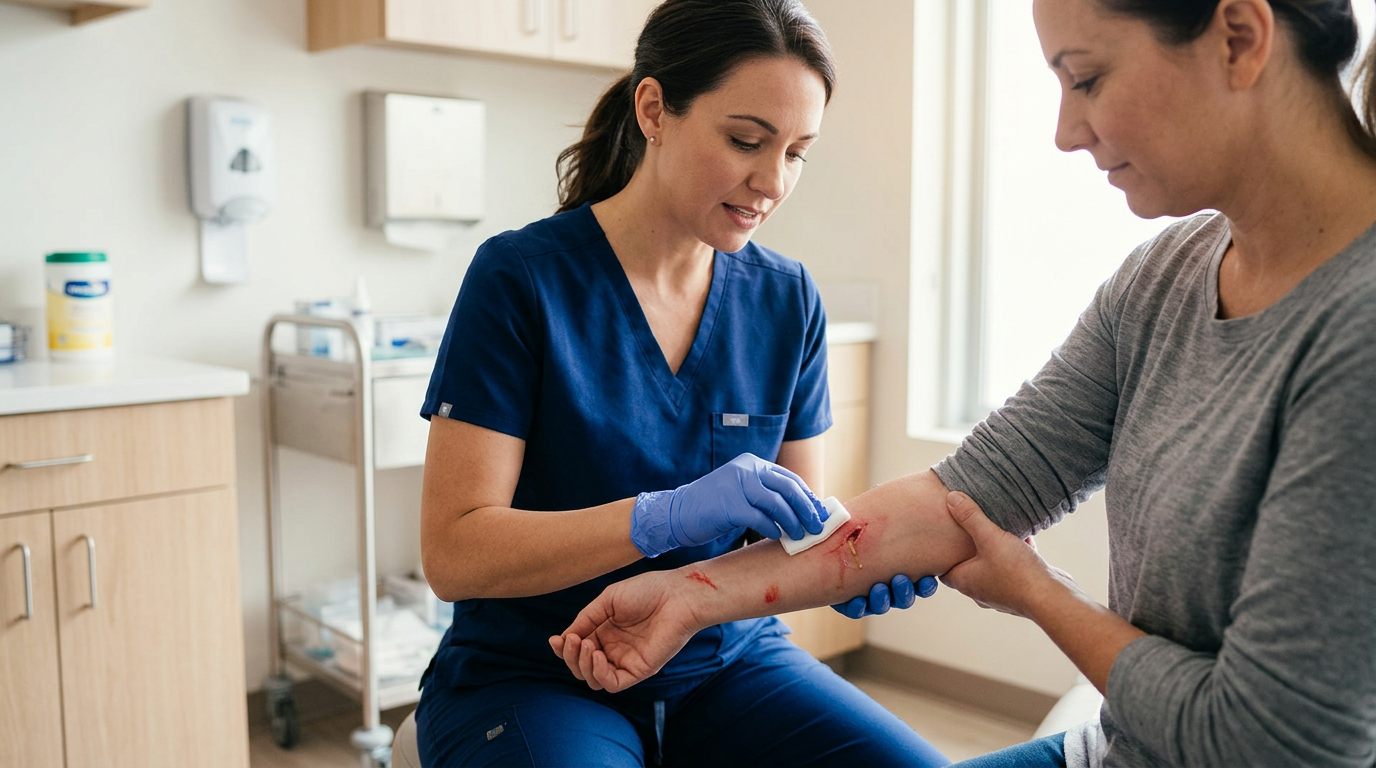
At CityHealth, we can clean the wound, prescribe burn-appropriate dressings, and provide guidance on wound care at home. We’ll also assess whether you need a tetanus booster.
When to Go to the ER for Burns
Do not go to urgent care — call 911 or go directly to the ER — if the burn:
- Is third-degree (white, brown, or black; leathery; painless in the burn area)
- Covers a large area of the body (larger than the palm of your hand)
- Is on the face, hands, feet, genitals, or major joint (knee, elbow)
- Was caused by electricity or lightning
- Was caused by a chemical, especially if it affected the eyes or mouth
- Is accompanied by smoke inhalation (coughing, hoarseness, difficulty breathing)
- Occurred in someone under 5 years old or over 60 years old
- Occurred in someone with a weakened immune system or diabetes
Burn Wound Care and Dressing Changes
Once your burn has been evaluated at CityHealth, proper wound care at home is key to preventing infection and minimizing scarring.
Daily Wound Care Routine
- Wash your hands before touching the wound
- Gently clean the burn with mild soap and cool water
- Apply a thin layer of prescribed or recommended ointment (like bacitracin or silver sulfadiazine)
- Cover with a non-stick sterile dressing
- Change the dressing once daily or when it becomes wet or soiled
Signs of Burn Infection
Watch for these warning signs and return to CityHealth (or call us) if you notice:
- Increasing redness, swelling, or warmth around the burn
- Yellow or green discharge from the wound
- Unpleasant smell from the wound
- Fever above 100.4°F
- Increasing pain after the first few days (healing burns should become less painful over time)
Recovery and Scarring
First-degree burns typically leave no scar. Second-degree burns may cause some discoloration or scarring, especially if they become infected or don’t receive proper care. Keep healed burns moisturized and protected from the sun — UV exposure can cause lasting discoloration in healed burn tissue.
For significant burns, your provider may recommend silicone gel sheeting or refer you to a dermatologist or wound care specialist once the burn has healed.
Related Services at CityHealth
Wound care is a core part of what we do at CityHealth. If your burn involved a cut or laceration, check out our guide on when to get stitches. Not sure whether your burn is an urgent care case or an ER case? Our urgent care vs. ER guide covers the decision in detail. If a burn was caused by an animal or human bite, see our post on urgent care for cat bites for wound infection risk guidance.
Book Same-Day Care at CityHealth
CityHealth San Leandro — open 7 days a week. Walk-ins welcome, most insurance accepted. On-site lab and X-ray.
Frequently Asked Questions
Can urgent care treat burns?
Yes. CityHealth can evaluate and treat minor to moderate burns — specifically first-degree and small second-degree burns. We provide wound cleaning, dressing, and follow-up care instructions. Severe burns (third-degree, large surface area, face/hands/feet) require ER-level care.
Should I put ice on a burn?
No. Ice can damage burned tissue further and worsen outcomes. Use cool running water for 10-20 minutes instead. This is the gold standard first aid recommendation.
How do I know if my burn is infected?
Signs of infection include increasing redness, swelling, pus or discharge, bad smell, or fever. If you notice any of these, return to CityHealth for evaluation. Infected burns need antibiotic treatment.
How long does a burn take to heal?
First-degree burns: 3-5 days. Small second-degree burns: 2-3 weeks. Larger or deeper burns take longer and may need ongoing wound care. Proper treatment from the start significantly reduces healing time.
Visit CityHealth Urgent Care in San Leandro for Burn Treatment
Burns need the right care fast. Whether you’re dealing with a kitchen accident, a workplace exposure, or something in between, CityHealth Urgent Care in San Leandro is here to help. We’re open 7 days a week — no appointment needed.
Save your spot at CityHealth today and get your burn properly evaluated and treated. Fast, expert wound care makes all the difference in how you heal.
CityHealth Urgent Care serves San Leandro, Oakland, Hayward, Castro Valley, and the surrounding East Bay. Urgent care services are available at our San Leandro location only.
Need care today?
CityHealth urgent care in San Leandro offers same-day walk-in care — no appointment required. Book online or walk in.