That red, swollen lump keeps getting worse. It’s hot to the touch, painful, and possibly oozing. A skin abscess won’t resolve on its own. You need an urgent care abscess drainage before the infection spreads.
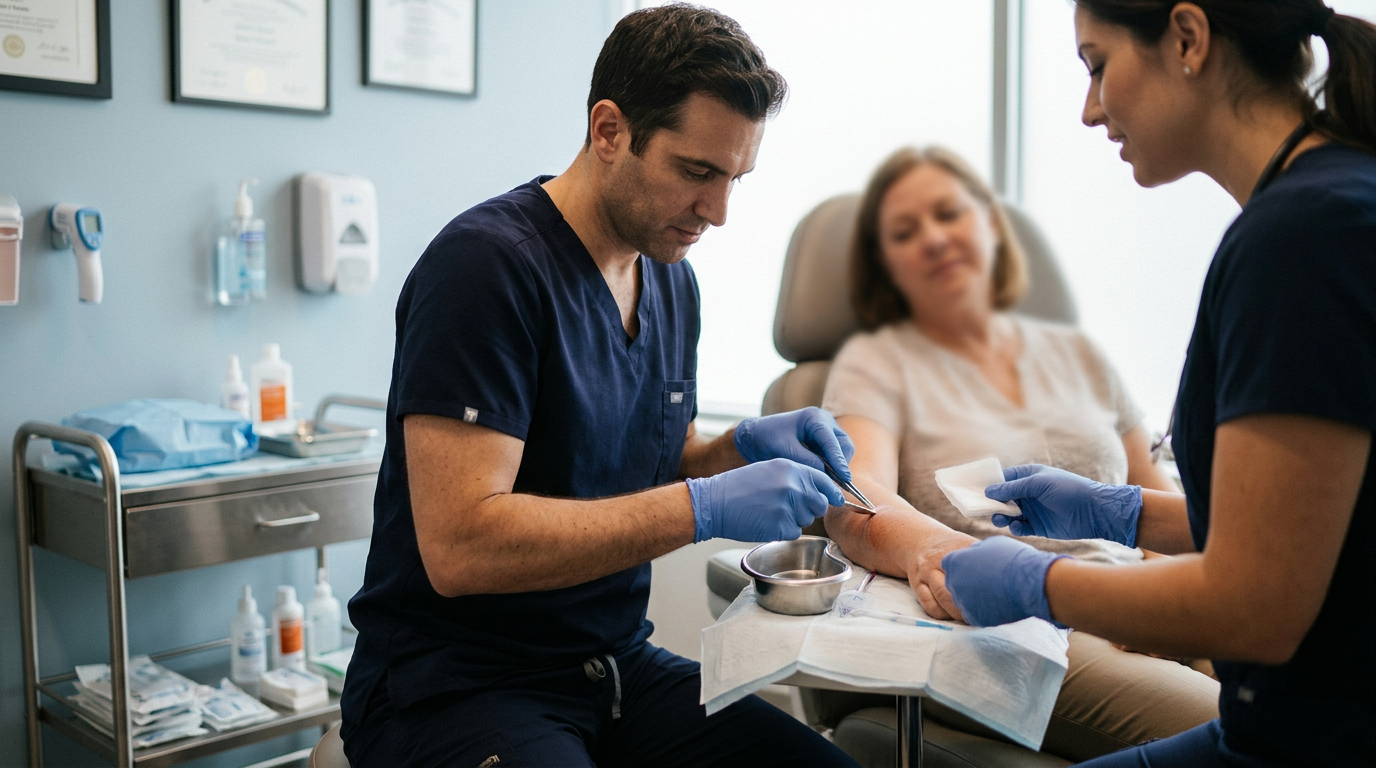
Urgent care clinics drain skin abscesses every day. The procedure takes 20 to 30 minutes, costs a fraction of an ER visit, and you walk out the same day with the infection under control. CityHealth Urgent Care in San Leandro performs incision and drainage (I&D) procedures on-site, seven days a week.
This guide explains what an abscess is, how urgent care drains it, what it costs, and when you need emergency care instead.
What Is a Skin Abscess?
A skin abscess is a pocket of pus that forms under the skin when bacteria enter through a cut, scratch, hair follicle, or insect bite. The body’s immune system sends white blood cells to fight the bacteria, and that battle produces pus: a thick mixture of dead cells, bacteria, and fluid.
Abscesses start as a firm, tender area. Over days, the pocket fills and grows. The skin above it turns red, warm, and tight. Some abscesses develop a visible white or yellow head. Others stay deep under the surface.
Common locations include the armpits, groin, buttocks, inner thighs, face, and anywhere skin-to-skin friction occurs. Staph bacteria, particularly MRSA (methicillin-resistant Staphylococcus aureus), cause the majority of skin abscesses. According to the CDC, MRSA skin infections often present as abscesses or boils that people initially mistake for spider bites.
Skin Abscess vs. Dental Abscess
Urgent care handles skin abscesses. Dental abscesses require a dentist. This distinction matters because people searching for “urgent care abscess” often have one or the other.
A dental abscess forms at the root of a tooth or in the gum tissue. It causes jaw pain, facial swelling, fever, and a foul taste in your mouth. Urgent care providers can prescribe antibiotics at urgent care to control the infection temporarily, but they cannot perform dental procedures. You need a dentist or oral surgeon for definitive treatment.
A skin abscess appears on the body’s surface or just below it. Urgent care providers drain these directly. No dental referral needed.
How Urgent Care Abscess Drainage Works
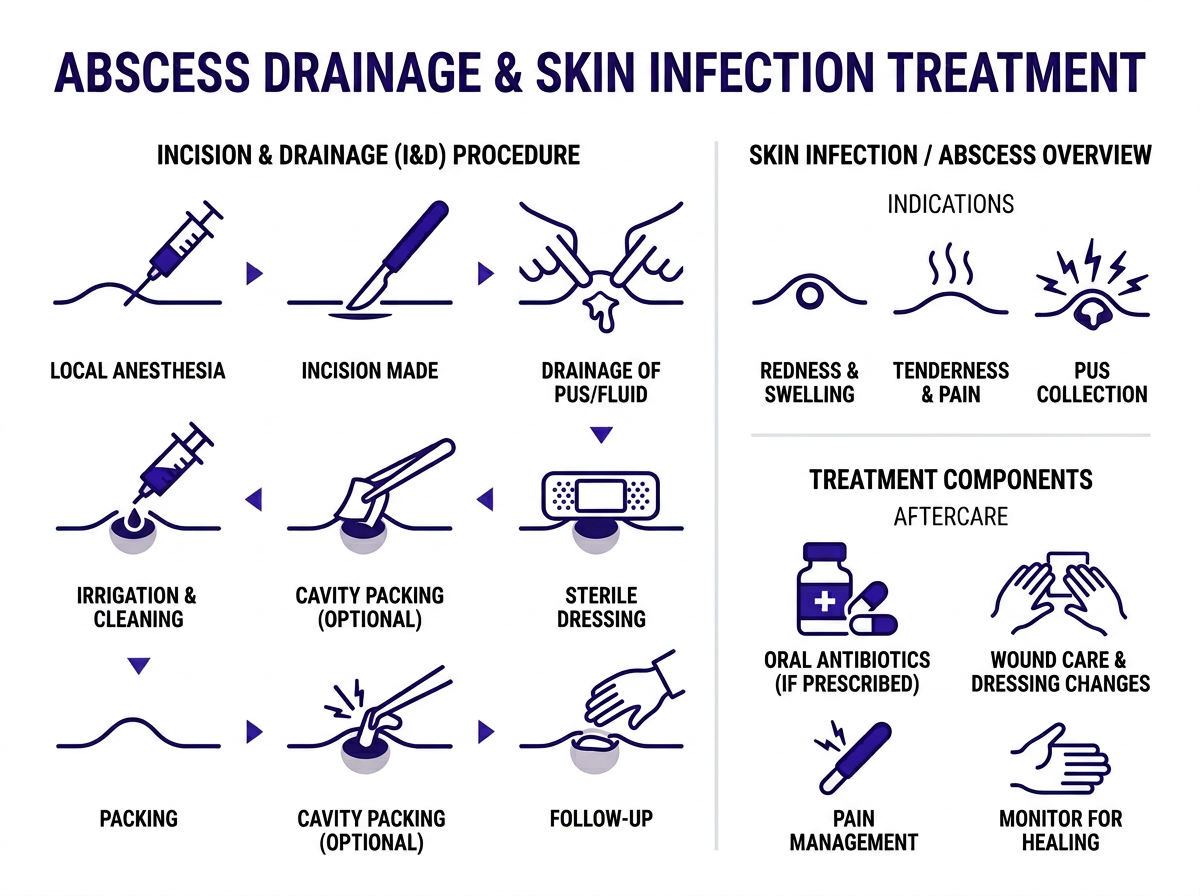
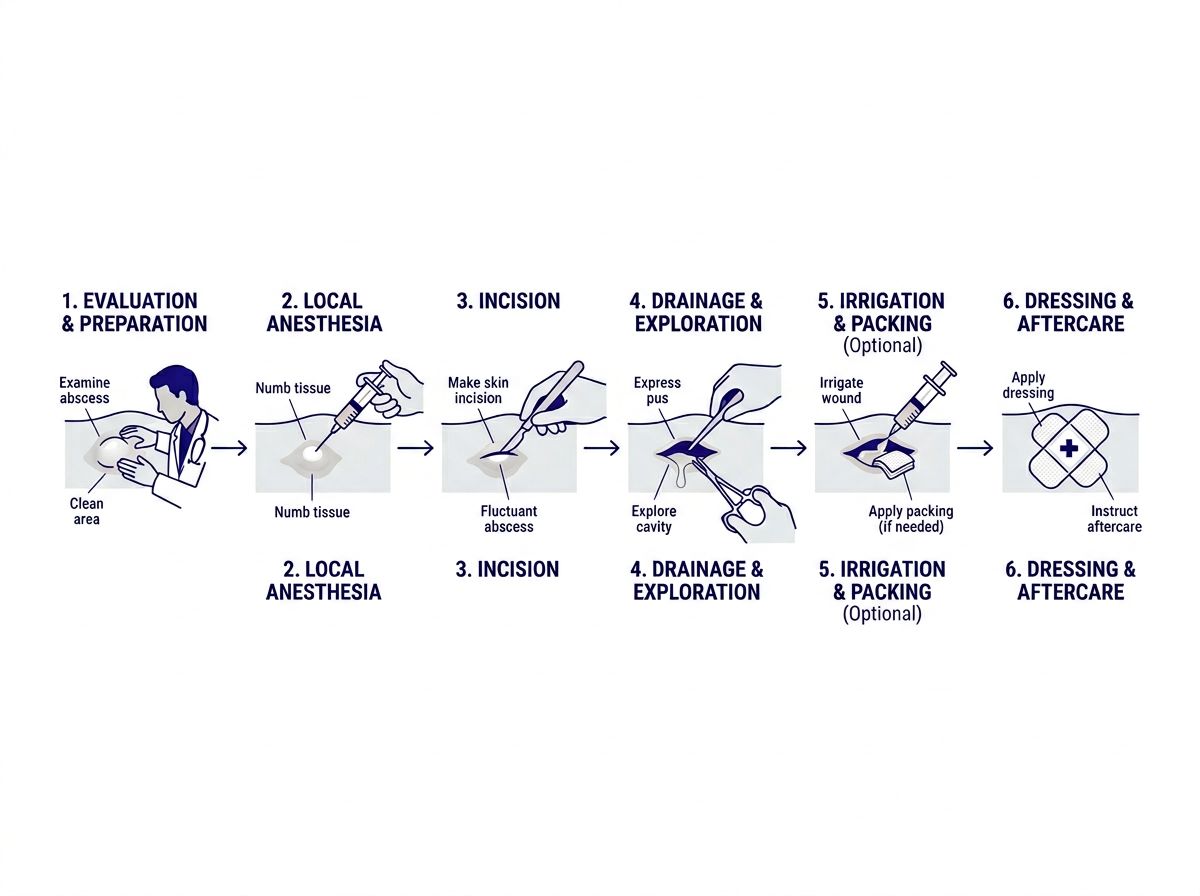
Incision and drainage (I&D) is a straightforward procedure. Here’s what happens step by step at a typical urgent care visit:
- Assessment: Your provider examines the abscess, checks size and depth, and confirms it’s ready for drainage. Not all abscesses are mature enough to drain. If the pocket hasn’t fully formed, your provider may prescribe warm compresses and antibiotics first, with drainage scheduled for a follow-up visit.
- Numbing: The provider injects local anesthetic (lidocaine) around the abscess. This stings for about 10 seconds, then the area goes numb. You stay awake and alert the entire time.
- Incision: Using a scalpel, the provider makes a small cut into the abscess cavity. This releases the trapped pus immediately.
- Drainage and irrigation: The provider expresses all pus from the cavity, then flushes it with sterile saline to clear remaining debris and bacteria.
- Packing: For larger abscesses, the provider packs the cavity with sterile gauze. This keeps the wound open so it heals from the inside out and prevents the abscess from reforming. The packing comes out at a follow-up visit in one to three days.
- Wound care instructions: You leave with bandaging, instructions for home care, and usually a prescription for oral antibiotics.
Total time in the procedure room: 20 to 30 minutes. Most patients describe the worst part as the initial numbing injection. After that, you feel pressure but no pain.
How Much Does Urgent Care Abscess Drainage Cost?
Abscess drainage falls under minor surgical procedures. It costs more than a standard office visit but far less than the same procedure in an emergency room.
With insurance: Your visit copay ($25 to $75) plus any applicable coinsurance for the procedure. Many insurance plans cover I&D as an in-office surgical procedure. Total out-of-pocket typically runs $50 to $200 depending on your plan.
Without insurance: Self-pay rates at urgent care range from $200 to $500 for the full visit including the procedure. Some clinics charge the office visit and procedure separately.
ER comparison: The identical procedure in an emergency room costs $1,000 to $3,000. ER facility fees, physician fees, and supply charges add up fast. The procedure itself takes the same 20 minutes in either setting.
For a detailed look at urgent care pricing, read our urgent care costs guide. If you need care without coverage, see urgent care without insurance.
Signs Your Abscess Needs Medical Attention
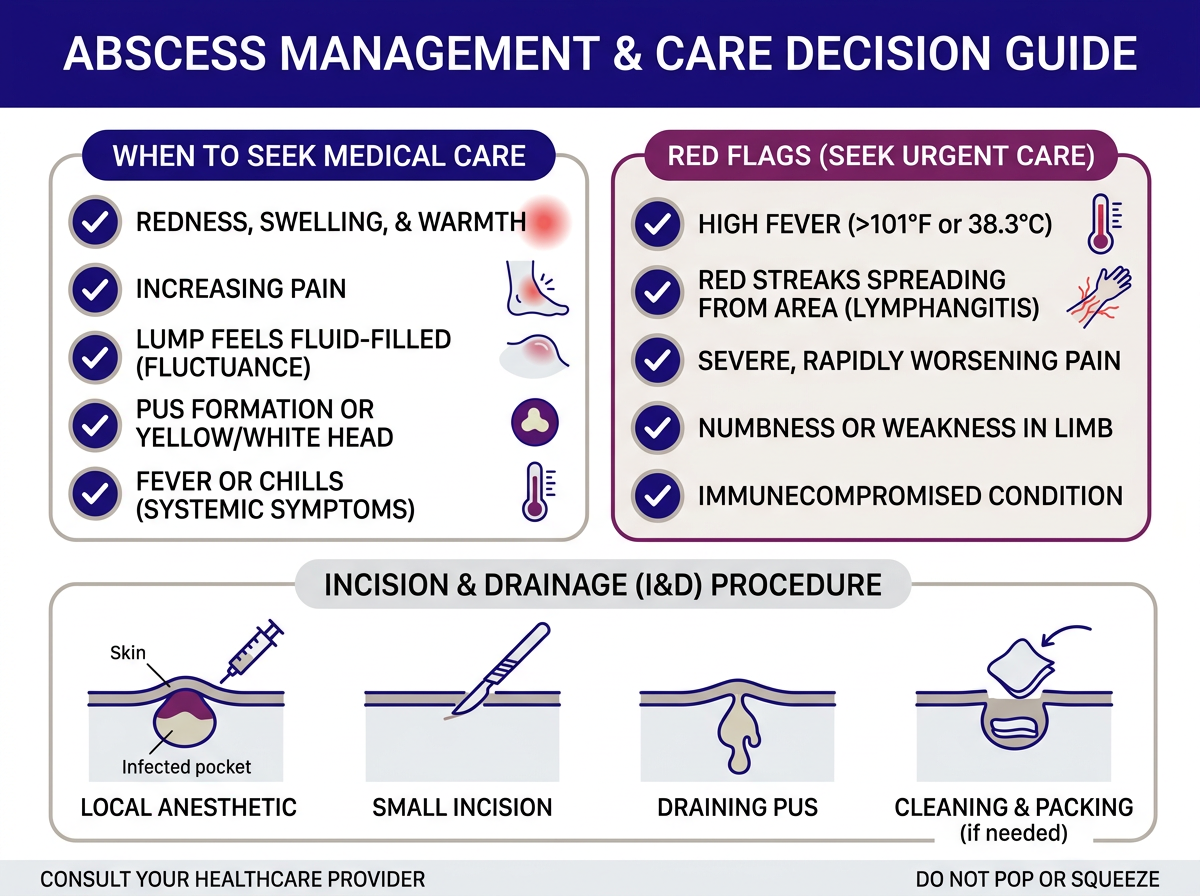
Small boils sometimes drain on their own. But medical treatment becomes necessary when you notice any of these signs:
- Size larger than a pea: Anything bigger than half an inch across probably won’t resolve without drainage
- Getting worse over 2 to 3 days: Growing, more painful, more red. The infection is winning.
- Red streaks spreading from the site: This indicates the infection is moving into surrounding tissue (cellulitis). You need antibiotics now.
- Fever or chills: Systemic infection. Your body is fighting bacteria beyond the local site.
- Location on the face: Facial abscesses near the nose and eyes carry higher risk of spreading to the brain. Seek care immediately.
- Recurrence: Repeat abscesses in the same area suggest an underlying issue, often MRSA colonization. Your provider can test for this and prescribe decolonization protocols.
- Diabetes or immune conditions: These slow healing and increase infection risk. Don’t wait for the abscess to grow.
When to Go to the ER Instead of Urgent Care for an Abscess
Urgent care handles most skin abscesses. Head to the ER if:
- The abscess is deep near your spine, rectum, or groin with severe symptoms
- You have a high fever (over 103°F) with chills and body aches
- Red streaks extend several inches from the abscess site
- You feel confused, lightheaded, or have a rapid heart rate (signs of sepsis)
- The abscess is in a location that makes drainage difficult without sedation
For more guidance on choosing between settings, read urgent care vs ER.
What Happens After Urgent Care Abscess Drainage?
Recovery is straightforward but requires attention to wound care.
First 48 hours: Keep the bandage dry and clean. Take prescribed antibiotics exactly as directed. Over-the-counter pain relievers (ibuprofen, acetaminophen) manage discomfort. Expect some drainage from the wound. That’s normal.
Packing removal: If your provider packed the wound, return in one to three days for removal. The provider checks healing progress and may repack if the cavity is still large. This visit takes about 10 minutes.
Wound healing: The incision site heals from the inside out over one to four weeks depending on size. Keep the area clean, change bandages daily, and watch for signs of reinfection: increasing redness, swelling, fever, or new drainage after initial improvement.
Follow-up: Most simple abscesses heal completely with a single drainage plus antibiotics. Recurrent abscesses may need culture testing to identify the specific bacteria and targeted antibiotic therapy.
Can You Drain an Abscess at Home?
No. Squeezing, popping, or cutting an abscess at home pushes bacteria deeper into tissue, risks incomplete drainage, and can cause dangerous spread of infection. Home drainage also lacks the sterile technique that prevents secondary infection.
Warm compresses (15 to 20 minutes, three to four times daily) can help a small boil come to a head and drain spontaneously. But if it doesn’t resolve within three days, or if it’s growing, get to urgent care.
Preventing Skin Abscesses
You can reduce your risk of developing abscesses with basic hygiene and wound care:
- Clean all cuts and scrapes promptly with soap and water
- Don’t share razors, towels, or athletic equipment
- Shower after heavy sweating, especially after gym workouts
- Keep skin folds dry (armpits, groin, under breasts)
- Don’t pick at pimples, ingrown hairs, or minor skin irritations
- If you get frequent boils, ask your provider about MRSA decolonization with mupirocin nasal ointment and chlorhexidine body washes
If your abscess developed from an insect bite that got infected, treat future bites promptly with cleaning and antibiotic ointment to prevent recurrence.
Get Abscess Drainage at CityHealth
CityHealth Urgent Care in San Leandro offers same-day abscess drainage with experienced providers. Walk in 7 days a week or book online at care.cityhealth.com/book-appointment. Call (510) 984-2489 with questions.