You stepped on a rusty nail. Your kid scraped their knee on gravel. A kitchen knife slipped. Now you’re wondering: do I need a tetanus shot? If you can’t remember your last one, you probably need an urgent care tetanus shot today.
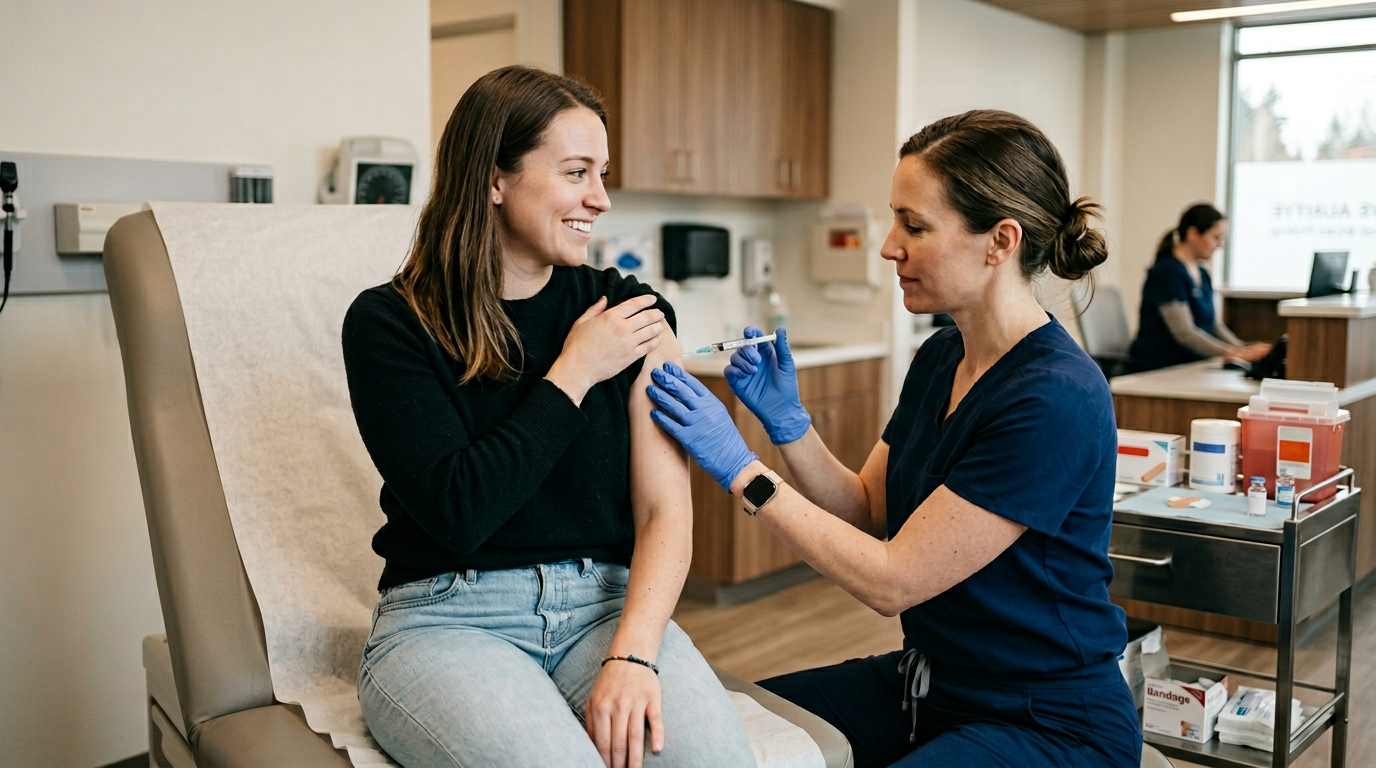
Tetanus is caused by bacteria in soil, dust, and animal waste. The spores enter your body through breaks in the skin, even tiny puncture wounds. Once inside, the bacteria produce a toxin that attacks your nervous system, causing severe muscle spasms and lockjaw. Tetanus kills roughly 1 in 10 people who develop it, according to the CDC.
The good news: it’s entirely preventable with vaccination. CityHealth Urgent Care in San Leandro gives tetanus shots seven days a week. No appointment necessary.
When Do You Need an Urgent Care Tetanus Shot?
The timing of your tetanus booster determines whether you need one after an injury. Here’s the breakdown:
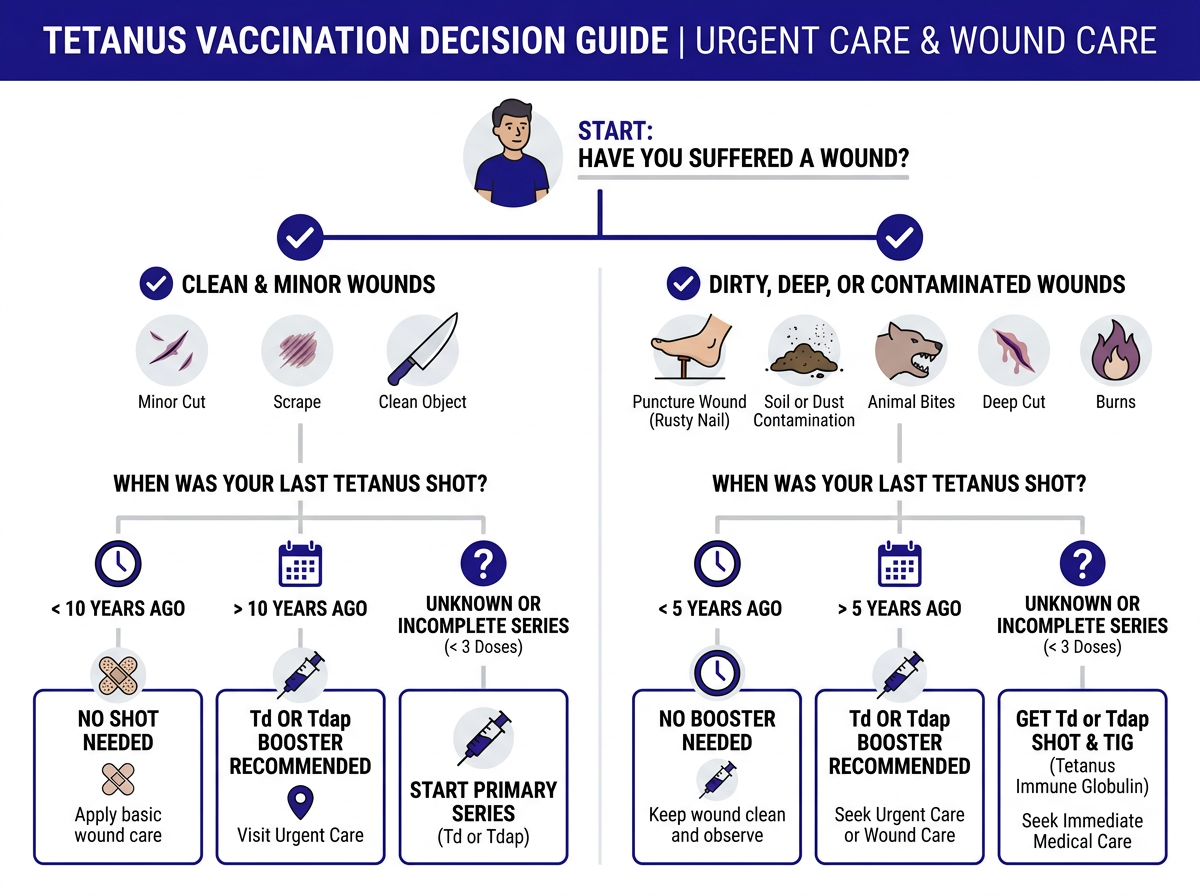
You need a tetanus shot NOW if:
- You have a wound (cut, puncture, scrape, burn, animal bite) AND your last tetanus booster was more than 5 years ago
- You have a dirty wound (contaminated with dirt, feces, rust, saliva) AND your last booster was more than 5 years ago
- You don’t know when you last had a tetanus shot
- You never completed the childhood tetanus vaccination series
You can wait if:
- Your last Tdap or Td booster was within the past 5 years AND your wound is clean
- You have a minor, clean cut and your booster is less than 10 years old
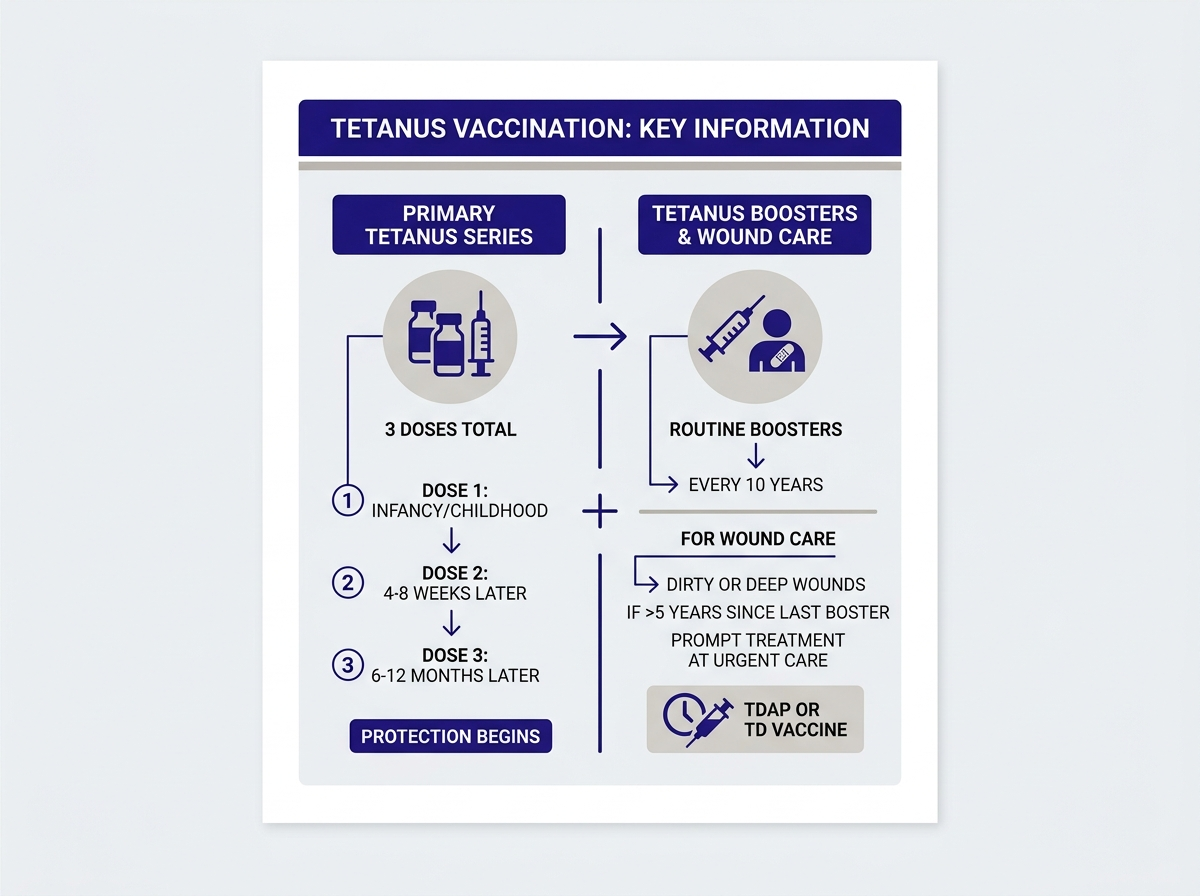
The 5-year vs. 10-year distinction matters. For clean, minor wounds, a booster within 10 years provides adequate protection. For dirty or deep wounds, the threshold drops to 5 years because the risk of tetanus is higher.
What Injuries Require a Tetanus Shot?
Tetanus bacteria thrive in environments without oxygen. Deep puncture wounds create exactly those conditions. But tetanus risk isn’t limited to stepping on nails.
High-risk injuries that need tetanus evaluation:
- Puncture wounds: Nails, thorns, splinters, needles. Anything that creates a deep, narrow wound.
- Animal bites: Dog bites, cat bites, and wild animal bites introduce bacteria deep into tissue. Cat bites are especially dangerous because their sharp teeth create deep punctures. Read more about cuts and lacerations treatment at CityHealth.
- Crush injuries: Dropped heavy object on your foot? Caught your hand in a door? Crushed tissue creates low-oxygen pockets where tetanus bacteria multiply.
- Burns: Second and third-degree burns damage deep tissue and create tetanus risk. CityHealth treats burn treatment with tetanus evaluation included.
- Wounds contaminated with dirt or feces: Gardening injuries, falls on dirt trails, barnyard accidents.
- Compound fractures: Bone breaking through skin is an open wound exposed to the environment.
- Frostbite and surgical wounds: Dead tissue from frostbite or post-surgical complications can harbor tetanus bacteria.
Lower-risk (but still evaluate):
- Clean cuts from kitchen knives (if booster is within 10 years, you’re likely fine)
- Paper cuts and shallow scrapes
- Surgical incisions in sterile environments
How Fast Do You Need a Tetanus Shot After an Injury?
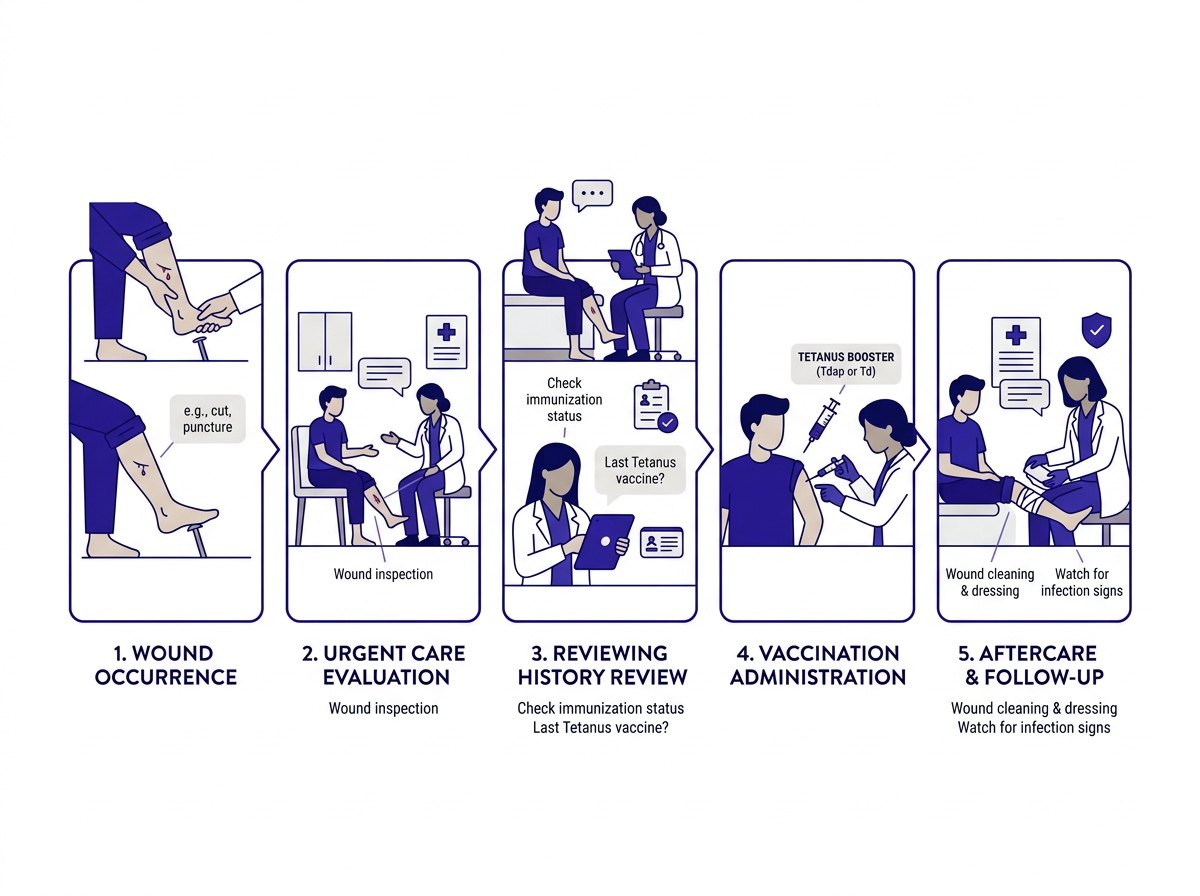
Within 48 hours, ideally within 24. Tetanus bacteria begin producing toxin as soon as they establish in a wound. The vaccine triggers your immune system to produce antibodies, but that takes time. Getting the shot quickly gives your body a head start on fighting the bacteria before they gain a foothold.
If more than 72 hours have passed since your injury and you’re overdue for a booster, still get the shot. Late vaccination is better than none. But if you’re showing symptoms of tetanus (jaw stiffness, muscle spasms, difficulty swallowing), go to the emergency room immediately. Active tetanus infection requires hospital-level treatment.
Tetanus Shot Types: Tdap vs. Td
Two vaccines protect against tetanus. Both work. The difference is what else they cover.
Tdap (Tetanus, Diphtheria, Pertussis): Protects against three diseases. This is the preferred booster for anyone who hasn’t had a Tdap before, adults who need a booster and are around infants, and pregnant women (given during each pregnancy at 27 to 36 weeks). Adults who’ve never received Tdap should get one dose, then switch to Td for subsequent boosters.
Td (Tetanus, Diphtheria): Protects against two diseases. Used for routine boosters every 10 years after the initial Tdap. Also used for wound management when tetanus protection is the primary concern and the patient has already received Tdap.
At urgent care, providers typically stock both. They’ll choose based on your vaccination history and the reason for your visit.
How Much Does an Urgent Care Tetanus Shot Cost?
Tetanus vaccination is one of the more affordable urgent care services.
With insurance: Most insurance plans cover tetanus shots at 100% under preventive care when given as a routine booster. When given for wound management, it falls under your standard urgent care copay ($25 to $75). Either way, out-of-pocket costs are minimal.
Without insurance: The vaccine itself costs $25 to $75. Add the urgent care visit fee ($100 to $200), and your total runs $125 to $275. Still far less than an ER visit for the same shot, where facility fees push the total to $500 or more.
Medi-Cal and Alameda Alliance: Both cover tetanus vaccination fully. CityHealth accepts both plans.
For full visit pricing, see our urgent care costs guide.
The Tetanus Booster Schedule
Tetanus protection requires ongoing boosters throughout your life. Here’s the schedule:
Children (DTaP series):
- 2 months, 4 months, 6 months, 15 to 18 months, 4 to 6 years: five-dose series
- 11 to 12 years: one dose of Tdap
Adults:
- One dose of Tdap if never received as an adolescent or adult
- Td booster every 10 years after that
- Pregnant women: one Tdap per pregnancy (27 to 36 weeks)
If you missed childhood doses or don’t have records, your provider can start a catch-up series. The first dose goes in during your visit, the second dose follows 4 weeks later, and the third dose comes 6 to 12 months after the second.
Side Effects of the Tetanus Shot
The tetanus vaccine is safe and well-studied. Common side effects are mild and temporary:
- Sore arm at injection site: The most common reaction. Lasts one to three days. Move your arm frequently and apply ice to reduce discomfort.
- Low-grade fever: Occurs in about 1 in 4 adults. Resolves within 24 hours.
- Mild headache or fatigue: Common day-of symptom. Rest and hydrate.
- Redness or swelling at injection site: Normal inflammatory response. Resolves in days.
Serious allergic reactions to tetanus vaccine are extremely rare, occurring in fewer than 1 in a million doses. Your provider monitors you for 15 minutes after injection as a precaution.
Do I Need a Tetanus Shot for a Rusty Nail?
Rust itself doesn’t cause tetanus. This is one of the most persistent medical myths. Tetanus comes from Clostridium tetani bacteria, which live in soil, dust, and animal feces. Rusty nails found outdoors carry tetanus risk because they’ve been in contact with contaminated soil. A brand-new, clean nail that punctures your skin could carry the same risk if it was lying in dirt.
The question isn’t whether the nail was rusty. The question is whether the wound was deep and whether contamination is possible. A deep puncture from any object in a dirty environment warrants tetanus evaluation, especially if your booster is overdue.
Tetanus Symptoms to Watch For
Tetanus symptoms appear 3 to 21 days after infection, with an average incubation period of 10 days. Shorter incubation periods tend to produce more severe disease.
Early warning signs:
- Jaw stiffness or difficulty opening your mouth (lockjaw)
- Neck stiffness
- Difficulty swallowing
- Muscle spasms in the abdomen
- Painful body stiffness, especially in the jaw and neck
These symptoms are a medical emergency. Go to the ER immediately. Tetanus treatment requires hospitalization, tetanus immune globulin (TIG), IV antibiotics, and intensive supportive care. Prevention through vaccination is infinitely easier than treatment.
Get Your Tetanus Shot at CityHealth
CityHealth Urgent Care in San Leandro stocks Tdap and Td vaccines for immediate administration. Walk in 7 days a week or book online at care.cityhealth.com/book-appointment. Call (510) 984-2489 with questions.
If you’re dealing with a wound that needs more than a tetanus shot, CityHealth providers handle what urgent care treats including wound cleaning, suturing, urgent care x-ray for fracture evaluation, and urgent care blood work for infection screening. One visit handles everything.