
That painful pressure behind your eyes. The thick, stubborn congestion that won’t quit. The throbbing headache that gets worse when you lean forward. If these symptoms sound familiar, you might have a sinus infection — and you’re probably wondering whether sinus infection urgent care is your best next step. The short answer: yes, for most people, urgent care is exactly where you should go. Here’s everything you need to know to get relief fast.
What Is a Sinus Infection? Understanding Acute vs. Chronic Sinusitis
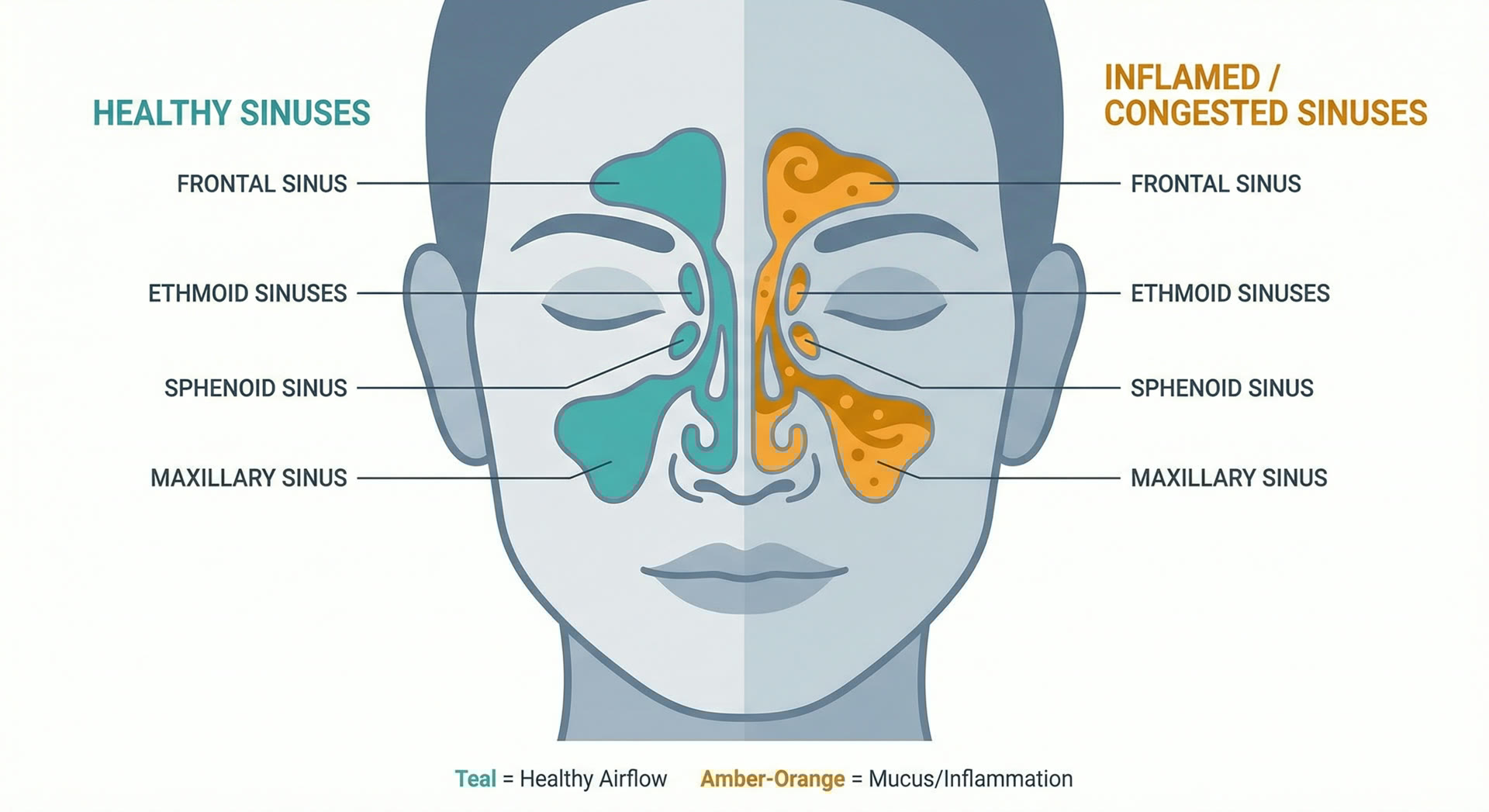
Your sinuses are hollow, air-filled spaces inside the bones around your nose. Normally, they produce a thin layer of mucus that drains down and out. However, when the sinus lining becomes inflamed and swollen, that drainage gets blocked. Mucus builds up, pressure increases, and bacteria or viruses can thrive — causing a sinus infection, medically known as sinusitis.
According to MedlinePlus (NIH), sinusitis falls into four main categories:
- Acute sinusitis — lasts up to 4 weeks; the most common type and very treatable
- Subacute sinusitis — lasts 4 to 12 weeks; often follows an untreated acute episode
- Chronic sinusitis — persists longer than 12 weeks, sometimes for months or years
- Recurrent sinusitis — several separate episodes in a single year
Most people deal with acute sinusitis, which often starts as a common cold. In fact, the Mayo Clinic notes that viruses cause the vast majority of acute sinus infections. However, when the sinuses stay blocked long enough, a bacterial infection can develop on top of the initial viral infection — and that’s typically when you need medical treatment and possibly antibiotics.
Sinus Infection Symptoms: More Than Just a Stuffy Nose
It’s easy to confuse a sinus infection with a regular cold, especially in the first few days. Therefore, knowing the specific symptoms can help you decide when to seek care. Sinus infections tend to cause a distinct combination of symptoms that set them apart from a mild cold.
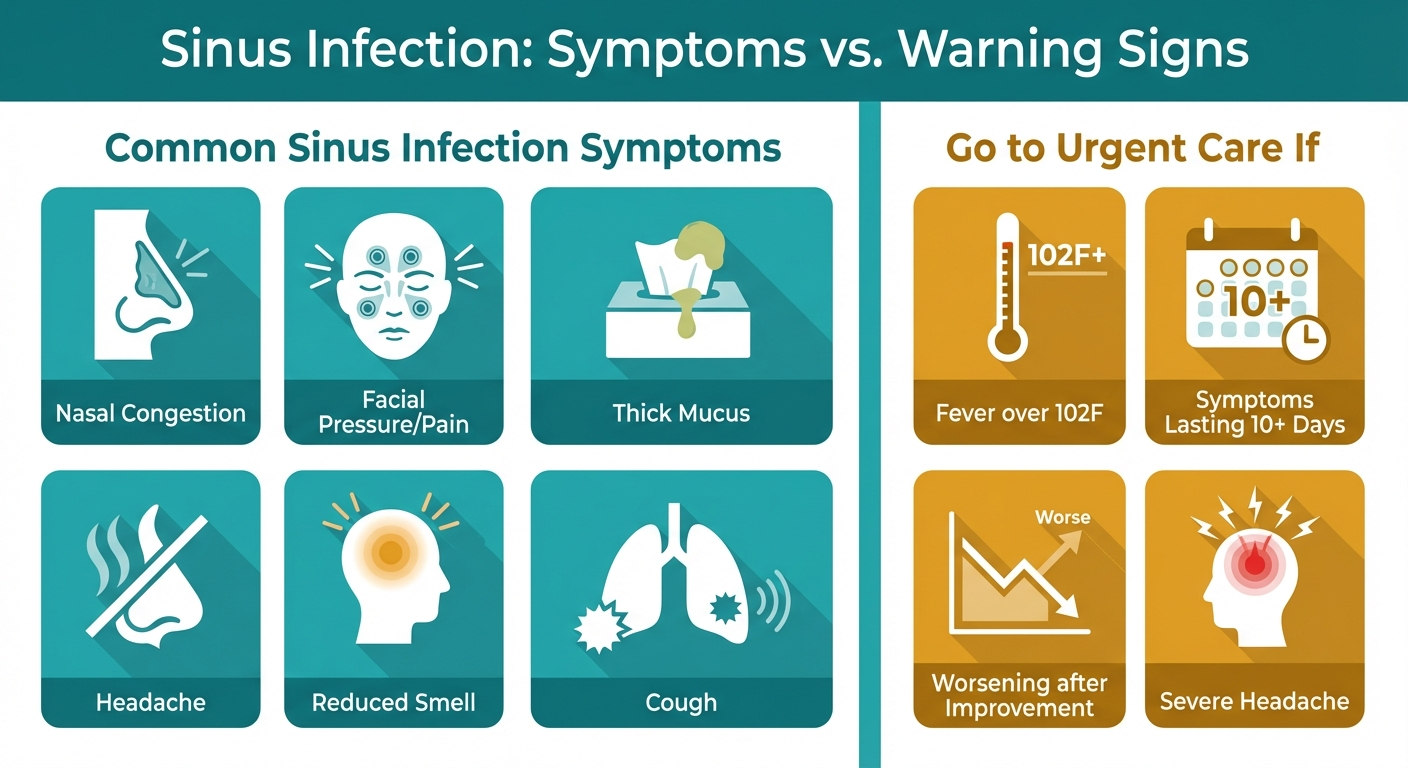
Common signs of a sinus infection include:
- Thick, yellow or green nasal discharge — or mucus draining down the back of your throat (postnasal drip)
- Blocked or stuffy nose — often making it hard to breathe through one or both nostrils
- Facial pain and pressure — especially around the eyes, cheeks, nose, or forehead that worsens when bending over
- Headache — typically a dull, throbbing ache behind the eyes or across the forehead
- Reduced sense of smell — congestion can block odor signals from reaching your smell receptors
- Ear pressure — the Eustachian tubes connect your sinuses and ears, so congestion spreads
- Cough — often worse at night due to postnasal drip
- Bad breath (halitosis) — caused by stagnant mucus and bacterial activity
- Toothache or dental pain — the roots of upper teeth sit close to the maxillary sinuses
- Low-grade fever and fatigue — your body fighting the infection
These symptoms often feel like a cold at first. However, a cold typically improves within 7 to 10 days. If your symptoms persist beyond that window — or worsen after initially seeming better — a sinus infection is the likely culprit.
When Should You Go to Urgent Care for a Sinus Infection?
Many mild sinus infections resolve on their own within a week or two. Nevertheless, certain signs indicate it’s time to stop waiting and visit urgent care. Getting evaluated sooner rather than later prevents complications and gets you feeling better faster.
For same-day treatment, visit urgent care in San Leandro at CityHealth — walk-ins welcome 7 days a week.
Visit urgent care for your sinus infection if:
- Your symptoms have lasted more than 7 to 10 days without improvement
- You have a fever above 102°F (38.9°C)
- Symptoms improved and then suddenly worsened — a classic sign that a bacterial infection developed on top of a viral one
- You experience severe or worsening headache that doesn’t respond to over-the-counter pain relievers
- You have a history of recurrent or chronic sinusitis
- Your symptoms are significantly disrupting sleep, work, or daily life
- You’ve tried OTC remedies (decongestants, saline rinses) for several days with no relief
Urgent care is also a smart choice if you simply want to know for certain whether you have a bacterial infection that needs antibiotics. Furthermore, a provider can rule out related conditions like strep throat or ear infection that sometimes accompany or mimic sinusitis.
What to Expect at Urgent Care for a Sinus Infection
Visiting urgent care for a sinus infection is straightforward. You don’t need an appointment — you can typically walk in and be seen within minutes. Here’s what to expect when you arrive:
Evaluation and Diagnosis
Your provider will start by reviewing your symptoms and medical history. Next, they’ll examine your nose, throat, and face. They’ll look for swelling, tenderness, and drainage. In most cases, a sinus infection diagnosis is clinical — meaning your provider can diagnose it based on your symptoms and physical exam alone, without imaging tests.
Occasionally, if there’s concern about complications or if symptoms are severe, your provider may order an X-ray or refer you for further evaluation. At CityHealth, our urgent care clinics have on-site digital X-ray capabilities, so you won’t have to go elsewhere for additional workup.
Treatment Options
Because most sinus infections start as viral, antibiotics aren’t always necessary. Your provider will guide you based on your specific presentation:
- Viral sinusitis — supportive care: rest, fluids, nasal saline irrigation, decongestants, and pain relievers. Antibiotics won’t help a viral infection.
- Bacterial sinusitis — if your provider determines bacteria are the cause (typically when symptoms exceed 10 days or worsen after initial improvement), they will prescribe an antibiotic. Amoxicillin-clavulanate is a common first-line choice.
- Allergy-related sinusitis — nasal steroid sprays, antihistamines, and allergy management recommendations
- Severe pain or inflammation — sometimes a short course of oral steroids helps reduce inflammation quickly
Your provider will also discuss strategies to prevent recurrent episodes, particularly if you have underlying allergies or structural nasal issues.
Urgent Care vs. the ER: When Does a Sinus Infection Become an Emergency?
The vast majority of sinus infections are not emergencies. Urgent care handles them perfectly well. However, in rare cases, a sinus infection can spread to nearby structures and cause serious complications. Go directly to the emergency room or call 911 if you experience any of these warning signs:
- Swelling, redness, or pain around the eyes — this may indicate orbital cellulitis, a serious eye socket infection
- Vision changes or double vision — a potential sign of infection spreading to the eye orbit
- Stiff neck combined with severe headache — could indicate meningitis, a rare but life-threatening complication
- High fever with confusion or altered mental status
- Sudden, severe “worst headache of your life”
According to the Mayo Clinic, these complications — while uncommon — can include meningitis, orbital infection, and bone infections. Therefore, if you experience any of the above, skip urgent care and go straight to the ER.
For everything else — including standard sinus infection symptoms, even severe ones — urgent care is the right call. It’s faster, more affordable, and fully equipped to diagnose and treat you.
Need Sinus Infection Treatment Today?
CityHealth San Leandro provides same-day evaluation and antibiotic prescriptions for sinus infections. Walk-ins welcome — no appointment needed.
Home Remedies to Help While You Recover
Whether you’ve already seen a provider or you’re managing a mild case at home, several evidence-based remedies can ease symptoms and support recovery.

- Steam inhalation — breathe in steam from a bowl of hot water (with a towel draped over your head) for 10 minutes, 2 to 4 times daily. This loosens thick mucus and improves drainage.
- Saline nasal irrigation — rinse nasal passages with a saline solution (neti pot or squeeze bottle) to flush out mucus and reduce inflammation. Use distilled or sterile water only.
- Stay well-hydrated — drink plenty of water, herbal teas, and clear broths. Fluids thin mucus and keep your body’s defenses strong.
- Warm compress — place a warm (not hot) towel over your nose and forehead to reduce facial pain and sinus pressure.
- Sleep with your head elevated — prop up an extra pillow to encourage sinus drainage overnight and reduce nighttime congestion.
- Avoid irritants — stay away from cigarette smoke, strong perfumes, and air pollutants that can worsen sinus inflammation.
- OTC decongestants — medications like pseudoephedrine (Sudafed) can temporarily reduce nasal swelling. However, don’t use oxymetazoline nasal sprays (Afrin) for more than 3 days to avoid rebound congestion.
Moreover, if your sinus infection is allergy-related, managing your allergy triggers is a key part of long-term prevention. Speak with a provider about maintenance strategies.
Get Same-Day Sinus Infection Treatment at CityHealth
You don’t have to suffer through days of sinus pain waiting for a primary care appointment. Sinus infection urgent care at CityHealth means same-day access to experienced providers who can evaluate you, confirm your diagnosis, and get you the right treatment — whether that’s home care guidance, a prescription, or further workup.
CityHealth Urgent Care serves San Leandro with extended hours seven days a week. Our clinics offer on-site lab testing and digital X-ray, so we can assess your condition comprehensively without sending you elsewhere. Additionally, we offer virtual urgent care for patients who prefer to be seen from the comfort of home — perfect for straightforward sinus infection consultations.
Walk-ins are always welcome. You can also book an appointment online for shorter wait times. If you’re dealing with sinus pressure, congestion, and facial pain that won’t quit, come see us today. Relief is closer than you think.
This article is for informational purposes only and does not constitute medical advice. Always consult a qualified healthcare provider for diagnosis and treatment of medical conditions.
Ready to be seen? Book your appointment at CityHealth online, or walk in to our Oakland or San Leandro location — no appointment required, though booking online gets you seen faster.
Related: bronchitis
See our complete guide: what can urgent care treat.


