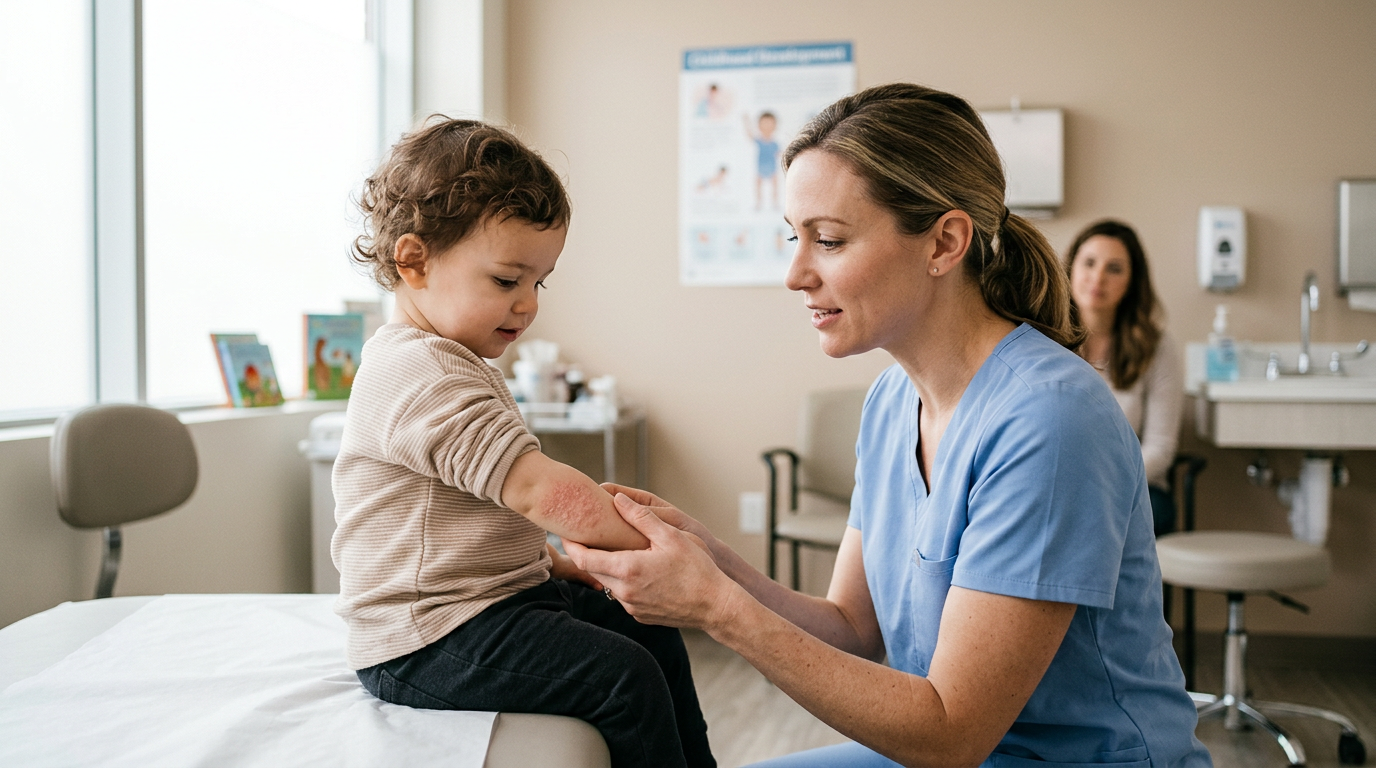
Your baby feels warm to the touch. She won’t eat. Something feels off, but you can’t name it. As a new parent, learning the signs a newborn is sick can feel scary, especially in those first weeks when every cry sounds urgent. But here is the good news: most warning signs follow clear patterns. This guide covers the signs newborn is sick that need medical care, the ones you can watch at home, and the red flags that call for same-day help.
Medically reviewed by Susana Quezada, NP — Nurse Practitioner
Early Signs Newborn Is Sick: Feeding, Crying, and Alertness
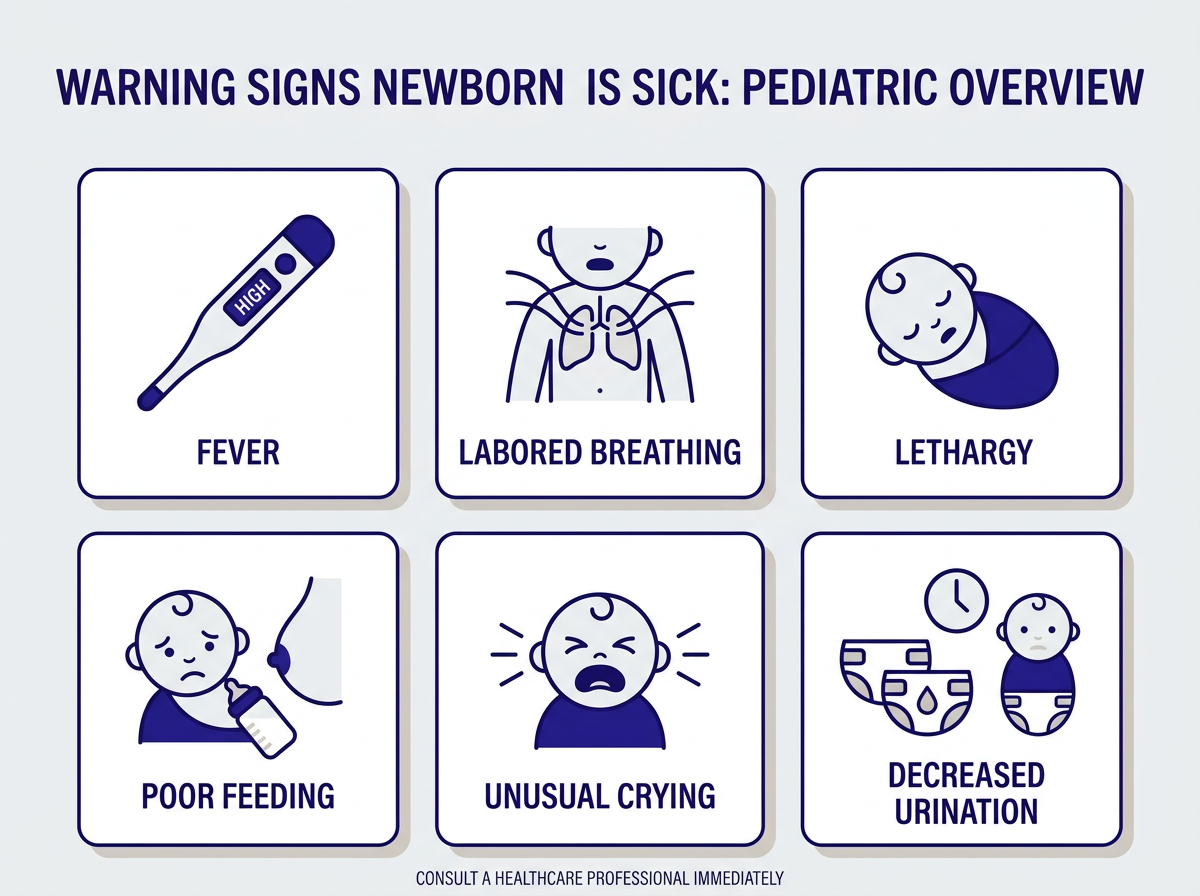
Newborns can’t tell you what hurts. Their signals are subtle, and illness can move fast. The American Academy of Pediatrics (AAP) lists several early warning signs that your baby may be fighting an infection.
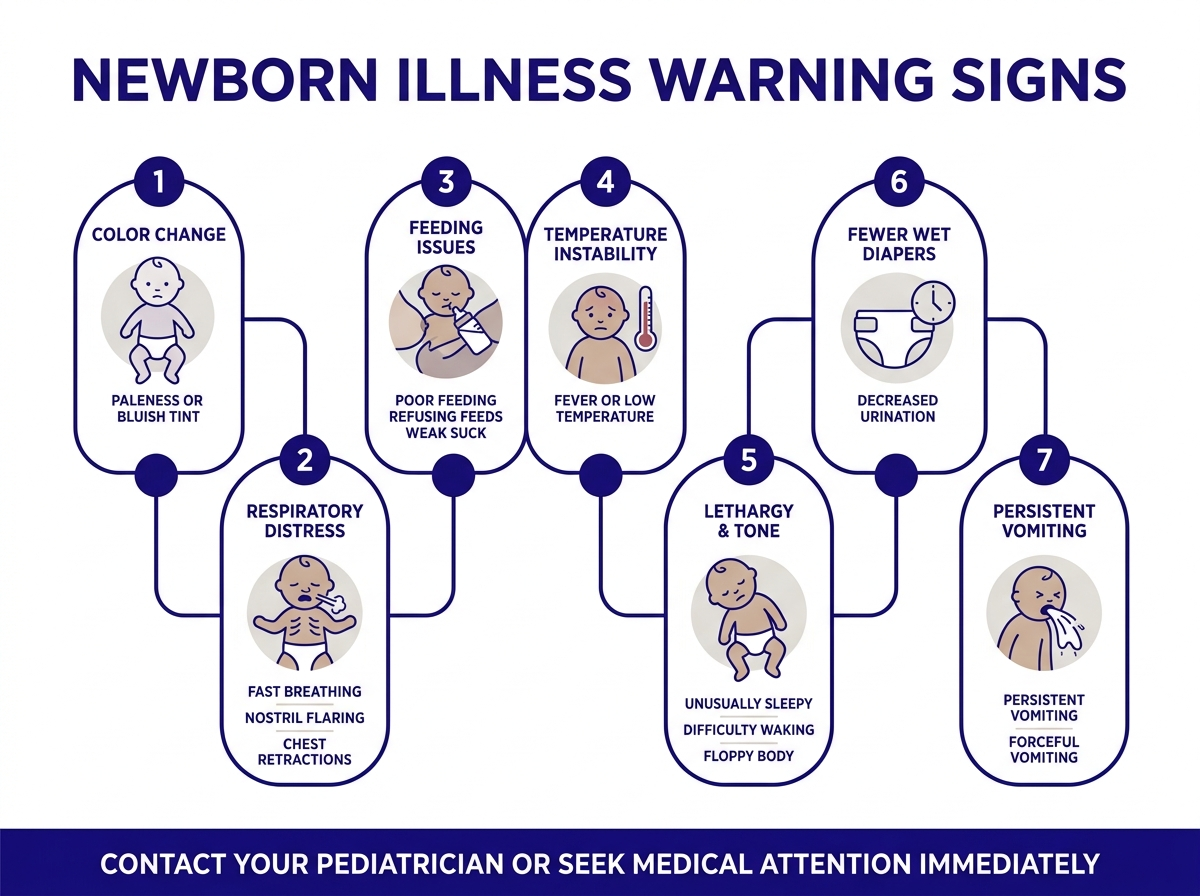
Changes in feeding often show up first. A healthy newborn eats every 2 to 3 hours. If your baby refuses two or more feeds in a row, feeds for much shorter times, or seems too tired to latch, take note. Indeed, poor feeding in a newborn is one of the most reliable early signs of illness.
A change in cry is another signal. You already know your baby’s normal cry. However, a sick newborn may cry with a higher pitch, a weaker tone, or in a pattern that sounds different from hunger cries. Also, some sick babies become strangely quiet.
Less activity or alertness matters too. Of course, newborns sleep a lot. But a healthy baby has wakeful periods where they move their arms and legs, make eye contact, and respond to your voice. Specifically, a baby who is hard to wake, floppy when held, or less alert than normal needs a medical check.
Fever: One of the Most Urgent Signs Newborn Is Sick
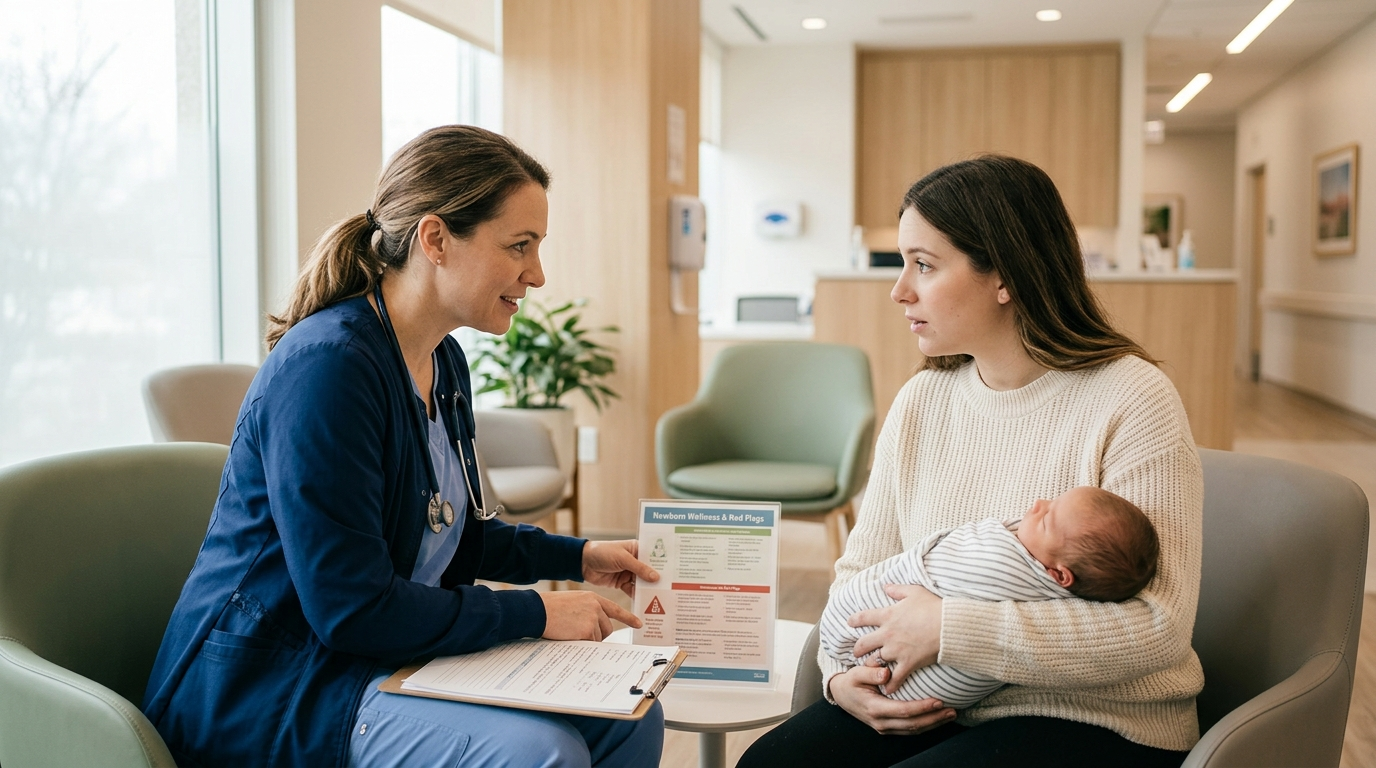
Fever is one of the most common signs a newborn is sick. In very young babies, it always calls for prompt medical care.
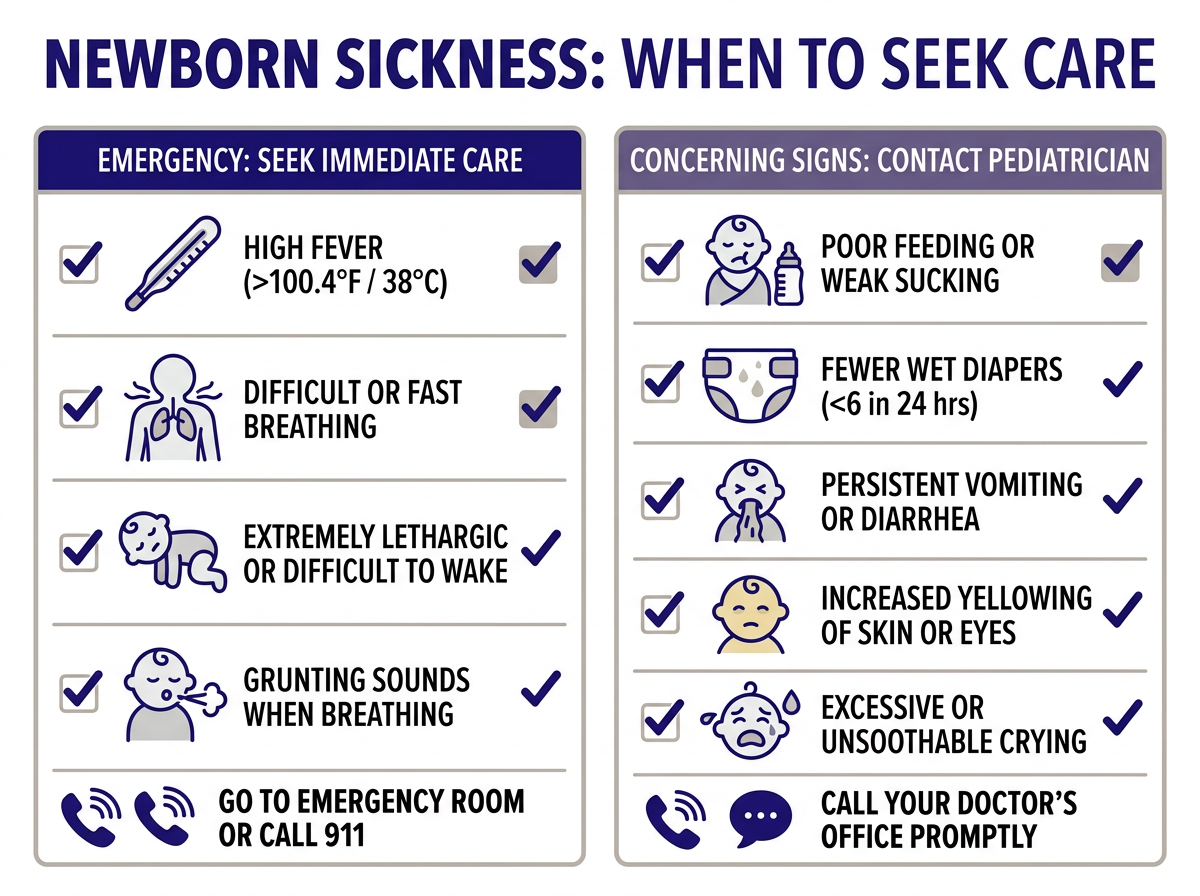
According to the AAP and the CDC, a rectal temperature of 100.4°F (38°C) or higher in a baby under 3 months old needs same-day medical care. Do not wait. Do not give fever medicine first. Instead, call your doctor or go to urgent care right away.
For babies 3 to 6 months old, a fever of 101°F (38.3°C) or higher warrants a call to your doctor. Similarly, for babies older than 6 months, call your provider when fever hits 102°F (38.9°C) or lasts more than 24 hours.
Here are a few important notes about taking your baby’s temperature:
- Use a rectal thermometer for babies under 3 months. It gives the most accurate reading.
- Forehead and ear thermometers are less reliable for young infants. In particular, ear thermometers should not be used for babies under 6 months.
- Feeling your baby’s forehead with your hand is not accurate enough to rule out fever.
- A temperature below 97°F (36.1°C) can also signal a problem. In fact, hypothermia in newborns needs medical care too.
Because babies under 3 months have immature immune systems, infections can become dangerous fast. Consequently, fever in a newborn can point to a serious bacterial infection, urinary tract infection, or meningitis. This is why the concern threshold is lower than for older children.
Breathing Problems: Signs Newborn Is Sick and Needs Help Now
Breathing issues in newborns can get worse within hours. Therefore, learn these warning signs so you can act fast.
Call 911 or go to the emergency room if your baby shows any of these breathing signs:
- Breathing faster than 60 breaths per minute while at rest
- Grunting with each exhale
- Nostril flaring with each breath
- Retractions (skin pulling in between or below the ribs)
- Pauses in breathing lasting longer than 10 seconds
- Blue or gray color around the lips, tongue, or fingernails
Normal newborn breathing is uneven. For instance, babies sometimes breathe fast for a few seconds, then slow down. Also, short pauses of 5 to 10 seconds are typical. But persistent fast breathing, any color changes, or visible effort with each breath are not normal.
According to the CDC, RSV is especially dangerous for babies under 6 months. Other common causes include bronchiolitis, croup, and pneumonia. If your baby has a cough, congestion, or noisy breathing that gets worse over 2 to 3 days, seek medical care.
Skin Color and Appearance Changes
Your baby’s skin can reveal a lot about their health. Specifically, watch for these visible changes:
Jaundice (yellowing of the skin and eyes) is common in the first week. However, it should improve by day 10 to 14. If yellow color shows up after the first week, spreads to the arms and legs, or deepens, your baby needs a bilirubin check. Untreated jaundice can damage the brain.
Pale, mottled, or blue skin suggests poor blood flow or low oxygen. Most importantly, a blue tint around the lips or tongue is always an emergency. In darker-skinned babies, check the gums, tongue, and nail beds for color changes.
A rash with fever in a newborn deserves same-day medical care. While many newborn rashes are harmless (baby acne, milia), a rash paired with fever, poor feeding, or fussiness could signal infection.
A bulging or sunken soft spot (fontanelle) on your baby’s head is also important. A bulging fontanelle can point to increased pressure or meningitis. Meanwhile, a sunken fontanelle can indicate dehydration that needs urgent care.
Digestive Warning Signs: Vomiting, Diarrhea, and Dehydration
Spit-up is normal. However, forceful vomiting is not. Here is how to tell the difference.
Projectile vomiting (vomit that shoots several inches) after most feeds may point to pyloric stenosis. This is a condition where the muscle between the stomach and intestines thickens. It typically shows up between 2 and 8 weeks of age and needs medical treatment.
Green (bile-stained) vomit is always an emergency in a newborn. It can signal a bowel blockage. As a result, go to the emergency room right away.
Diarrhea in newborns means watery stools more often than usual. Because breastfed babies normally have loose, seedy stools, look for a change from their baseline. Specifically, more than 6 to 8 watery stools in a day raises concern.
Signs of dehydration in a newborn include:
- Fewer than 4 wet diapers in 24 hours (after day 4 of life)
- No tears when crying
- Dry mouth and lips
- Sunken soft spot
- Dark, strong-smelling urine
- Too much sleepiness
Dehydration in newborns gets worse fast due to their small body size. Therefore, if your baby shows two or more of these signs, see a doctor the same day.
Sick Newborn or Just Fussy? How to Tell the Difference
This is the question that keeps new parents up at night. Here is a simple way to assess your baby.
A fussy baby who is likely fine:
- Still feeding well and gaining weight
- Has calm periods between fussy spells
- Makes normal wet and dirty diapers
- Has normal skin color and temperature
- Can be soothed with holding, rocking, or feeding
- Makes eye contact during alert periods
A baby who may be sick:
- Refuses feeds or eats much less than usual
- Cannot be consoled for long stretches
- Has fewer wet diapers than normal
- Feels hot or strangely cool to the touch
- Seems limp, too sleepy, or hard to wake
- Has changes in breathing, skin color, or cry
Trust your gut. Indeed, parents often sense something is wrong before they can name the symptom. Research in Pediatrics confirms that parental concern about a newborn is a valid clinical sign. If something feels off, it’s worth a medical check.
When to Call 911 for a Sick Newborn
Some situations need emergency care. Call 911 or go to the ER if your newborn has:
- Blue or gray skin, lips, or tongue
- Stopped breathing or pauses longer than 15 seconds
- A seizure (rhythmic jerking, eye rolling, or stiffening)
- Cannot be woken and does not react to touch or sound
- Green vomit
- Rectal temperature above 100.4°F in a baby under 3 months
For other concerning symptoms, a pediatric urgent care can check your baby without the long ER wait. Walk-in clinics that see newborns handle fever checks, breathing assessments, dehydration tests, rash reviews, and feeding concerns.
How to Prepare Before Visiting Urgent Care With Your Newborn
When you spot signs a newborn is sick and decide to seek care, these steps help the visit go faster:
- Take a rectal temperature before you leave and write down the number and time.
- Note feeding times and amounts over the past 24 hours.
- Count wet and dirty diapers for the day.
- Write down all symptoms and when they started.
- Bring your baby’s insurance card and any records from the hospital.
This information helps the provider assess your newborn quickly.
CityHealth Sees Babies: Walk-In Pediatric Care in San Leandro
Knowing the signs newborn is sick is the first step. Getting timely care is the second. At CityHealth Urgent Care in San Leandro, we see babies and infants on a walk-in basis. No appointment needed.
Our team checks newborns for fever, breathing issues, feeding problems, rashes, dehydration, and other concerns. If your baby needs a higher level of care, we will coordinate a transfer to the right facility.
We are open 7 days a week. Walk in or book a same-day visit online.