Your baby is burning up at 10 p.m. on a Saturday. The pediatrician’s office is closed. You’re Googling “urgent care for babies” while rocking a fussy infant, and you need answers fast. Fortunately, walk-in urgent care clinics can treat many common infant illnesses safely and quickly. However, not every situation belongs at urgent care. On the other hand, some symptoms in babies require an emergency room visit instead. This guide will help you figure out exactly where to go, what to expect, and when to act.
Medically reviewed by Susana Quezada, NP — Nurse Practitioner

Can You Take a Baby to Urgent Care?
Yes. In fact, most urgent care clinics accept pediatric patients, including infants. At CityHealth Urgent Care, providers see patients of all ages, from newborns to seniors. No appointment is needed.
However, age matters when it comes to what urgent care can handle. Babies older than 3 months with common illnesses like ear infections, mild fevers, rashes, or congestion are generally good candidates for a walk-in visit. As a result, providers can examine your baby, run basic tests, and prescribe treatment on the spot.
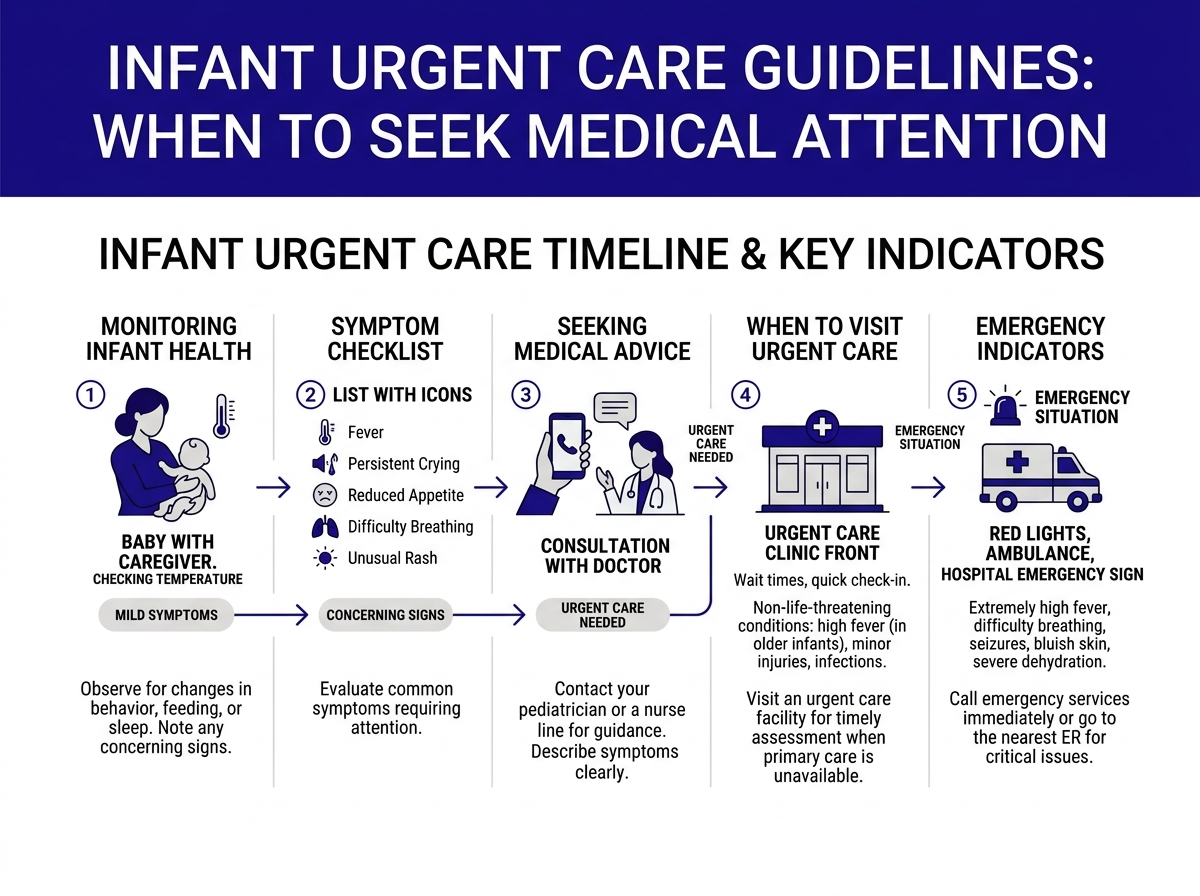
In contrast, for babies under 3 months old, the situation is different. Because their immune systems are still developing, any fever (100.4°F or higher) in a newborn is considered a medical emergency. Urgent care providers will evaluate your baby, but they will refer you to the emergency room for further testing. This is standard protocol recommended by the American Academy of Pediatrics (AAP).
Fever in Babies: Urgent Care vs. Emergency Room
Fever is the number one reason parents bring babies to urgent care. Therefore, understanding the age-based guidelines is critical.
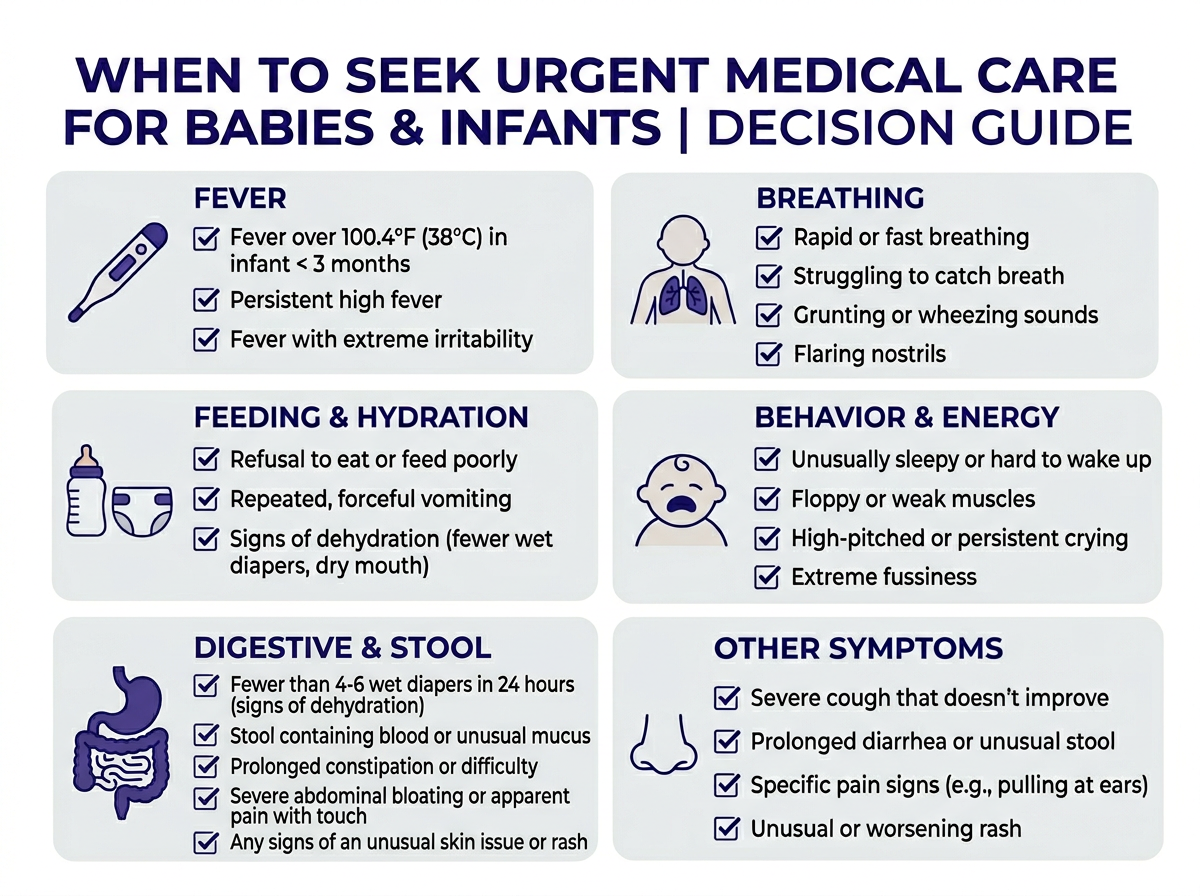
Under 3 months old: Any rectal temperature of 100.4°F or above requires an ER visit. In particular, do not wait. Do not try home remedies first. To clarify, a fever at this age can signal a serious bacterial infection like meningitis or a bloodstream infection. Consequently, urgent care clinics will check your baby’s vitals and then send you directly to the ER for blood work, urine tests, and possibly a spinal tap.
3 to 6 months old: A fever up to 102°F can often be evaluated at urgent care. Specifically, providers will check for obvious sources like an ear infection or viral illness. However, if your baby looks lethargic, refuses to eat, or the fever climbs above 102°F, the provider may recommend an ER visit for more thorough testing.
6 to 12 months old: Urgent care can handle most fevers in this age group. Therefore, providers will look for the cause and may prescribe infant acetaminophen or ibuprofen (for babies 6 months and older). However, you should go to the ER if the fever lasts more than 3 days, reaches 104°F, or your baby shows signs of dehydration or distress.
Common Baby Conditions Treated at Urgent Care
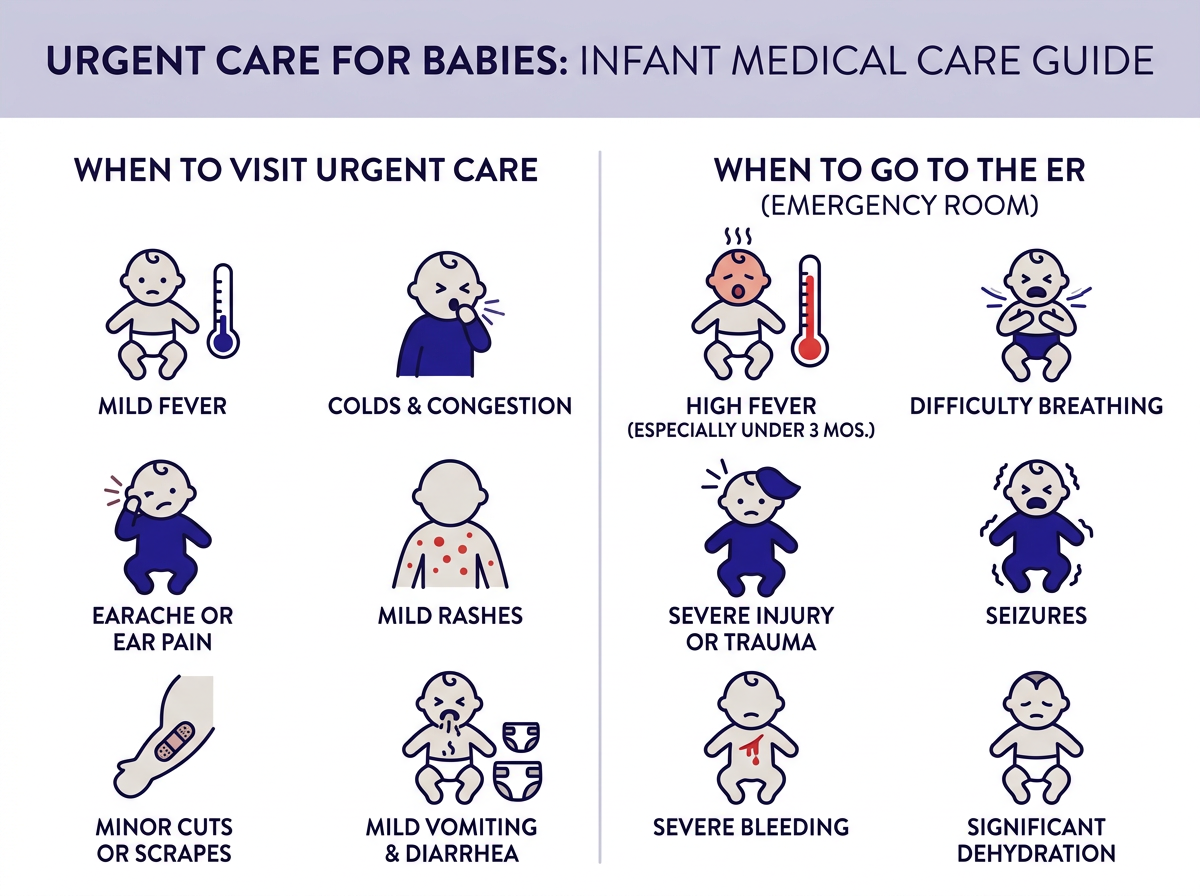
Walk-in clinics treat a wide range of infant illnesses. Specifically, these are the conditions providers see most often in babies.
Ear infections. Babies tug at their ears, cry more than usual, and may run a low fever. Urgent care providers can look inside the ear canal with an otoscope and prescribe antibiotics if needed. In addition, they can recommend pain relief options safe for your baby’s age.
RSV (respiratory syncytial virus). This common virus causes cold-like symptoms but can turn serious in infants. Urgent care can test for RSV with a simple nasal swab. Moreover, if your baby is breathing fast, wheezing, or struggling to eat because of congestion, a provider will assess oxygen levels and determine if hospital care is necessary.
Rashes. Baby skin reacts to everything. Consequently, parents often worry about rashes that appear suddenly. Urgent care providers can diagnose common rashes like eczema flares, heat rash, hand-foot-and-mouth disease, and allergic reactions. Furthermore, they can also rule out more serious causes.
Vomiting and diarrhea. Stomach bugs spread easily in daycare settings. Because babies dehydrate faster than older children, prompt evaluation matters. Urgent care providers check for dehydration signs and can recommend oral rehydration strategies or refer to the ER if IV fluids are needed.
Coughs and congestion. Upper respiratory infections are extremely common in babies, particularly during fall and winter. Providers can listen to your baby’s lungs, check oxygen levels, and test for flu or COVID if appropriate.
Eye infections. Similarly, pink eye and blocked tear ducts frequently show up in infants. Urgent care can prescribe antibiotic eye drops when bacterial infection is the cause.
When to Skip Urgent Care and Go Straight to the ER
Urgent care handles a lot. However, some situations require emergency room resources that walk-in clinics do not have. Go to the ER immediately if your baby shows any of these signs:
- Fever of 100.4°F or higher in a baby under 3 months old
- Difficulty breathing, flared nostrils, or ribs pulling in with each breath
- Blue or gray color around the lips or fingernails
- Seizures or uncontrolled shaking
- Unresponsiveness or extreme difficulty waking up
- Projectile vomiting or vomiting blood
- A bulging soft spot on the head
- Signs of severe dehydration: no wet diapers for 6+ hours, no tears when crying, sunken eyes
If you are unsure, it is always safe to start at urgent care. Providers will evaluate your baby quickly and refer you to the ER if the situation requires it. In other words, urgent care acts as a helpful first stop when you cannot reach your pediatrician.
What to Expect at an Urgent Care Visit for Babies
Walking into a clinic with a sick baby can feel stressful. Therefore, knowing what happens during the visit helps you prepare. First, a medical assistant will take your baby’s vitals: temperature, heart rate, respiratory rate, and oxygen level. Then, a provider will examine your baby from head to toe.
Bring your baby’s insurance card, a list of any medications, and your baby’s vaccination record if possible. Also bring a diaper bag with supplies for a wait. Similarly to a pediatrician visit, the provider will ask about symptoms, how long they have lasted, and what you have tried at home.
The provider may order quick diagnostic tests depending on symptoms. For example, a nasal swab can check for RSV, flu, or COVID in about 15 minutes. In addition, a urine sample (collected with a small bag attached to the diaper area) can check for urinary tract infections. Ear exams and throat swabs are also common.
After the evaluation, the provider will explain the diagnosis and treatment plan. As a result, you will leave with a clear set of instructions, any needed prescriptions, and guidance on when to follow up with your pediatrician. Above all, you should feel confident about the next steps for your baby’s care.
Urgent Care for Babies: Frequently Asked Questions
What age can a baby go to urgent care?
Babies of any age can be seen at urgent care. However, babies under 3 months with fever will be evaluated and then referred to the ER for further testing. On the other hand, for babies 3 months and older, urgent care can diagnose and treat most common illnesses on the spot.
Is urgent care cheaper than the ER for a baby visit?
In most cases, yes. In fact, an urgent care visit typically costs a fraction of an ER visit. Furthermore, wait times are usually shorter. If your baby’s condition is not life-threatening, pediatric urgent care is often the smarter choice for your wallet and your time.
Do I need an appointment?
No. Urgent care clinics are walk-in by design. At CityHealth, you can walk in any time during open hours. No referral or appointment is needed.
Can urgent care prescribe antibiotics for my baby?
Yes. If the provider diagnoses a bacterial infection like an ear infection or UTI, they can prescribe age-appropriate antibiotics during the visit. In other words, you do not need a separate pharmacy trip for a prescription.
What if urgent care is closed?
If your baby is sick after hours and the condition is not an emergency, you can wait until the clinic opens the next day for mild symptoms. However, for anything that worries you, especially in young infants, go to the ER. Trust your instincts as a parent.
Tips for Keeping Your Baby Comfortable Before the Visit
While you prepare to head to urgent care, there are a few things you can do at home. First, take your baby’s temperature rectally for the most accurate reading. Next, keep your baby hydrated with breast milk, formula, or an electrolyte solution if your provider has recommended one.
For fevers in babies older than 3 months, you can give infant acetaminophen (Tylenol) based on your baby’s weight. However, do not give ibuprofen to babies under 6 months. Also, dress your baby in light clothing. After all, bundling a feverish baby in blankets can raise body temperature further.
Write down your baby’s symptoms, including when they started and any changes you have noticed. As a result, this information helps the provider make a faster, more accurate diagnosis. Likewise, note any recent exposures to sick family members or daycare outbreaks.
Why Parents in San Leandro Choose CityHealth for Urgent Care for Babies
Finding reliable urgent care for your child should not add to your stress. CityHealth Urgent Care in San Leandro sees babies, toddlers, and children of all ages. Moreover, the clinic is walk-in only, so you never need to wait for an appointment. Providers are experienced in pediatric evaluation and know exactly when to treat on-site and when to refer to a higher level of care.
CityHealth also treats the whole family, including toddlers who need urgent care. If a stomach bug or cold is making its way through your household, everyone can be seen in one visit. In addition, the clinic offers rapid testing for common infections, same-day prescriptions, and clear follow-up guidance so you know exactly what to do next.
Your baby is counting on you to make the right call. If your infant is sick and your pediatrician is unavailable, walk into CityHealth Urgent Care in San Leandro today. No appointment needed. Just walk in and get the care your baby deserves.