Your two-year-old has been cranky all day. She’s pulling at her ear, refusing food, and her forehead feels warm. She can’t tell you what hurts. All you get are tears and “no.” So when a toddler urgent care visit crosses your mind at 6 PM on a Tuesday, you need a fast answer: go now, or wait it out?
Toddlers get sick often. In fact, they pick up every virus at daycare, fall off playground equipment, and spike fevers that scare even seasoned parents. But the good news is that most toddler illnesses and injuries don’t need an emergency room. Instead, a toddler urgent care visit handles the majority of what goes wrong between ages 1 and 3. Plus, you’ll spend far less time waiting.
This guide covers the most common reasons parents bring toddlers to urgent care, what we treat at CityHealth Urgent Care in San Leandro, and the specific warning signs that mean your child needs the ER instead.

Medically reviewed by Susana Quezada, NP — Nurse Practitioner
When to Take Your Toddler to Urgent Care
Essentially, urgent care sits between your pediatrician’s office and the emergency room. It handles conditions that need same-day attention but won’t put your child’s life at risk.
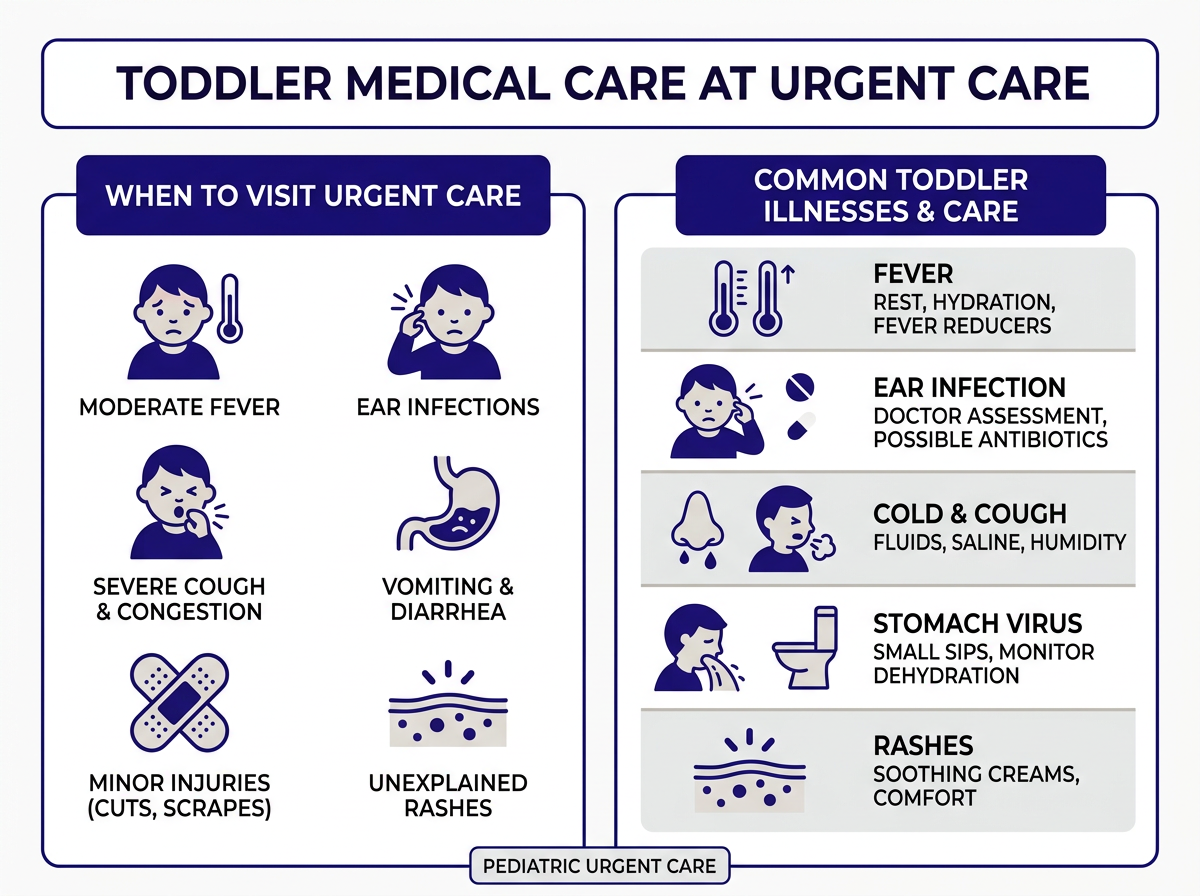
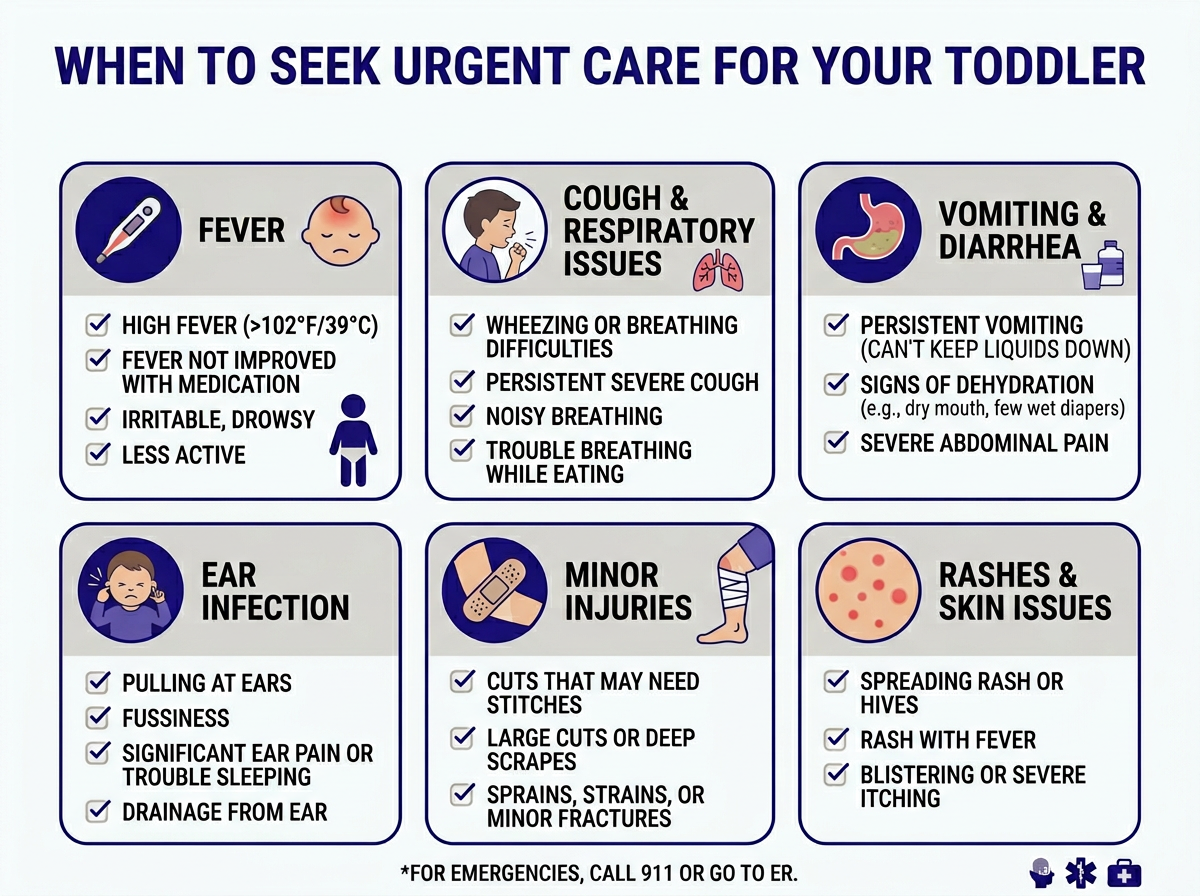
Bring your toddler to urgent care when:
- Fever above 100.4°F that lasts more than 24 hours or comes with other symptoms
- Ear pain, tugging, or drainage from the ear
- Persistent cough, barking cough, or wheezing without severe breathing trouble
- Vomiting or diarrhea lasting more than a few hours
- Rashes that appear suddenly or spread fast
- Falls that cause swelling, limping, or refusal to use an arm or leg
- Minor cuts that may need stitches or skin glue
- Pink eye, sore throat, or a runny nose that won’t clear up
Here is the key question: is your child alert, breathing normally, and responsive? If yes, then urgent care is almost always the right call. Also, if your pediatrician’s office is closed or booked out, a pediatric walk-in clinic gives your toddler the same level of care without the ER price tag.
7 Common Reasons Toddlers Need Urgent Care
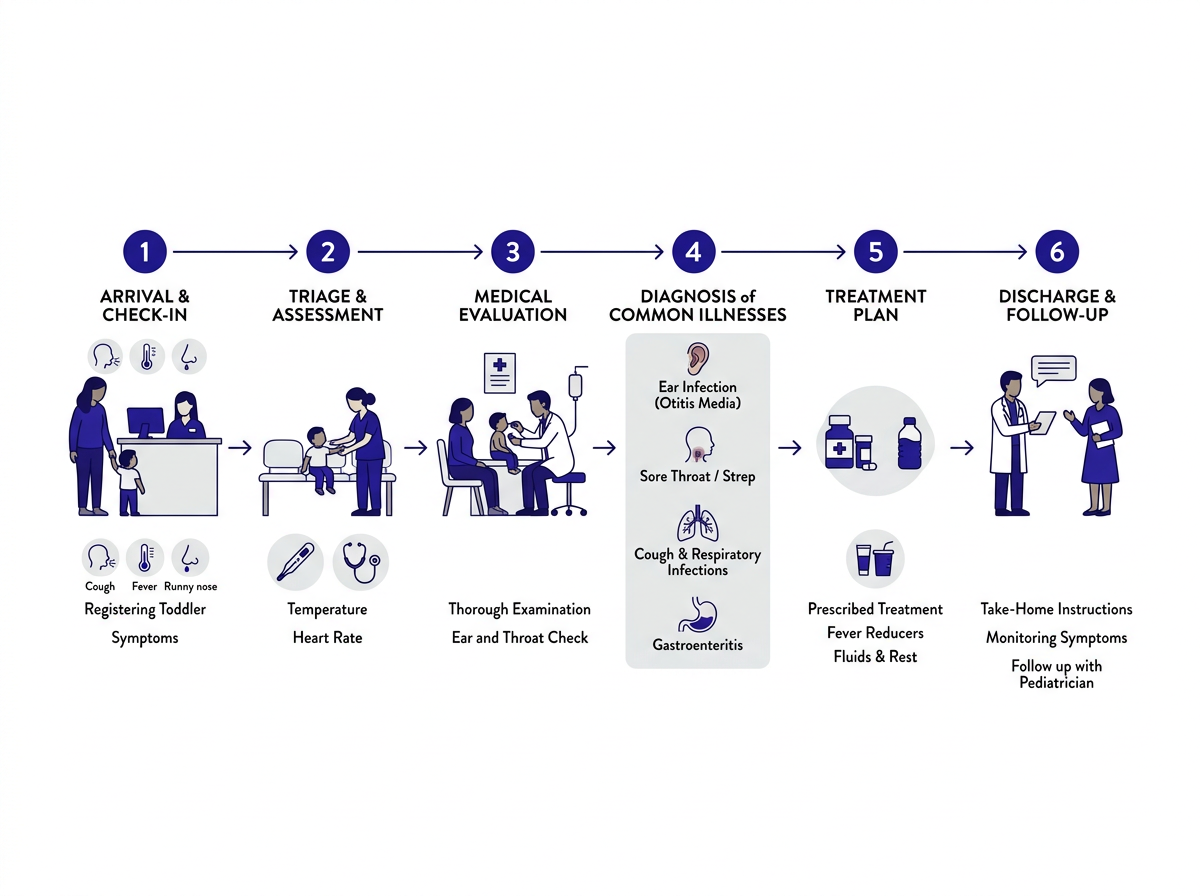
1. Ear Infections
Ear infections are the number one reason parents bring toddlers to urgent care. Specifically, children between 6 months and 3 years get them more than any other age group. This happens because their Eustachian tubes are shorter and more flat. As a result, fluid gets trapped easily.
Signs to watch for include ear pulling, crying more than usual (especially when lying down), fever, trouble sleeping, and fluid draining from the ear. Because toddlers can’t say “my ear hurts,” changes in behavior are your best clue.
At CityHealth, we check the ear with an otoscope, confirm whether the infection is bacterial or viral, and prescribe antibiotics when needed. Most child ear infections clear up within a few days of starting treatment. As a result, no ER visit is needed.
2. Fevers
Toddlers spike fevers often. Most fevers are the body’s normal way of fighting infection and go away on their own. However, certain fever patterns do need a toddler urgent care visit.
Bring your toddler in for fever when:
- Temperature reaches 104°F (40°C) or higher
- Fever lasts more than 2 to 3 days without getting better
- Your child seems very tired or cranky between fever spikes
- Fever comes back after being gone for 24 or more hours (this may signal a second infection)
- Fever comes with a rash, stiff neck, or nonstop vomiting
According to the American Academy of Pediatrics, fever alone in a child over 3 months old who looks well rarely points to a dangerous illness. Still, a provider visit gives you peace of mind and catches bacterial infections that need antibiotics early.
3. Croup and Breathing Illnesses
That barking cough that sounds like a seal at 2 AM is almost always croup. Croup causes swelling in the upper airway. Because toddler airways are small, they feel the effects more than older kids. Fortunately, most cases respond well to cool air, moisture, and a single dose of oral steroids.
At urgent care, we treat mild to moderate croup with dexamethasone. This steroid cuts airway swelling within hours. If your toddler is coughing but still breathing well, eating, and drinking, then urgent care can handle it. However, stridor at rest (the high-pitched sound when breathing in) or visible chest pulling means you should go to the ER.
4. RSV and Bronchiolitis
RSV (respiratory syncytial virus) hits toddlers hard during fall and winter. Symptoms start like a cold but then progress to wheezing, fast breathing, and trouble feeding. Fortunately, most toddlers over age 1 recover at home with supportive care.
At urgent care, we check your toddler’s oxygen levels, breathing rate, and hydration. Then we decide whether home care is safe or whether your child needs closer watch. For toddlers who drink fluids and keep oxygen levels above 94%, outpatient care works well.
5. Vomiting and Diarrhea
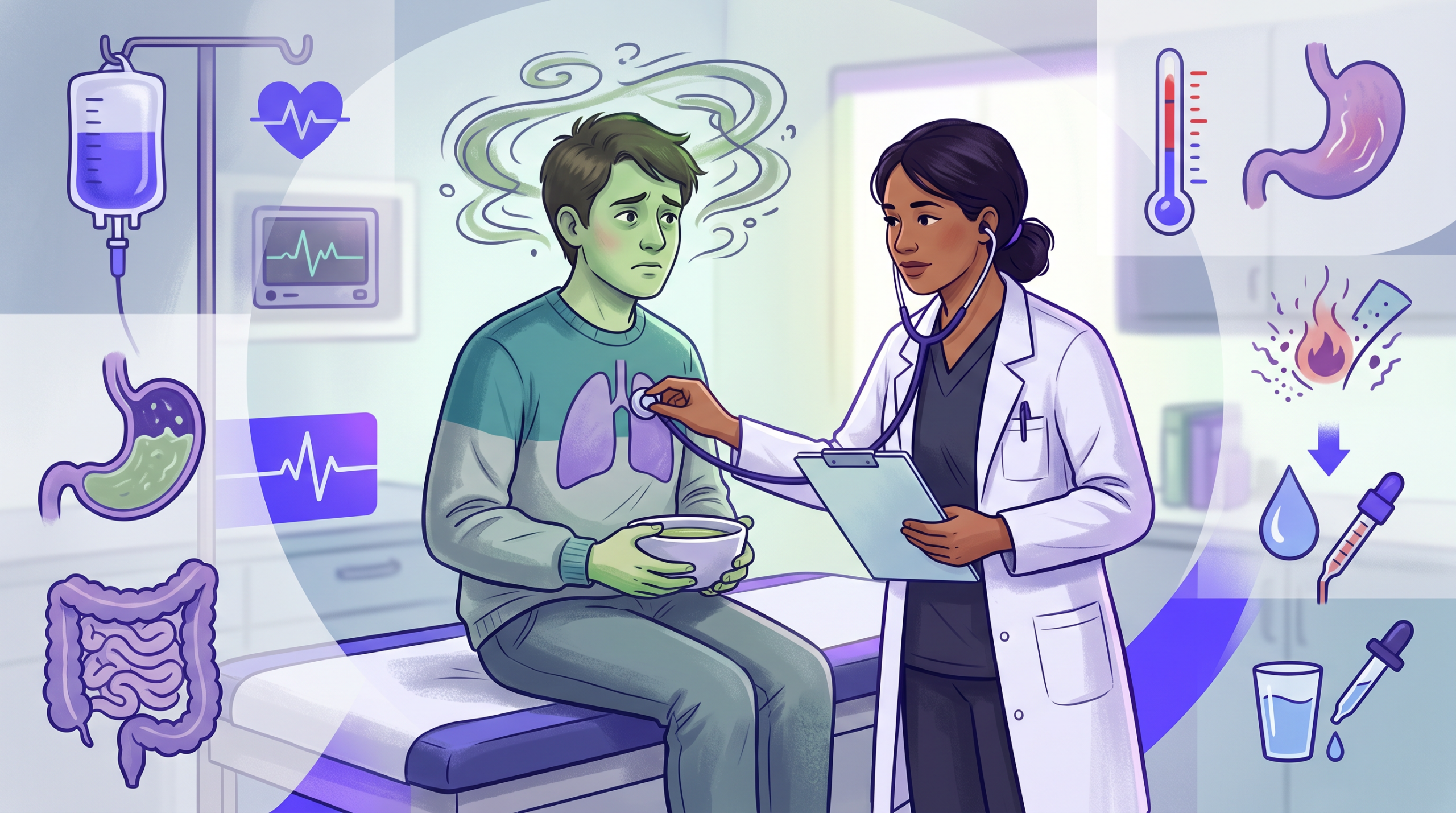
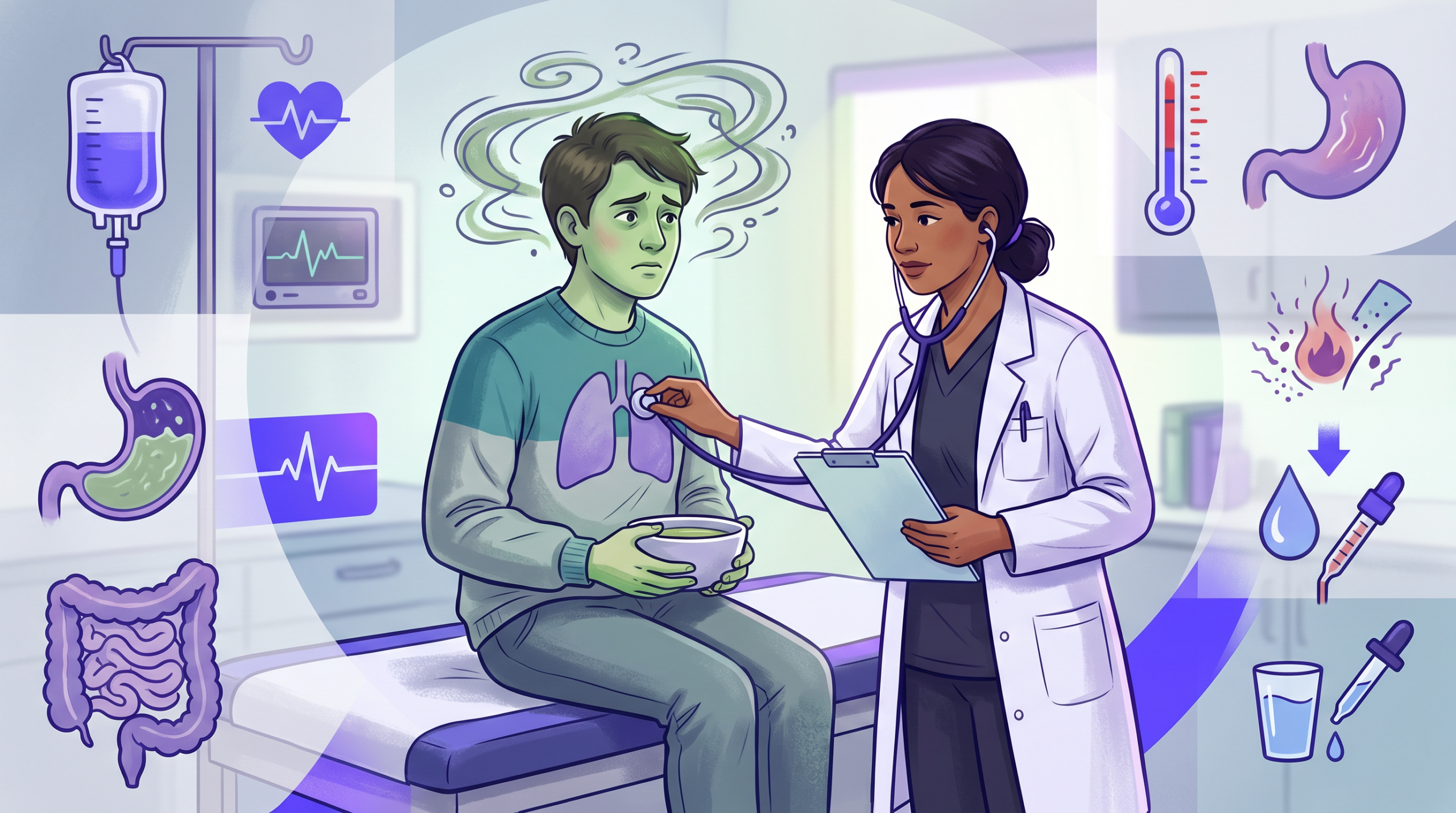
Stomach bugs spread fast through toddler play groups and daycare. Most of the time, gastroenteritis clears up in 24 to 48 hours. But the real danger is dehydration. Because toddlers are small, they lose fluids faster than older children.
Signs your toddler needs urgent care for vomiting or diarrhea:
- Cannot keep down fluids for more than 4 to 6 hours
- Fewer than 3 wet diapers in 24 hours
- No tears when crying
- Sunken eyes or a dry, sticky mouth
- Blood in stool or vomit
- Hard to wake up or very sleepy
At CityHealth, we check hydration levels and give oral rehydration tips. For moderate dehydration, we also give anti-nausea medicine to stop the vomiting cycle. As a result, your toddler can start taking fluids again.
6. Falls and Minor Injuries
Toddlers fall all the time. They climb furniture, run on uneven ground, and topple off playground structures. Most falls only cause bruises, bumps, and tears. However, some falls cause injuries that need a medical check.
Visit urgent care after a fall when your toddler:
- Limps or won’t walk or use an arm
- Has visible swelling over a bone
- Has a cut that won’t stop bleeding or gaps open
- Threw up once after hitting their head but now acts normal
CityHealth has on-site digital x-ray to check for fractures. We splint broken bones, close cuts with stitches or skin glue, and refer to specialists when needed. For kids with sprains and minor fractures, urgent care gives the same first treatment as an ER at a fraction of the cost.
7. Rashes and Skin Reactions
Toddler rashes are very common. Indeed, they range from harmless viral rashes to allergic reactions that need treatment. For example, hand, foot, and mouth disease causes painful sores that make eating hard. Similarly, contact dermatitis from new soaps or plants creates red, itchy patches. Meanwhile, hives can signal an allergic reaction.
Urgent care can evaluate the rash, find the cause, and prescribe treatment. For allergic reactions without breathing trouble or facial swelling, antihistamines and monitoring at urgent care work well. However, allergic reactions with throat tightening, tongue swelling, or breathing trouble need the ER or a 911 call.
What Toddler Urgent Care Cannot Treat: When to Go to the ER
Urgent care has limits. In particular, certain situations demand ER resources, specialists, and equipment that walk-in clinics don’t carry.
Take your toddler to the ER or call 911 if you see:
- Breathing trouble: Ribs pulling in with each breath, nostril flaring, grunting, or blue lips or fingernails
- Fever in babies under 2 months: Any fever of 100.4°F or higher in a baby under 8 weeks needs emergency care right away
- Seizures: Febrile seizures are common in toddlers, but they need ER care if they last more than 5 minutes, if it’s the first one, or if your child doesn’t return to normal after
- Can’t wake your child: If your toddler won’t respond or seems confused and out of it
- Severe dehydration: No wet diapers for 12 or more hours, no tears, sunken soft spot
- Suspected poisoning: Swallowed pills, cleaning products, or button batteries
- Head injury with blacking out: Even brief loss of consciousness after a fall needs CT imaging
- Bone visible through skin: Open fractures need surgical care
When in doubt, first call your pediatrician’s nurse line. They can guide you to the right level of care. If your pediatrician’s office is closed, urgent care providers also triage incoming patients and will send you to the ER if your child’s condition calls for it.
Why Choose CityHealth for Toddler Urgent Care in San Leandro
Not every urgent care clinic sees toddlers. Some have minimum age limits of 18 months or older. Others lack pediatric experience. In contrast, CityHealth Urgent Care in San Leandro treats patients of all ages, including toddlers and infants.
What CityHealth offers for your toddler:
- Walk-in availability 7 days a week with no appointment needed
- On-site digital x-ray for fractures and chest imaging
- Rapid strep and flu testing with same-visit results
- Experienced providers who treat toddler-specific conditions
- Shorter wait times than local emergency rooms
- Insurance accepted: Most major plans including Medi-Cal and Alameda Alliance
We know that sick toddlers don’t wait patiently. That’s why our team moves fast to evaluate, diagnose, and treat so you can get your child home and resting. For a deeper look at your options, see our guide on walk-in clinics vs. primary care.
How to Prepare for a Toddler Urgent Care Visit
Fortunately, a little prep makes the visit smoother for you and your toddler.
Bring with you:
- Insurance card and photo ID
- A list of current medicines (including doses of any Tylenol or Motrin given today)
- Your child’s shot record if you have it
- A comfort item like a stuffed animal or blanket
- A sippy cup with water or Pedialyte
Before you arrive:
- Write down your child’s symptoms, when they started, and any changes
- Note the highest temperature and when you took it
- Also, take a photo of any rash before it changes or fades
All of these details help your provider make faster, more accurate diagnoses. Since toddlers can’t describe their symptoms, your observations essentially become the medical history.
Toddler Urgent Care vs. the ER: Cost and Wait Time
For non-emergency toddler illnesses, urgent care saves you both time and money.
Average urgent care visit: $75 to $250 (self-pay) or a standard copay with insurance. Wait times average 15 to 45 minutes.
Average ER visit: $800 to $3,000 or more before doctor fees. Wait times for non-critical cases average 2 to 4 hours.
Both settings treat ear infections, fevers, coughs, and minor injuries. However, the difference comes down to cost, wait time, and whether your child’s condition is life-threatening. For the vast majority of toddler ailments, urgent care gives the same treatment quality at lower cost with shorter waits.
Still unsure whether your toddler needs urgent care or more specialized pediatric care? CityHealth providers assess every child who walks in and refer to the ER right away when needed. As a result, you won’t lose time by starting at urgent care.
Book Your Toddler’s Urgent Care Visit Today
When your toddler is sick or hurt and your pediatrician can’t see them, CityHealth Urgent Care in San Leandro is ready. Walk in any day of the week, or book an appointment online to save your spot and skip the wait.
Your toddler can’t tell you what’s wrong. But our providers can figure it out, treat it, and send you both home feeling better.