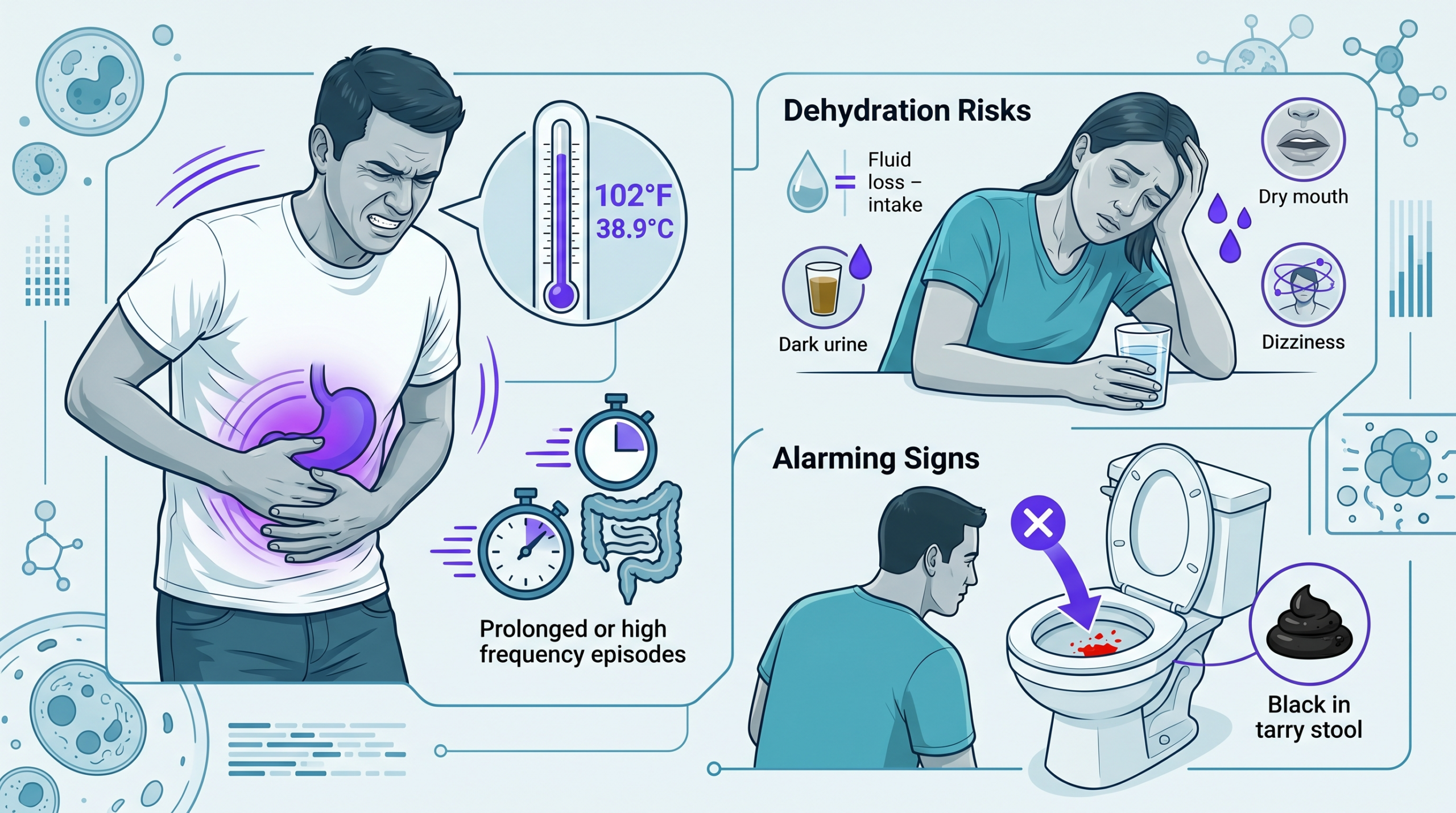

Adults should go to urgent care for diarrhea when it lasts more than two days. You should also go if you have signs of dehydration, fever, or blood in the stool. CityHealth urgent care in San Leandro can evaluate your symptoms, test for infection, and give IV fluids when needed. However, if you have severe abdominal pain, signs of shock, or heavy rectal bleeding, go to the emergency room instead.
When to Go to Urgent Care for Diarrhea in Adults: Red Flags, Dehydration, and Treatment
Most adults deal with diarrhea at some point. Most cases clear up in a day or two. Still, knowing when to go to urgent care for diarrhea as an adult can prevent serious problems. It can stop dehydration, catch infections early, and cut your recovery time. Some causes need prescription treatment to clear up. Also, some patients need IV fluids before they can safely recover at home.
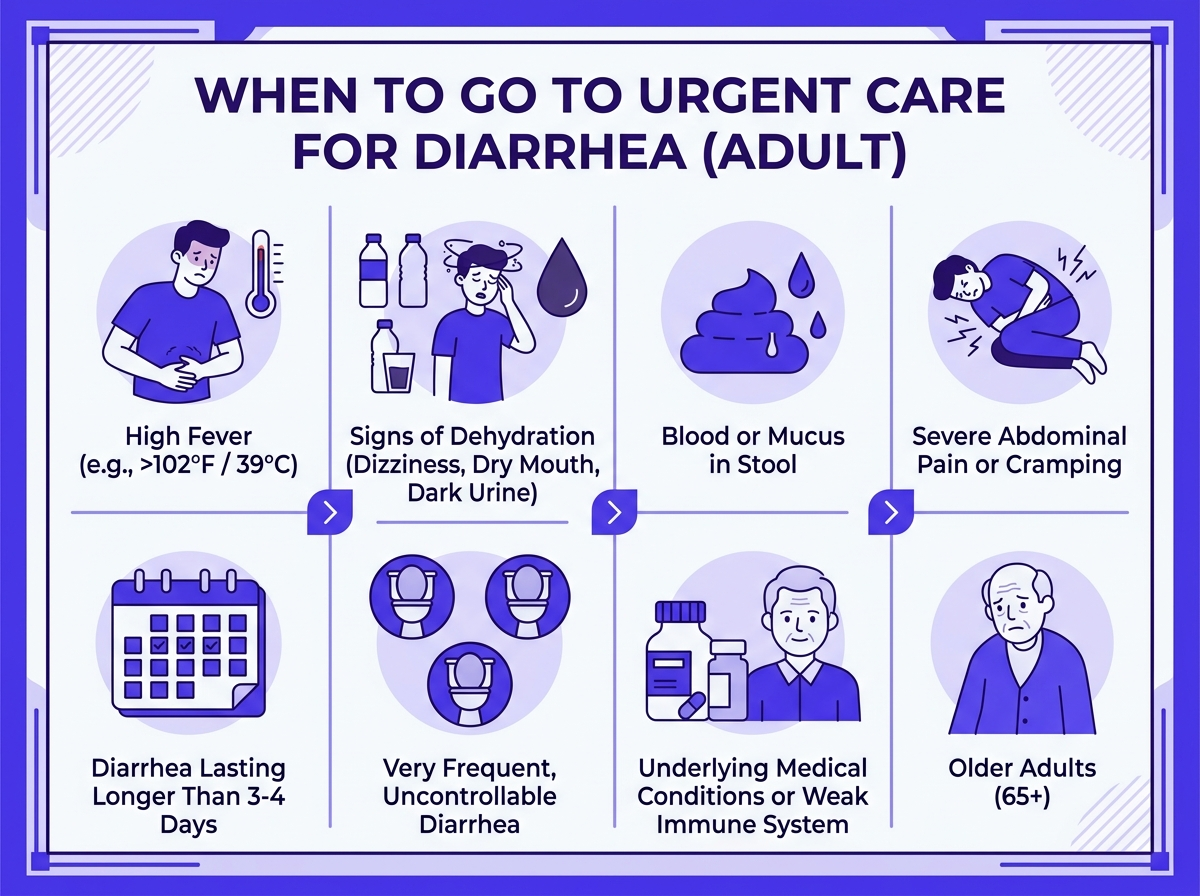

When to Go to Urgent Care for Diarrhea as an Adult
Short, mild diarrhea without warning signs often does not need a clinic visit. However, certain symptoms mean you should stop waiting and get checked right away.
Go to urgent care if you have any of the following:
- Diarrhea lasting more than two days without improvement
- Signs of dehydration: dry mouth, dark urine, dizziness, or no urination for eight or more hours
- Fever above 101 degrees Fahrenheit
- Black, tarry, or bloody stools
- Significant abdominal cramping that does not ease between episodes
- Diarrhea that started after recent travel outside the United States
- Watery diarrhea that began during or after antibiotic use
- Symptoms in adults over 65, or in people with diabetes, heart disease, or weakened immune systems
For most of these situations, urgent care is the right first stop. Because evaluation happens the same day, you get answers and treatment fast. You do not need to wait for a scheduled appointment.
You can also review what to bring and what to expect at CityHealth’s urgent care for diarrhea page before your visit.
Red Flags That Mean Go to the ER Instead
Urgent care handles most diarrhea cases in adults. But some symptoms need emergency care right away.
Go to the emergency room if you have:
- Heavy rectal bleeding or blood in the stool combined with severe abdominal pain
- Signs of shock: rapid heart rate, confusion, pale or clammy skin
- Fever above 103 degrees Fahrenheit
- An inability to keep any fluids down for more than 12 hours
- Severe abdominal pain that keeps getting worse
- Fainting, extreme weakness, or loss of consciousness
These symptoms can signal a serious bowel infection or a perforated intestine. They can also point to dangerous dehydration. All of them need monitoring and resources beyond what urgent care provides.
What Does Urgent Care Do for Adult Diarrhea?
Urgent care visits for diarrhea are more thorough than most people expect. First, a provider reviews your symptoms. Then, they examine you and order tests based on what they find.
Common steps at urgent care for diarrhea include:
- Physical exam: checking for signs of dehydration, abdominal tenderness, and bowel sounds
- Stool testing: checking for bacterial infection, parasites, or C. diff
- Blood work: looking at kidney function, electrolyte levels, and white blood cell count
- IV fluids: rehydrating patients who cannot keep fluids down
- Prescriptions: antibiotics for bacterial causes, anti-nausea drugs, or anti-diarrheal medications when right for the situation
Also, urgent care can tell apart food poisoning, viral illness, and bacterial infection. Treatment differs for each cause. So the diagnosis matters a great deal.


Dehydration: The Most Common Complication
Your body loses water and electrolytes with every loose stool. Dehydration sets in faster than most people realize. This is especially true when episodes are frequent.
Signs of mild to moderate dehydration include:
- Dry mouth and lips
- Increased thirst
- Headache and fatigue
- Reduced urination
- Dark yellow or amber urine
Signs of severe dehydration include confusion, a rapid heartbeat, sunken eyes, and fainting. These require emergency care, not urgent care.
For mild dehydration, oral rehydration solutions work better than plain water. Sports drinks are not the same thing. According to the CDC, oral rehydration solutions replace both fluids and the sodium and potassium lost during diarrhea. In contrast, plain water does not replace electrolytes.
If you cannot keep fluids down, urgent care can give you IV fluids to rehydrate you right away.
Diarrhea that won’t let up?
CityHealth urgent care in San Leandro can evaluate your symptoms today. Walk in or book online.
Book an AppointmentWhen to Go to Urgent Care for Diarrhea in Adults Versus Waiting at Home
A day or two of loose stools without fever, blood, or dehydration can often be managed at home.
At home, you can:
- Sip oral rehydration solution or clear broth in small, frequent amounts
- Avoid dairy, greasy food, caffeine, and alcohol until symptoms clear
- Eat small amounts of bland food such as crackers, rice, or toast when you can tolerate it
- Rest and watch for any warning signs listed above
However, if symptoms worsen after 24 hours or do not improve after 48 hours, go to urgent care. Waiting longer raises the risk of dehydration. It also lets a treatable infection get worse.
For example, diarrhea after a shared meal or foreign travel needs evaluation sooner. Food poisoning can spread quickly. Also, some bacterial infections need antibiotics to clear.
If cramping and stomach pain are part of the picture, the CityHealth urgent care for stomach pain page explains what that evaluation looks like.
Common Causes of Diarrhea in Adults
Finding the cause shapes the treatment. Therefore, a provider will ask about your recent food, travel history, medications, and contact with sick people.
Common causes include:
- Viral gastroenteritis: the most frequent cause; it usually clears in one to three days without antibiotics
- Food poisoning: bacteria such as Salmonella, E. coli, or Campylobacter from contaminated food or water
- C. diff infection: antibiotics disrupt gut bacteria and allow C. difficile to overgrow
- Traveler’s diarrhea: exposure to unfamiliar bacteria or parasites while traveling abroad
- Parasitic infections: Giardia and Cryptosporidium from contaminated water sources
- Food intolerances: lactose or fructose intolerance causing loose stools after certain meals
If your symptoms also include nausea and vomiting, you may have a stomach flu. In that case, urgent care can address all of those symptoms at once.


What to Expect at CityHealth Urgent Care in San Leandro
CityHealth urgent care in San Leandro sees adults with diarrhea, dehydration, and related symptoms. Walk-ins are welcome. You can also book online to hold your spot ahead of time.
During your visit, the provider will:
- Review your full symptom history and relevant medications
- Perform a physical examination
- Order labs or stool testing if the exam suggests infection
- Give IV fluids if you are dehydrated and cannot keep oral fluids down
- Write prescriptions when a bacterial or parasitic cause is confirmed
- Give you clear instructions on what to watch for at home
Because urgent care focuses on acute illness, it fits diarrhea that has moved past manageable. You get a same-day evaluation without scheduling days in advance.
Frequently Asked Questions
How long should diarrhea last before going to urgent care?
Adults should go to urgent care if diarrhea lasts more than two days without improvement. However, go sooner if you also have fever above 101 degrees, blood in the stool, signs of dehydration, or severe abdominal pain. Additionally, adults over 65 and people with chronic illness should not wait the full 48 hours before seeking care.
Can urgent care give IV fluids for diarrhea?
Yes. Urgent care can give IV fluids to treat dehydration from diarrhea. If you cannot keep liquids down, the provider will start an IV and monitor you until your fluid levels stabilize. In fact, IV rehydration is one of the most common treatments for diarrhea at urgent care.
Will urgent care prescribe antibiotics for diarrhea?
Urgent care will prescribe antibiotics only when a bacterial infection is found or strongly suspected based on your history and test results. Most diarrhea is viral. So antibiotics will not help most of the time. However, if your stool test or travel history points to Salmonella, Campylobacter, Shigella, or C. diff, the provider will prescribe the right antibiotic. Using antibiotics without a confirmed bacterial cause can disrupt gut bacteria and make symptoms worse.
Is bloody diarrhea always an emergency?
Not always, but you should not ignore it. Small amounts of blood without other warning signs can be evaluated at urgent care. However, heavy bleeding, severe abdominal pain, a rapid heart rate, or any sign of shock means you should go to the ER right away. A provider needs to find the source of the bleeding, which can range from hemorrhoids to a serious bowel infection.
If your symptoms match the criteria above, do not wait it out. CityHealth urgent care in San Leandro is ready to evaluate diarrhea, treat dehydration, and find infections that need prescription care. Walk in today or book an appointment online to be seen the same day.