
Your baby is finally here, and the appointments start almost right away. The first newborn pediatrician visit happens within days of leaving the hospital. It sets the pace for your child’s entire first year of care.
This schedule moves fast. Knowing what to expect at each visit helps you stay prepared and catch problems early. This guide walks you through every checkup, what the doctor does, the questions you should ask, and when to head to urgent care instead.
Medically reviewed by Susana Quezada, NP — Nurse Practitioner
The Newborn Pediatrician Visit Schedule: Every Appointment in Year One
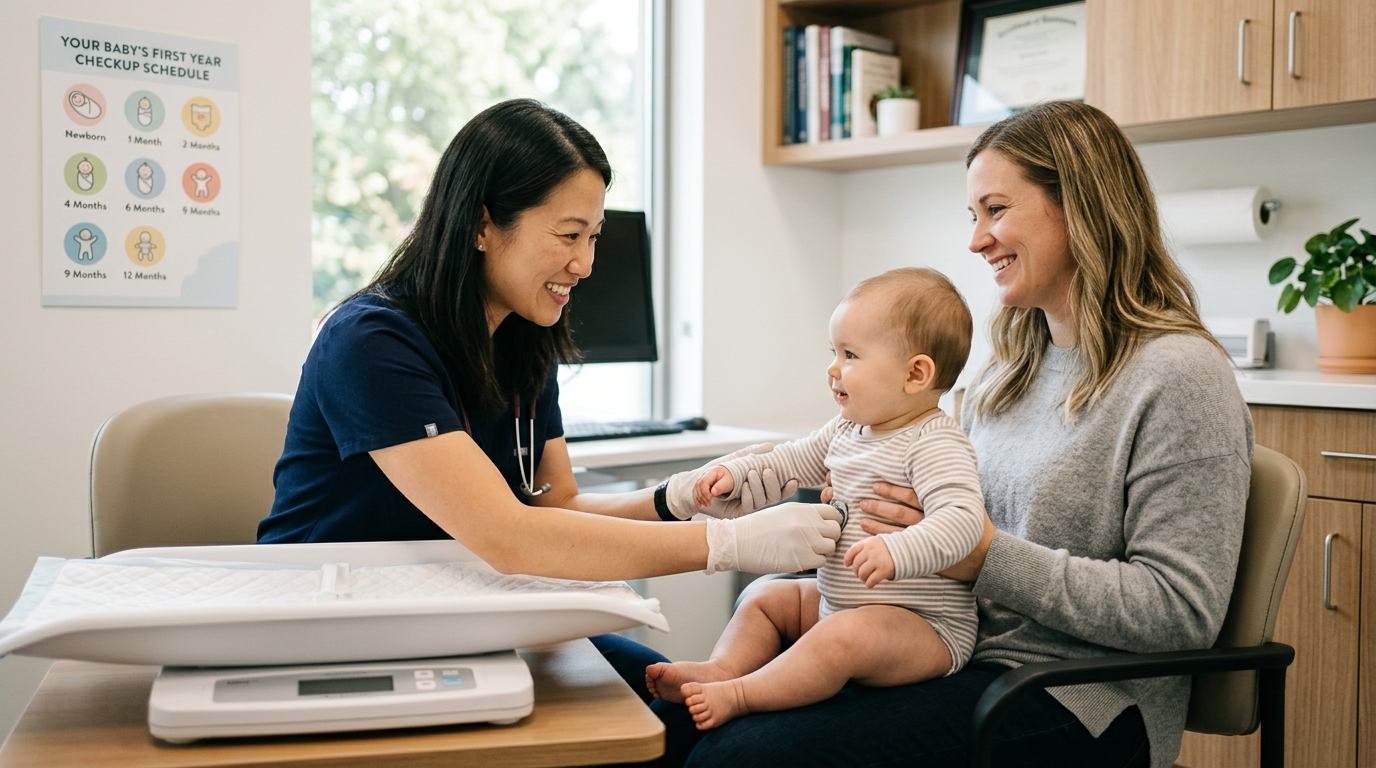
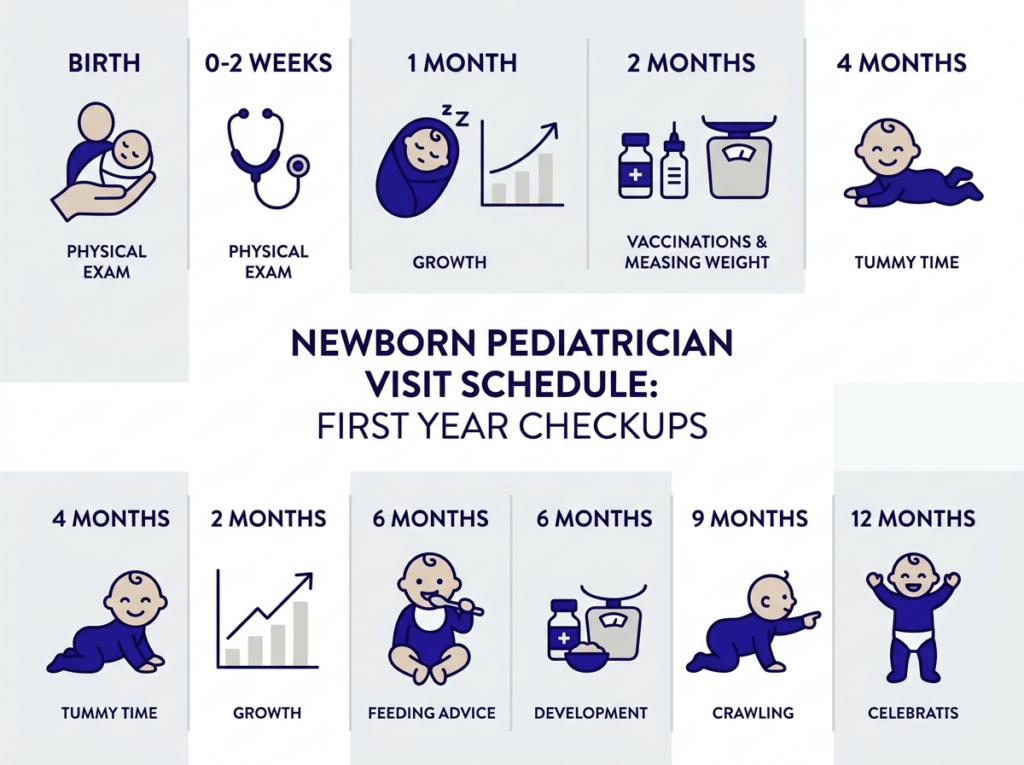
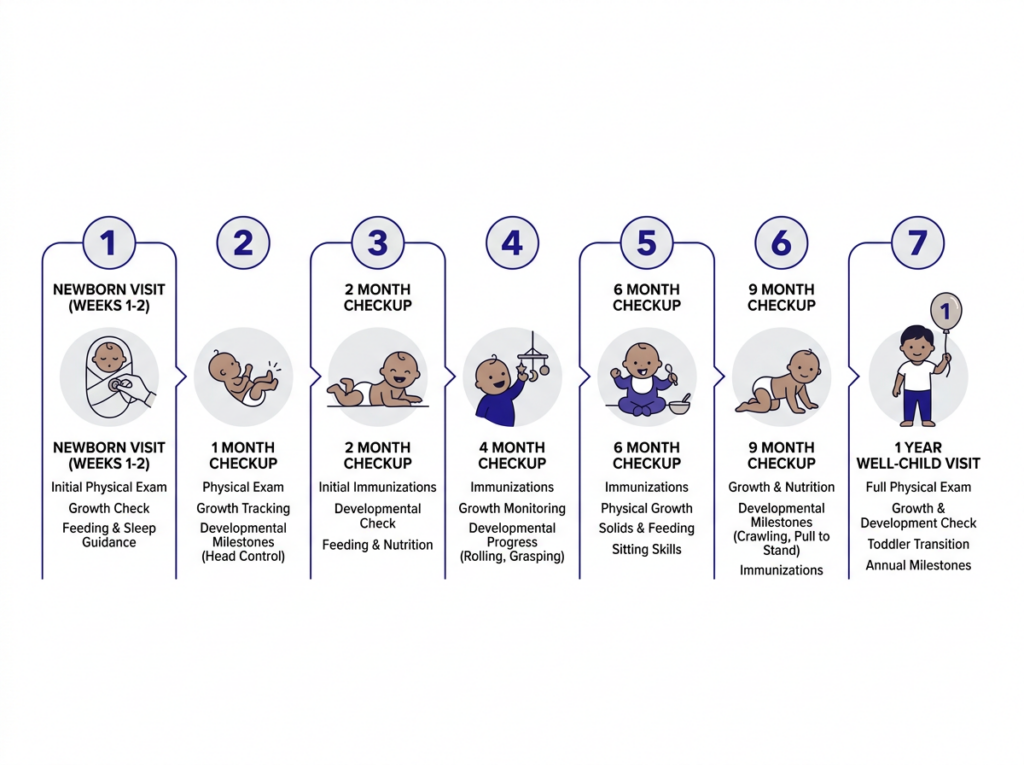
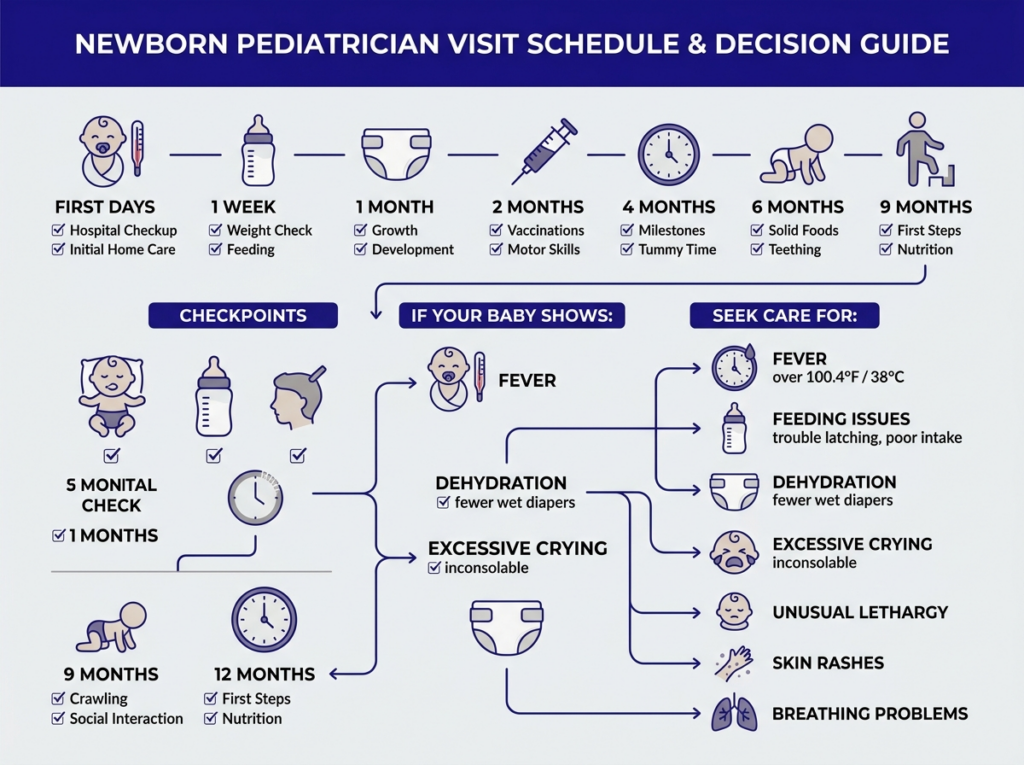
The American Academy of Pediatrics (AAP) recommends a set well-baby visit schedule during the first year. Most pediatricians follow this timeline closely. Here is what it looks like:
- 3 to 5 days old — First visit after hospital discharge
- 2 weeks old — Early growth and feeding check
- 1 month old — Developmental milestone review
- 2 months old — First round of vaccinations
- 4 months old — Growth tracking and second vaccine round
- 6 months old — Introduction to solids discussion
- 9 months old — Developmental screening
- 12 months old — One-year wellness exam
In total, you can expect at least eight well-baby visits in the first year. Finding a good pediatrician near you early matters. Try to choose your pediatrician before your baby arrives. That way, the first appointment is already on the calendar.
The First Newborn Pediatrician Visit: 3 to 5 Days Old
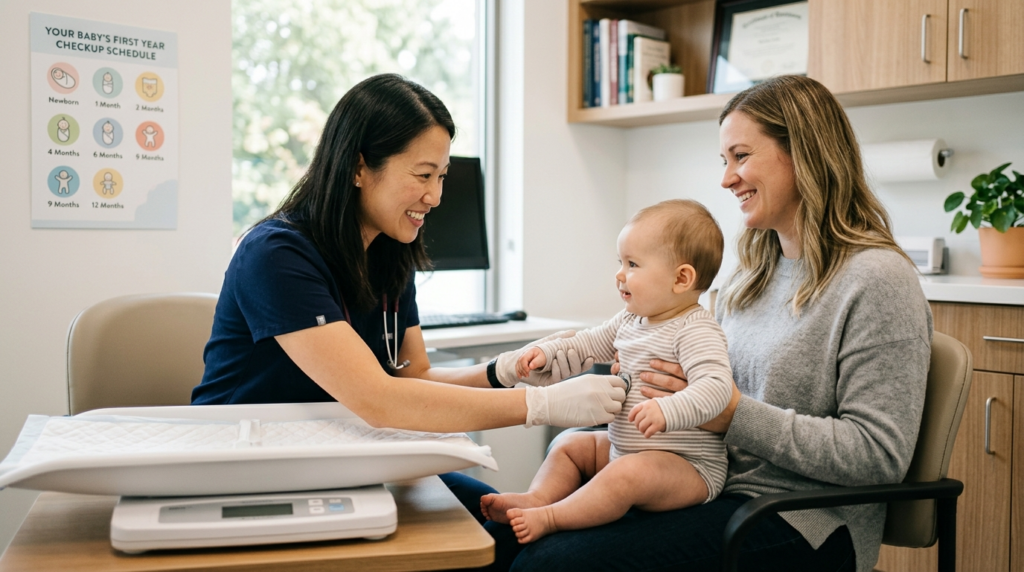
This visit is the most important one. Typically, it happens within three to five days after birth. However, if your baby was born early or had problems, it may happen sooner. Specifically, the pediatrician focuses on a few key areas during this visit.
Weight check. Most newborns lose 5% to 10% of their birth weight in the first few days. Because of this, your pediatrician will weigh your baby and make sure the weight loss is in a normal range. Also, they check if your baby has started gaining weight again. This usually happens by day four or five.
Jaundice screening. Yellow skin and eyes are common in newborns. However, high bilirubin levels can be harmful. Therefore, the doctor will check your baby’s skin color and may order a blood test to measure bilirubin levels.
Feeding check. Whether you breastfeed or use formula, the doctor will ask how often your baby eats. In addition, they will ask about wet and dirty diapers. Feeding problems are the top concern in the first week, so be honest about any struggles.
Physical exam. Finally, the pediatrician will check your baby’s heart, lungs, hips, reflexes, soft spot, and cord stump. They will also confirm that newborn screening tests from the hospital are done.
What Happens at the 2-Week and 1-Month Visits
At two weeks, your pediatrician will check that your baby is back to their birth weight. In most cases, healthy newborns reach this point by day 10 to 14. Additionally, the doctor will look for signs of colic, reflux, or feeding problems that may have come up since the first visit.
The one-month visit builds on everything before it. Specifically, the pediatrician will track your baby’s head size, length, and weight on a growth chart. They will also review early milestones. For example, your baby should be able to focus on faces, respond to sounds, and move both arms and legs the same way.
At both of these visits, expect questions about your own health too. In fact, screening for postpartum depression is now standard at well-baby checkups. Therefore, do not be surprised if your pediatrician asks how you are sleeping, eating, and feeling. This is normal and important.
The 2-Month Visit: Vaccines Begin
The two-month visit is a big one. This is when your baby gets their first round of shots. Typically, these protect against whooping cough, polio, rotavirus, and pneumonia-related illness. Many parents feel nervous about this visit. However, vaccines are the best way to protect your newborn from serious illness.
Along with vaccines, this visit also includes a full physical exam and growth check. In particular, your pediatrician will look for social smiling, eye tracking, and early head control. Furthermore, they will review your baby’s sleep patterns and discuss safe sleep habits.
After this visit, mild fussiness and a low fever are common side effects. Generally, a temperature under 100.4 degrees is normal in the first 24 to 48 hours. However, if your baby gets a fever above 100.4 at any point in the first three months of life, seek medical help right away. This rule applies no matter what the cause may be.
Visits at 4, 6, 9, and 12 Months
These later visits follow a similar pattern. At each one, your pediatrician will measure growth, give scheduled vaccines, and check for milestones. Naturally, the focus shifts as your baby grows.
4 months: The doctor looks for your baby to hold their head steady, push up on elbows during tummy time, and laugh or squeal. A second round of vaccines is given at this visit.
6 months: This visit often includes a talk about starting solid foods. Your pediatrician may suggest fluoride drops and check for signs of teething. Some babies also get a blood test to check for low iron.
9 months: The growth check becomes more detailed. The doctor will look at crawling, babbling, and how your baby reacts to strangers. The AAP suggests a formal screening at this age using a standard form.
12 months: The one-year visit includes more vaccines and a full growth review. Your pediatrician will also talk about switching from formula or breast milk to whole milk. They may order a lead screening blood test as well.
Questions to Ask at Every Newborn Pediatrician Visit
Going to any visit with questions ready saves time and lowers stress. Therefore, write your questions down before you arrive. After all, sleep loss makes it easy to forget. Below are questions worth asking at every visit:
- Is my baby gaining weight at a healthy rate?
- Are we on track with developmental milestones?
- Is my baby’s feeding pattern normal for this age?
- What vaccines are due today, and what side effects should I watch for?
- When should I call your office versus going to urgent care?
- Are there any concerns based on today’s exam?
Also, do not hold back on things that seem minor. For instance, questions about diaper rash, spit-up, or sleep habits are all fair game. Your pediatrician has heard it all before. Ultimately, no concern is too small when it involves a newborn.
Red Flags Between Scheduled Visits: When to Seek Immediate Care
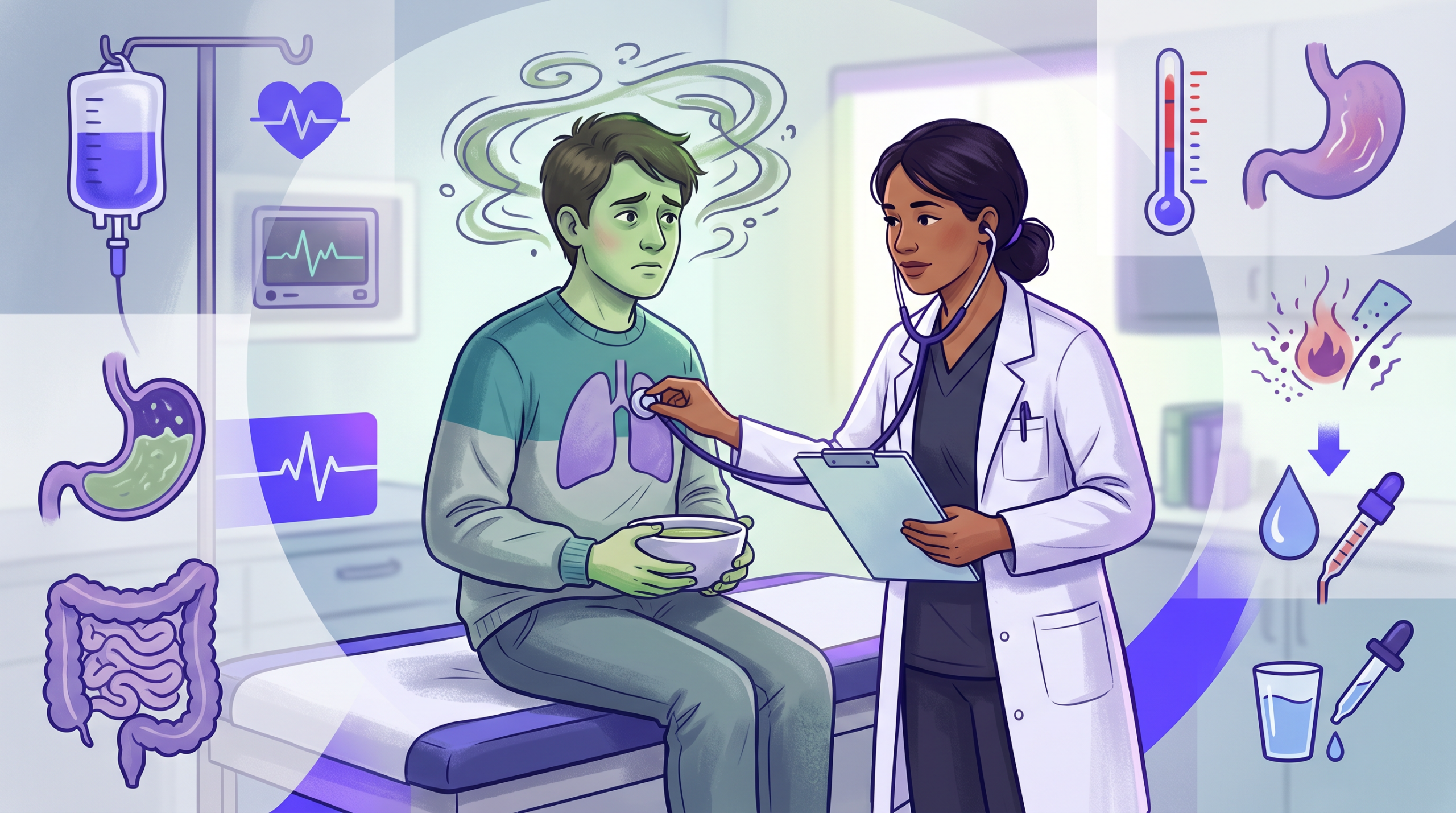
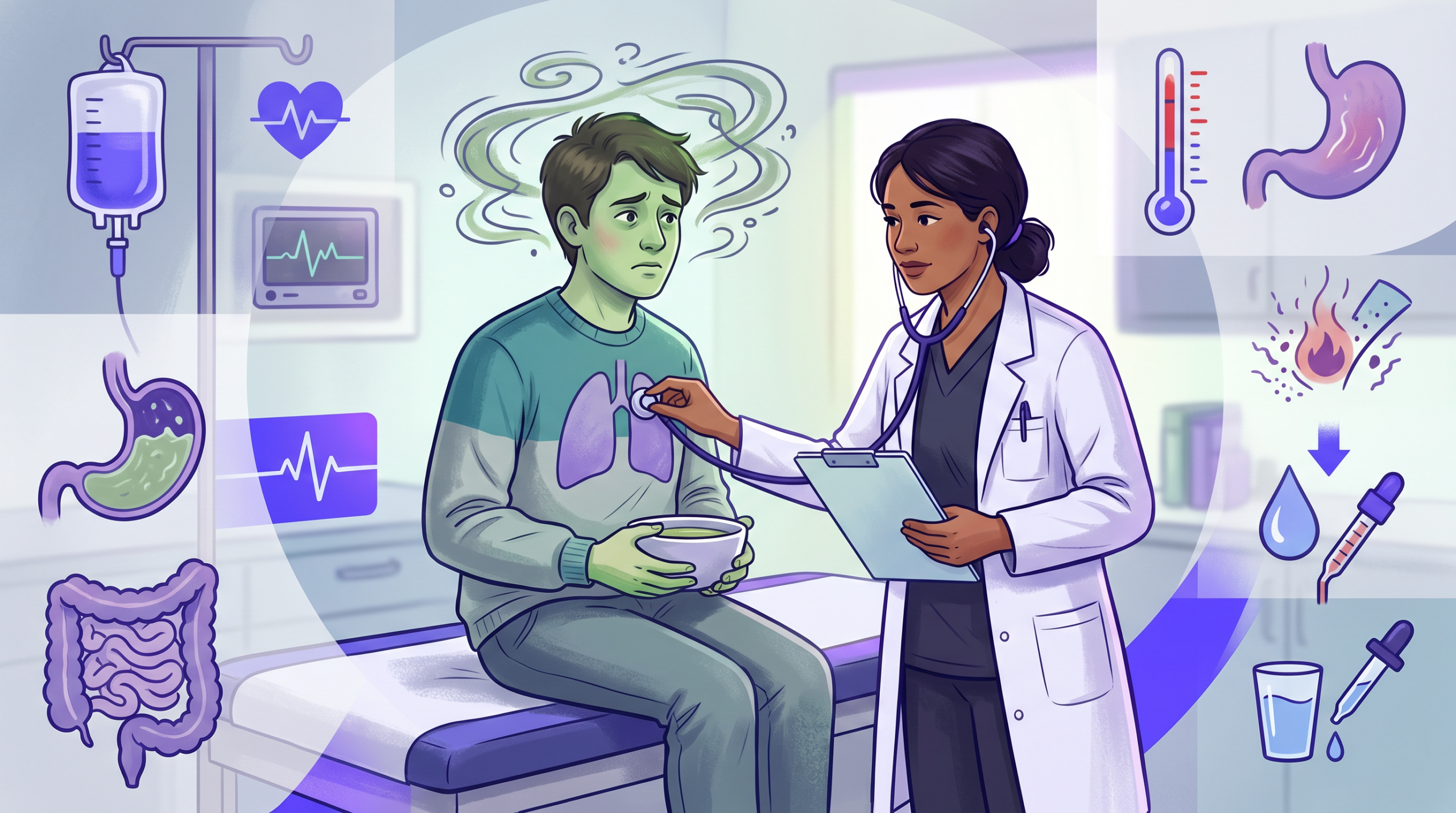
Well-baby visits happen on a set schedule. However, babies do not get sick on a schedule. As a result, you need to know which symptoms need urgent care. The following signs in a newborn call for a same-day medical visit:
- Fever of 100.4 or higher in a baby under 3 months old (this is always an emergency)
- Difficulty breathing — flaring nostrils, grunting, or skin pulling in between ribs
- Refusing to eat for two or more consecutive feedings
- Extreme sleepiness — unable to wake your baby for feedings
- Fewer than 3 wet diapers in a 24-hour period (sign of dehydration)
- Yellow skin or eyes worsening after the first week
- Projectile vomiting after most feedings
- Bloody stool or a distended, hard belly
If you notice any of these symptoms, do not wait for your next visit. Instead, trust your instincts. Above all, if something feels wrong with your baby, it is always better to get checked than to wait. Learn more about when a child’s fever means it is time to see a doctor.
What to Do When You Cannot Get Into Your Pediatrician
Here is something every new parent faces. Your baby has a symptom that worries you. You call your pediatrician’s office, and the next opening is two days away. Meanwhile, the symptom does not seem bad enough for the ER. So what do you do?
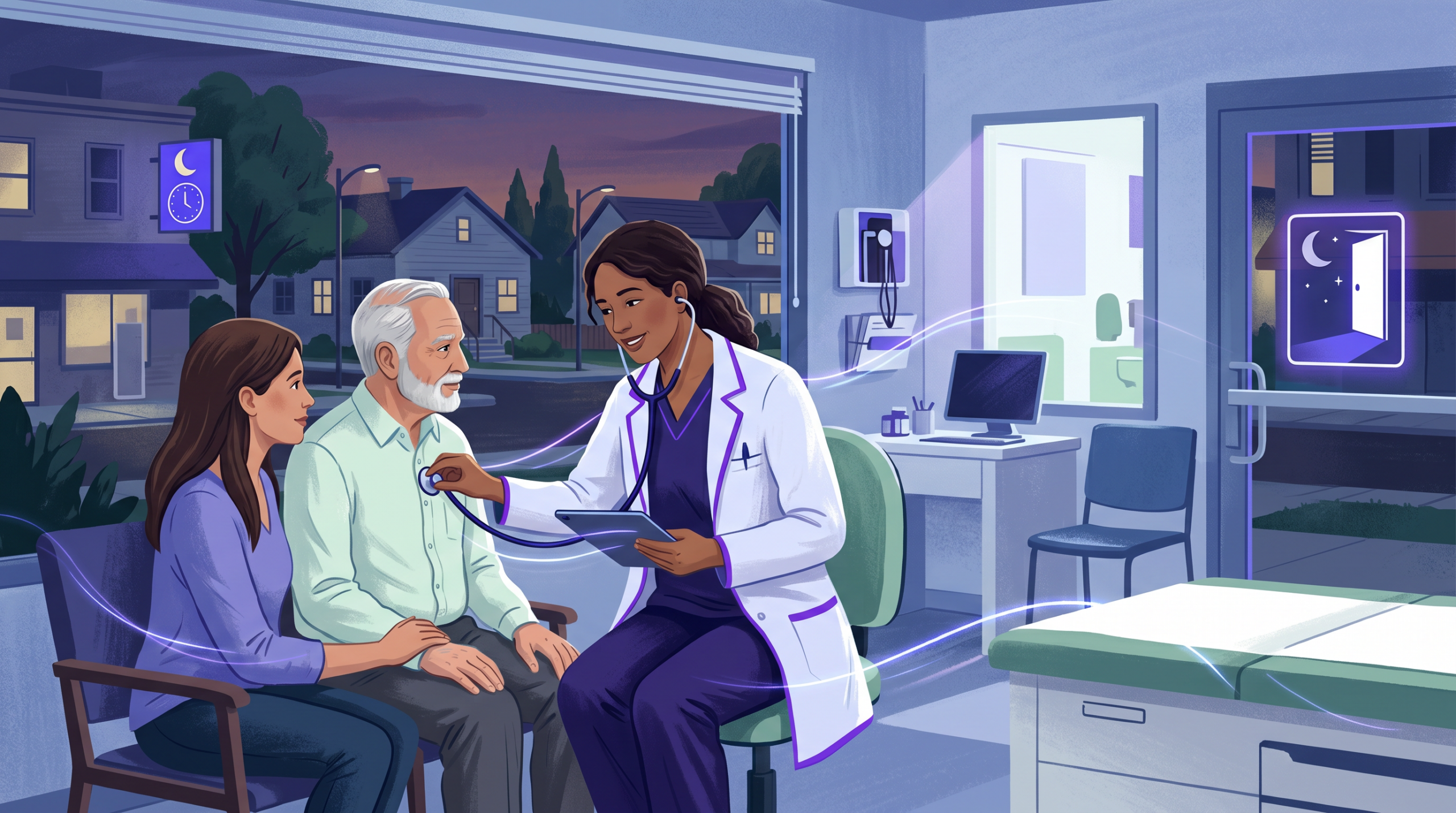
This is where walk-in urgent care fills the gap. Of course, well-baby checkups and vaccine schedules belong with your pediatrician. However, sick visits and urgent concerns between appointments can often be handled at an urgent care clinic. In other words, you do not have to choose between waiting two days and sitting in an ER for six hours.
For example, urgent care works well for mild fevers in babies over 3 months, rashes, ear pulling, stuffy noses, minor feeding issues, and diaper rash that is not getting better at home. Still, remember: any fever in a baby under 3 months needs emergency care, not urgent care. The 100.4-degree line in young infants is a hard rule with no exceptions.
CityHealth Urgent Care: Same-Day Newborn Sick Visits in San Leandro
At CityHealth Urgent Care in San Leandro, we see worried parents every day. We are not a replacement for your baby’s pediatrician. Your pediatrician is your partner for well-baby visits, vaccines, and ongoing care. But when your baby gets sick between checkups and your pediatrician cannot see you today, we are here.
Our providers have experience caring for newborns and infants. Importantly, we offer walk-in visits with no appointment needed. As a result, you can bring your baby in the moment you are worried. We also share visit notes with your pediatrician so nothing falls through the cracks.
Walk in to CityHealth Urgent Care in San Leandro today. No appointment needed. When your baby is sick, waiting until Monday is not an option. Visit our pediatric urgent care page to learn more, or head straight to our urgent care clinic.