


Also, you finally get into the exam room, the doctor walks in, and your mind goes completely blank. You had a list of questions on the drive over. Also, now you can’t remember a single one. If that sounds familiar, you are not alone — and this guide is specifically built around the most important questions to ask pediatrician appointments, organized so you walk in prepared every single time.
Additionally, knowing the right questions to ask your pediatrician makes a real difference in your child’s care. However, most articles hand you a generic list of 20 questions and call it done. This one is different. Below, you will find questions organized by visit type — first visit, well-child checkups, and sick visits — so you always know exactly what to bring up and when.
Medically reviewed by Susana Quezada, NP — Nurse Practitioner, CityHealth
Why Organizing Your Questions to Ask Pediatrician by Visit Type Matters
Furthermore, a 2-week newborn visit is nothing like a 4-year well-child visit. Similarly, a sick visit for a fever is nothing like either of those. When you walk in with the wrong questions at the wrong time, you waste your limited appointment minutes — or worse, you leave without the answers you actually needed.
Moreover, the American Academy of Pediatrics recommends well-child visits at specific intervals throughout childhood. Each visit, for example, has its own developmental focus. Your questions should match that focus.
Specifically, before you go anywhere, write your questions down. Bring the list in your hand, not just in your head. Additionally, rank them — if time runs short, you want your top concerns answered first.
Questions to Ask Pediatrician at Your Child’s First Visit
Notably, the first visit — usually within the first week or two after birth — is as much about you getting to know the practice as it is about your baby’s health. This is your chance to understand what a pediatrician does and whether this one is the right fit for your family.
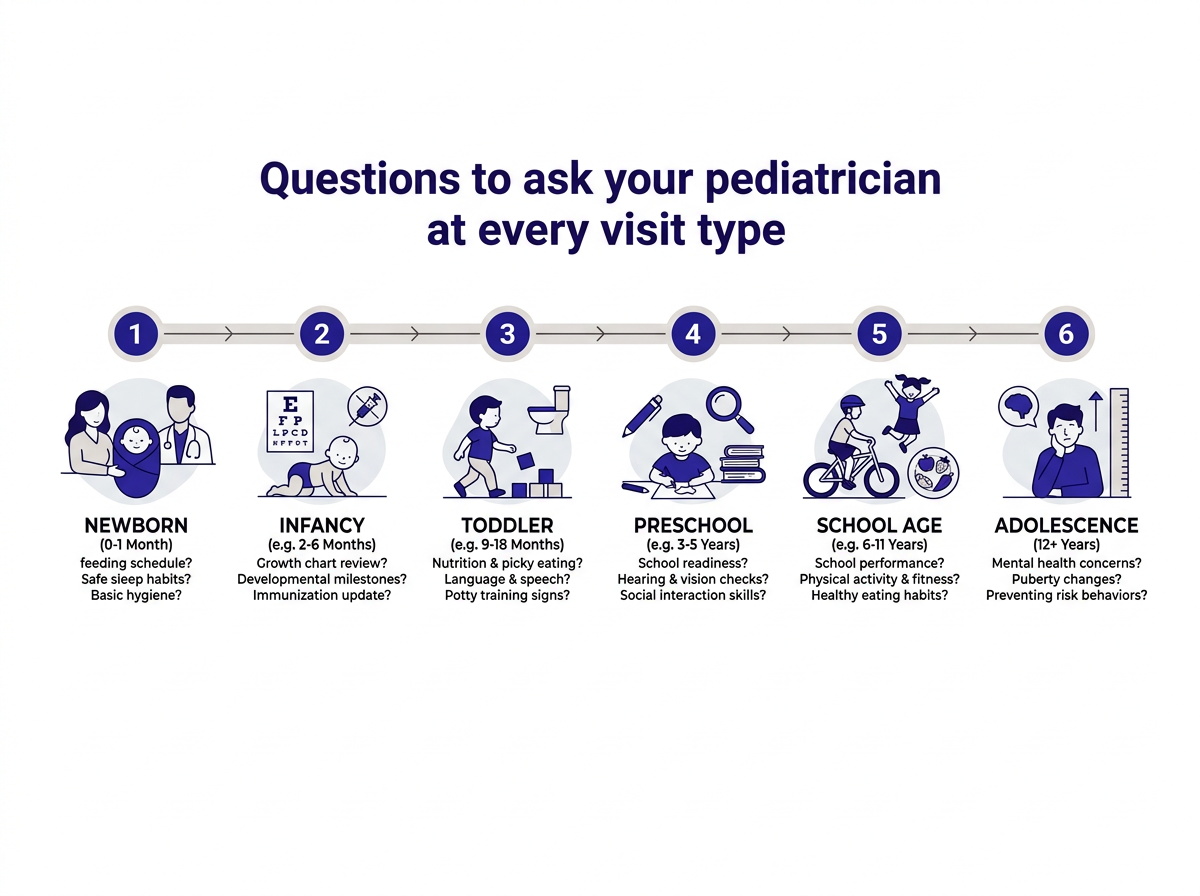
Logistics and practice questions
- What are your hours, including evenings and weekends?
- How do I reach you after hours? Specifically, ask what happens on nights, weekends, and holidays.
- How long does it typically take to get a sick visit appointment? Same-day availability matters enormously — for example, when your child has a fever on a Tuesday morning.
- Which hospital are you affiliated with? If your child ever needs hospitalization, you want to know in advance. Additionally, knowing the hospital helps you plan ahead.
- Do you have a nurse line or portal for quick questions?
Philosophy and approach questions
- What is your approach to vaccines? The AAP follows a standard immunization schedule, and most pediatricians do too. In any case, know where your doctor stands.
- How do you feel about breastfeeding support? If you are nursing, you want a pediatrician who will actively support that decision. This is especially important in the first weeks.
- How do you handle parents who have questions about recommendations? Above all, you want a doctor who listens, not one who dismisses your concerns.
Newborn health questions
- Is my baby’s weight gain on track? Newborns typically lose a small amount of weight in the first days. As a result, ask when you should expect a return to birth weight.
- How do I know my baby is eating enough? Also ask about feeding frequency and wet diaper counts as signals.
- What are the signs of jaundice I should watch for at home?
- When should I call you immediately versus wait and watch? Most importantly, get a clear answer on this before you leave.
Questions to Ask at Well-Child Visits
Indeed, well-child checkups follow your child from birth through adolescence. The AAP recommends visits at 2 weeks, 1 month, 2 months, 4 months, 6 months, 9 months, 12 months, 15 months, 18 months, 2 years, and annually after that. Each visit covers growth, development, and vaccines appropriate for that age.
In fact, if you are searching for a good pediatrician near you, these well-child visit questions give you a solid benchmark for the kind of care to expect.
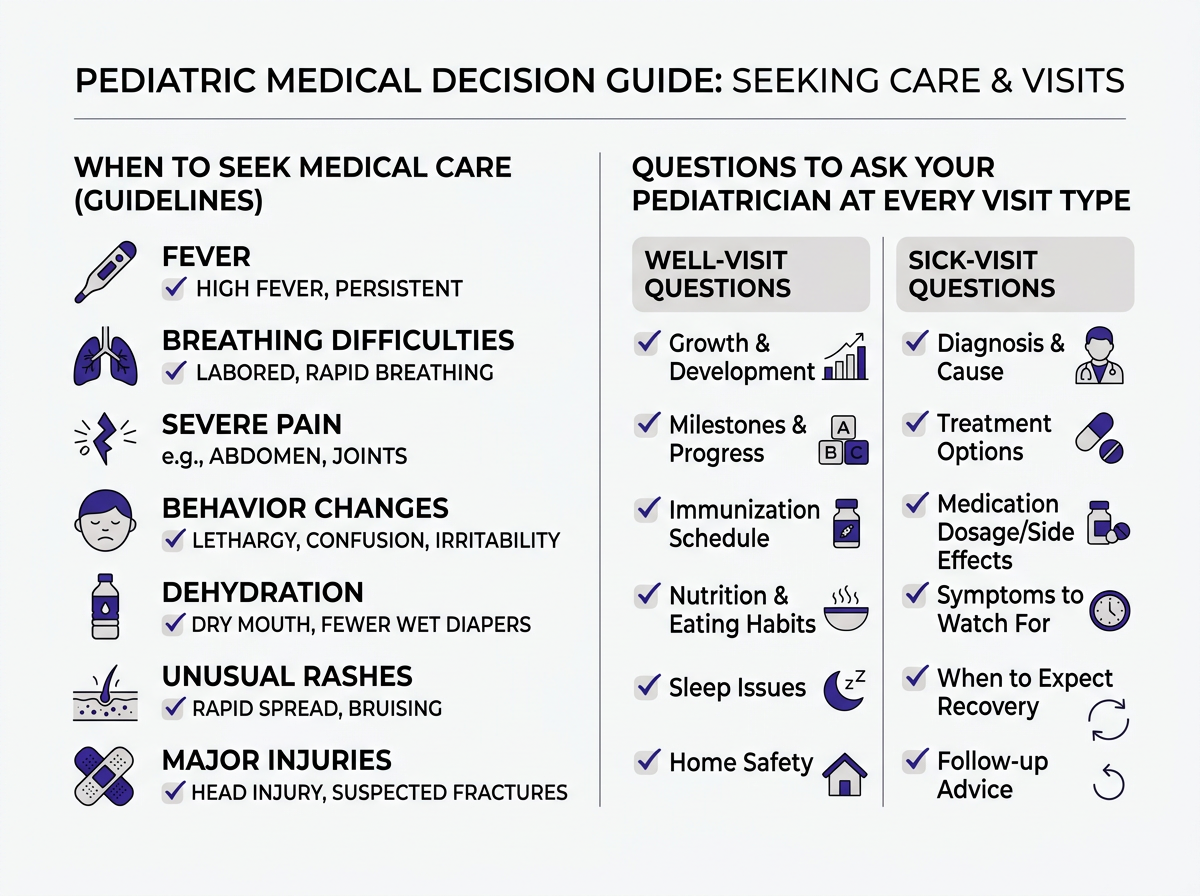
Development and growth questions
- Is my child hitting their developmental milestones? Specifically, ask about motor skills, language, and social-emotional development for their age.
- What milestones should I expect before the next visit? This, in turn, keeps you informed between appointments.
- How is my child’s growth tracking? Ask to see the growth chart and understand what the percentiles mean. In addition, ask whether any trends concern the doctor.
- Is there anything in their development I should be watching closely?
Nutrition and sleep questions
- What should my child be eating at this age? Nutritional needs shift significantly at 4 months, 6 months, 1 year, and beyond.
- How much sleep does my child need right now?
- Are there any vitamins or supplements you recommend? For example, vitamin D and iron come up frequently in the early years.
Vaccine and screening questions
- Which vaccines are due at this visit? Know what to expect before your child gets a shot. Next, ask about the timeline for future doses.
- What side effects should I watch for? Ask what is normal and what warrants a call. Specifically, ask about fever thresholds after vaccination.
- Are there any screenings or lab tests due? For example, lead and iron screenings, hearing tests, and vision checks all follow specific schedules.
Safety questions by age
- What are the biggest safety risks for my child’s age right now? For example, car seat installation, water safety, and safe sleep guidelines change as your child grows.
- Should I have my home tested for lead? This is especially relevant in older homes. In addition, ask about soil and water sources if you live in an older neighborhood.
- At what age should I start talking to my child about online safety? This is also a good time to ask about screen time limits for their current age.
Questions to Ask Pediatrician at Sick Visits
Essentially, sick visits are different. You are not there for a developmental update — you need answers fast. As a result, go in focused on the specific problem, and make sure you leave with a clear plan.
Before the visit, track these details
- When did symptoms start?
- How high has the fever been and for how long?
- Is your child eating and drinking?
- Any exposure to sick kids at school or daycare recently?
Questions to ask during the sick visit
- What do you think is causing this? Specifically, a virus versus bacterial infection changes the treatment completely.
- Do we need any tests — strep, flu, RSV? In fact, rapid tests can give you an answer before you leave the office.
- What is the treatment plan and what does it involve? Also, ask whether any over-the-counter medicines are safe to use at home.
- When should my child start feeling better? Set a timeline so you know when to be concerned. For example, most viral infections improve within 3–5 days.
- What symptoms mean I should bring them back or go to urgent care? Get a specific list — not just “if they seem worse.”
- When can they return to school or daycare? Next, confirm whether any written clearance is required.
Importantly, for fever guidance specifically, read our article on when to take your child to the doctor for a fever.
The Question Nobody Thinks to Ask: What Happens When You Can’t Get an Appointment?
Clearly, here is the situation most pediatric articles ignore. Your child wakes up with a 103-degree fever on a Thursday morning. Also, you call the pediatrician. The earliest they can see you is next week. What do you do?
Plus, This happens all the time. Pediatric practices are often booked out. Same-day sick visits are limited. And consequently, waiting a week when your child has a high fever, ear pain, or a sore throat is not a realistic option.
Ultimately, this is exactly where CityHealth Urgent Care fits into your child’s care. CityHealth is not a pediatrician and not a primary care practice. However, for acute sick visits — ear infections, fevers, strep throat, flu, pink eye, and similar concerns — CityHealth sees kids today, without an appointment.
CityHealth handles:
- Ear infections
- Fevers
- Strep throat (rapid test available)
- Flu (rapid test available)
- Pink eye
- Coughs, colds, and respiratory symptoms
- Minor cuts, rashes, and injuries
Also, you can walk in or book online. Your child’s pediatrician handles the long-term relationship — the well-child visits, the vaccines, the developmental tracking. CityHealth, on the other hand, steps in when you need same-day care and the pediatrician is not available.
Additionally, if you are looking for a pediatric walk-in clinic near you, CityHealth in San Leandro offers all services including pediatric sick visits.
How to Make the Most of Every Pediatrician Appointment
Furthermore, a few practical habits make every visit more productive, no matter what type of appointment it is. First, prepare before you leave the house. Then, once you are in the room, stay focused on your priorities.
- Write your questions down before you leave the house. Not on your phone where you will scroll past them — specifically, on paper, in your hand.
- Rank your questions. If you only get five minutes of Q&A time, which questions matter most? Consequently, having a priority order saves you from leaving the most important things unasked.
- Bring a second person when you can. One adult manages the child. The other takes notes and listens. As a result, you retain far more of what the doctor says.
- Repeat back what you heard. “So if the fever goes above 104, I should call you immediately — is that right?” Confirming in the moment prevents confusion later. In addition, it signals to the doctor that you are engaged.
- Ask for written instructions. Most practices can print or message an after-visit summary. That way, you have a reference at home.
- Save the nurse line number in your phone right now. Before you need it. Similarly, save the after-hours number as a separate contact.
Moreover, the goal is a pediatrician relationship built on clear communication. When you ask good questions, you get better care. And when you know what your pediatrician covers — and what they don’t cover on a same-day basis — you know exactly where to turn for every situation.
Bottom Line
Above all, remember that the best questions to ask your pediatrician depend entirely on the type of visit you are having. First visits are about fit and logistics. Well-child visits, on the other hand, are about development, growth, and vaccines. Sick visits are specifically about diagnosis and treatment. Therefore, organize your questions accordingly, write them down, and rank them before you walk in.
Specifically, and when your pediatrician is fully booked and your child needs to be seen today — CityHealth is open, walk-ins welcome, no appointment required.
Need to see a provider today?
Notably, cityHealth Urgent Care in San Leandro sees kids for sick visits, ear infections, fevers, strep, flu tests, and more — today, no appointment required.

