
Also, you just got another call from school. Or daycare sent them home — again. Also, if it feels like your child keeps getting sick every few weeks with no end in sight, you’re not imagining it, and you’re not doing anything wrong. You’re just exhausted, and you need answers.
Medically reviewed by Susana Quezada, NP — Nurse Practitioner, CityHealth
Additionally, this article breaks down why frequent illness happens and when it crosses from normal into a red flag. Most importantly, it covers what you can actually do about it today, not next week when the pediatrician has an opening.
Why Your Child Keeps Getting Sick: The Honest Answer
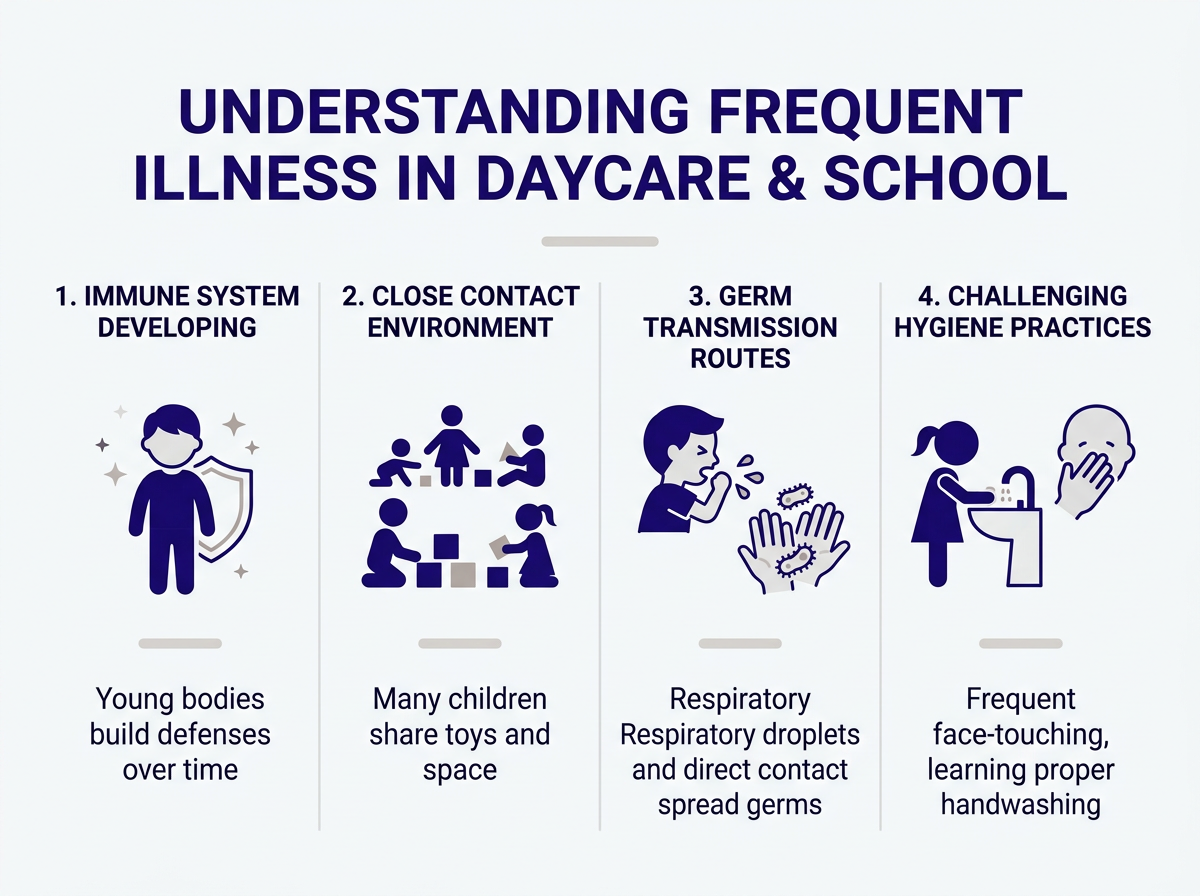
Furthermore, children’s immune systems are still developing. Every virus or bacteria your child encounters is a first-time exposure. As a result, their body has no pre-built defenses. That process takes years — not months.
Moreover, according to the American Academy of Pediatrics, it is completely normal for young children to get 6 to 12 respiratory infections per year. Kids in daycare or school can even hit the higher end of that range. This is because they spend hours in shared spaces, breathing the same air and touching the same surfaces.
So if your child seems to catch everything that comes through the classroom, the immune system is usually doing its job — it’s just still learning.
Specifically, Common reasons kids get sick so frequently include:
- Daycare or school exposure to large groups of children
- Seasonal changes that weaken respiratory defenses
- Hand-to-face contact (kids do this constantly)
- Shared toys, surfaces, and food
- An immune system that simply hasn’t built up antibodies yet

When “Normal” Stops Being Normal: Red Flags to Watch For
Notably, frequent colds are one thing. However, some patterns signal that something more is going on — and those patterns are worth knowing before you end up in an ER waiting room at midnight.
Indeed, Talk to a medical provider if your child has:
- More than 12 colds or respiratory infections per year
- 8 or more ear infections in a single year
- 2 or more cases of pneumonia in one year
- Infections that don’t resolve with standard treatment
- Poor weight gain or growth alongside frequent illness
- A recurring fever with no clear cause
Essentially, these patterns can point to an underlying issue. For example, the cause may be an immune problem, a structural issue such as large adenoids, or an allergy that keeps the airways irritated and open to infection. A provider can help sort that out — but first, you need to get your sick child seen.
What to Do When Your Child Is Sick Right Now
Importantly, most advice online tells you to “see your pediatrician.” That’s great advice in theory. In practice, however, pediatrician offices are often booked out days or even weeks. Your child has a 102-degree fever right now.
Clearly, here’s a practical framework based on what your child is actually dealing with:
Fever
Plus, a fever is your child’s immune system working. That said, certain fevers need same-day care. Specifically, if your child is under 3 months with any fever, or older with a fever above 104°F, get them seen today. Additionally, a fever that lasts beyond 3 days, or a fever paired with a stiff neck or rash, also needs same-day evaluation. Read our full guide on when a child’s fever needs a doctor visit.
Ear Pain
Ultimately, repeat ear infections are one of the most common reasons parents feel like their child keeps getting sick. Ear infections usually need to be examined and, in many cases, treated with antibiotics. In fact, they don’t clear up on their own as reliably as viral colds do. Learn more about when to bring your child to urgent care for an ear infection.
Sore Throat
Also, strep throat requires a test to confirm — you cannot tell by looking. If your child has a sore throat, fever, and no runny nose or cough, strep is a real possibility. It needs to be tested and treated. For this reason, don’t wait it out. Untreated strep can lead to more serious problems.
Cough
Additionally, most coughs in kids are viral and will pass. However, a cough that lasts beyond 2 weeks, causes trouble breathing, or comes with wheezing deserves evaluation. See our guide on when a child’s cough needs a doctor.

Urgent Care vs. the ER: Know the Difference
Furthermore, a lot of parents end up in the emergency room for situations that don’t need emergency care. They go there simply because they had nowhere else to go on a Saturday afternoon. That costs more, takes longer, and puts a sick child in a waiting room full of people with more serious conditions.
Moreover, Go to the ER if your child has:
- Difficulty breathing or bluish lips
- Seizure or loss of consciousness
- Severe allergic reaction
- Signs of dehydration with inability to keep anything down
- A very high fever in an infant under 3 months
Come to urgent care for:
- Fever that needs evaluation
- Ear pain or possible ear infection
- Sore throat or strep test
- Flu test
- Persistent cough
- Rash with no other emergency symptoms
- Pink eye
- Minor injuries
Specifically, read our full breakdown of when to take your child to urgent care if you’re ever unsure which level of care fits.
How to Support Your Child’s Immune System Between Illnesses
Notably, you cannot stop every germ. However, you can give your child’s immune system the best conditions to do its job between infections.
Indeed, The basics that actually move the needle:
- Sleep. Children need more sleep than most parents realize. Toddlers need 11–14 hours. Also, school-age kids need 9–11. Sleep is when the immune system recovers and resets.
- Handwashing. This is still the single most effective way to reduce illness spread. Teach your child to wash before eating and after the bathroom — and do it yourself, too.
- Nutrition. A varied diet rich in fruits, vegetables, and protein gives the immune system what it needs. You don’t need supplements if your child eats reasonably well.
- Vaccines. Staying current on vaccinations — including the annual flu shot — directly reduces how often and how severely your child gets sick.
- Outdoor time. Physical activity and time outside support immune function and reduce stress. Stress is a known immune suppressor even in young kids.
Essentially, beyond that, if your child is in daycare, know that increased illness during the first year of group care is almost universal. In fact, most children who start daycare early build stronger immunity by the time they reach kindergarten.
What CityHealth Can Do for Your Sick Child Today
Importantly, cityHealth is a walk-in urgent care clinic — not a pediatrician’s office, not an ER. That means you don’t need an existing bond with a provider, you don’t need a referral, and you don’t need to wait days for a slot.
Clearly, at our San Leandro location, we see kids for:
- Sick visits and fever evaluation
- Strep and flu testing
- Ear infection diagnosis and treatment
- Cough and breathing illness
- Rashes and skin concerns
- Pink eye
- Urinary tract infections
Plus, we understand that kids don’t get sick on a convenient schedule. For example, daycare calls on a Tuesday morning, school calls at 2 PM on a Friday, or your child wakes up miserable on a Sunday. We’re open for those moments. No appointment is required, though you can book ahead online to save your spot.
Ultimately, if your child keeps getting sick, you may wonder whether the pattern is normal. We can help evaluate that, too. Also, our providers can review your child’s history and examine what’s happening right now. They can then point you toward the right next step — whether that’s treatment today or a referral to a specialist for further workup.
The Bottom Line
Also, if your child keeps getting sick, you’re probably dealing with a still-developing immune system in a world full of shared germs. That’s genuinely hard, but it’s also genuinely common. Most children grow out of the peak illness years by the time they reach elementary school.
Additionally, in the meantime, you need practical support — not just reassurance. Know the red flags. Know when urgent care is the right call. Also, and know that you don’t have to wait days to get your child seen.
Furthermore, cityHealth is here when you need us. Book a same-day visit online or walk in to our San Leandro location. We’ll take care of your child so you can stop worrying and start recovering — both of you.
See Urgent Care Services at CityHealth Book a Same-Day Visit