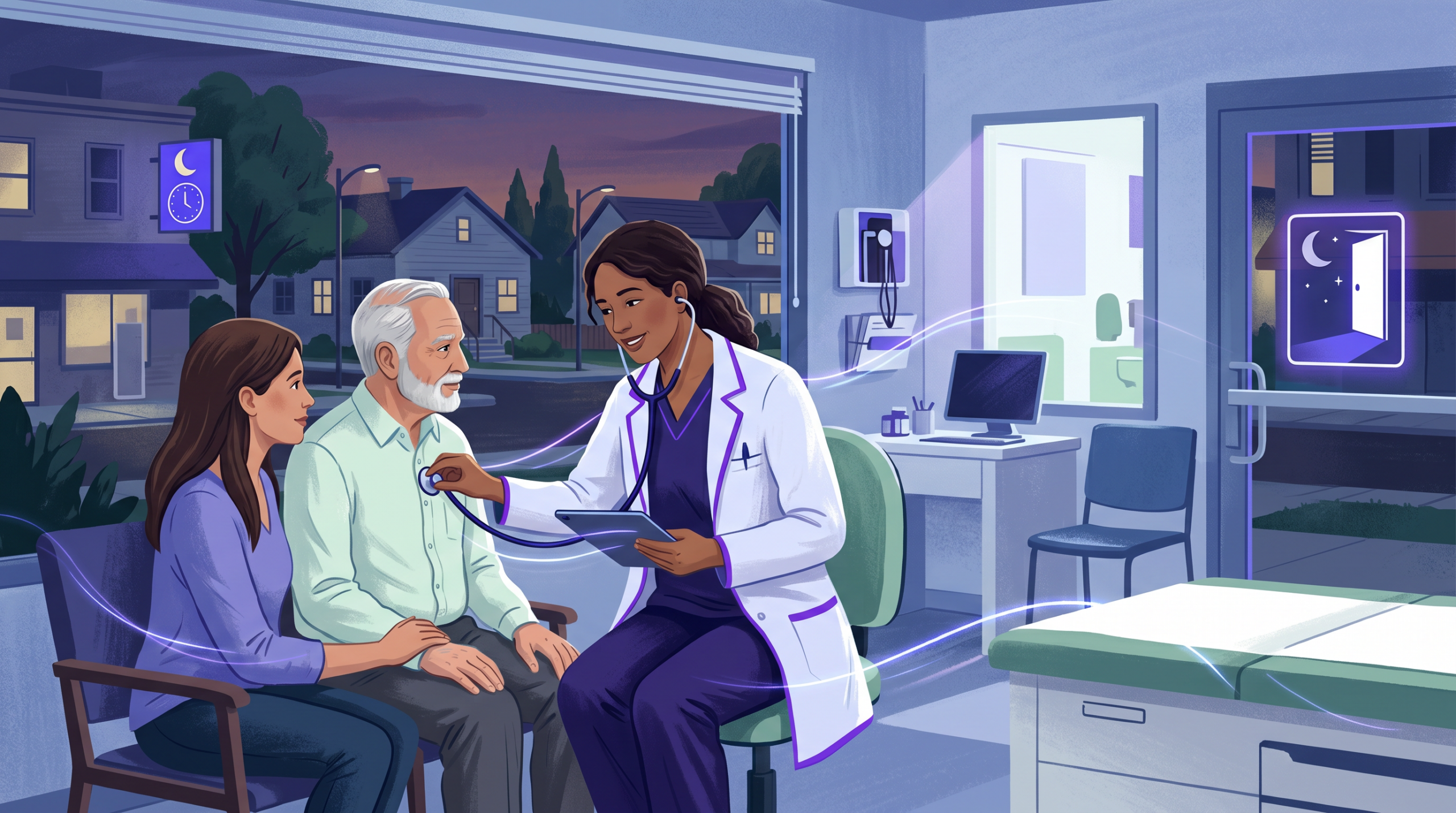

Also, your kid woke up with a fever at 7am and an ear that won’t stop hurting. Your pediatrician’s next open slot is Thursday. It’s Monday. So now you’re asking the question thousands of parents search every week: pediatrician vs family doctor — which one should my child be seeing, and does it even matter right now?
Additionally, the honest answer is: it depends on what you need. And sometimes, neither is the right call for today’s problem.
What Is a Pediatrician?
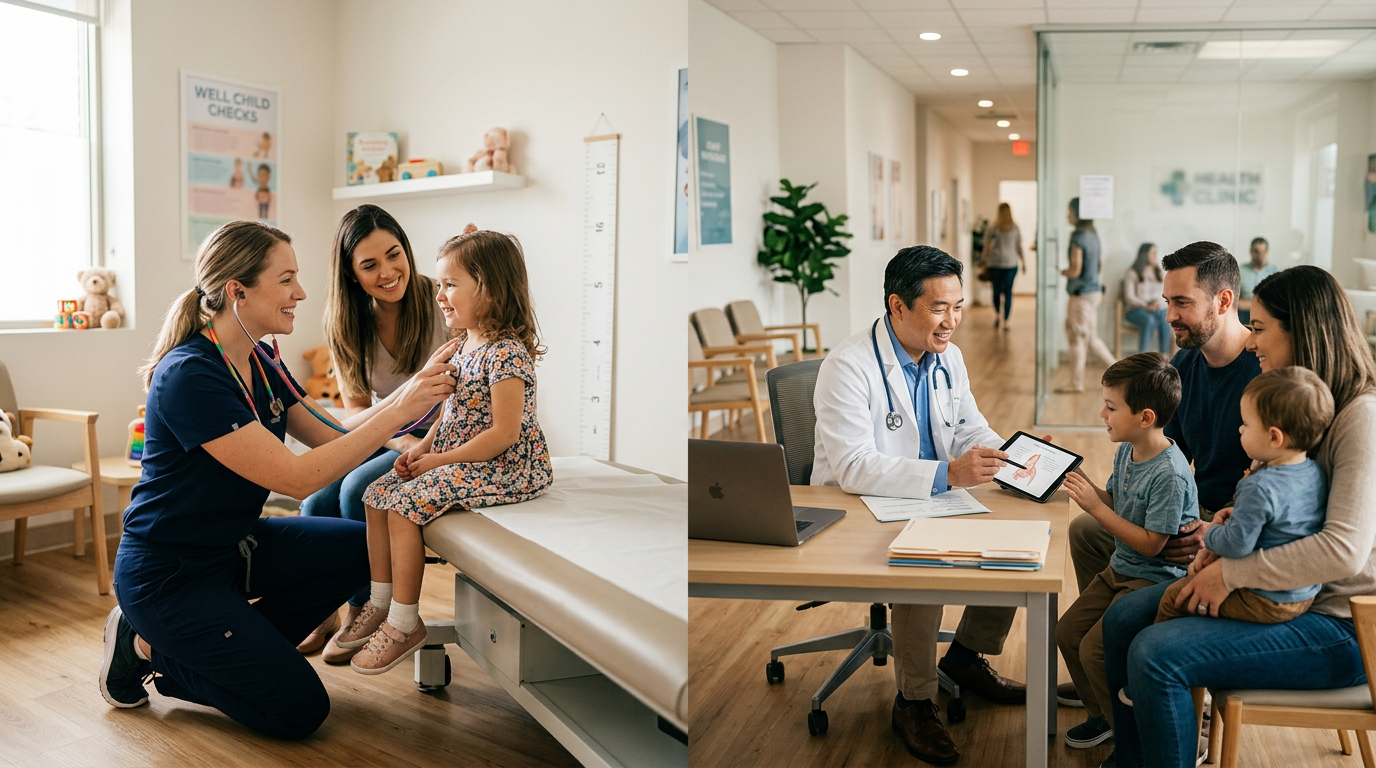
Furthermore, a pediatrician is a doctor who focuses only on children’s health — from newborns through young adulthood, typically up to age 18 or 21. After four years of medical school, pediatricians complete a three-year program focused entirely on kids. Some go further with advanced training in areas like heart care, cancer care, or neurology.
Because pediatricians see only children, they build deep knowledge of child health. Specifically, they focus on safe dosing for kids and the conditions that show up most in young patients. They track growth, give the childhood vaccine schedule, and know how to talk with a scared seven-year-old — or read the cries of a four-month-old.
Moreover, the American Academy of Pediatrics (AAP) recommends that children receive well-child visits at regular intervals from birth through the teen years. A pediatrician is typically the provider running those visits.
What Is a Family Doctor?
Specifically, a family medicine physician treats patients of all ages — newborns, teenagers, adults, and seniors. Like pediatricians, family doctors complete medical school and then a three-year program. However, their training covers the full lifespan. That breadth is the point.
Notably, family doctors can manage childhood illness, adult chronic conditions, elder care, and preventive health for an entire household. For families in rural areas or towns with fewer specialists, this matters a lot. In fact, a family doctor often becomes the one provider who knows your family’s full health history across generations.
Indeed, the tradeoff is depth. A family doctor sees far fewer child patients than a pediatrician does. They are excellent generalists, but they are not child health specialists.
Pediatrician vs Family Doctor: The Real Differences
Training and Focus
Essentially, both are fully licensed physicians. Also, both complete full residency training. The core difference is focus: pediatricians spend three years learning only children’s health. Family doctors, on the other hand, spend three years learning how to treat everyone.
Importantly, for complex or rare child conditions — like heart defects at birth, growth delays, or childhood immune disorders — a pediatrician’s focused training is a real advantage. For routine sick visits, checkups, and common childhood illness, however, a well-trained family doctor handles those just as well.
Age Range and Care Over Time
Clearly, most pediatricians stop seeing patients somewhere between 18 and 21. When your teenager ages out, you need a new provider. A family doctor removes that switch — your child can see the same doctor at age 5 and age 45.
Plus, for families who want simplicity, family medicine has a practical edge. Similarly, for parents who want someone focused only on their child’s health during the early years, a pediatrician is the natural fit.
Availability and Wait Times
Ultimately, here’s the part nobody puts in the comparison articles: both pediatricians and family doctors can be genuinely hard to get into. New patient waits of weeks or months are common in many areas. Even current patients sometimes face multi-day delays for sick visits.
Also, that gap between “my child is sick now” and “the next open slot is Friday” is where a lot of parents get stuck. As a result, urgent care becomes the practical answer.
Is It Better to Take Your Child to a Pediatrician or Family Doctor?
Additionally, for ongoing primary care, the best answer is whichever one your child already has a bond with. Continuity matters. A provider who knows your child’s health history, allergies, and growth is genuinely valuable over time.
Furthermore, if you are choosing a primary care provider for a newborn or a child new to your family, here is a simple framework:
- Choose a pediatrician if your child has complex medical needs, growth concerns, or you want a child health specialist managing their care.
- Choose a family doctor if you want one provider for the whole family, value long-term care into adulthood, or live in an area where pediatricians are scarce.
- Use urgent care when your child is sick today and you cannot get a same-day slot — or when the issue is urgent and does not need your primary care provider’s involvement.
Moreover, that third option is the one most comparison articles skip entirely. And it’s often the most useful one in the moment.
At What Age Should a Child Stop Seeing a Pediatrician?
Specifically, most pediatricians move patients to adult medicine somewhere between 18 and 21, though this varies by practice. Some pediatricians keep seeing patients with complex conditions — like certain disabilities or long-term illness — into their mid-twenties. This happens when an adult specialist has not yet been found.
Notably, the switch itself can feel abrupt for families. Many parents use this moment to move the whole family to a family medicine practice for simplicity. Also, others find an adult primary care provider for their now-adult child and keep everyone else with the pediatrician. Both approaches work.
The Option Nobody Talks About: Walk-In Urgent Care for Kids
Indeed, most “pediatrician vs family doctor” articles treat the choice as binary. However, there is a third option that handles the majority of reasons parents bring kids to the doctor in the first place.
Walk-in urgent care.
Essentially, think about the most common reasons you’ve taken your child to the doctor in the last few years. Ear infections. Strep throat. Fevers. Rashes. Flu. Pink eye. Additionally, coughs that won’t quit. Also, for almost all of these, you do not need your child’s primary care provider. Furthermore, you just need a qualified clinician who can check your child, run the right tests, and prescribe treatment today.
Importantly, that’s exactly what CityHealth Urgent Care does, every day, for kids in San Leandro and the surrounding East Bay.
What CityHealth Sees in Kids
Clearly, cityHealth is a walk-in urgent care clinic — not a pediatrician’s office, not a primary care practice. But the conditions we treat in children overlap heavily with what people call their pediatrician about:
- Ear infections and ear pain
- Fever check
- Strep throat (rapid strep test on-site)
- Flu (rapid flu test on-site)
- Rashes and skin concerns
- Pink eye (conjunctivitis)
- Coughs, colds, and sinus infections
- Mild asthma flares
- Minor injuries — cuts, sprains, burns
- COVID testing
Plus, we see kids without an appointment. You can walk in or book a same-day slot online to reduce your wait.
Ultimately, if your child needs care beyond what urgent care can handle, we will tell you clearly and point you in the right direction. For example, we refer out for specialist care, complex long-term conditions, or ongoing primary care needs. We are not trying to replace your pediatrician. Instead, we are here for the times your pediatrician can’t see you today.
Urgent Care vs Pediatrician: When to Choose Which
Also, use your pediatrician or family doctor for:
- Well-child visits and annual checkups
- Vaccine administration
- Growth screening and milestone tracking
- Management of ongoing conditions like ADHD, asthma, or diabetes
- Anything that needs a long-term care bond
Use urgent care for:
- Sick visits when your primary care provider has no same-day opening
- Illnesses that need a test and treatment today — strep, flu, ear infection
- Minor injuries that need a look but are not ER-level
- A second opinion on a symptom that has been lingering
- Situations where you don’t yet have a pediatrician lined up
Additionally, you can read more about when to take your child to urgent care vs. a pediatrician’s office for a full breakdown by symptom type.
Finding the Right Provider in the East Bay
Furthermore, if you are looking for a pediatrician in the San Leandro or Oakland area, we put together a resource on how to find a good pediatrician near you. Having an ongoing bond with a primary care provider for your child is worth the effort. First, it pays off for routine care and vaccines. Second, it matters a lot for ongoing health management.
But while you’re searching, or when your pediatrician’s schedule is full, CityHealth is open. We offer pediatric walk-in care for kids in the Oakland and San Leandro area, with clinicians experienced in treating children. No appointment needed.
Moreover, you can also explore our full range of pediatric urgent care services to see exactly what we treat and what to expect from a visit.
The Bottom Line
Specifically, the pediatrician vs family doctor debate matters when you are choosing a long-term primary care provider for your child. Pediatricians bring focused child health knowledge. Family doctors, on the other hand, bring whole-family care over time. Both are good choices. Above all, the best one is whichever qualified provider your child actually sees on a regular basis.
But that debate doesn’t help you when your kid has a 102-degree fever on a Tuesday morning and the next open slot is in four days.
Notably, That’s what urgent care is for. CityHealth sees kids in San Leandro today — walk in or book online. No appointment required, no long wait for an opening.
Indeed, See What We Treat | Book a Same-Day Visit