
Quick Answer: Urgent care treats pink eye (conjunctivitis). CityHealth in San Leandro provides same-day diagnosis and antibiotic eye drops for bacterial conjunctivitis. Most cases resolve within 7-10 days. Book online.
Your eye is red, irritated, and producing discharge you definitely didn’t have yesterday. You’re wondering whether it’s pink eye — and whether you need to see a doctor or just wait it out. The good news is that pink eye urgent care visits are quick, straightforward, and often lead to same-day relief. The tricky part is knowing when to go and what to expect when you get there.
This guide covers everything you need to know about pink eye — from the three types and their symptoms to exactly when urgent care is the right call.
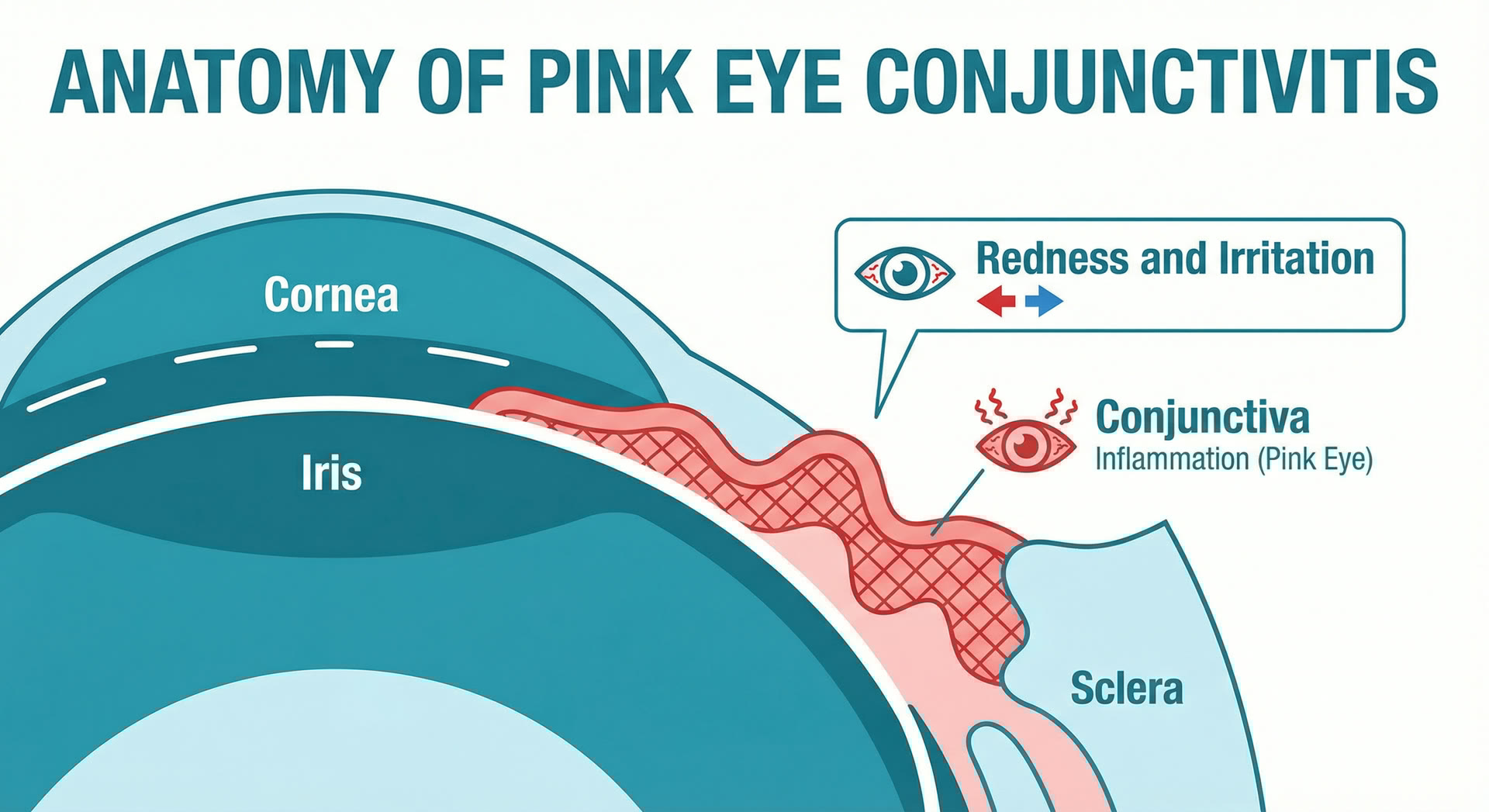
What Is Pink Eye? Understanding Conjunctivitis
Pink eye — medically called conjunctivitis — is inflammation of the conjunctiva, the thin, transparent membrane that lines the inside of your eyelid and covers the white part of your eye. When blood vessels in the conjunctiva become swollen and irritated, they become visible. That’s what causes the characteristic reddish or pink appearance. According to the Centers for Disease Control and Prevention (CDC), pink eye is one of the most common and treatable eye conditions. It affects millions of Americans every year, in children and adults alike. Moreover, most cases clear up within one to two weeks — but the type of pink eye you have determines whether treatment can speed up your recovery. The symptoms most people notice first include:- Redness or pinkness in the white of one or both eyes
- Discharge — watery, mucousy, or thick and sticky depending on the cause
- Itching or burning sensation in the eye
- Crusty eyelids in the morning, sometimes stuck together
- Sensitivity to light (photophobia)
- Tearing or watery eyes
- A gritty feeling, like something is in your eye
The 3 Types of Pink Eye — And Why the Type Matters
Not all pink eye is the same. The cause determines whether your case is contagious, how long it will last, and whether antibiotics will help. The American Academy of Ophthalmology (AAO) identifies three main types.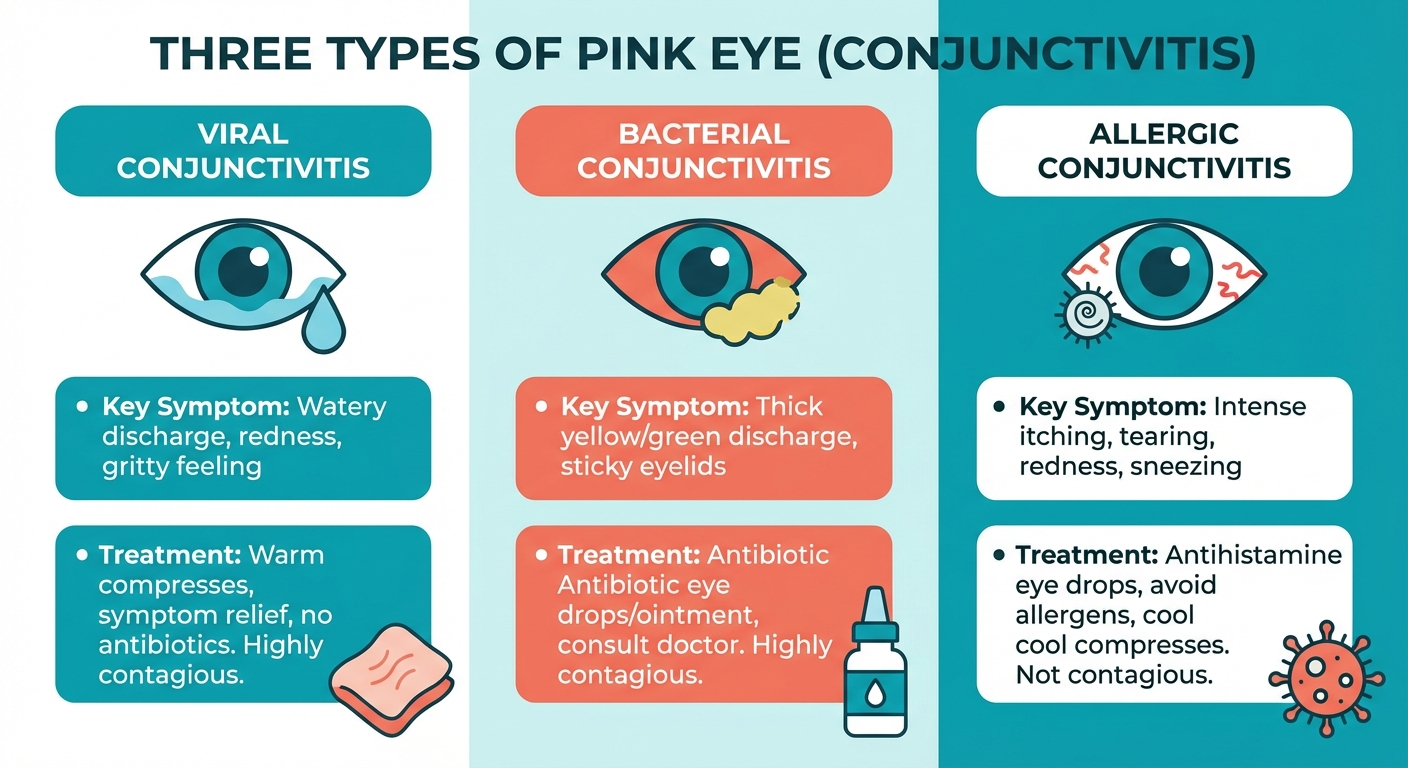
1. Viral Conjunctivitis
Viral pink eye is the most common type. It is often caused by the same virus responsible for the common cold — adenovirus — though other viruses like herpes simplex, varicella-zoster, and even COVID-19 can cause it. Viral pink eye typically produces watery discharge and spreads very easily from person to person. Unfortunately, there is no antibiotic that treats viral pink eye. Your immune system has to clear the infection on its own, usually within one to two weeks. In the meantime, cool compresses and lubricating eye drops can make your eyes more comfortable.2. Bacterial Conjunctivitis
Bacterial pink eye tends to cause thicker, stickier discharge — often yellow or green in color. Your eyelids may be heavily crusted in the morning. This type is also quite contagious and can spread through direct contact with infected discharge or contaminated surfaces. The important difference: bacterial pink eye can be treated with antibiotic eye drops. A visit to urgent care for pink eye allows a provider to examine your eye, determine whether bacteria are likely the cause, and prescribe the appropriate antibiotic drops. This is often why people seek pink eye urgent care — to get antibiotics and recover faster.3. Allergic Conjunctivitis
Allergic pink eye develops in response to allergens — pollen, pet dander, dust mites, smoke, or contact lens solutions. It is not contagious. Both eyes are usually affected simultaneously, and intense itching is the dominant symptom, often accompanied by sneezing and a runny nose. Allergic conjunctivitis responds well to antihistamine or anti-inflammatory eye drops. Therefore, if your pink eye flares every spring or around specific triggers, allergy management is the solution — not antibiotics.Pink Eye Urgent Care: When Should You Go?
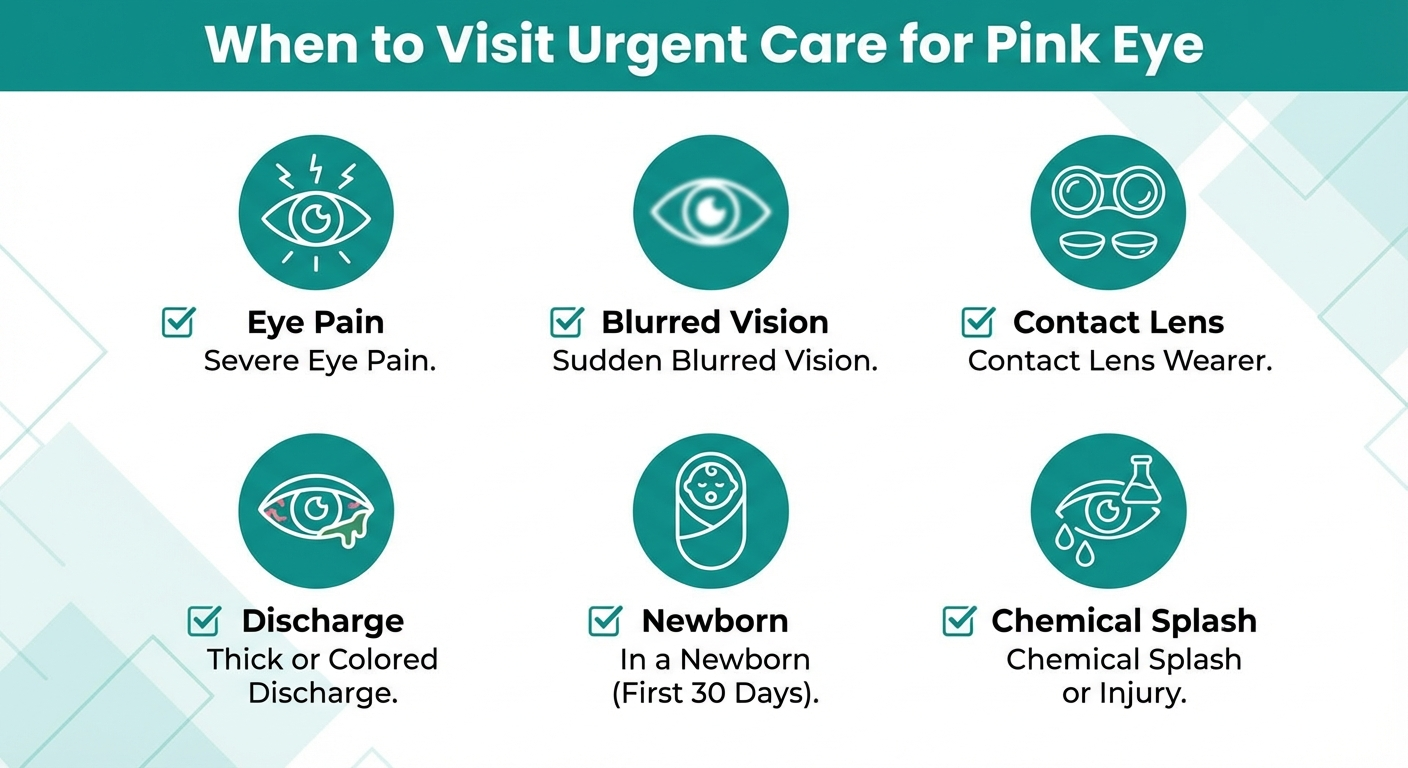
Many cases of pink eye resolve without medical treatment. However, certain situations call for a same-day evaluation at urgent care. Go to pink eye urgent care if you experience:- Eye pain — beyond mild irritation, any actual pain in or around the eye
- Blurred or changed vision — pink eye does not typically affect vision; if yours is blurry, that is a concern
- Severe light sensitivity that makes it hard to keep your eyes open
- Contact lens wearers — stop wearing lenses immediately and see a provider within 12–24 hours if symptoms don’t resolve; contact lens-related infections can be more serious
- Symptoms that don’t improve after a week, or that get significantly worse
- Heavy discharge or complete eyelid crusting, suggesting bacterial infection that needs antibiotics
- Newborns or infants with any eye redness — this requires immediate evaluation
- Suspected chemical exposure — flush eyes with water immediately and head to urgent care or the ER
What to Expect at Urgent Care for Pink Eye
A pink eye urgent care visit is typically fast and low-stress. Here is what the process usually looks like:- Brief medical history — The provider will ask about your symptoms, when they started, which eye(s) are affected, whether you have been around anyone else with pink eye, and whether you wear contact lenses.
- Eye examination — The provider examines the eye visually, looking at the type and amount of discharge, degree of redness, eyelid condition, and any other signs that might suggest a more serious issue.
- Diagnosis — Based on your symptoms and exam, the provider determines whether your pink eye is viral, bacterial, or allergic. Lab tests are rarely needed for straightforward cases.
- Treatment plan — For bacterial pink eye, the provider prescribes antibiotic eye drops. For viral cases, the advice focuses on symptom management and hygiene. For allergic conjunctivitis, antihistamine drops or other allergy treatments are recommended.
- Return-to-work or school guidance — Your provider can tell you when it is safe to return to normal activities.
Got Pink Eye? Get Seen Today
CityHealth San Leandro treats pink eye same day — rapid diagnosis, prescription drops, and results in minutes. Walk-ins welcome, most insurance accepted.
How Pink Eye Spreads — and How to Stop It
Viral and bacterial conjunctivitis are highly contagious. They spread through direct contact with eye discharge, touching contaminated surfaces, and then touching your own eyes. Consequently, the following prevention steps are important whether you have pink eye or are trying to avoid it:- Wash hands frequently with soap and water, especially before and after touching your face
- Avoid touching or rubbing your eyes, even when they itch
- Do not share towels, pillowcases, washcloths, or eye makeup with others
- Change pillowcases daily while you are infected to avoid re-contaminating your eye
- Discard contact lenses and solutions used while you were infected — do not resume wearing until fully recovered
- Stay home from school or work until discharge has stopped, particularly for bacterial or viral cases
- Clean and disinfect frequently touched surfaces — doorknobs, keyboards, phones
Can CityHealth Treat Pink Eye?
Yes — CityHealth Urgent Care treats pink eye at both our Oakland (Montclair Village) and San Leandro locations. No appointment is needed. Walk in any day of the week during our regular hours, and a provider will evaluate your symptoms and get you on the right treatment path quickly. Our providers see pink eye frequently. We can assess whether your case needs antibiotics, prescribe them when appropriate, and help you understand how to manage symptoms and prevent spreading the infection to others. We also handle cases where contact lens-related infections are a concern — a situation that always warrants prompt evaluation. Additionally, if your eye symptoms turn out to be something other than pink eye — such as a corneal abrasion, stye, or more serious infection — our team is equipped to evaluate and treat those conditions as well. If you are searching for urgent care in San Leandro, CityHealth is your local option with no long waits and no appointment needed. Whether you are dealing with crusty morning eyelids, uncomfortable redness, or discharge that has been going on for days, do not wait and wonder. A quick pink eye urgent care visit at CityHealth gets you answers and relief the same day. Visit CityHealth for same-day pink eye care — walk-ins welcome, no appointment necessary.Ready to be seen? Book your appointment at CityHealth online, or walk in to our Oakland or San Leandro location — no appointment required, though booking online gets you seen faster.
For same-day treatment, visit urgent care in San Leandro at CityHealth — walk-ins welcome 7 days a week.


