Tienes un ojo rojo con laganas, ardor o vision borrosa. First, considera que puede ser una infeccion ocular. Conocer bien la infeccion de ojos tratamiento correcto puede hacer la diferencia entre recuperarte en dias o sufrir semanas sin mejorar. Here, encontraras todo sobre tipos, sintomas, cuidados en casa y cuando ver a un medico hoy mismo.

Que es una infeccion ocular
Una infeccion ocular ocurre cuando bacterias, virus u hongos invaden el ojo o sus estructuras. Las mas comunes afectan la conjuntiva. However, tambien pueden afectar los parpados, la cornea o las glandulas alrededor del ojo.
Additionally, las infecciones bacterianas y virales son muy contagiosas. Specifically, se propagan entre personas que comparten toallas, maquillaje o superficies de contacto frecuente.
Tipos de infeccion de ojos: como identificar la tuya
First, es importante identificar el tipo correcto. Essentially, esto determina el tratamiento que necesitas. Furthermore, cada tipo requiere un medicamento diferente.
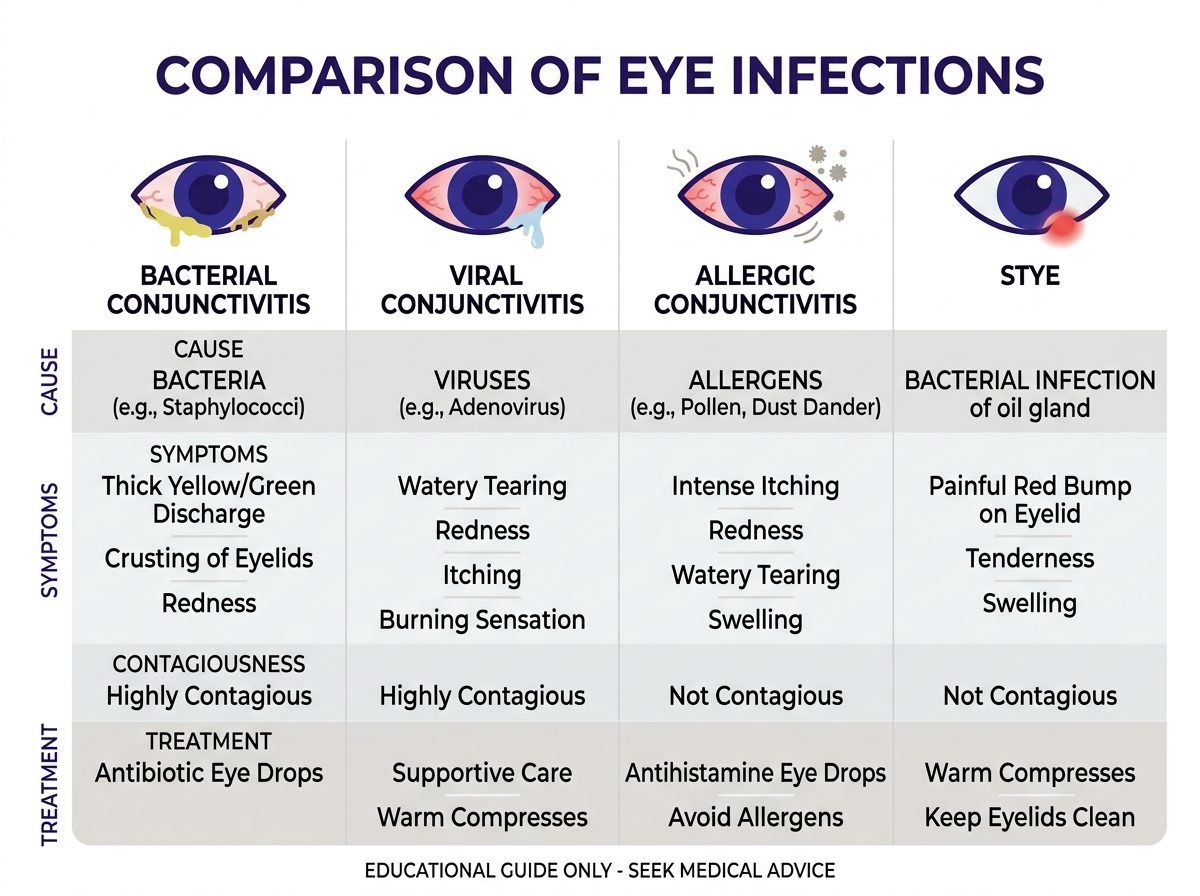
Conjuntivitis bacteriana
Caused by bacteria like Staphylococcus aureus, this shows as yellow or green thick discharge. Additionally, the eyelids stick together at wake-up. Furthermore, the redness is marked and uncomfortable. Fortunately, it responds well to prescribed topical antibiotics.
Conjuntivitis viral (ojo rosado)
This is the most common cause of red eye. Generally, the adenovirus produces it. The discharge is watery or clear. Also, it often comes with cold-like symptoms. However, it does not respond to antibiotics. Therefore, treatment focuses on symptom relief with warm compresses and artificial tears.
Conjuntivitis alergica
This is not a true infection. Instead, it is an allergic reaction to pollen, dust, or cosmetics. It produces intense itching in both eyes and tearing without pus. Consequently, treatment involves antihistamines and avoiding the trigger.
Orzuelo (perrilla)
This is a bacterial infection of the eyelid oil glands. It appears as a red and painful bump on the eyelid edge. Most improve with warm compresses. However, some require medical drainage by a provider.
Blefaritis
This is chronic inflammation of the eyelid edges. It causes scaly eyelids, burning, and a foreign body sensation. Treatment includes regular eyelid cleaning. Moreover, it sometimes requires prescribed antibiotics for full resolution.
Queratitis
This is the most serious of the common eye infections. It affects the cornea directly. Furthermore, it can cause severe pain, extreme light sensitivity, and permanent vision damage. Therefore, it requires urgent medical attention without any delay.
Sintomas de una infeccion ocular
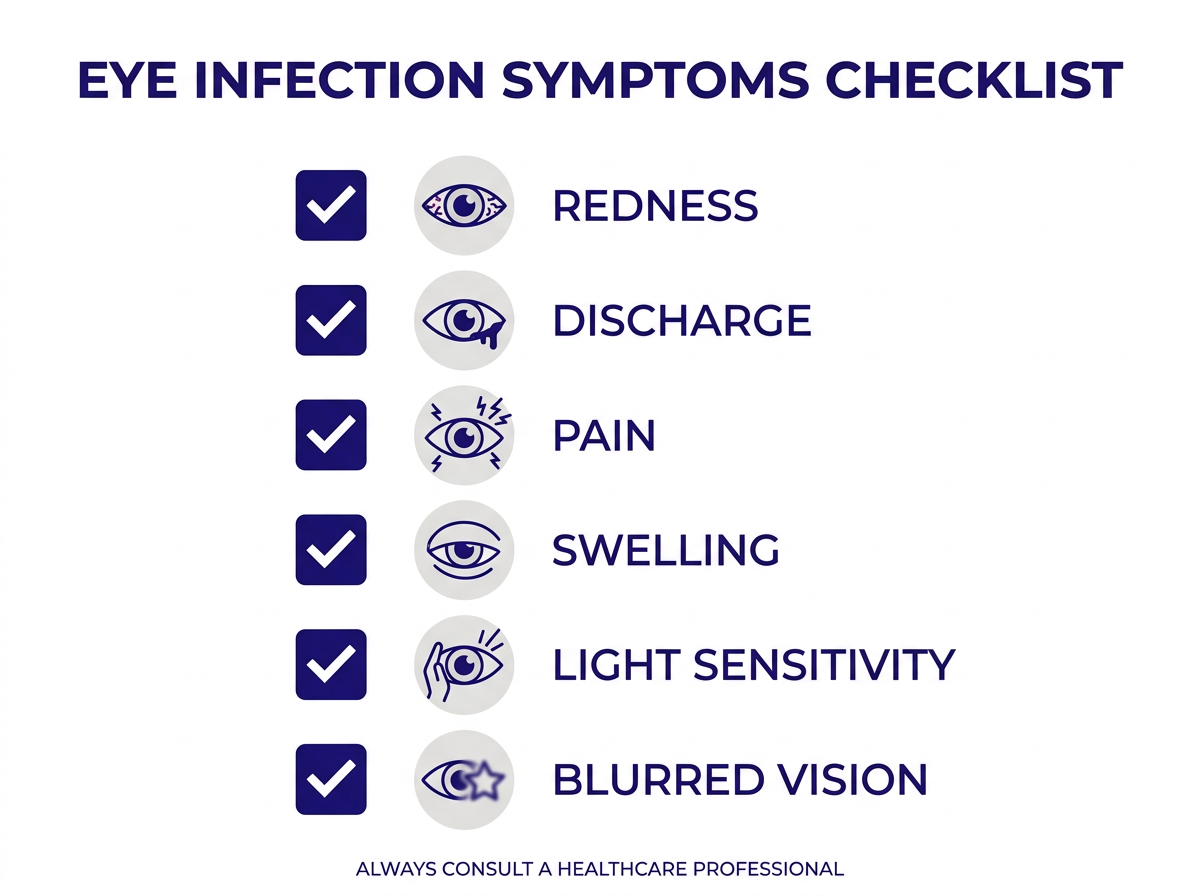
Los sintomas mas frecuentes incluyen:
- Enrojecimiento en la parte blanca del ojo o en el parpado
- Secrecion amarilla, verde, blanca o acuosa
- Parpados pegados al despertar
- Ardor o picazon persistente
- Hinchazon del parpado o area alrededor del ojo
- Sensibilidad a la luz (fotofobia)
- Vision borrosa o alterada
- Sensacion de arenilla dentro del ojo
Specifically, if you have intense pain or vision changes, do not wait. Seek care the same day without hesitation.
Infeccion de ojos tratamiento: opciones segun el tipo
The right infeccion de ojos tratamiento depends completely on its cause. Therefore, medical diagnosis is essential before using any medication. Notably, using antibiotics for a viral infection does not help and can cause antibiotic resistance.
Para infeccion bacteriana
- Prescribed antibiotic drops or ointment: tobramycin, erythromycin, ciprofloxacin
- Typical duration: 5 to 7 days
- Visible improvement in 24 to 48 hours with correct treatment
Para infeccion viral
- Primarily, supportive care: cold compresses and artificial tears
- For ocular herpes: antivirals like acyclovir or ganciclovir drops
- Generally, the virus resolves on its own in 1 to 2 weeks
Para conjuntivitis alergica
- Antihistamine eye drops: ketotifen, olopatadine
- Cold compresses to reduce inflammation
- Avoid rubbing the eyes at all costs
Para orzuelo
- Warm compresses 3 to 4 times a day for 10 to 15 minutes
- Never try to pop it at home
- If it does not improve in 2 weeks, a doctor can drain it safely
Para queratitis
- High-concentration antibiotic or antiviral drops by prescription
- Mandatory and frequent medical follow-up
- In severe cases, hospitalization may be required
Cuidados en casa para aliviar los sintomas
While getting medical care, these steps reduce discomfort:
- Warm compress: apply a clean damp cloth on the closed eye for 10 minutes. This softens crusts and relieves stye pain effectively.
- Gentle cleaning: clean discharge with sterile gauze from the inner corner outward. Use a different cloth for each eye.
- Preservative-free artificial tears: these hydrate and relieve irritation without damaging the eye surface.
- Do not touch your eyes without washing your hands first.
- Do not share towels, makeup, or contact lenses.
- Remove contact lenses until the eye fully heals.
Furthermore, for more information on conjunctivitis and how to prevent spread, the American Academy of Ophthalmology has a detailed and updated guide available online.
Senales de alarma: cuando ir urgente por infeccion de ojos tratamiento inmediato
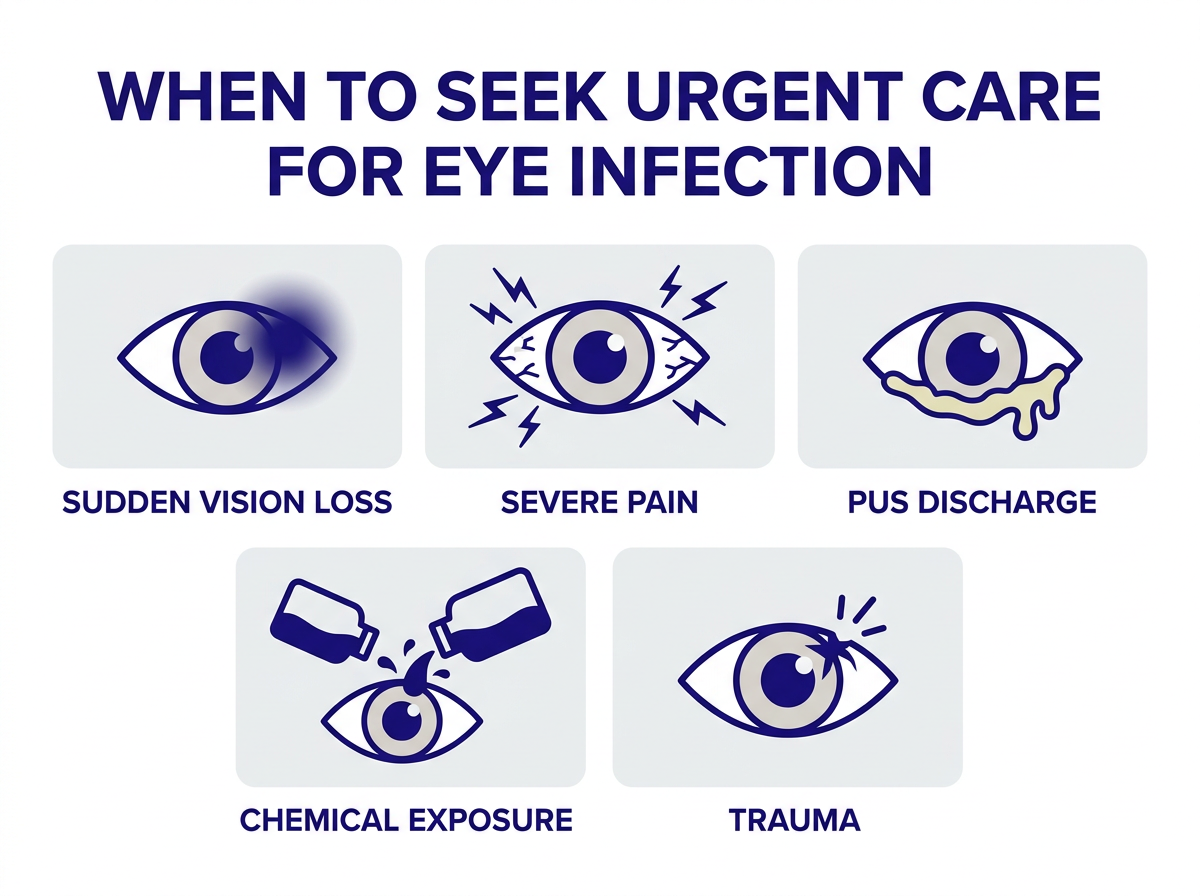
Some situations are a true emergency. Go to urgent care today if you have:
- Sudden loss or decrease of vision
- Severe eye pain that does not improve
- Abundant pus discharge
- Eyelid so swollen you cannot open the eye
- High fever along with eye symptoms
- Exposure to chemicals or foreign objects in the eye
- Symptoms that worsen after 48 hours of treatment
Specifically, if you wear contact lenses, remove them immediately. Moreover, contact lens wearers have a higher risk of serious bacterial keratitis. Therefore, do not wait to seek care.
Lo que CityHealth puede hacer por ti
At CityHealth, our urgent care providers evaluate eye infections every day. No appointment needed. No waiting weeks to see a specialist.
Specifically, in a single visit we can:
- Examine your eye and determine if the infection is bacterial, viral, or allergic
- Prescribe the correct drops or ointment from day one
- Evaluate whether you need a specialist ophthalmologist referral
- Give you clear instructions for home care
Additionally, we also treat conjunctivitis (pink eye) and other common eye problems in adults and children every day.
You can walk directly into our clinic at 201 Dolores Ave, San Leandro, CA 94577. Our hours are: Monday 10am to 7pm, Tuesday through Friday 9am to 7pm, and Saturday and Sunday 9am to 5pm. You can also call us at (510) 984-2489.
Visita CityHealth hoy — sin cita previa y que un profesional evalue tu ojo antes de que la infeccion empeore.
Preguntas frecuentes sobre infeccion de ojos tratamiento
¿Cuanto tiempo tarda en curarse una infeccion ocular?
It depends on the type. Specifically, bacterial conjunctivitis treated with antibiotics improves in 2 to 5 days. Viral infections can last 1 to 2 weeks. Additionally, allergic conjunctivitis improves once the allergen is controlled. Finally, a stye can resolve in 1 to 2 weeks with regular warm compresses.
¿Puedo tratar una infeccion de ojos sin ir al medico?
Mild viral or allergic conjunctivitis sometimes resolves on its own. However, if there is pus discharge, intense pain, or vision changes, you need medical diagnosis urgently. Furthermore, using antibiotics without a prescription or the wrong antibiotic can worsen the situation significantly.
¿Son contagiosas las infecciones de ojos?
Yes, bacterial and viral conjunctivitis are highly contagious. They spread through direct contact with infected eye discharge. Therefore, wash your hands frequently and do not share personal items with others. Also, avoid touching your eyes throughout the day.
¿Cuando debo llevar a mi hijo al medico por una infeccion ocular?
Take your child that same day if they are under 1 year old, have abundant yellow or green discharge, or have a fever. Additionally, if the eye is so swollen it cannot open, seek immediate care. You can go to CityHealth Urgent Care without an appointment for fast treatment.
¿Los antibioticos en gotas necesitan receta medica?
In the United States, yes. Antibiotic eye drops require a prescription. Moreover, do not use someone else’s drops or leftover drops from a prior infection. Each infection may need a different medication entirely for proper treatment.