

How Often Should You Go to the Doctor? A Guide by Age and Health Status
If you have ever asked how often should you go to the doctor, you are asking a key question. However, the answer is not the same for everyone. How often you should visit depends on your age, health, family history, and lifestyle. Furthermore, getting checked on time helps you catch problems early. Early care is simpler, cheaper, and works better. At CityHealth in San Leandro, we make it easy to stay on top of your health with walk-in visits. No appointment is needed.
Medically reviewed by Sean Parkin, PA, CEO & Founder — Preventive Care & Walk-In Health Services
Why How Often Should You Go to the Doctor Matters So Much
It is easy to skip doctor visits when you feel fine. In fact, most people only see a provider when something goes wrong. Nevertheless, only going when sick is one of the most costly mistakes you can make. It hurts both your health and your wallet.
According to the U.S. Preventive Services Task Force (USPSTF), routine screenings can find problems like high blood pressure, diabetes, high cholesterol, and certain cancers years before symptoms show up. Consequently, finding these early leads to simpler and cheaper treatment. On the other hand, skipping checkups lets these issues grow in silence. By the time you feel something is wrong, treatment may cost more and work less well.
Therefore, knowing how often to see a provider is not trivia. It is a real plan for guarding your long-term health.
Recommended Doctor Visits by Age Group
While every person’s needs differ, medical guidelines give general advice. Specifically, you need more visits as you age. Because your risk for chronic conditions rises each decade.
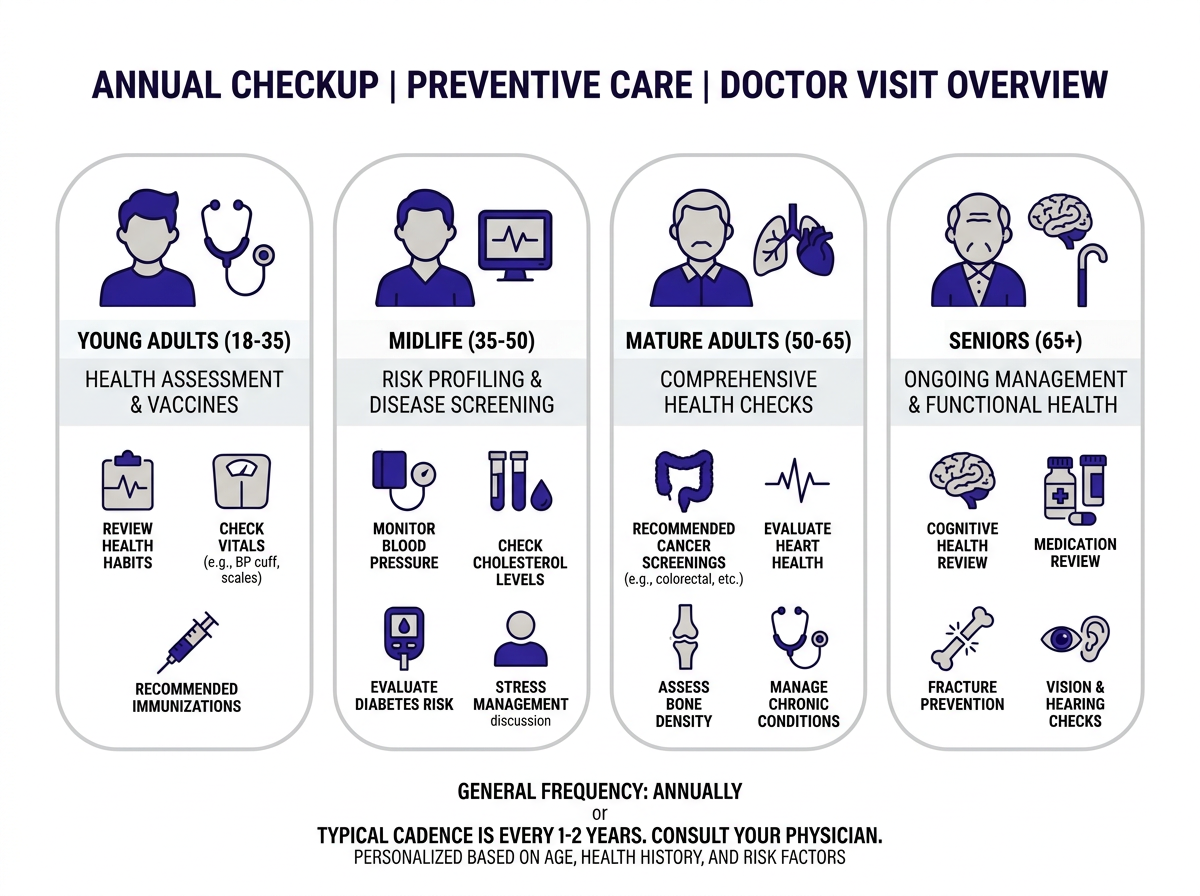
Ages 18-29: Building Your Health Baseline
In your twenties, you are likely at your healthiest. However, that does not mean you should skip checkups. In particular, this is the time to set baseline numbers. These include blood pressure, cholesterol, blood sugar, and weight. Your provider will compare these to later results.
How often: Every 1 to 3 years for a general checkup, if you have no chronic conditions.
What to get checked:
- Blood pressure — because high blood pressure can start early, check it at every visit
- Cholesterol — at least once, although more often with a family history
- STI screening — yearly if sexually active with new or multiple partners
- Skin check — specifically if you have sun exposure or family history of skin cancer
- Mental health screening — since depression and anxiety are common at this age
- Dental and vision exams — also suggested yearly
Furthermore, this is the time to make sure your vaccines are up to date. These include flu shots, tetanus boosters, and HPV. Because staying current on vaccines is one of the easiest steps you can take.
Ages 30-39: Early Detection Gets Important
Your thirties are when chronic conditions often begin. For example, high blood pressure and prediabetes often start now but cause no symptoms. Consequently, regular checkups become more important.
How often: Every 1 to 2 years, or yearly if you have any risk factors.
What to add:
- Blood sugar/diabetes screening — specifically if you are overweight or have a family history
- Metabolic panel — because this shows how your organs are working
- Thyroid function tests — especially important for women
- Cervical cancer screening — Pap smear every 3 years, or Pap plus HPV test every 5 years
- Talk about family planning and birth health
Moreover, your thirties are a key time to review your family health history. Therefore, if heart disease, diabetes, or cancer runs in your family, your provider may suggest earlier screenings.
Ages 40-49: The Screening Decade
Your forties are when screening needs go up a lot. In particular, this is when many cancers and heart problems first appear. As a result, yearly checkups become the norm.
How often: Yearly.
What to add:
- Mammogram — starting at age 40 for women, although frequency depends on risk factors
- Colon cancer screening — now suggested starting at age 45 for average-risk adults
- Heart risk check — including a full cholesterol panel, because heart disease risk rises sharply now
- Diabetes screening — every 3 years if normal; however, more often if prediabetic
- Eye exam — specifically a baseline full exam at age 40
- Prostate talk — men should therefore begin discussing prostate screening with their provider
Specifically, the USPSTF now suggests colon cancer screening starting at age 45. Because rates have been rising in younger adults, this earlier screening saves lives.
Ages 50-64: Staying Watchful
In your fifties and early sixties, regular visits are a must. Because this is when chronic diseases are most often found. Consequently, regular checkups have the biggest impact on results.
How often: Yearly, with extra specialist visits as needed.
What to add:
- Bone density scan (DEXA) — for women at age 65, although earlier if risk factors exist
- Lung cancer screening — specifically for adults 50 to 80 with a 20-plus pack-year smoking history
- Aortic aneurysm screening — a one-time check for men 65 to 75 who have ever smoked
- Shingles vaccine — because the risk of shingles goes up a lot after age 50
- Pneumonia vaccine — also suggested based on risk factors
- Regular skin cancer screening — especially with a history of sun exposure
Furthermore, this is the age when many patients deal with several health issues at once. Therefore, keeping up with visits becomes even more vital.
Ages 65 and Older: Full Monitoring
After 65, yearly visits are a must. Many patients do best seeing a provider more than once a year. Because age-linked conditions need close watching, more visits help catch changes early.
How often: At least yearly, with more visits as conditions require.
What to add:
- Wellness visit — because Medicare covers a yearly Wellness Visit at no cost, there is no reason to skip it
- Memory screening — specifically to watch for early signs of dementia
- Fall risk check — including balance testing and medication review, since falls are a top cause of injury
- Hearing and vision tests — also suggested yearly at this stage
- Medication review — to spot bad mixes, because taking many drugs is common after 65
- Updated vaccines — including flu, pneumonia, shingles, and COVID-19 boosters
In addition, patients 65 and older should make sure they have a clear advance directive and healthcare proxy on file.
What If You Do Not Have a Primary Care Doctor?
Here is the truth: knowing how often you should go to the doctor is one thing. Going is another. Specifically, many people skip visits not because they are lazy. They skip because they do not have a primary care provider.
The PCP shortage in the U.S. is well known. Consequently, getting set up as a new patient can take months. Meanwhile, if you moved or changed insurance, the process feels too hard. As a result, routine care gets put off — sometimes for years.
This is why CityHealth exists. As a walk-in urgent care clinic in San Leandro, we give you an easy option when you cannot see a PCP. Although CityHealth is not a primary care office, we offer many of the same services. These include full-body checkups and annual physicals on a walk-in basis.
Therefore, instead of waiting three months for a PCP visit you may not keep, walk into CityHealth today. Get the checkup you have been putting off.
Key Screenings You Should Not Skip — By Decade
To make it easy, here is a quick summary of the screenings that matter most at each stage:
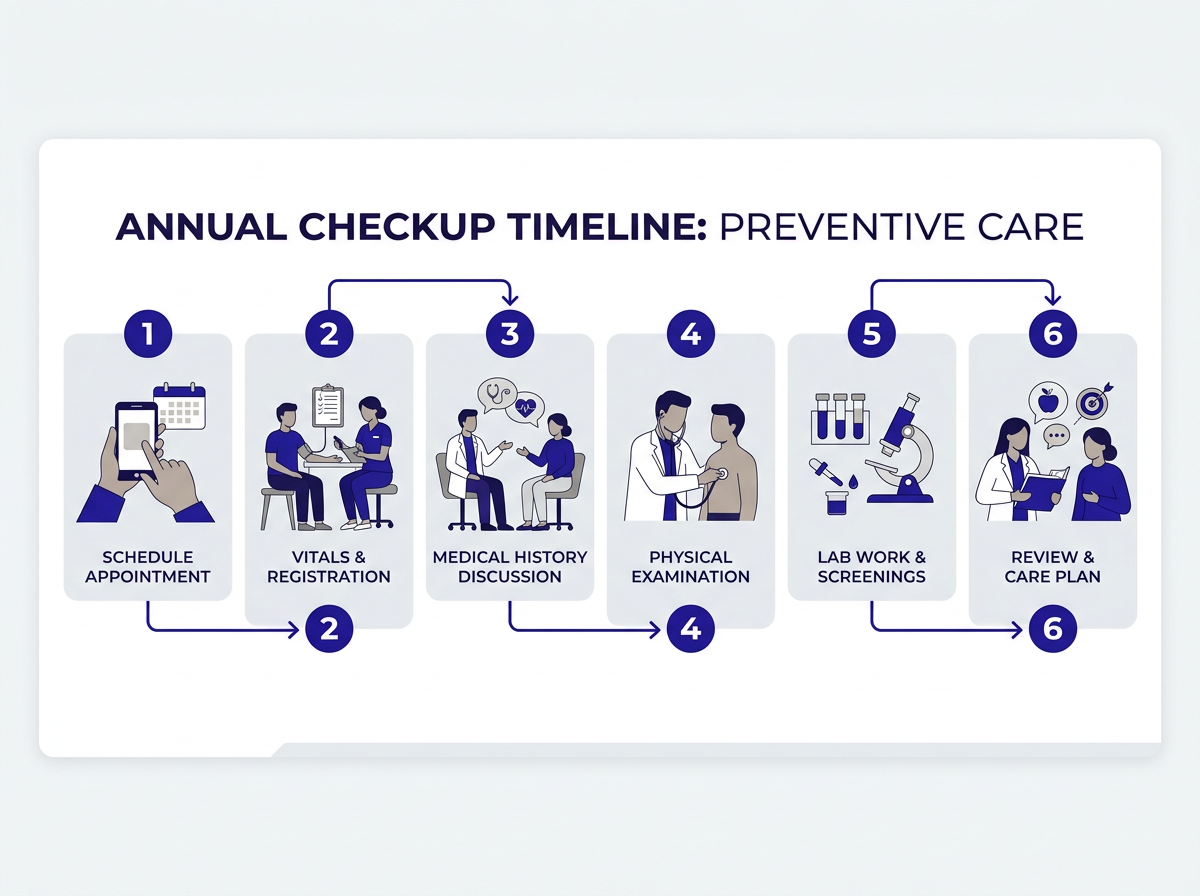
Your 20s: Blood pressure, cholesterol baseline, STI screening, mental health check
Your 30s: All of the above, plus diabetes screening, thyroid function, Pap smear/HPV test
Your 40s: All of the above, plus mammogram, heart risk review, colorectal screening at 45
Your 50s: All of the above, plus lung cancer screening if needed, bone density, shingles vaccine
Your 60s+: All of the above, plus cognitive screening, fall risk check, hearing/vision tests
Of course, these are general guidelines. Nevertheless, using this list ensures you do not miss the most important screenings for your age group.
Signs You Should See a Doctor Sooner Than Planned
While sticking to a regular schedule is important, some symptoms call for a visit right away. In particular, you should see a doctor today if you have:
- Weight loss or gain you cannot explain — losing or gaining more than 10 pounds without trying
- Ongoing fatigue — tiredness that does not get better with rest
- New or odd pain — especially if it lasts more than a week or two
- Changes in bowel or bladder habits — that last more than a few days
- Skin changes — new moles, changes in existing moles, or sores that will not heal
- Shortness of breath — especially with little effort
- Ongoing fever — lasting more than a few days without a clear cause
- Mental health changes — more anxiety, depression, or thoughts of self-harm
Because these symptoms can point to serious problems, do not ignore them. Furthermore, at CityHealth, you do not need to call around. You can simply walk in and be checked the same day.
How CityHealth Makes Regular Checkups Easy
Knowing how often should you go to the doctor only helps if you can follow through. At CityHealth, we built our clinic to remove the biggest barriers to regular care:
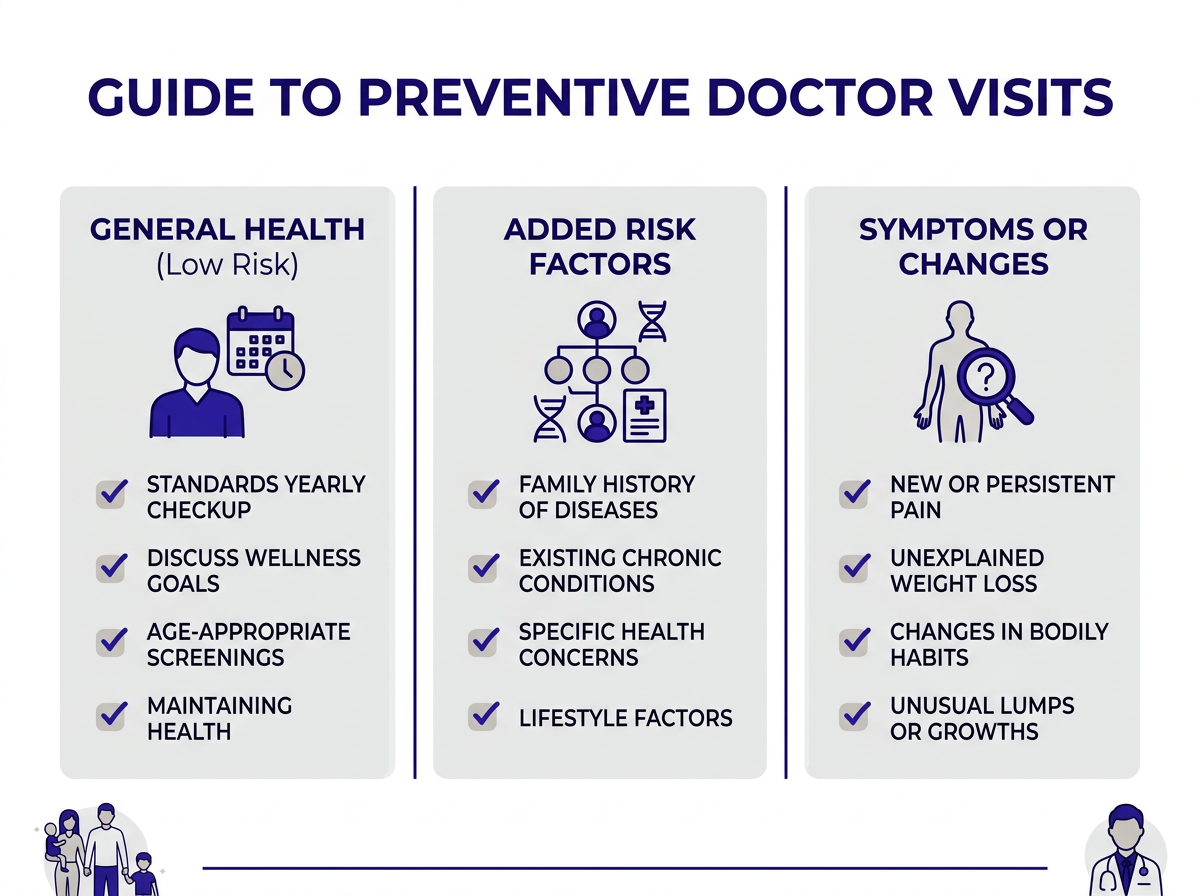
- No appointment needed — Walk in on your schedule. Or book online if you prefer a set time.
- No patient panel — You do not need to be on file. We see everyone, every time.
- On-site labs — Bloodwork and testing done during your visit, so no extra lab trip
- Insurance and Medi-Cal accepted — Along with fair self-pay rates for the uninsured
- Easy San Leandro spot — Simple to reach from Oakland, Hayward, and the wider East Bay
Moreover, we handle everything in one visit — exam, labs, and results. You can stay on top of your health without losing your whole day. Consequently, the “I do not have time” excuse gets much harder to use.
Stop Putting It Off: Your Health Cannot Wait
The question of how often should you go to the doctor has a clear answer: more often than you likely do. However, knowing the answer and acting on it are two different things. Therefore, the best time to book your next checkup is now. Not “some day” or “when I have time.”
At CityHealth, we see patients every day who say: “I have been meaning to come in for months.” Although we are always glad they made it, earlier visits mean earlier catches and better results. Consequently, we have made it as easy as we can to walk in and get care.
Because your health is not something you can put off forever. And with CityHealth’s walk-in model, you do not have to.
Ready to catch up on your checkup? Book your visit online or walk in to CityHealth in San Leandro today. No referral needed, no patient panel, no long wait — just the care you have been putting off, finally done.