Your kid has been coughing for three days straight, and you’re lying awake at 2 a.m. wondering if this is normal. You’re not alone. Every parent eventually faces the question of child cough when to see doctor, and knowing the answer can save you hours of worry and, in some cases, catch a serious problem early. Because most childhood coughs clear up on their own, the real skill is spotting the ones that don’t.
Medically reviewed by Susana Quezada, NP — Nurse Practitioner

Why Kids Cough So Much in the First Place
Coughing is your child’s body doing its job. Specifically, the airways push out mucus, dust, and germs before they can settle deeper into the lungs. According to the American Academy of Pediatrics (AAP), the average child catches six to eight colds per year. Each one can trigger a cough that lingers for two to three weeks.
However, not every cough sounds the same. The sound your child makes actually tells you a lot about what’s going on inside their chest and throat. Therefore, learning to listen closely matters more than counting the days.
Types of Coughs and What They Mean
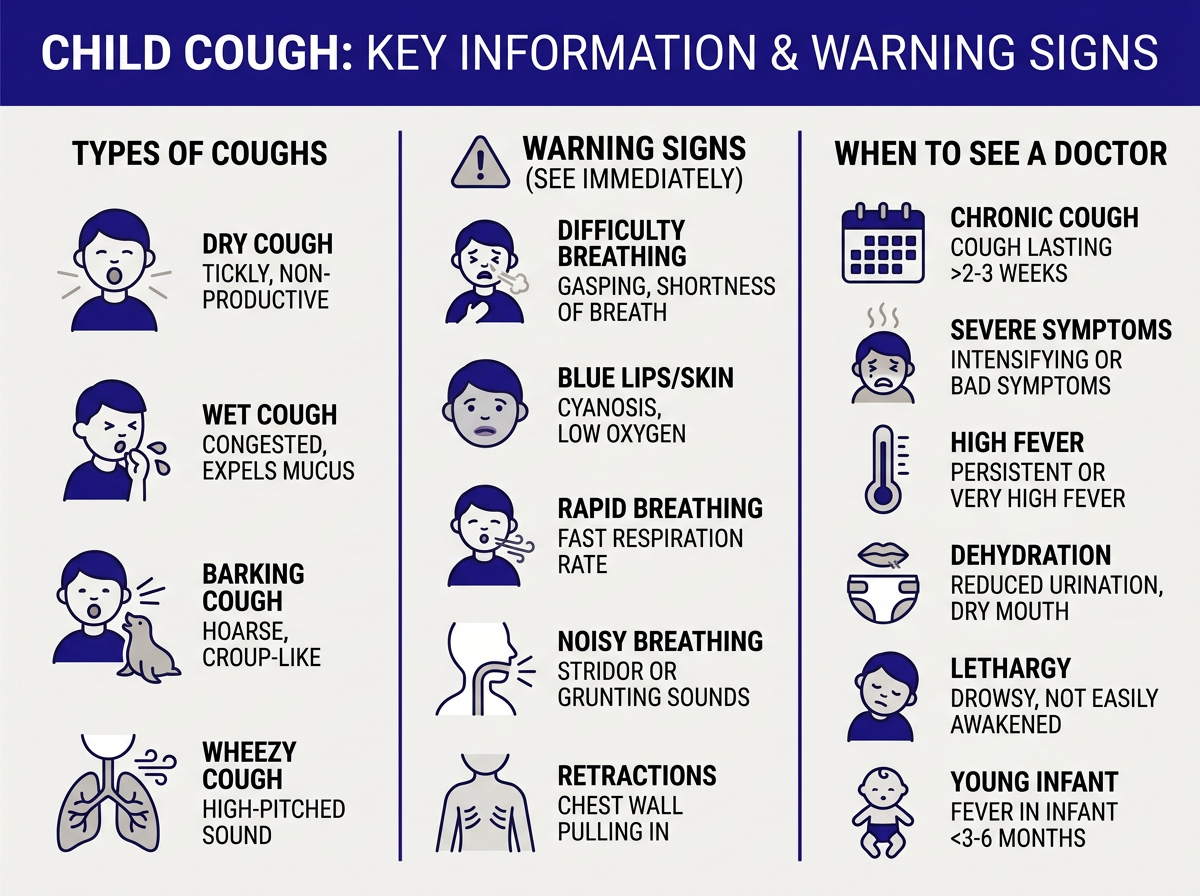
First, pay attention to the quality of the cough. Understanding each type helps you decide whether to seek care or wait it out at home. A barking cough in a child that sounds like a seal usually points to croup. Croup causes swelling in the upper airway and tends to get worse at night. In most cases, cool night air or a steamy bathroom provides relief within 15 minutes.
A wet cough produces mucus and often follows a cold. Because the body is clearing fluid from the lower airways, this type of cough is actually productive. It usually resolves on its own within two weeks.
In contrast, a dry cough creates no mucus. It can signal allergies, asthma, or the tail end of a viral infection. A persistent cough in kids that stays dry for more than three weeks deserves medical attention.
Then there’s the whooping cough. Your child coughs in rapid bursts, then inhales with a high-pitched “whoop.” This is pertussis, a bacterial infection that can turn dangerous fast in babies and toddlers. If you hear that whoop, seek care immediately.
Child Cough When to See Doctor: Age-by-Age Breakdown
Your child’s age changes the rules when it comes to child cough when to see doctor. What’s manageable in a five-year-old can be an emergency in a newborn. Consequently, you need different thresholds for different ages.
Under 3 Months Old
Any cough in a baby under three months old warrants a same-day medical visit. Because newborns have immature immune systems, infections like RSV (respiratory syncytial virus) can escalate within hours. Furthermore, babies this young cannot effectively clear their own airways. If your newborn is coughing and has a fever of 100.4°F or higher, go to the emergency room.
3 Months to 1 Year
For babies in this range, a mild cough with no fever often resolves at home. However, you should see a doctor if the cough lasts more than five days, comes with rapid breathing, or disrupts feeding. RSV symptoms in this age group include wheezing, flared nostrils, and a cough that gets steadily worse. Also watch for signs of dehydration like fewer wet diapers.
Toddlers (1 to 3 Years)
A toddler cough paired with a runny nose and low-grade fever is almost always a cold. Give it time. However, bring your toddler in if you notice a barking cough that doesn’t improve with steam, a fever over 102°F for more than two days, or difficulty breathing. In particular, watch for rib retractions, where the skin pulls in between the ribs with each breath.
Children 4 to 12 Years
Older kids can usually tell you how they feel. Consequently, you get more clues. A child cough at night that disrupts sleep for more than a week could point to asthma or post-nasal drip. Similarly, a cough that shows up only during exercise may suggest exercise-induced asthma. If your school-age child has a cough lasting more than three weeks, schedule a visit. In addition, if you are unsure, it is always better to err on the side of caution with persistent symptoms.
Red Flags: When to Get Help Right Away
Some symptoms demand immediate action regardless of your child’s age. Drop everything and seek emergency care if you see:
- Blue or gray lips, fingernails, or skin (a sign of oxygen deprivation)
- Severe difficulty breathing or gasping for air
- Fever above 104°F that doesn’t respond to medication
- Stridor, a high-pitched sound when breathing in
- Coughing up blood
- Inability to swallow or drooling excessively
- Lethargy, where your child is unusually hard to wake or unresponsive
- Rapid breathing, which means more than 60 breaths per minute in infants or more than 40 in children over one year
These symptoms can indicate serious conditions like severe croup, pneumonia, bronchitis in children, or an allergic reaction. As a result, you should not wait to see if they improve overnight. For any of these red flags, the question of child cough when to see doctor is answered immediately: go now.
Child Cough When to See Doctor: Urgent Care vs. ER vs. Waiting It Out
Knowing where to go saves time and money. Moreover, choosing the right level of care means your child gets treated faster. Here’s the breakdown.
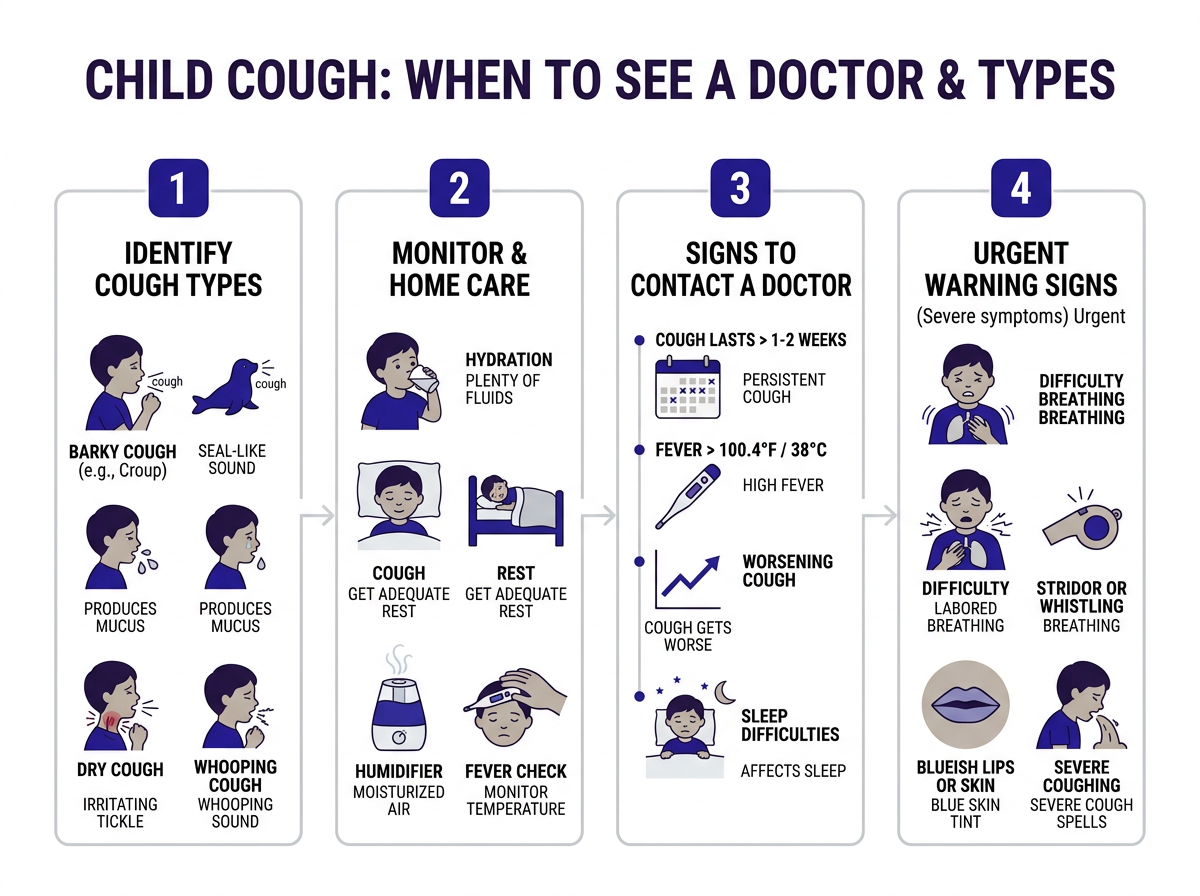
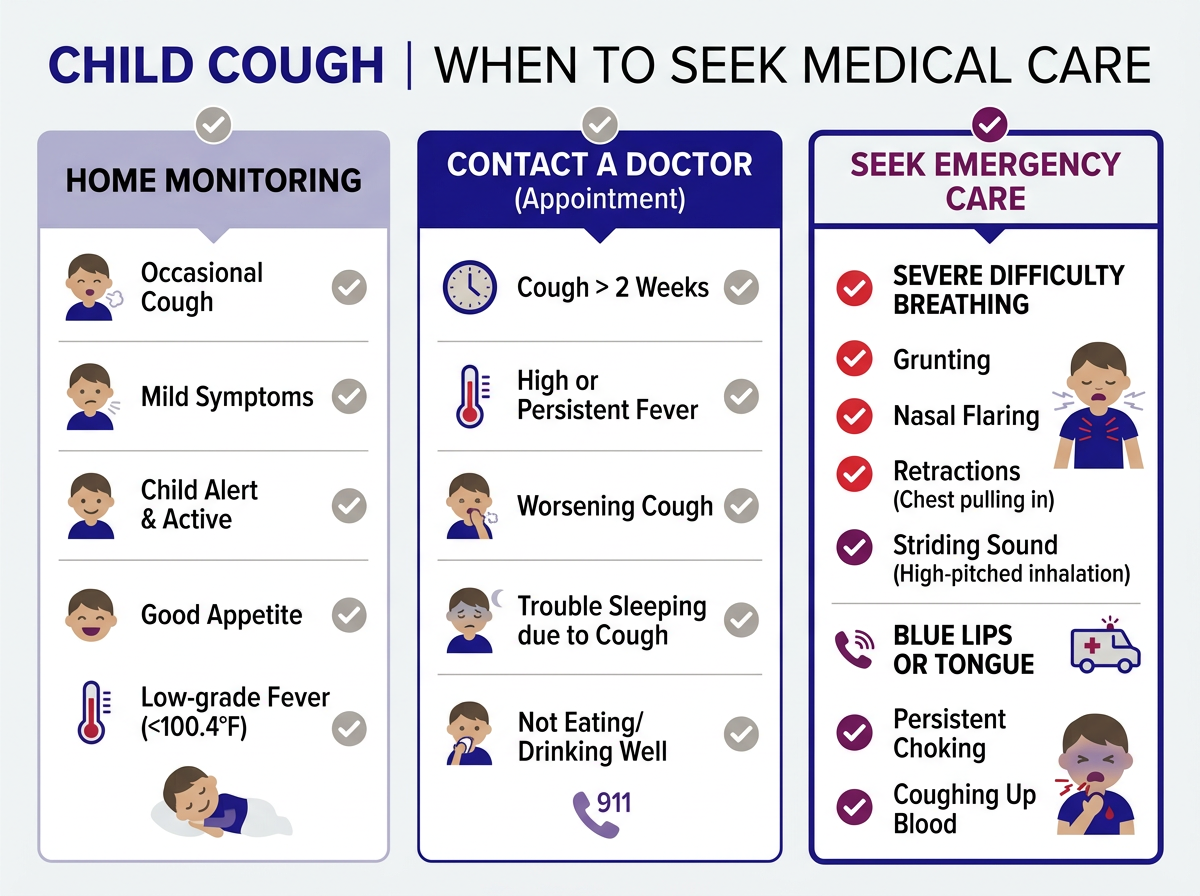
Wait it out at home when your child has a mild cough, no fever or a low-grade fever, continues to eat and drink normally, and stays playful. Most viral coughs fall into this category.
Visit urgent care when your child has a cough lasting more than five days, a fever between 101°F and 103°F, mild wheezing, ear pain alongside the cough, or a barking cough that keeps returning. Walk-in urgent care clinics like CityHealth Urgent Care can evaluate your child same-day, test for strep or flu, and prescribe treatment on the spot.
Go to the ER when you see any of the red flags listed above. Also go to the ER if your child is under three months old with a fever, or if you feel something is seriously wrong. Trust your gut on this one.
If you’re ever unsure whether your child needs urgent care or the ER, our guide on when to take child to urgent care breaks down the decision in detail.
Home Care Tips to Ease Your Child’s Cough
While you monitor your child’s symptoms, several home remedies can bring relief. These won’t cure the underlying cause, but they will help your child rest.
Honey works surprisingly well as a cough suppressant for children over one year old. For example, give half a teaspoon to children ages one to five and one teaspoon to kids ages six and older before bed. However, never give honey to babies under 12 months because of the risk of infant botulism.
Hydration thins mucus and soothes irritated throats. Offer warm water, broth, or diluted apple juice throughout the day. For babies under six months, breast milk or formula provides all the fluid they need.
A cool-mist humidifier adds moisture to dry air, which consequently calms inflamed airways. Place it near your child’s bed at night. Also, clean it daily to prevent mold growth.
Elevate the head of the bed slightly for children over one year. This reduces post-nasal drip and helps your child breathe easier during sleep. For toddlers, place a towel under the mattress rather than using pillows.
Saline nasal drops loosen mucus in stuffy noses, which in turn also reduces the cough triggered by drainage. Use two to three drops in each nostril before meals and bedtime.
Above all, avoid over-the-counter cough and cold medicines for children under six. The AAP warns that these products carry risks and offer little benefit in young kids. If home remedies aren’t working after several days, that is another clear signal for child cough when to see doctor.
Common Illnesses Behind a Child Cough When to See Doctor for Each
Croup: Most cases resolve at home within three to five days. However, see a doctor if the barking cough comes with stridor at rest or your child struggles to breathe.
RSV: RSV symptoms start like a cold but can worsen quickly in babies. Because RSV causes bronchiolitis (inflammation of the small airways), it sometimes requires monitoring with a pulse oximeter. Bring your child in if you notice fast breathing or poor feeding.
Bronchitis in children: Acute bronchitis usually follows a cold and causes a wet cough for one to three weeks. Antibiotics won’t help since viruses cause most cases. See a doctor if the cough lasts beyond three weeks or your child develops a high fever.
Asthma: A recurring child cough at night, during exercise, or in cold air may signal asthma. Furthermore, if your child wheezes regularly or gets winded faster than peers, ask your doctor about testing.
Pneumonia: A cough with persistent high fever, chest pain, and rapid breathing can indicate pneumonia. This requires medical evaluation and often a chest X-ray. Therefore, don’t wait on these symptoms. In particular, children under five are at higher risk for complications.
If your child’s cough comes with child fever when to go to doctor, we have a separate guide to help you decide when fever alone warrants a visit.
What Happens During an Urgent Care Visit for a Cough
Knowing what to expect reduces stress for both you and your child. At a walk-in urgent care visit, the provider will first listen to your child’s lungs with a stethoscope. Specifically, they check for wheezing, crackles, or decreased breath sounds.
Next, they measure oxygen saturation with a small clip on your child’s finger. This painless test shows how well the lungs move oxygen into the blood. In addition, the provider will check your child’s throat, ears, and nose because infections in these areas often trigger coughing.
Depending on the findings, the provider might order a rapid strep test, flu test, or chest X-ray. Consequently, you can leave with a diagnosis and treatment plan in a single visit. Most urgent care cough visits take 30 to 60 minutes.
Trust Your Instincts, Then Get Backup
You know your child better than anyone. Therefore, if the cough sounds different from past coughs, if your child seems more tired than usual, or if something just feels off, that’s reason enough to get checked. You don’t need to diagnose the problem yourself. When it comes to child cough when to see doctor, your parental instinct is a valid reason to seek care.
CityHealth Urgent Care in San Leandro sees kids on a walk-in basis every day, with no appointment needed. Our providers, including nurse practitioners and physicians experienced in pediatric care, can evaluate your child’s cough, run tests on-site, and start treatment the same day. Stop by our clinic or visit our pediatric urgent care near me page to learn more about how we help families get answers fast.