Your Kid Is Sick Right Now — and Your Pediatrician Can’t See Them Until Next Week
You know the drill. Your child wakes up with a fever, a swollen ear, or a rash that wasn’t there last night. You call your pediatrician’s office and hear the words no parent wants: “Our next opening is Thursday.” Suddenly, you’re searching for a walk in pediatrician who can see your kid today.
That’s why thousands of parents search for the same thing every single day. They need a doctor who can see their child today — not four days from now. The good news? Walk-in urgent care clinics see kids the same day. No appointment needed. Providers are trained to treat children of all ages.
Medically reviewed by Susana Quezada, NP — Nurse Practitioner

What People Actually Mean by “Walk In Pediatrician”
When parents search for a walk in pediatrician, they want one thing: a doctor who treats kids without an appointment. However, most pediatrician offices don’t offer same-day walk-in visits. As a result, their schedules are booked weeks ahead. In reality, the best answer is a walk-in pediatric clinic or urgent care that sees kids.
Specifically, these clinics are staffed by nurse practitioners, physician assistants, and doctors who treat children. They handle the same childhood illnesses your pediatrician does. However, they work on your timeline, not theirs. You walk in, sign in, get seen, and leave with a plan. In most cases, visits take under an hour.
Here’s the key difference. Your regular pediatrician handles long-term health, such as vaccines, growth tracking, and milestones. In contrast, a walk-in clinic handles the urgent stuff. For example, think ear infections, fevers, rashes, sore throats, and injuries that can’t wait.
Common Conditions a Walk In Pediatrician Visit Covers
Walk-in clinics that see children treat many conditions. In particular, these clinics are built for urgent (but not emergency) visits. Therefore, they handle most of what sends parents rushing for same-day care.
Breathing and throat issues top the list. For instance, this includes coughs, colds, sore throats, croup, and strep. Providers can run a rapid strep test on-site. If it’s positive, then they prescribe antibiotics within minutes. Also, ear infections are checked quickly and treated the same visit.
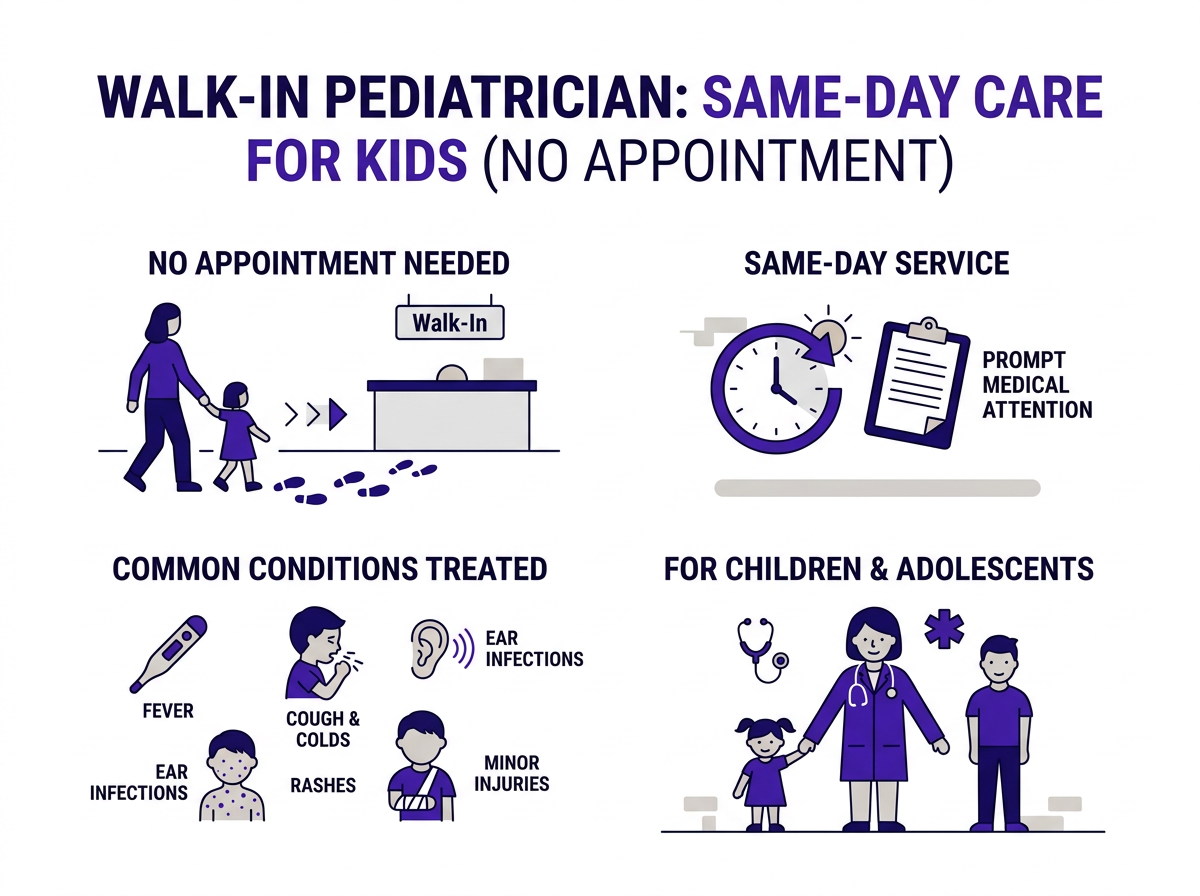
Furthermore, walk-in clinics commonly treat:
- Fevers of unknown origin
- Pink eye (conjunctivitis)
- Stomach bugs with vomiting or diarrhea
- Skin rashes, hives, and mild allergic reactions
- Urinary tract infections
- Minor cuts, scrapes, and burns that may need wound care
- Sprains, strains, and minor fractures
- Insect bites and stings
- Asthma flare-ups
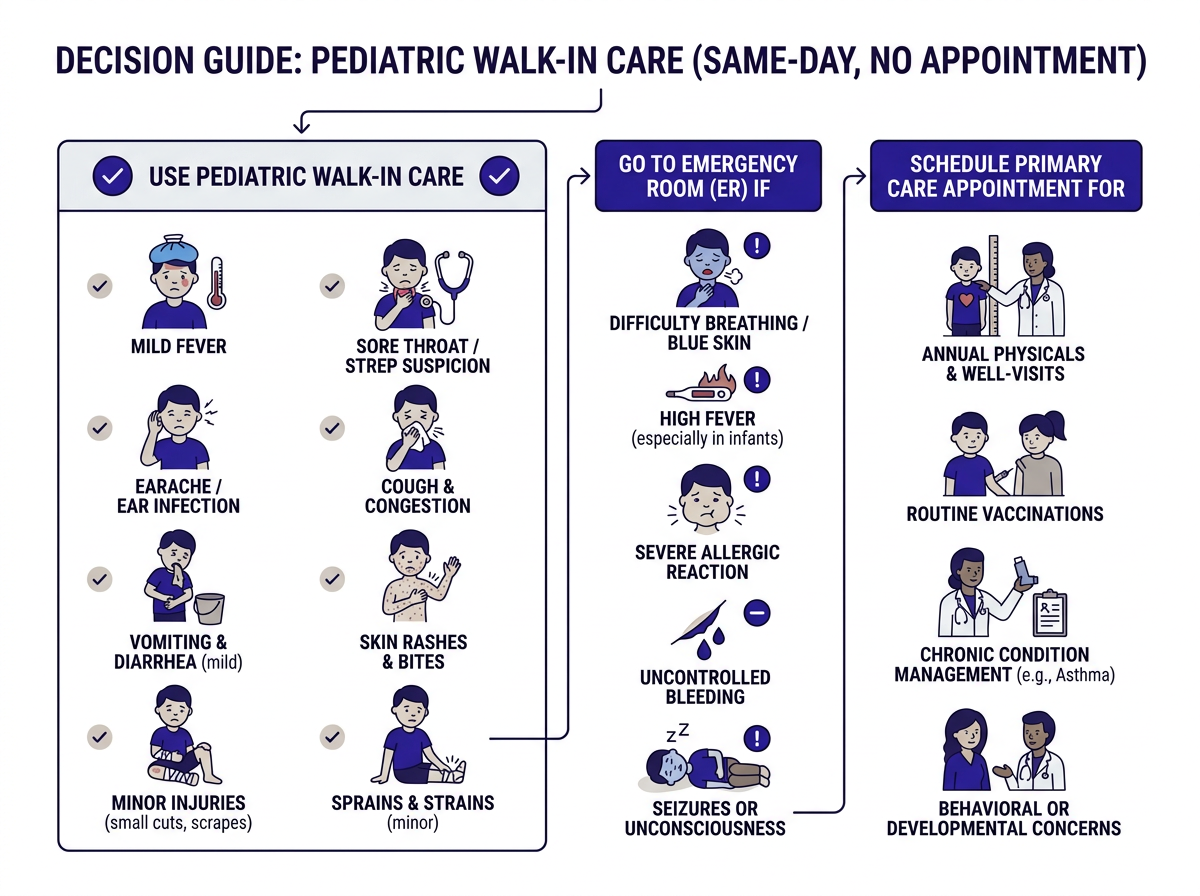
However, some things do need the ER. For example, chest pain, trouble breathing, seizures, or a head injury with loss of consciousness all require the emergency room. Not sure if your child needs urgent care or the ER? This guide on when to take your child to urgent care breaks it down clearly.
What Ages Do Walk-In Clinics See?
This varies by clinic, so always check before you go. For instance, some urgent care centers only see kids age 2 and older. Others treat babies as young as 6 months. Meanwhile, a few clinics limit visits to kids over 5.
At CityHealth Urgent Care, providers see children starting at 6 months old. As a result, parents of babies, toddlers, school-age kids, and teens can all walk in. For parents of toddlers needing urgent care, that early age cutoff matters a lot. Always confirm age policies before you drive across town.
Will They Have My Child’s Medical Records?
This is one of the biggest concerns parents have. The short answer: probably not, and that’s okay. Because walk-in clinics run separately from your pediatrician’s office, they won’t have your child’s chart on file.
However, you can fill that gap easily. First, bring a list of your child’s current medications, allergies, and vaccine history. In addition, most pediatrician offices have a patient portal where you can download this info. Also, tell the walk-in provider about any ongoing conditions like asthma or diabetes.
After the visit, the clinic gives you a visit summary. Then, share it with your regular pediatrician so they stay in the loop. Ultimately, one walk-in visit won’t disrupt your child’s care. Instead, it fills the gap when your regular doctor isn’t free.
Can Walk-In Providers Prescribe Medication for Kids?
Yes. Nurse practitioners, physician assistants, and doctors at walk-in clinics can prescribe medications. Specifically, this includes antibiotics for infections, steroids for croup or asthma flares, allergy medicine, and anti-nausea drugs for stomach bugs.
Furthermore, many walk-in clinics send prescriptions straight to your pharmacy. As a result, you can often pick up the medicine on your way home. If your child tests positive for strep at 10 a.m., then they could start antibiotics by lunch. That speed is the whole point of walk-in care.
Insurance, Cost, and What to Expect at a Walk In Pediatrician Visit
Most walk-in urgent care clinics accept major insurance plans, including Medi-Cal. In fact, your copay for urgent care is usually lower than an ER copay. Typically, urgent care copays range from $20 to $75. In contrast, ER copays can run $150 to $500 or more.
If you don’t have insurance, then many clinics offer self-pay rates. Therefore, ask about pricing before the visit so there are no surprises. Also, bring your insurance card and your child’s ID if they have one.
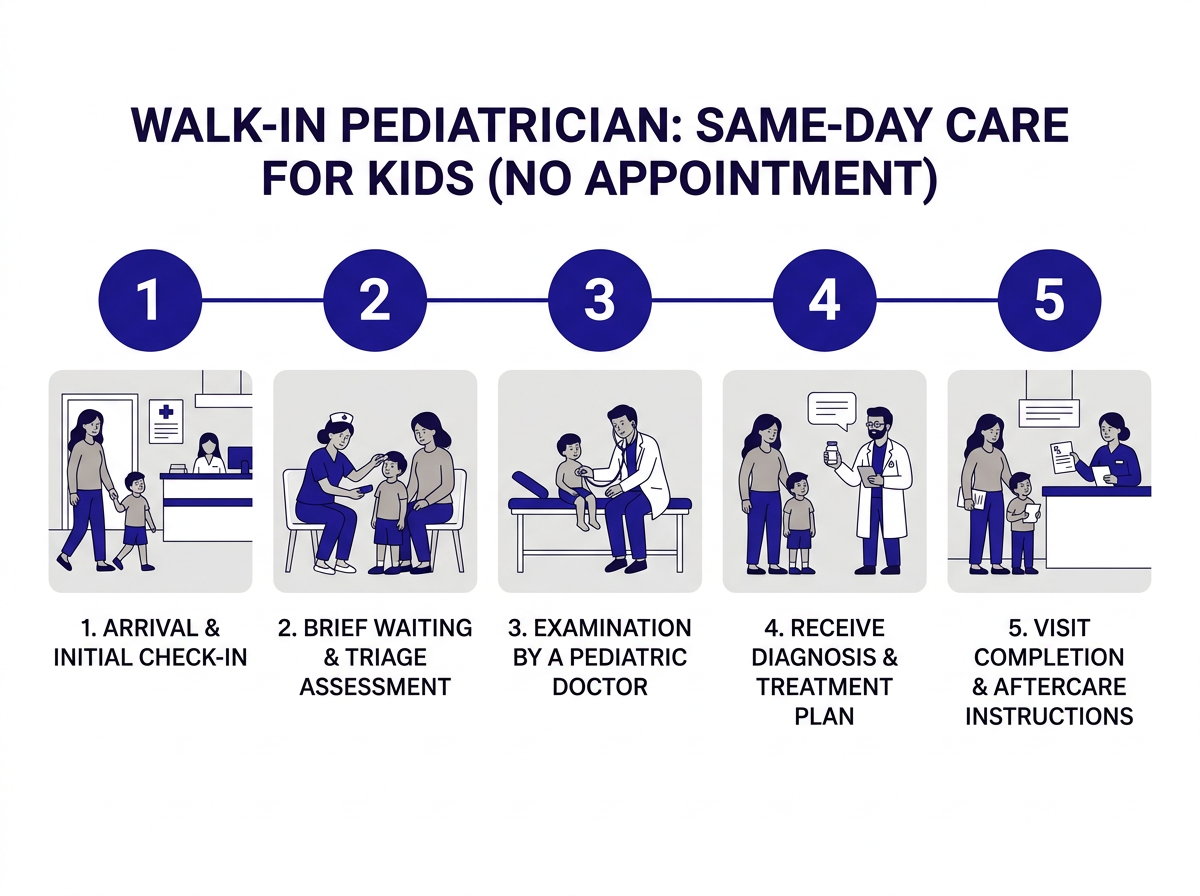
Here’s what the actual visit looks like, step by step:
- Arrival and check-in: You walk in with no appointment. Front desk staff collect your child’s basic info and insurance details.
- Triage: A medical assistant takes your child’s vitals — temperature, weight, heart rate, and blood pressure for older kids.
- Provider exam: A nurse practitioner, PA, or doctor examines your child and asks about symptoms. They run any needed tests (strep, flu, urine, or X-ray).
- Diagnosis and treatment: The provider explains what’s going on. They prescribe medicine if needed and give you clear home care steps.
- Checkout: You get a visit summary and head home. Most visits take 45 minutes to an hour.
How Walk-In Care Differs from Your Regular Pediatrician
Your pediatrician is your child’s medical home. They know your kid’s history, track their growth, give vaccines, and manage ongoing conditions. On the other hand, a walk-in clinic serves a different role. Specifically, it handles the sudden illnesses and injuries that pop up between well-child visits.
Think of it this way: your pediatrician is the long game. In contrast, walk-in care is the relief pitcher. Neither replaces the other. Instead, they work together to keep your child healthy. The American Academy of Pediatrics agrees. Urgent care plays a key role in giving kids timely care when their regular doctor isn’t free.
Some parents worry that using a walk-in clinic means they’re “going behind” their pediatrician’s back. However, that’s not how it works. In fact, pediatricians know that sick kids can’t always wait. They expect parents to use walk-in care when needed. Simply share the visit summary at the next regular appointment.
Signs Your Child Needs Same-Day Care (Not a Scheduled Appointment)
Sometimes it’s hard to know if a symptom can wait. As a general rule, these situations call for same-day walk-in care:
- Fever over 100.4°F in a child 6 months or older that doesn’t respond to medication
- Ear pain that wakes them up at night or makes them inconsolable
- Sore throat with difficulty swallowing or white patches on the tonsils
- Persistent vomiting or diarrhea lasting more than 24 hours
- A rash that spreads quickly or appears with fever
- Eye discharge, redness, or crusting that suggests pink eye
- A limp, swelling, or pain after a fall or sports injury
- Wheezing or increased coughing in a child with asthma
Above all, trust your gut. You know your child better than anyone. If something feels off, then getting them seen the same day is never the wrong call. A quick pediatric urgent care visit gives you answers and peace of mind fast.
Why Parents in San Leandro Choose CityHealth for Walk-In Kids’ Care
CityHealth Urgent Care in San Leandro sees kids 6 months and older, every day, with no appointment needed. The clinic is built for walk-in visits. You won’t face the “call back Monday” runaround. You show up, your child gets seen by a provider, and you leave with a clear plan.
The clinic accepts most major insurance plans, including Medi-Cal. On-site testing for strep, flu, COVID, UTIs, and more means you get results during the visit — not two days later. X-ray is also on-site for suspected fractures or sprains.
CityHealth providers know that a sick or hurt child makes the whole family anxious. The goal is simple: get your kid feeling better fast. Walk in today or check wait times at CityHealth Urgent Care. No appointment needed.