

Can Urgent Care Refer You to a Specialist? Yes — Here’s How It Works
You’ve got a health issue that needs a specialist. But you don’t have a primary care doctor. Or maybe yours can’t see you for three weeks. So can urgent care refer you to a specialist? Yes — and for many people, it’s the fastest path to care. Here’s how urgent care referrals work, what specialists you can see, and how insurance factors in.
Medically reviewed by Sean Parkin, PA, CEO & Founder — Urgent Care
How to Get a Referral Without a Primary Doctor
Millions of Americans don’t have a regular primary care provider. Maybe you moved recently. Maybe your old doctor retired. Or maybe you’ve been healthy and haven’t needed one. Whatever the reason, not having a PCP shouldn’t block you from seeing a specialist.
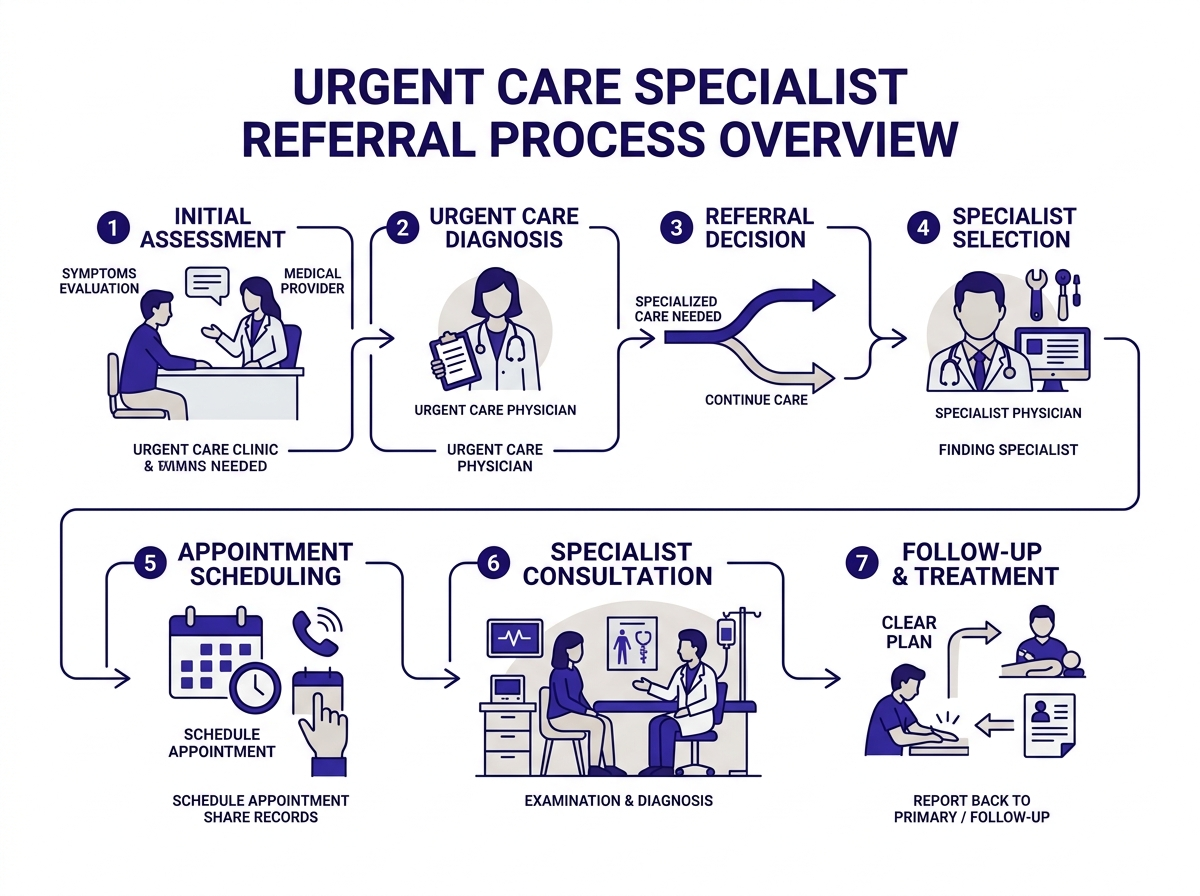
Urgent care fills the gap. When you visit with a problem that needs specialist follow-up, the provider can evaluate you and run initial tests. They can also start treatment if needed. Then they refer you to the right specialist. In fact, this process works much like a primary care referral. The urgent care provider documents your condition, explains why a specialist is needed, and gives you the info to book that appointment.
For example, say you come in with ongoing stomach pain. The urgent care provider can examine you and order blood work to check for infection. If the results suggest an ulcer or gallbladder issue, they’ll refer you to a gastroenterologist. As a result, you leave with a clear next step instead of waiting weeks just to get your foot in the door.
Similarly, if you come in with a rash that won’t go away, the provider may suspect it needs a dermatologist. In that case, they can refer you directly. So the urgent care visit becomes your starting point — not a dead end.
What Types of Specialists Can Urgent Care Refer You To?
Urgent care providers can refer you to virtually any type of specialist. Here are the most common referrals from urgent care:
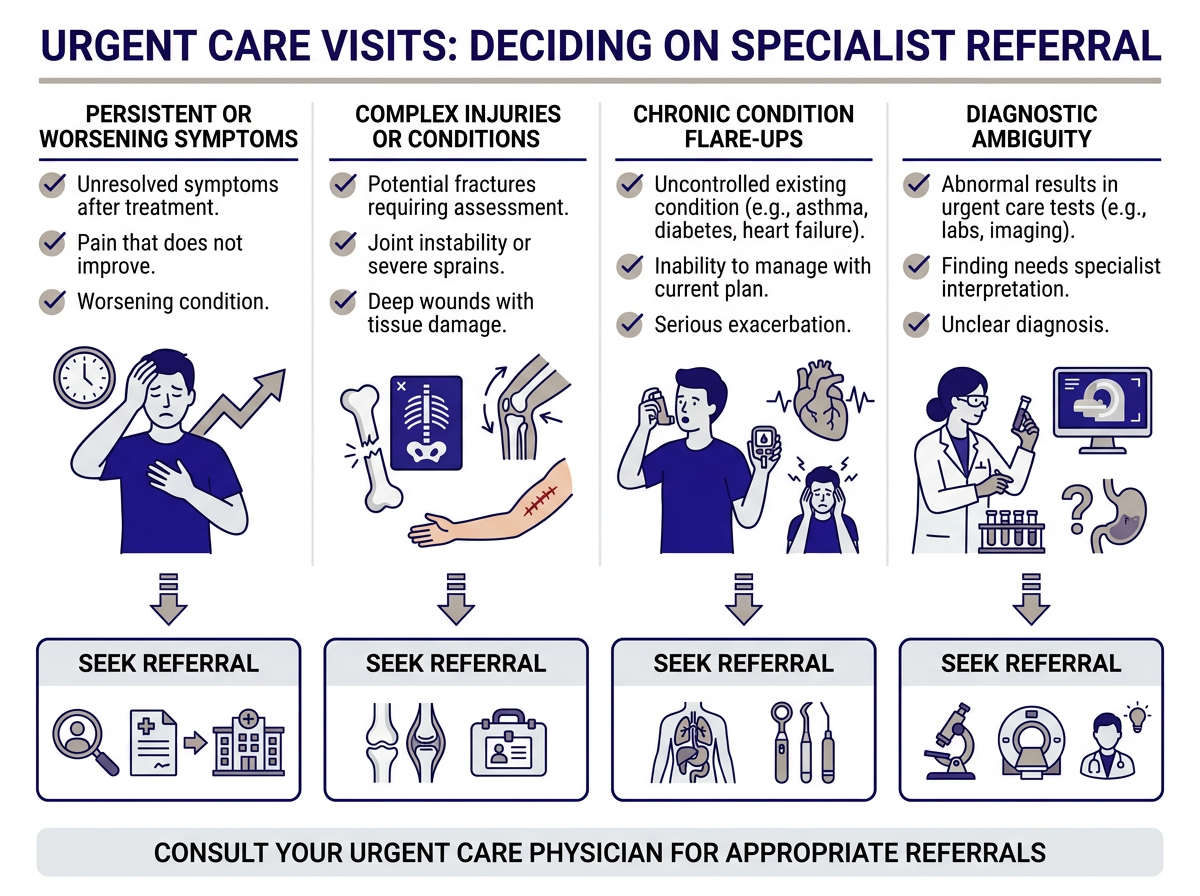
Orthopedics. Sprains, fractures, and joint injuries are common at urgent care. For instance, an X-ray might reveal a fracture that needs surgery. Or you might have a ligament injury that needs an MRI. In either case, you’ll get an orthopedic referral. Additionally, the urgent care provider can splint you and manage your pain right away.
Dermatology. Some skin conditions don’t respond to initial treatment. Specifically, persistent rashes, suspicious moles, and chronic eczema flares often need a dermatologist. Urgent care can start treatment and refer you at the same time. That way, you’re not waiting without relief.
Gastroenterology. Ongoing digestive issues may point to conditions that require a GI specialist. For example, acid reflux, abdominal pain, blood in stool, or unexplained weight loss. Urgent care can first rule out emergencies, then run initial labs and send you to the right provider.
Cardiology. Sometimes you come in with chest pain. If the evaluation suggests a cardiac cause that isn’t an emergency — for instance, an abnormal EKG — you’ll be referred to a cardiologist. However, if urgent care suspects an active heart attack, they’ll send you to the emergency room instead.
ENT (Ear, Nose, and Throat). Chronic sinusitis and recurrent ear infections often warrant an ENT referral. The same is true for hearing changes or a persistent sore throat that doesn’t clear up with treatment.
Other common referrals: Neurology (persistent headaches, numbness), pulmonology (breathing issues), urology (urinary problems), ophthalmology (eye conditions beyond basic treatment), and general surgery (hernias or cysts that need removal).
How Insurance Affects Urgent Care Referrals
Whether you need a formal referral depends on your insurance plan. Because of this, understanding your coverage upfront prevents surprise bills and wasted appointments.
HMO plans typically require a referral from an in-network provider before you can see a specialist. The good news is that an urgent care provider in your HMO network can usually issue this referral. However, you should confirm with your insurer that they accept referrals from urgent care — not just your assigned PCP. Most HMOs do accept this, but policies vary.
PPO plans generally let you see any specialist without a referral. You can self-refer, though you’ll pay less if you stay in-network. In this case, the urgent care referral isn’t about insurance approval. Instead, it’s about getting a professional recommendation. It also ensures the specialist has your medical info before the visit.
EPO plans work similarly to HMOs. They require you to stay in-network. However, they may or may not require referrals. So check your plan documents or call the number on your insurance card.
According to HealthCare.gov, your plan’s Summary of Benefits will specify whether specialist referrals are required. If you’re unsure, call your insurer before the specialist appointment — not after.
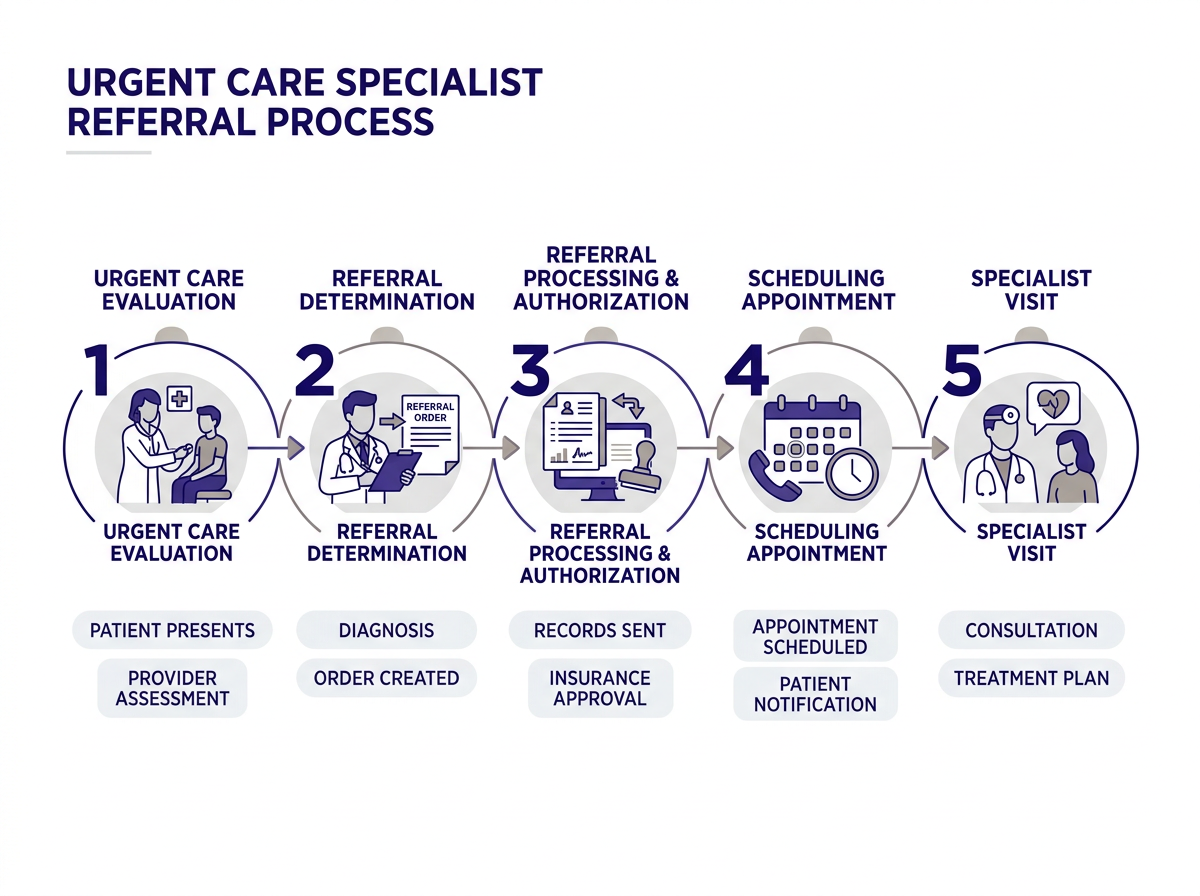
A practical tip: When your urgent care provider writes a referral, ask them to include the diagnosis code (ICD-10). Also request a brief clinical note explaining medical necessity. This documentation helps the specialist’s office get prior authorization. Furthermore, it reduces the chance of a denied claim.
Is Urgent Care Considered a Specialist for Insurance?
No. Urgent care is classified as outpatient primary care for insurance purposes, not as a specialist visit. This distinction matters because it affects your copay.
Most plans have separate copay tiers. First, there’s primary care or urgent care visits (often $20-$50). Next, specialist visits (often $40-$75). Finally, emergency room visits (often $150-$500). Since urgent care falls in the lowest tier, it’s one of the most affordable ways to get an initial evaluation and referral.
Furthermore, because urgent care isn’t a specialist visit, you don’t need a referral to go there. You can walk into any urgent care clinic without prior authorization from your PCP. This is true even with an HMO plan. As a result, urgent care is a practical first stop when you think you need specialist care but aren’t sure where to start.
Why Urgent Care Is a Shortcut to Specialist Care
Here’s the math that makes urgent care referrals appealing. The average wait for a new patient appointment with a primary care doctor is 26 days in most metro areas. Once you finally see the PCP, they evaluate you. Then they decide you need a specialist. After that, you wait again — often another 2-6 weeks for the specialist appointment.
In contrast, urgent care sees you the same day — no appointment needed. If the provider determines you need a specialist, you leave with that referral in hand. Essentially, you’ve compressed weeks of waiting into a single visit.
This shortcut is especially valuable for time-sensitive conditions that aren’t emergencies. For instance, think about a suspicious skin lesion that needs a biopsy. Or persistent abdominal pain that warrants a GI consult. Or a knee injury that needs an orthopedic evaluation before you can return to work. In these cases, weeks of delay aren’t just inconvenient — they can affect outcomes.
Additionally, urgent care providers can start treatment while you wait for the specialist. If you have a painful condition, they can prescribe the right medication. If you need imaging, they can order X-rays on the spot. So you’re not stuck in limbo between “I know something’s wrong” and “someone’s finally looking at it.”
Can Urgent Care Refer You to a Specialist? What to Bring to Your Visit
To make your urgent care visit as productive as possible, bring these items — especially if you think you’ll need a referral:
- Your insurance card. The provider needs your plan info to make an in-network referral.
- A list of current medications. Specialists will want this. Having it documented from the start saves time.
- Any relevant medical records. If you’ve had previous testing or treatment for the same condition, bring those results. This avoids duplicate tests and gives the specialist useful background.
- A clear description of your symptoms. When did they start? What makes them better or worse? How do they affect your daily life? These specific details help the provider determine the right type of specialist.
The more information you bring, the stronger the referral. A well-documented referral with clinical notes and test results gets you seen faster. It also reduces back-and-forth between offices.
What Urgent Care Can Do Before the Specialist Visit
Think of urgent care as the diagnostic starting point. Before sending you to a specialist, an urgent care provider can:
- Run lab work — blood tests, urinalysis, rapid strep or flu tests — to narrow down the diagnosis
- Order imaging — X-rays are available on-site at many urgent cares; they can also order CT scans, MRIs, or ultrasounds at nearby imaging centers
- Start treatment — antibiotics for infections, pain medication, anti-inflammatories, splinting for injuries
- Document everything — create a medical record that follows you to the specialist, so you’re not starting from scratch
This preliminary workup is genuinely valuable. When you show up to the specialist with labs, imaging, and a clinical note, they can move directly to advanced treatment. In other words, rather than spending the first appointment on basics, they can focus on what only they can do.
Urgent Care vs. Primary Care for Referrals
If you have a primary care provider you see regularly, they’re still the best source for referrals on chronic conditions. Your PCP knows your full medical history. They track your medications and coordinate your long-term care.
However, urgent care makes more sense for referrals when:
- You don’t have a PCP or can’t get an appointment soon enough
- The condition is new and needs a specialist sooner than your PCP can arrange
- You need same-day evaluation and can’t wait for a scheduled appointment
- You need initial diagnostics (labs, X-rays) before the specialist visit
The two aren’t in competition. Urgent care handles the immediate need and connects you with the right specialist. Meanwhile, your PCP — if you have one — takes over long-term management afterward. Both serve a role in your healthcare.
Get Your Referral at CityHealth Urgent Care
At CityHealth Urgent Care in San Leandro, we regularly help patients connect with the specialists they need. Whether that’s orthopedics, dermatology, GI, or any other field — we can help. Simply walk in any time during our hours. Our providers will evaluate your condition, run the right tests, and set you up with a referral if needed. No appointment necessary. Call us at (510) 984-2489 or visit cityhealth.com/urgent-care.