
Urgent Care for Tooth Pain: What We Can Actually Do (and When You Need a Dentist)
Your tooth is throbbing, it’s 9 PM on a Saturday, and your dentist’s office won’t open until Monday. Sound familiar? If you’re dealing with urgent care for tooth pain, you’re not alone — millions of Americans visit urgent care or the ER each year for dental problems. The good news: urgent care can help manage your pain, treat infections, and bridge the gap until you see a dentist. Here’s exactly what to expect.
Medically reviewed by Sean Parkin, PA, CEO & Founder — Urgent Care
What Will Urgent Care Do for a Toothache?
Let’s be upfront: urgent care cannot pull teeth, do fillings, or perform root canals. Those are dental procedures that require a dentist’s chair and specialized tools. However, urgent care providers can do several things that make a real difference when you’re in pain.
First, we evaluate your symptoms. A provider will examine your mouth, check for visible swelling or signs of infection, and ask about the type of pain you’re experiencing. Sharp and stabbing pain suggests a cracked tooth or exposed nerve. A dull, constant ache with swelling often points to an abscess — a pocket of infection at the tooth root.
If infection is present, urgent care can prescribe antibiotics to stop it from spreading. This matters because a dental abscess left untreated can become dangerous. In rare cases, the infection can spread to your jaw, neck, or even your brain. Antibiotics buy you critical time until a dentist can address the root cause.
Urgent care can also prescribe pain medication — including anti-inflammatories stronger than what’s available over the counter. For severe pain, providers may prescribe a short course of stronger medication to get you through the weekend. Additionally, if your face is noticeably swollen or you have a fever, urgent care can assess whether you need emergency-level intervention or whether antibiotics and pain management will hold you over.
What Is the 3-3-3 Rule for Toothaches?
The 3-3-3 rule is a simple guideline that helps you decide how serious your tooth pain is. It works like this:
- 3 seconds: If your pain lasts less than 3 seconds after exposure to hot, cold, or sweet foods, the problem is likely minor sensitivity. You can probably wait for a regular dental appointment.
- 3 minutes: If the pain lingers for about 3 minutes, the nerve inside your tooth may be irritated or inflamed. Schedule a dentist visit soon — within a few days if possible.
- 3 hours (or more): If your pain is constant and lasts 3 hours or longer, the nerve may be dying or already dead, or you could have an abscess. This is when you should seek urgent care for tooth pain if a dentist isn’t available.
The 3-3-3 rule isn’t a medical diagnosis, but it gives you a practical framework. Because tooth pain that persists for hours often signals something that won’t resolve on its own, waiting and hoping rarely works at that stage.
When to Go to Urgent Care for a Toothache
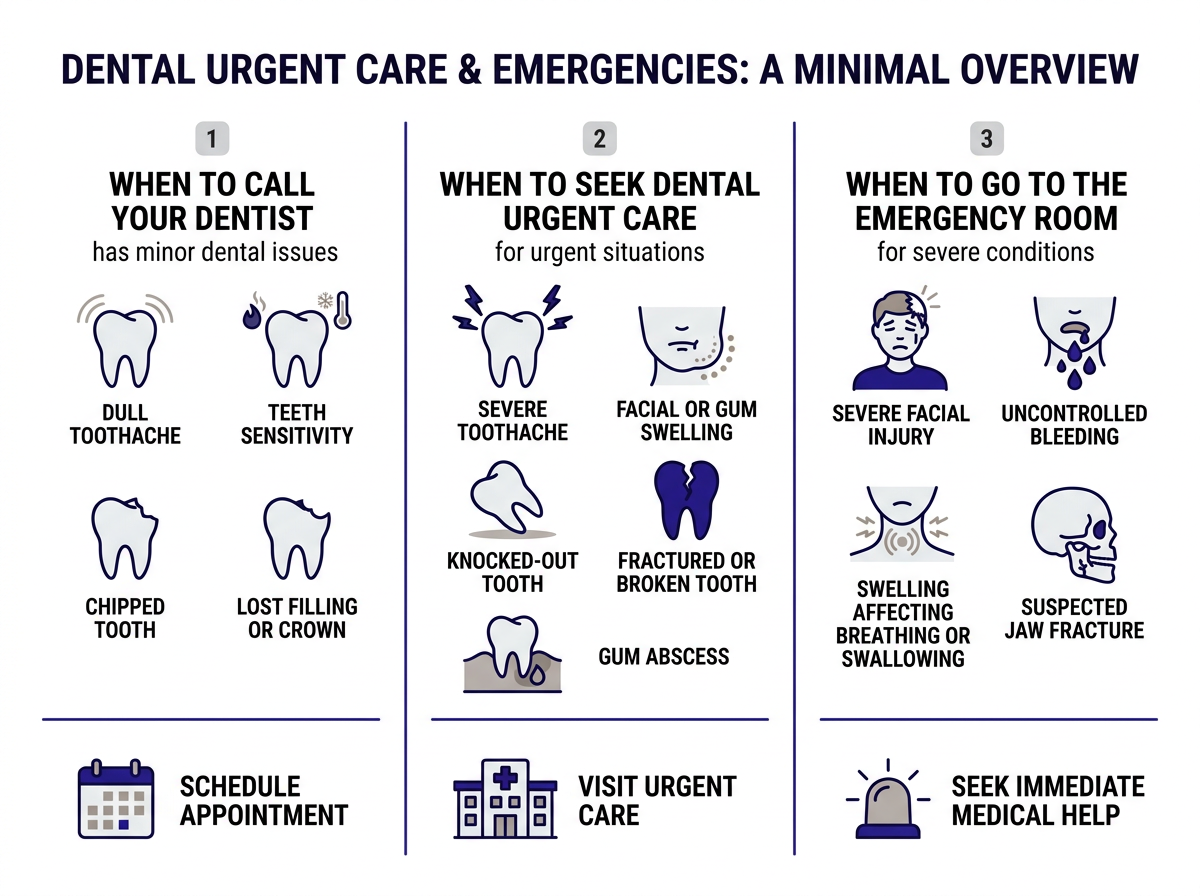
Not every toothache needs urgent care. A mild ache that responds to ibuprofen can usually wait for a dentist appointment. However, certain symptoms mean you should see a provider today.
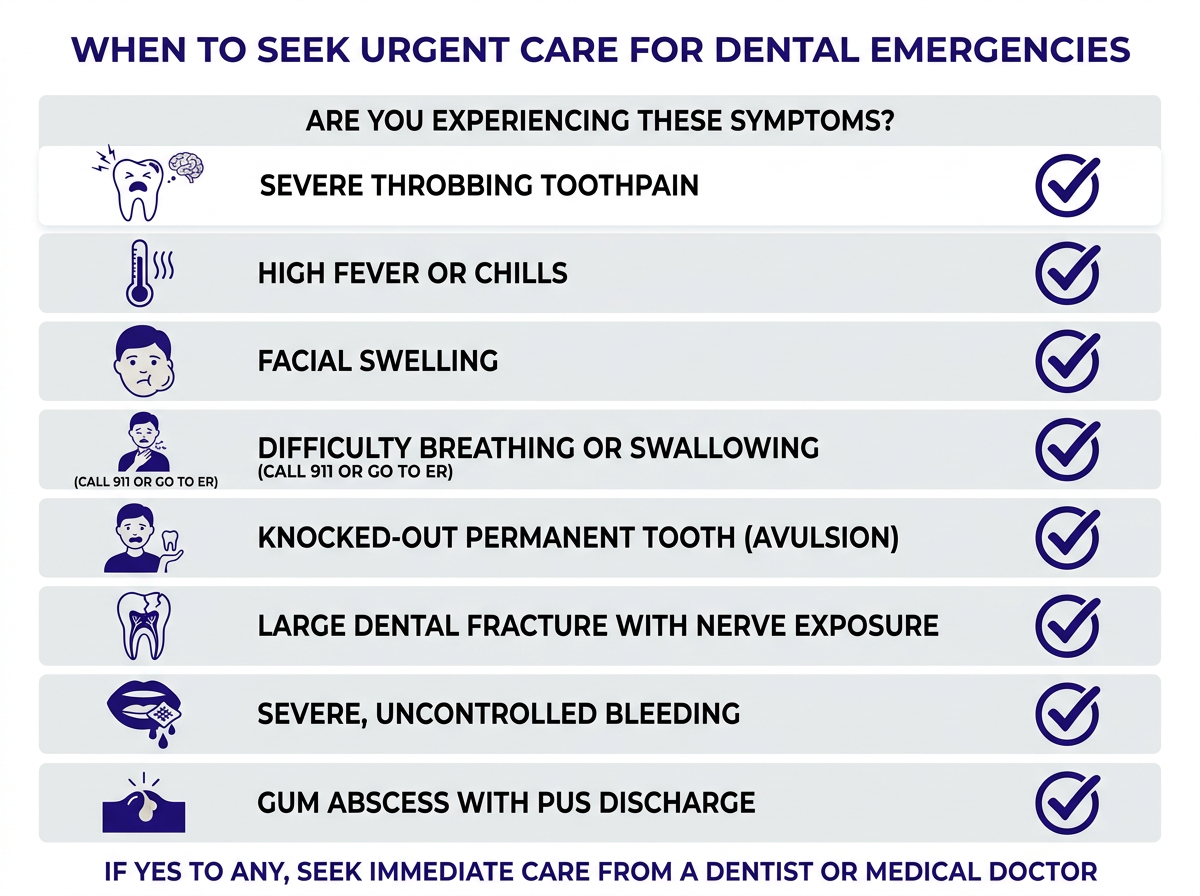
Go to urgent care if you have:
- Severe pain that over-the-counter meds aren’t touching
- Swelling in your face, jaw, or neck
- A fever along with tooth pain (a sign of spreading infection)
- A foul taste in your mouth or pus near the gum line
- Pain after a tooth was knocked loose or chipped from an injury
- Tooth pain that’s keeping you from eating, sleeping, or functioning
On the other hand, go to the ER instead of urgent care if you have trouble breathing or swallowing, a high fever (over 103°F), swelling that’s spreading rapidly toward your eye or throat, or uncontrolled bleeding from the mouth. These symptoms can indicate a life-threatening emergency.
For everything else — the Saturday night throbbing, the abscess that flared up during a holiday — urgent care is the right call. You’ll get evaluated, treated for infection and pain, and pointed toward the right follow-up care.
What Can I Do for Unbearable Tooth Pain at Home?
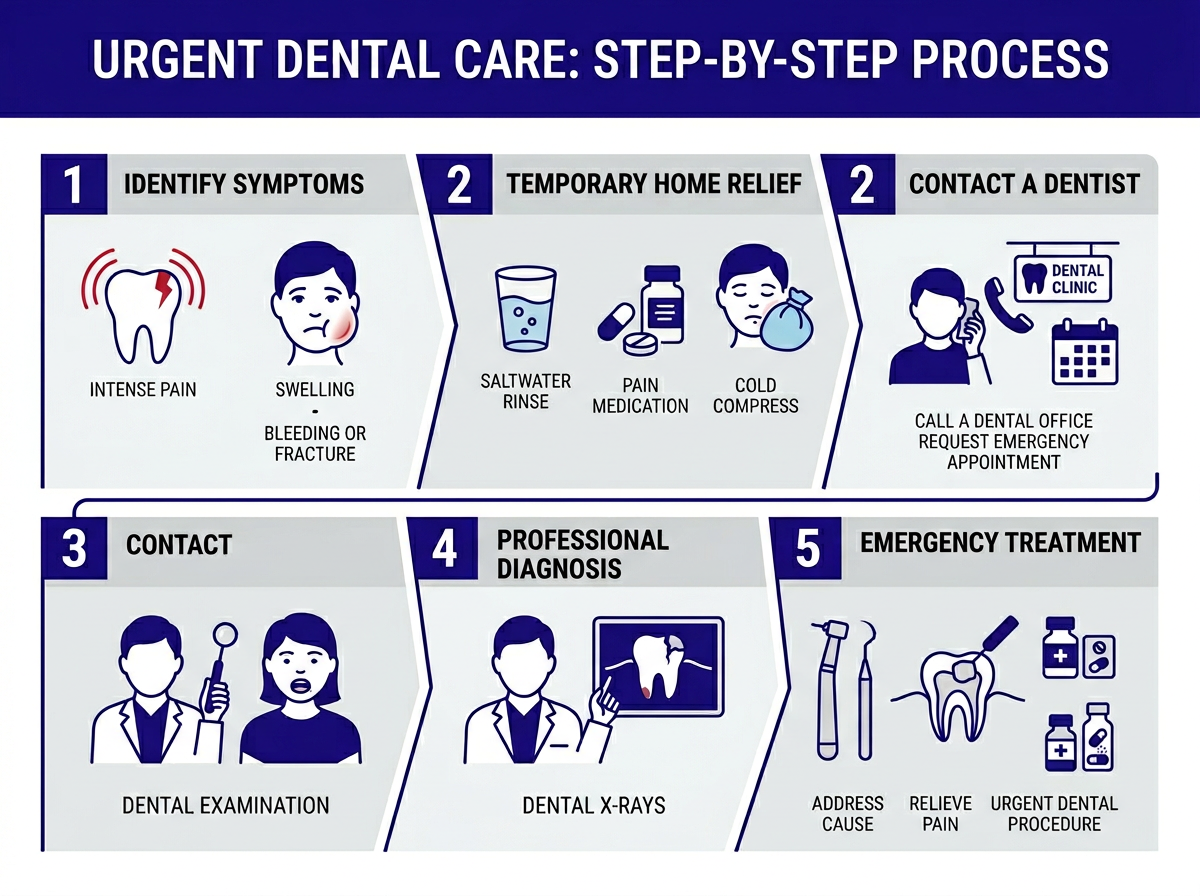
While you’re waiting to get to urgent care or a dentist, these home remedies can take the edge off. They won’t fix the underlying problem, but they can make the next few hours bearable.
Ibuprofen + acetaminophen combo. Take 400-600 mg of ibuprofen (Advil) and 500 mg of acetaminophen (Tylenol) together. According to the Cleveland Clinic, this combination often works better than either drug alone for dental pain — and in some studies, it outperformed prescription opioids. Alternate doses every 3-4 hours, and don’t exceed the daily maximum for either drug.
Physical Remedies That Help
Cold compress. Hold an ice pack or bag of frozen peas against the outside of your cheek for 15 minutes on, 15 minutes off. Cold reduces swelling and numbs the area temporarily. Specifically, this works best for pain caused by inflammation or abscess.
Salt water rinse. Mix half a teaspoon of salt into 8 ounces of warm water and swish gently for 30 seconds. Salt water acts as a natural disinfectant and can reduce inflammation in the gums. Repeat every few hours as needed.
Clove oil. If you can find it at a drugstore, clove oil contains eugenol — a natural anesthetic. Dab a small amount on a cotton ball and hold it against the painful tooth. It tastes strong, but many people find it provides temporary numbing relief.
Elevate your head. When you lie flat, blood pools in your head and increases pressure around an inflamed tooth. Therefore, prop yourself up with an extra pillow at night. This simple change can mean the difference between sleeping and staring at the ceiling.
What to avoid: Don’t put aspirin directly on the gum (it can burn the tissue). Don’t use extremely hot or cold foods near the painful tooth. And don’t ignore a fever — that’s your body telling you an infection is spreading.
Why Urgent Care for Tooth Pain Makes Sense
Here’s the reality of dental emergencies in America: most people don’t have a dentist they can call on short notice. Even if you do, dental offices typically aren’t open evenings, weekends, or holidays — which is exactly when tooth pain seems to peak.
The ER will see you, but emergency rooms aren’t set up for dental work either. You’ll likely wait hours, pay significantly more, and end up with the same result: antibiotics, pain meds, and a referral to a dentist. In contrast, urgent care offers shorter wait times, lower costs, and providers who handle tooth pain cases regularly.
Furthermore, urgent care providers can identify red flags that might not be obvious to you. A swollen lymph node under your jaw, a low-grade fever you didn’t notice, or early signs of cellulitis (skin infection spreading from an abscess) — catching these early can prevent a simple toothache from becoming a hospital admission.
After Urgent Care: Next Steps for Your Tooth
Urgent care is a bridge, not a destination. After your visit, you’ll need to follow up with a dentist to fix the actual problem. Here’s how to make that transition smooth:
- Finish your antibiotics. If you’re prescribed a course (typically 7-10 days), take every dose even if the pain disappears. Stopping early lets resistant bacteria survive and the infection can return worse than before.
- Book a dentist appointment within the week. Don’t wait for the pain to come back. The antibiotics are treating the infection, but the underlying cause — a cracked tooth, deep cavity, or dead nerve — still needs professional dental treatment.
- Keep notes on your symptoms. Track when the pain started, what triggers it, whether it’s getting better or worse on antibiotics, and any swelling changes. Your dentist will find this information valuable.
- Ask about referrals. If you don’t have a dentist, your urgent care provider can often refer you to a specialist or recommend local options that accept your insurance or offer payment plans.
Urgent Care for Tooth Pain: The Bottom Line
Tooth pain doesn’t wait for business hours, and neither should your care. While urgent care can’t replace a dentist, it can manage your pain, treat active infections, and prevent complications — all without the long wait and high cost of an ER visit. If your toothache is severe, accompanied by swelling or fever, or simply unbearable, urgent care is a smart next step.
At CityHealth Urgent Care in San Leandro, CA, we see tooth pain patients regularly — especially on evenings and weekends when dental offices are closed. Walk in anytime during our hours or call us at (510) 984-2489 to find out how we can help. Learn more at cityhealth.com/urgent-care.