
Your back seized up this morning, the ibuprofen in your cabinet expired in 2024, and you need something stronger. Before you spend six hours in an ER waiting room, you want to know: can urgent care prescribe pain meds? Yes. Urgent care providers prescribe a range of pain medications, from prescription-strength anti-inflammatories to short-course muscle relaxants. However, opioids are prescribed rarely and only under strict guidelines. Here is what you can get, what you probably cannot, and what actually works for acute pain.
Medically reviewed by Sean Parkin, PA, CEO & Founder — Urgent Care
What Pain Meds Can Urgent Care Prescribe?
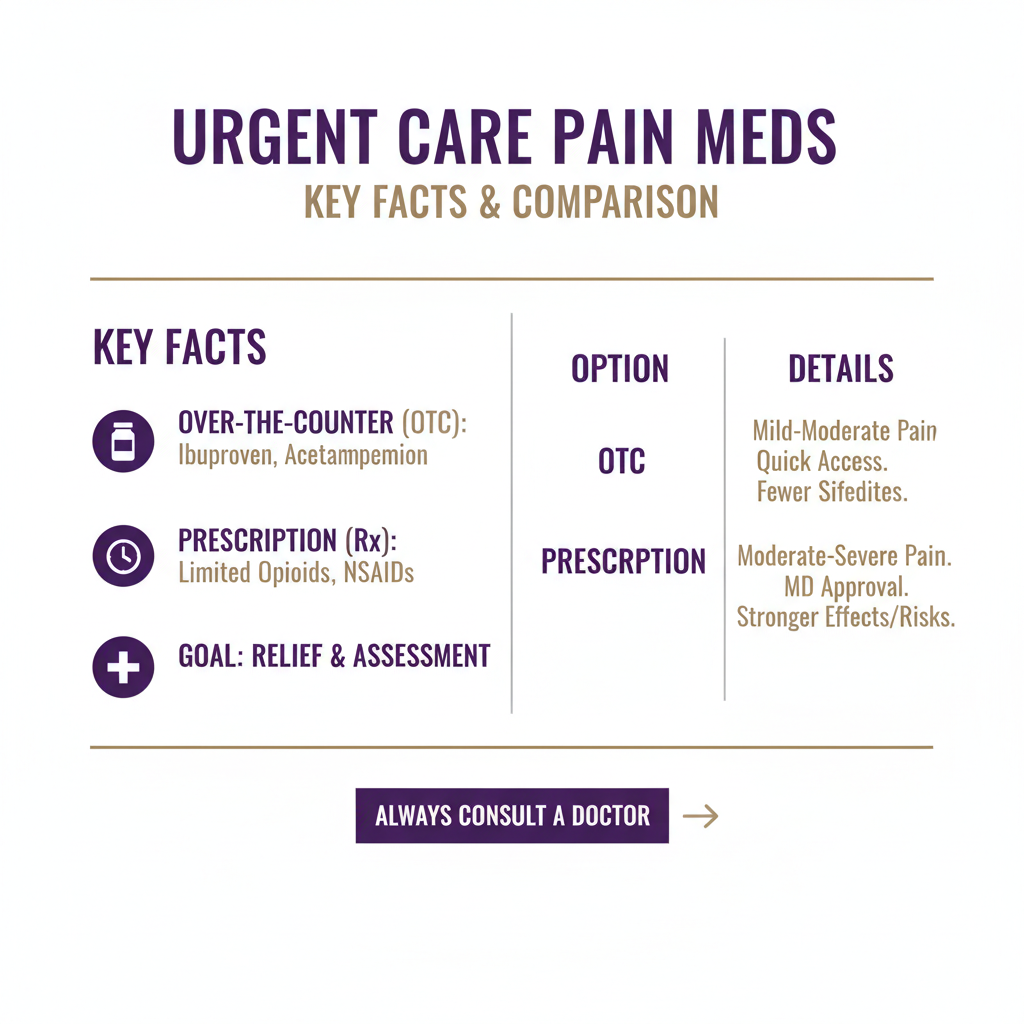
Urgent care treats acute pain — pain that started recently from an injury, illness, or flare-up. The goal is short-term relief while the cause gets treated. Here is what they prescribe most often.
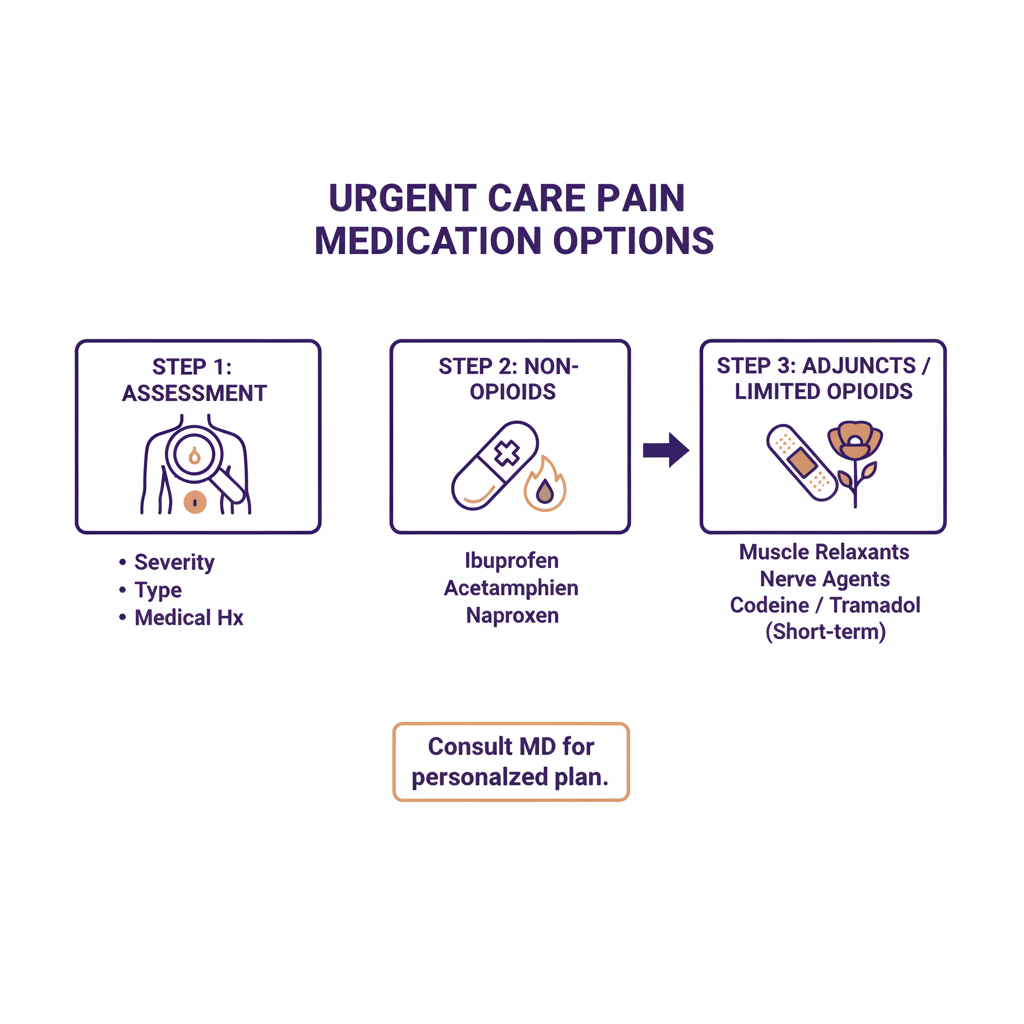
Strong Anti-Inflammatory Drugs
These are the first choice for most acute pain. They work well and carry less risk than opioids:
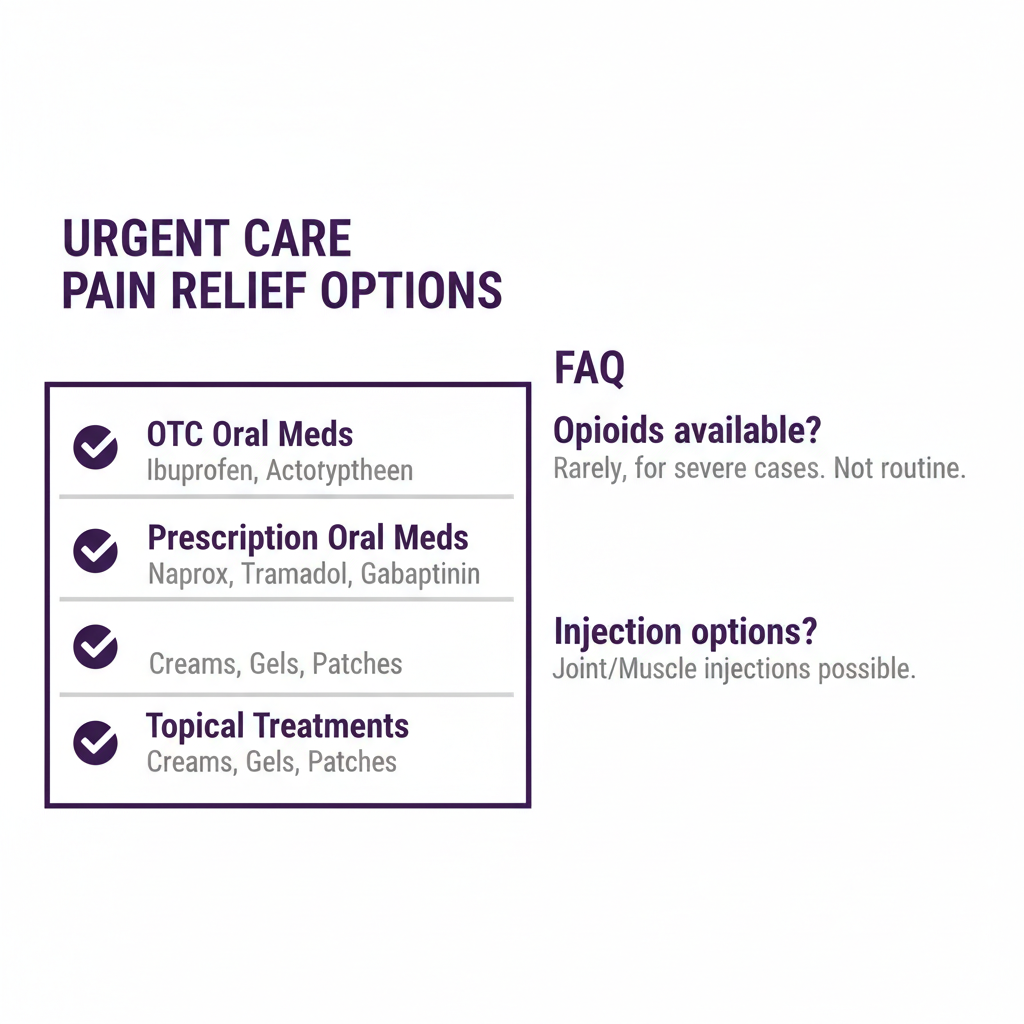
- High-dose ibuprofen (600-800mg) — stronger than what you buy at the store. Also naproxen and similar drugs.
- Toradol (ketorolac) — a strong anti-pain drug often given as a shot during your visit. It works fast and lasts 6-8 hours. Many patients say it works as well as opioids for short-term pain.
- Muscle relaxers — Flexeril, Robaxin, and similar pills for back pain, neck spasms, and pulled muscles. Usually given for 5-7 days.
- Pain patches and creams — lidocaine patches and Voltaren gel applied right to the sore spot.
- Steroid packs — prednisone pills for bad swelling. Common for severe joint pain or pinched nerves.
- Nerve pain drugs — gabapentin for sciatica or shingles pain. Usually a short supply with PCP follow-up.
Opioid Pain Drugs (Limited)
Urgent care can prescribe pain meds that include opioids. However, strict rules apply. According to the CDC opioid guidelines, providers should use the lowest dose for the shortest time needed.
- When opioids are used: broken bones with bad pain, kidney stones, and injuries where other drugs are not enough.
- How much you get: most states limit the first opioid script to 3-7 days. In California, the limit is 5 days for new acute pain.
- Which drugs: low-dose tramadol, Norco, or Percocet at the lowest dose that works.
In addition, your provider checks the PDMP — a state database that tracks all opioid scripts. This keeps both you and the provider safe.
Pain Meds Urgent Care Will Not Prescribe
Some pain treatments need a long-term doctor who knows you well. As a result, urgent care will not handle these:
- Long-term opioid use — if you need ongoing pain pills, you need a pain doctor or your PCP.
- Large opioid supplies — you will not get a 30-day supply. If you need more than a few days, the provider will refer you.
- Early opioid refills — if you ran out of an existing opioid script early, urgent care cannot help. Instead, call the doctor who wrote it.
- Scripts that do not match the exam — providers check your body, not just your words. Therefore, they will say no if the exam does not match the pain you report.
What Works Best for Common Types of Acute Pain
Studies show that non-opioid pain drugs work just as well as opioids for many conditions. For instance, a study in JAMA found that ibuprofen plus Tylenol worked as well as opioids for arm and leg pain in the ER.
Here is what your provider will likely suggest for each type of pain:
Back pain: A strong NSAID plus a muscle relaxer plus ice/heat. In addition, steroid pills help if the swelling is bad.
Sprains and strains: NSAID plus compression plus rest. Furthermore, a Toradol shot gives fast relief right at the clinic.
Joint pain: Oral NSAID or Toradol shot. A steroid may help if swelling drives the pain.
Headaches and migraines: A Toradol shot plus anti-nausea drugs if needed. In addition, migraine-specific drugs like sumatriptan help too.
Ear pain: Antibiotic drops (if infected) plus oral NSAID. As a result, most ear pain clears up within 2-3 days.
How to Get the Best Pain Treatment at Urgent Care
A few tips help you get the right treatment faster:
- Be specific about your pain. For example, say “sharp pain on the left side of my lower back that gets worse when I bend.” That helps more than “my back hurts.” In addition, rate your pain 1-10.
- Say what you already tried. Because knowing that OTC ibuprofen did not work helps your provider move to stronger options right away.
- Bring imaging results. If you had a recent X-ray or MRI, bring them along. As a result, your provider can skip repeat tests.
- Ask about combo treatment. For instance, a Toradol shot at the clinic plus a take-home muscle relaxer often works better than one pill alone.
- Plan your follow-up. Urgent care handles the first few days. However, if pain lasts more than a week, see your PCP or ask for a referral.
- Bring your ID and insurance card. In addition, bring a list of drugs you already take. This helps avoid bad drug interactions.
Can Urgent Care Prescribe Pain Meds Without Seeing My Regular Doctor?
Yes. You do not need a referral to visit urgent care for pain. You also do not need to see your PCP first. Walk in, get examined, and leave with a prescription if your provider decides you need one.
However, urgent care is best for new or sudden pain — not chronic pain you have dealt with for months. For long-term pain management, your PCP or a pain specialist is the better fit. Urgent care can get you through the first few days. After that, follow up with your regular doctor for a long-term plan.
What about after-hours pain? If your PCP’s office is closed and you need pain relief tonight, urgent care is the answer. Most clinics stay open until 8 PM or later. In fact, CityHealth is open 7 days a week, including weekends and holidays. You do not have to tough it out until Monday morning.
Will insurance cover pain medication from urgent care? In most cases, yes. Your insurance covers the urgent care visit under outpatient benefits. The prescription goes through your pharmacy plan. Therefore, you pay the same copay you would for any other drug. If you have no insurance, ask about cash-pay rates. In addition, most generic pain drugs cost under $15 at common pharmacies like Costco or Walmart.
Get Pain Relief Today at CityHealth
So can urgent care prescribe pain meds? Yes. From Toradol shots to muscle relaxers to steroid packs, CityHealth providers treat acute pain with a full range of drugs during a single walk-in visit. You do not need a referral from your PCP. You do not need to wait weeks for a doctor’s appointment. In fact, most patients are seen within 30 minutes and leave with a prescription the same day.
Visit CityHealth in San Leandro today — no appointment needed, open 7 days a week. Stop managing your pain with expired OTC pills and get prescription-strength relief from a licensed provider.