You woke up dizzy, your mouth feels dry, and you have not kept water down for hours. So can urgent care give IV fluids, or do you need the ER? The short answer: yes, most urgent care centers can give IV fluids. Also, the process takes far less time and money than an ER visit.
Medically reviewed by Sean Parkin, PA — CEO & Founder, CityHealth Urgent Care

Why Urgent Care Can Give IV Fluids for Dehydration
Urgent care clinics have licensed doctors, PAs, and nurses on staff. Because these clinics stock IV supplies like normal saline, they treat moderate dehydration on the spot. In addition, most clinics have the lab tools to run basic blood work if needed.
However, many people think IV fluids are only found in hospital ERs. That belief leads to longer waits, higher bills, and extra stress. In fact, urgent care fills the gap between your doctor’s office and the ER for issues that need quick care but are not life-threatening.
At CityHealth Urgent Care in San Leandro, our providers check your hydration level, review your vitals, and decide if you need oral fluids or an IV. Also, most patients feel much better within 30 to 60 minutes of starting the drip.
Signs You Need IV Fluids at Urgent Care
Dehydration has stages. Mild cases respond well to water or sports drinks at home. However, moderate to severe dehydration often needs professional help. Here are the signs that tell you oral fluids are not enough:
- Dark yellow or amber urine that has not improved with fluids
- Dizziness when you stand up
- Dry mouth and cracked lips that persist despite sipping water
- Rapid heartbeat even while resting
- Nausea or vomiting that stops you from keeping liquids down
- Fatigue or confusion beyond normal tiredness
- No urination for eight hours or more
If you cannot keep water down because of vomiting, then oral drinks will not work. Instead, IV fluids go straight into your bloodstream and skip your stomach. For this reason, urgent care IV therapy is often the fastest way to recover.
What Happens During an IV Fluid Visit at Urgent Care
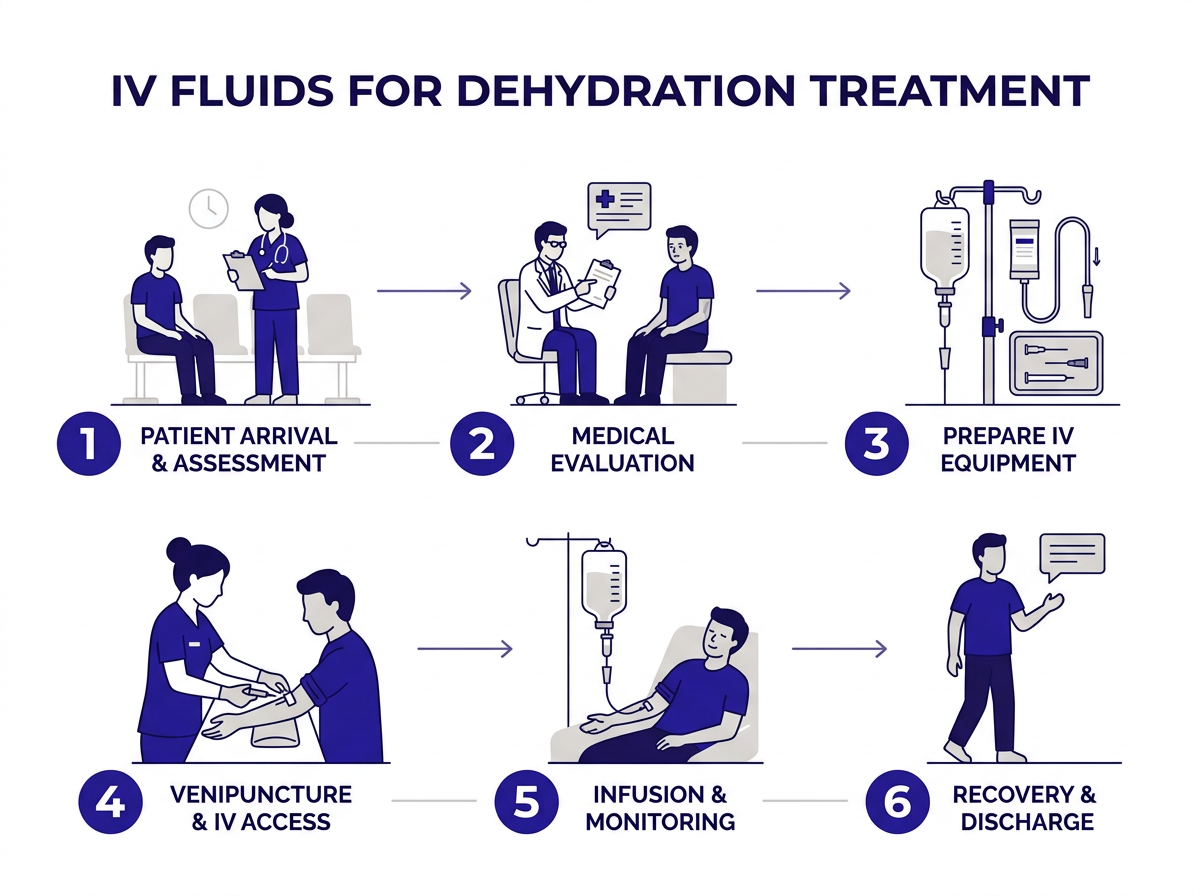
Knowing what to expect removes the guesswork. Here is what a typical IV visit looks like, step by step:
1. Check-In and Triage
First, a nurse takes your vitals. This includes blood pressure, heart rate, temperature, and oxygen level. Then you describe your symptoms and how long you have felt dehydrated. This part usually takes five to ten minutes.
2. Provider Assessment
Next, a doctor or PA examines you. They check your skin turgor (how fast your skin bounces back when pinched) and review your history. Then they decide if you need IV fluids, oral drinks, or extra tests like blood work.
3. IV Placement and Fluids
After that, a nurse inserts a small needle into a vein in your arm or hand. The IV bag holds normal saline (0.9% sodium chloride) or lactated Ringer’s solution. Most patients get 500 mL to 1,000 mL of fluid. The drip takes 30 to 60 minutes, depending on your level of dehydration.
4. Monitoring and Discharge
Meanwhile, staff watches your vitals during the drip. Once the bag is done, your provider checks you again. If you feel better and your vitals look good, you head home with tips on staying hydrated for the next 24 hours.
Can Urgent Care Give IV Fluids to Kids and Older Adults?
Yes, but with extra care. Children and seniors dehydrate faster than healthy adults because of their body size and metabolism.
For children: Providers use smaller IV lines and adjust fluid amounts by body weight. However, infants under six months and kids with severe signs like sunken eyes or no tears should go to a pediatric ER instead.
For older adults: Seniors often take drugs like diuretics that speed up fluid loss. Also, many older adults feel less thirsty, so they may already be low on fluids before an illness hits. Because too much fluid too fast can strain the heart or kidneys, providers adjust the rate for these patients.
Common Causes of Dehydration That Lead to Urgent Care Visits
Knowing why dehydration happens helps you spot the risk early. Here are the most common causes we see at CityHealth:
- Stomach flu: Vomiting and diarrhea drain fluids faster than you can drink them back.
- Food poisoning: Similar to stomach flu, but often more sudden.
- Heat exposure: Hot weather causes heavy sweating and fast fluid loss.
- Hard exercise: Athletes who skip water breaks risk moderate dehydration.
- Fever: Your body uses more water to cool down during illness. Consequently, even a mild fever can push you into dehydration.
- Alcohol: Because alcohol is a diuretic, it boosts urine output. As a result, hangovers often involve real dehydration.
- Medications: Specifically, diuretics, laxatives, and some blood pressure drugs increase fluid loss.
Urgent Care vs. ER for IV Fluids: How to Decide
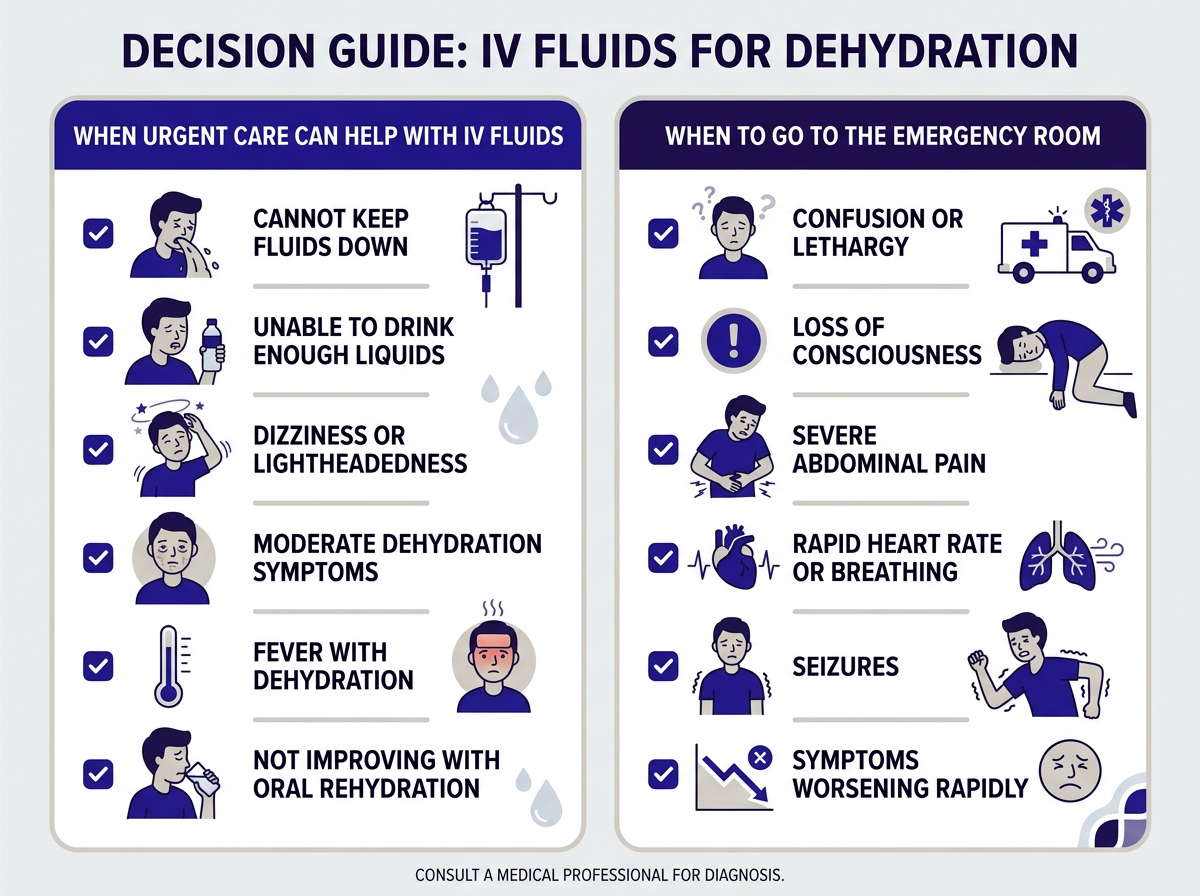
Choosing between urgent care and the ER depends on how bad your symptoms are. Here is a quick guide:
Go to urgent care if you have:
- Moderate dehydration with dizziness, dark urine, or mild confusion
- Vomiting or diarrhea for more than 24 hours
- Inability to keep fluids down for several hours
- General weakness after heat or exercise
Go to the ER if you have:
- Chest pain, trouble breathing, or fainting
- Severe confusion or loss of awareness
- No urination for 12 hours or more
- Bloody vomit or stool
- Seizures or fever above 104 degrees Fahrenheit
Essentially, urgent care handles the middle ground. If you need an IV but can still walk into a clinic, then urgent care is the right call. According to the CDC, daily water intake reduces the risk of severe dehydration. Still, when prevention falls short, urgent care offers a fast and affordable option.
How Much Do IV Fluids Cost at Urgent Care?
Cost is one of the top reasons people choose urgent care over the ER. Here is a general comparison:
- Urgent care IV fluids: Usually $150 to $500, depending on the clinic, your insurance, and whether extras like anti-nausea drugs are added.
- ER IV fluids: Often $1,000 to $3,000 or more, plus facility fees on top.
Most insurance plans cover IV fluids at urgent care with a standard copay. Similarly, if you are uninsured, many clinics offer self-pay rates well below ER prices. Therefore, unless you need emergency-level care, urgent care gives you the same IV fluids for much less.
Frequently Asked Questions About IV Fluids at Urgent Care
How long does IV hydration take at urgent care?
The drip itself usually takes 30 to 60 minutes. Including check-in and monitoring, your total visit lasts about 45 to 90 minutes.
Do I need an appointment for IV fluids at urgent care?
Most urgent care centers accept walk-ins. At CityHealth, you can also book an appointment online to cut your wait time.
Can urgent care give IV fluids for hangovers?
Yes. Hangover symptoms like headache and nausea are largely caused by dehydration. IV fluids with electrolytes help you bounce back faster than water alone. Also, some clinics add anti-nausea medicine to the IV.
Should I go to urgent care for dehydration or try home remedies first?
First, try oral fluids at home: water, broth, or electrolyte drinks. However, if you cannot keep anything down for a few hours, or if you feel dizzy and confused, visit urgent care. Waiting too long raises the risk of problems.
What type of IV fluid does urgent care use?
The most common types are normal saline (0.9% NaCl) and lactated Ringer’s solution. Your provider picks the fluid based on your condition, lab results, and history.
Get IV Fluids at CityHealth Urgent Care in San Leandro
Dehydration does not wait for a good time. Whether you are dealing with a stomach bug, heat exhaustion, or the aftermath of a tough workout, CityHealth Urgent Care in San Leandro gives you IV fluid therapy without the long wait or high cost of an ER visit. Furthermore, our providers can assess you and start treatment within minutes of arrival.
Book your appointment online or walk in during clinic hours. We accept most major insurance plans and offer affordable self-pay rates.