Walking Pneumonia Symptoms: How to Know If You Have It
You’ve had a cough for two weeks. You’re tired, achy, and running a low fever — but you’re still going to work. It feels like a cold that won’t quit. However, walking pneumonia symptoms often look exactly like that — and the infection can drag on for six weeks if you don’t treat it. Knowing the signs of walking pneumonia helps you get the right care before a stubborn cough becomes your new normal.
Medically reviewed by Sean Parkin, PA — CEO & Founder, CityHealth Urgent Care

What Is Walking Pneumonia?
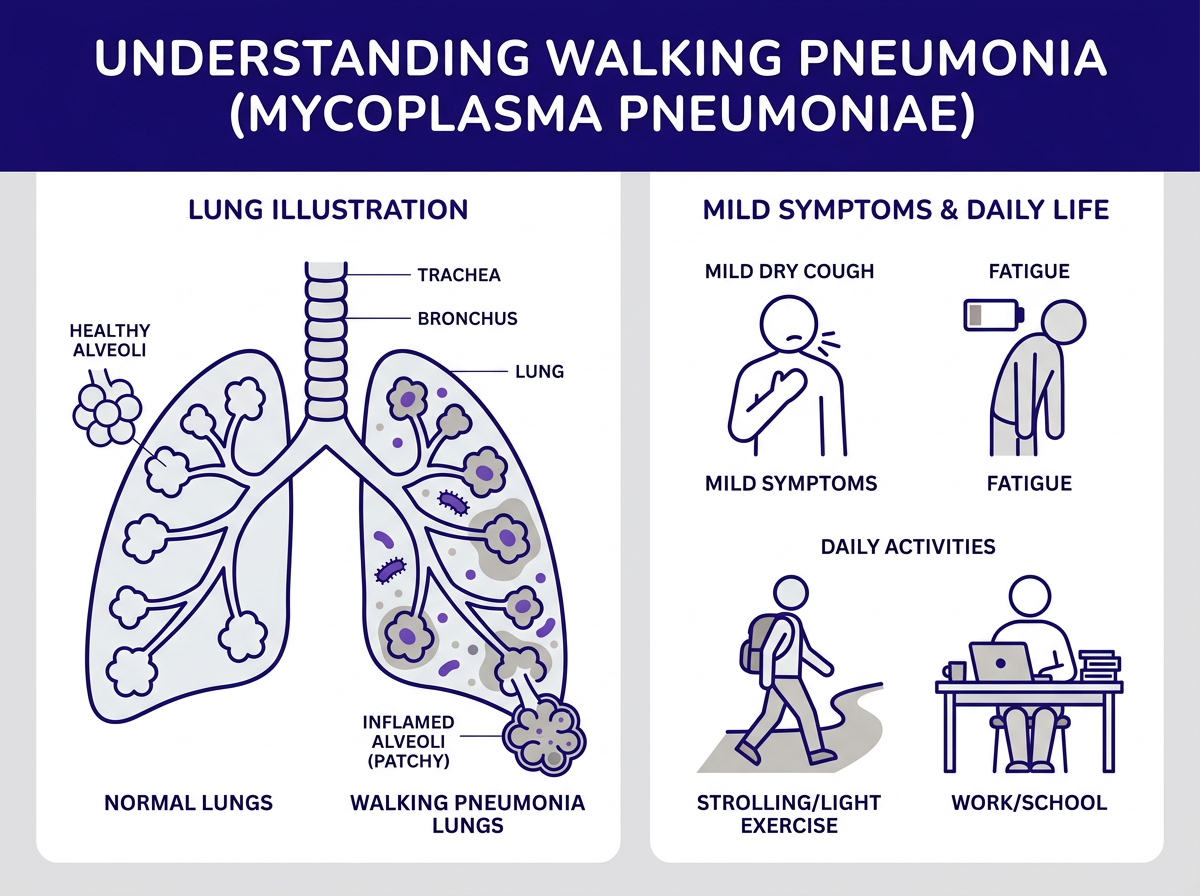
Walking pneumonia is the informal name for atypical pneumonia. It is usually caused by a bacterium called Mycoplasma pneumoniae. It’s called “walking” pneumonia because most people feel sick but can stay active. In contrast, typical pneumonia often puts people in bed or in the hospital.
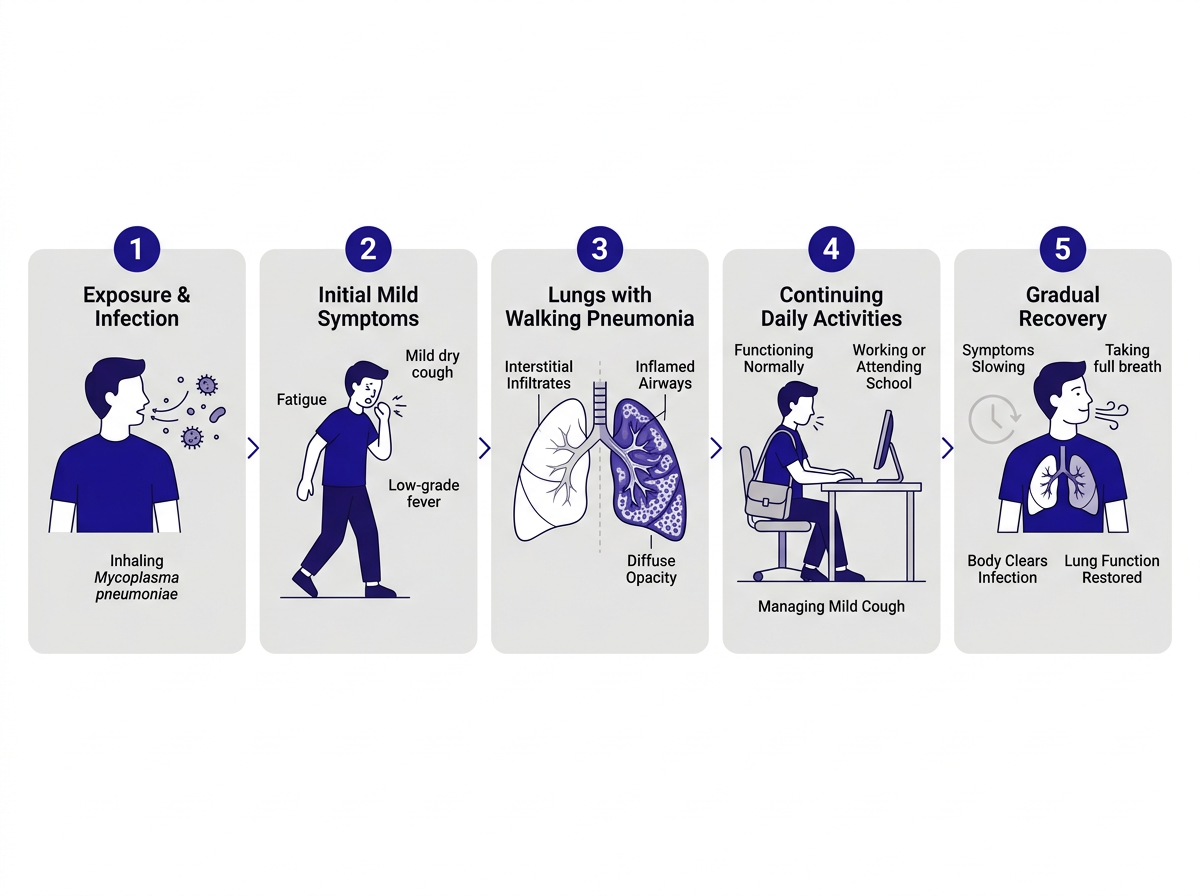
According to the Cleveland Clinic, walking pneumonia can last four to six weeks. The cough is usually the last symptom to go. Because the illness starts slowly and feels like a cold, many people don’t realize they have it for weeks.
Walking Pneumonia Symptoms to Watch For
The symptoms of walking pneumonia develop slowly. They rarely feel severe at first. Here’s what to look for:
- Persistent dry cough — this is the main symptom; it’s hacking and often gets worse over time
- Low-grade fever — usually around 101°F or lower
- Fatigue — a deep tiredness that rest doesn’t fix
- Sore throat — often shows up in the early days
- Headache — mild but persistent
- Runny or stuffy nose — more common than with regular pneumonia
- Chest discomfort — a dull ache or tight feeling, not sharp pain
- Mild shortness of breath — less common, but possible
- Sneezing — more typical of walking pneumonia than other forms
In addition, some people get ear pain or a mild rash. Children also sometimes have vomiting or diarrhea along with the cough.
How Walking Pneumonia Differs from Regular Pneumonia
The difference matters because they need different levels of care. Regular pneumonia typically causes:
- High fever (103°F or higher)
- Severe chills and shaking
- A wet cough with yellow or green mucus
- Sharp chest pain when you breathe
- Significant shortness of breath at rest
Walking pneumonia, however, is much milder. For example, your cough stays dry, your fever stays low, and you don’t feel acutely ill. But that mild presentation is exactly what makes it easy to brush off. As a result, many people wait too long to get treated.
How Long Does Walking Pneumonia Last?
Without treatment, walking pneumonia can linger for four to six weeks. The cough is often the most stubborn part. It can persist even after other symptoms clear up. With antibiotics, however, most people feel better within 3 to 5 days. As a result, the overall illness is much shorter.
Because Mycoplasma pneumoniae is a bacterium, antibiotics work well. Azithromycin (a Z-pack) is the most common treatment for adults. Doxycycline is another option, especially for older adults. Children may get a different antibiotic based on their age.
How Does Walking Pneumonia Spread?
Walking pneumonia spreads through respiratory droplets. Coughing, sneezing, or talking in close contact can pass it along. It is contagious, but generally less so than the common cold. The incubation period is long. Symptoms can appear one to four weeks after exposure. For this reason, outbreaks tend to spread slowly in schools, offices, and homes.
Because people with walking pneumonia often stay active and social, the infection spreads more than you might expect. They feel sick, but not sick enough to stay home.
When to Stop Waiting and Get Seen
You should walk in to urgent care if:
- A cough has lasted more than 7 to 10 days without improving
- You have a persistent fever alongside cold-like symptoms
- You feel unusually tired — more than a normal cold would explain
- Your cough is getting worse, not better
- You have chest discomfort or mild shortness of breath
- Someone in your household has already been diagnosed with walking pneumonia
At CityHealth Urgent Care in San Leandro, we can listen to your lungs, assess your symptoms, and order a chest X-ray if needed. No appointment required — walk in today.
Diagnosing Walking Pneumonia
Diagnosis starts with a physical exam. A provider listens to your lungs for abnormal sounds. If the sounds suggest pneumonia, a chest X-ray can confirm it and rule out other causes.
Blood tests can find the bacterium that causes walking pneumonia. However, they’re not always needed. In most cases, the symptoms alone — a long cough, low fever, and mild breathing issues — are enough to start treatment. Because walking pneumonia responds well to antibiotics, early treatment matters.
CityHealth has on-site X-ray. For more on what urgent care can diagnose, see our guide on can urgent care diagnose pneumonia.
Walking Pneumonia vs. Bronchitis
These two conditions are easy to confuse because both cause a persistent cough. However, there are clear differences:
- Bronchitis is usually viral, so antibiotics don’t help
- Walking pneumonia is bacterial, so antibiotics work well
- Bronchitis often produces mucus; walking pneumonia cough is usually dry
- Walking pneumonia tends to cause a low fever; bronchitis typically doesn’t
Because both conditions look similar, a clinical exam is the only reliable way to tell them apart. Therefore, if you’ve been coughing for two weeks without improvement, it’s time to get checked out.
When Walking Pneumonia Becomes Serious
For most healthy adults, walking pneumonia stays mild. However, it can become more serious in:
- Adults over 65
- People with asthma, COPD, or other lung conditions
- People with weakened immune systems
- Young children and infants
Go to the emergency room if you develop severe shortness of breath at rest, sharp chest pain with breathing, coughing up blood, confusion, or a fever above 103°F. These signs suggest a more serious infection requiring urgent evaluation.

Get Treated at CityHealth — No Appointment Needed
If you’ve had a nagging cough for more than a week and feel persistently run-down, don’t keep waiting. Walking pneumonia doesn’t go away on its own quickly, and antibiotics make a real difference.
CityHealth Urgent Care in San Leandro offers same-day evaluation for respiratory illness, including chest X-ray and antibiotic prescribing. If you’re also wondering whether urgent care can treat a cough, the short answer is yes. Walk in today or book a same-day appointment online.
Frequently Asked Questions
Is walking pneumonia contagious?
Yes. It spreads through respiratory droplets from coughing or sneezing. However, it’s generally less contagious than the common cold. You can reduce spread by washing hands frequently, covering coughs, and avoiding close contact with others while symptomatic.
Can walking pneumonia clear up on its own?
In some cases, yes — but it takes four to six weeks. Antibiotics shorten that significantly. Because the infection is bacterial, antibiotics work well and are worth taking.
What does walking pneumonia cough feel like?
It’s usually dry and hacking. It may produce some mucus in later stages, but the initial cough is typically non-productive. It can be persistent and worsen at night or with activity.
Can you have walking pneumonia without a fever?
Yes. Some adults with walking pneumonia have no fever or only a very mild one. The persistent cough and fatigue are often more consistent than fever in adults.