
Can Urgent Care Drain an Abscess? Yes — Here’s What to Expect
A red, swollen lump that throbs with every heartbeat. You press on it, and the pain spikes. You suspect an abscess, and you want it gone — but the ER sounds like a four-hour wait and a massive bill. So can urgent care drain an abscess? In short, yes. Most urgent care clinics perform incision and drainage (I&D) on skin abscesses every single day. In addition, the visit takes a fraction of the time and cost of an emergency room trip.
Medically reviewed by Sean Parkin, PA — CEO & Founder, CityHealth Urgent Care
What Is a Skin Abscess?
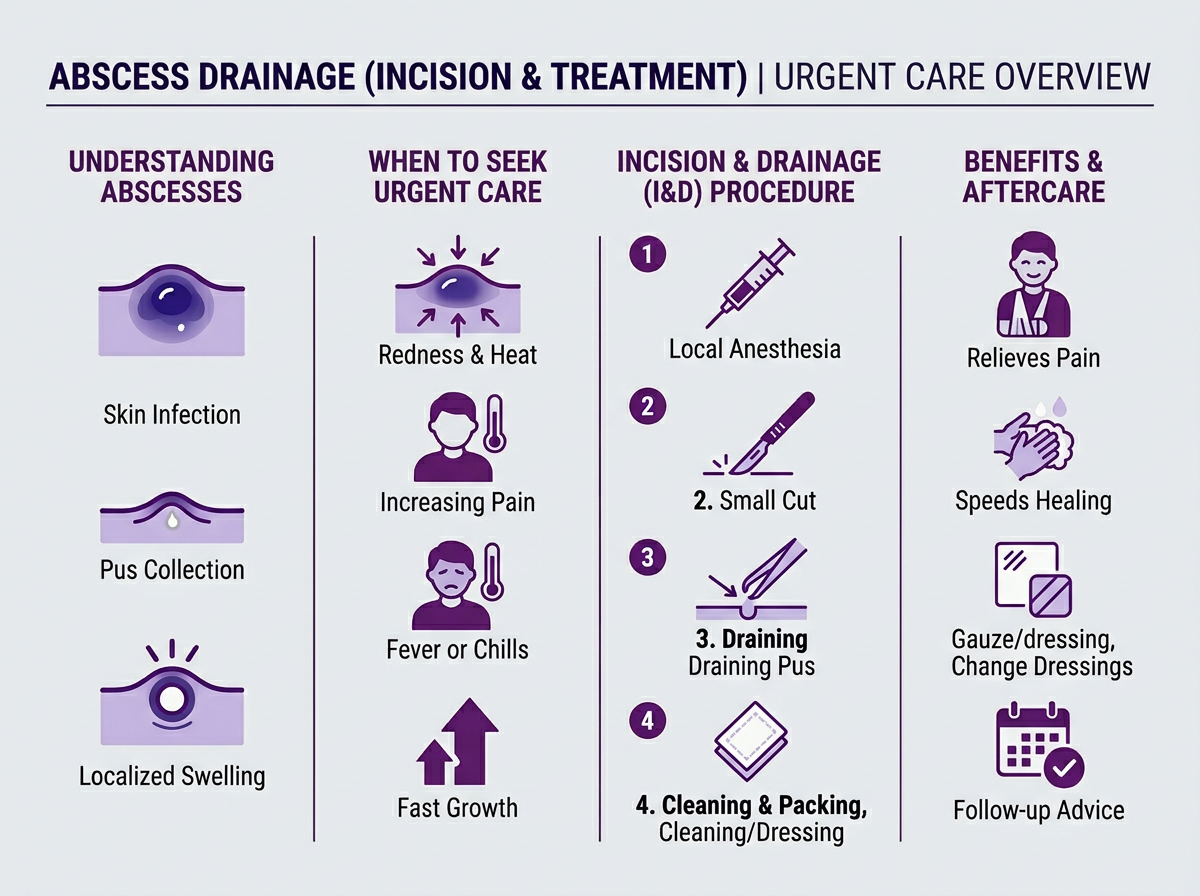
A skin abscess is a pocket of pus that forms under the skin when bacteria enter through a cut, scrape, or hair follicle. In response, your immune system sends white blood cells to fight the infection. As a result, the battle creates a walled-off collection of dead tissue, bacteria, and fluid. Because the pus has nowhere to go, pressure builds, and the area becomes red, warm, swollen, and painful.
Abscesses can form anywhere on the body. However, they show up most often in the armpits, groin, buttocks, and around hair follicles. According to the CDC, many skin abscesses are caused by Staphylococcus aureus, including antibiotic-resistant strains like MRSA. Because bacteria cause abscesses, antibiotics alone rarely resolve them. Consequently, the pus needs a physical way out.
Signs You Need Your Abscess Drained at Urgent Care
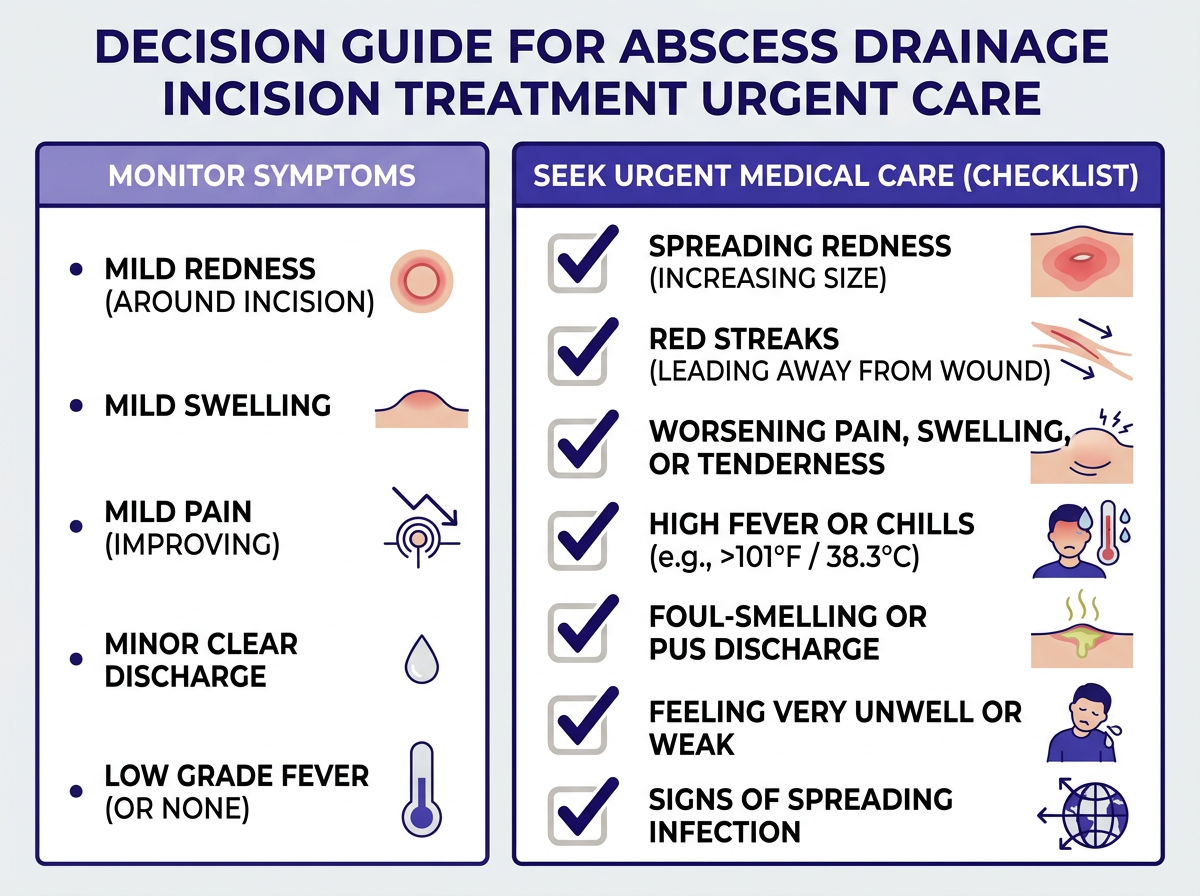
Not every bump on your skin needs medical drainage. For example, small boils sometimes resolve on their own with warm compresses. However, you should visit urgent care for abscess drainage if you notice any of these warning signs:
- The lump is larger than a marble (roughly 1 cm or bigger)
- Pain is getting worse, not better, over 2-3 days
- Red streaks extend outward from the bump
- You develop a fever or chills
- The area feels firm and deep rather than soft
- You have diabetes, HIV, or take immunosuppressive medications — because these conditions raise your risk of complications
If any of those signs apply to you, warm compresses and waiting will not fix the problem. Therefore, prompt drainage at an urgent care clinic is the fastest path to relief.
How Urgent Care Drains an Abscess: Step by Step
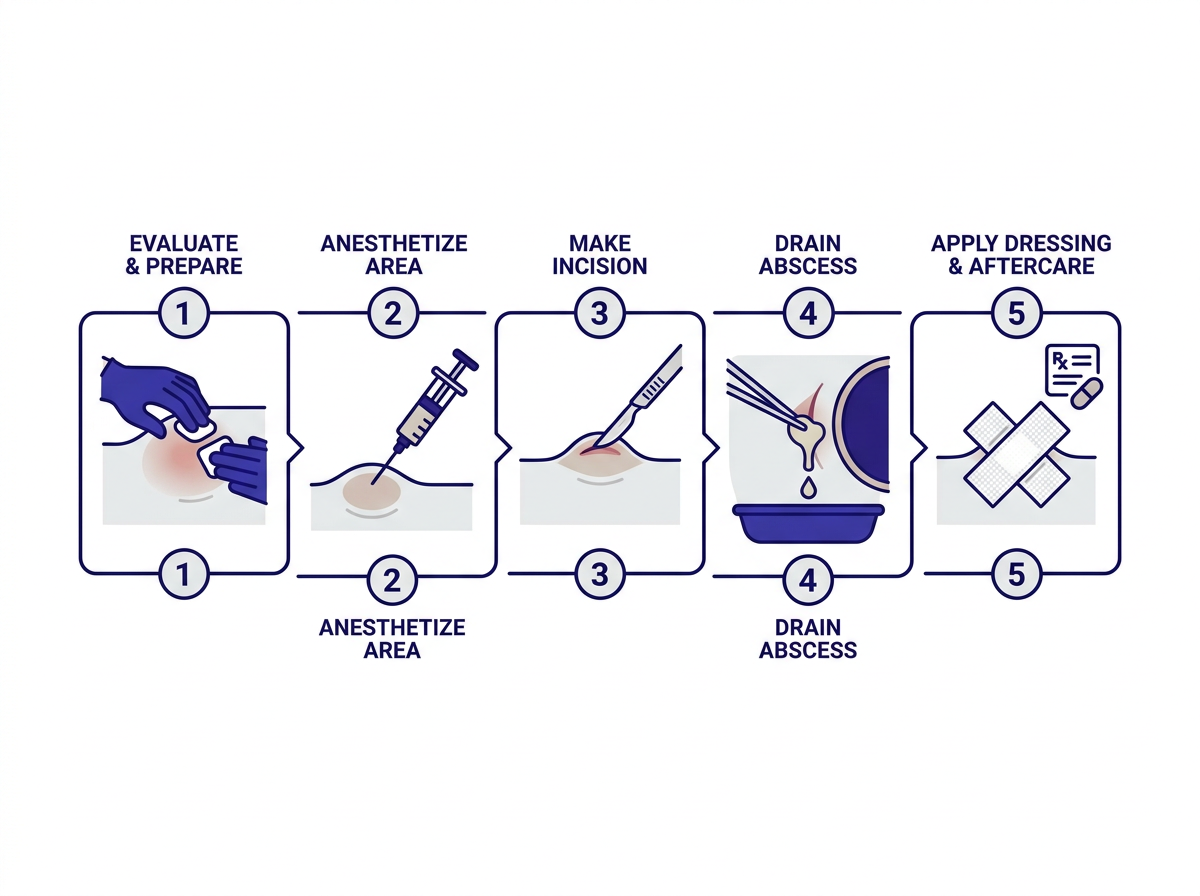
The medical term for the procedure is incision and drainage (I&D). Although it sounds intimidating, the process is straightforward and typically finished in under 30 minutes. Specifically, here is what happens during a standard abscess drainage at urgent care:
- Assessment. First, your provider examines the abscess and may mark the borders. If there is concern about depth or complications, they may also use a point-of-care ultrasound to map the pocket of pus.
- Numbing. Next, a local anesthetic (usually lidocaine) is injected around the abscess. You will feel a brief sting, and then the area goes numb. For larger abscesses, your provider may also apply a topical numbing agent beforehand.
- Incision. Then, the provider makes a small cut through the skin overlying the abscess. This allows the trapped pus to drain freely.
- Drainage and irrigation. After that, pus is expressed from the cavity, and the wound is flushed with sterile saline to remove remaining debris.
- Packing. In many cases, the provider places a thin strip of sterile gauze (called packing) inside the wound. Specifically, this keeps the cavity open so it can continue to drain and heal from the inside out.
- Dressing. Finally, a sterile bandage covers the wound. You receive aftercare instructions before you leave.
Your provider may also send a culture of the pus to the lab. As a result, if the infection turns out to be MRSA or another resistant strain, your antibiotic prescription can be adjusted. For more on staph-related skin infections, see our guide to staph and MRSA treatment at urgent care.
Does Abscess Drainage at Urgent Care Hurt?
This is the question most people ask first. In fact, the honest answer is reassuring: the numbing injection stings for a few seconds. After that, you should feel pressure but not sharp pain during the procedure. Moreover, most people report that the drainage itself brings instant relief because it releases the built-up pressure that was causing so much discomfort.
If you have a low pain tolerance, tell your provider before the procedure begins. As a result, they can use additional anesthetic or a slower injection technique to minimize discomfort. Furthermore, the entire procedure is usually over in 15-30 minutes, so the experience is brief.
Aftercare: What to Do After Abscess Drainage
Proper aftercare is critical to preventing the abscess from returning. Therefore, follow these steps after your urgent care visit:
- Keep the wound clean. For example, gently wash the area with soap and water once or twice daily.
- Change the dressing. Similarly, replace bandages whenever they become wet or soiled, or at least once a day.
- Take prescribed antibiotics. Also, finish the full course, even if the area looks better. Stopping early can promote resistant bacteria.
- Return for packing removal. If your wound was packed, you will need a follow-up visit in 1-2 days to have the packing removed or replaced.
- Watch for warning signs. In addition, contact your provider if redness spreads, fever returns, or the pain worsens after drainage.
Complete healing typically takes 1-3 weeks, depending on the size and location of the abscess. During this time, keep the area protected and avoid submerging it in pools or hot tubs. For more wound care guidance, also visit our wound care page.
Urgent Care vs. Emergency Room for Abscess Drainage
Both urgent care and emergency rooms can drain abscesses. However, for most straightforward skin abscesses, urgent care is the smarter choice. For example, here is how the two options compare:
| Factor | Urgent Care | Emergency Room |
|---|---|---|
| Average wait time | 15-45 minutes | 2-4+ hours |
| Typical cost (uninsured) | $200-$500 | $1,000-$3,000+ |
| Appointment needed | No — walk-in | No — walk-in |
| Follow-up care | Yes, often included | Referred out |
Because urgent care costs less and moves faster, it makes sense for surface-level abscesses that are not life-threatening. On the other hand, go to the ER if your abscess is near your spine, face, or groin and appears deep, if you have a fever above 101.3 F with chills, or if red streaks are spreading rapidly — because these signs suggest the infection may be entering your bloodstream.
Types of Abscesses Urgent Care Can and Cannot Treat
Urgent care handles most superficial skin abscesses with confidence. Specifically, the treatable types include:
- Boils (furuncles) and carbuncles
- Abscesses from ingrown hairs
- Post-injection abscesses
- Small perianal abscesses (case-by-case)
- Abscesses related to cellulitis
On the other hand, some abscesses require a higher level of care. Consequently, urgent care will refer you to the ER or a specialist for:
- Dental or peritonsillar abscesses — these need a dentist or ENT specialist
- Deep abscesses requiring imaging and surgical drainage
- Abscesses with signs of sepsis (high fever, rapid heart rate, confusion)
- Recurrent abscesses that may signal an underlying condition like hidradenitis suppurativa
If you are unsure whether your abscess qualifies for urgent care treatment, simply walk in and let the provider make the call. In fact, a quick exam takes minutes and could save you hours in the ER.
How to Prevent Abscesses from Coming Back
Once you have had one abscess, your risk of getting another one rises. Because prevention beats treatment every time, follow these strategies to reduce recurrence:
- Practice good hygiene. For example, wash your hands often and shower daily, especially after sweating.
- Avoid squeezing or popping bumps. Because this pushes bacteria deeper into the skin, it makes the infection worse.
- Use clean razors. Similarly, dull or shared blades create micro-cuts that invite infection.
- Wear loose clothing. In addition, tight fabrics trap moisture and cause friction in areas prone to abscesses.
- Manage chronic conditions. For instance, if you have diabetes, keeping blood sugar controlled lowers your infection risk.
- Ask about decolonization. For recurrent MRSA abscesses, your provider may also recommend nasal mupirocin and chlorhexidine body washes to reduce bacterial colonization.
Get Your Abscess Drained at CityHealth Urgent Care
If you have a painful, swollen lump that is not getting better, do not wait for it to burst on its own. Because abscesses that rupture without proper drainage often lead to deeper infections, scarring, and repeated flare-ups, professional treatment matters.
CityHealth Urgent Care in San Leandro performs abscess incision and drainage as a walk-in procedure — no appointment needed. Our providers numb the area, drain the infection, and send you home with clear aftercare instructions, often in under 30 minutes. Furthermore, we also handle follow-up wound checks and packing removal so you do not have to track down another provider.
Book a visit online or walk in today. Relief is closer than you think.