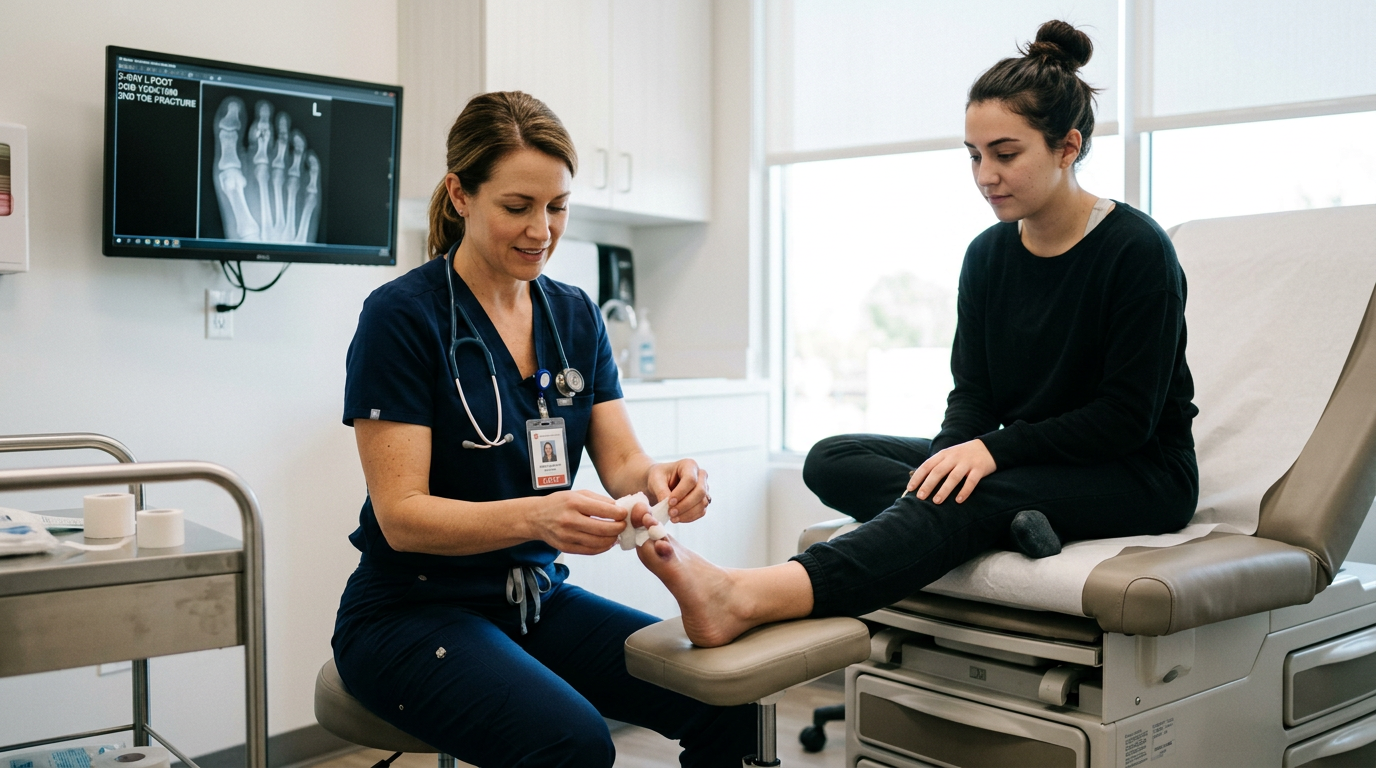

Wrist pain can stop you in your tracks. Whether you took a fall, overworked your hands at the gym, or noticed a dull ache creeping in after hours of typing, urgent care for wrist pain is often the fastest and most affordable path to answers and relief. At CityHealth in San Leandro, we treat wrist injuries every day — from minor sprains to suspected fractures — with on-site X-ray so you don’t have to wait in an ER for hours.
This guide explains the most common causes of wrist pain, how to tell if you need urgent care or the ER, and what to expect when you walk through our doors.
Common Causes of Wrist Pain
The wrist is a complex joint made up of eight small bones, multiple tendons, ligaments, and nerves. That complexity means there are many ways it can get hurt. The most common causes of wrist pain include:
- Wrist sprains: A sprain happens when the ligaments that hold your wrist bones together are stretched or torn. Most sprains occur from a fall on an outstretched hand. Sprains range from mild (Grade I) to severe (Grade III, complete tear).
- Wrist fractures: A broken wrist is one of the most common fractures in adults and children. The distal radius (the end of the forearm bone near the wrist) is the most frequently broken bone in the body. Scaphoid fractures — in the small bone at the base of the thumb — are also common and can be tricky to spot on X-ray.
- Tendonitis: Inflammation of the tendons around the wrist causes aching pain, especially with movement. De Quervain’s tendonitis affects the thumb side of the wrist and is common in new parents and people who use their thumbs heavily.
- Carpal tunnel syndrome: When the median nerve is compressed at the wrist, it causes numbness, tingling, and weakness in the hand. Pain often worsens at night. Repetitive motion and prolonged keyboard use are common triggers.
- Ganglion cysts: These fluid-filled lumps form on the wrist joints or tendons. They are usually benign but can cause pain and pressure.
- Repetitive strain injury (RSI): Repetitive tasks like typing, assembly line work, or playing an instrument can cause chronic inflammation in the wrist and hand.
- TFCC tears: The triangular fibrocartilage complex (TFCC) is a cushion on the small-finger side of the wrist. Tears cause wrist pain, clicking, or instability.
Urgent Care vs. ER: Which Do You Need for Wrist Pain?
Most wrist injuries do not need the emergency room. Urgent care is appropriate for the vast majority of wrist pain cases. Here’s how to decide:
Go to Urgent Care for Wrist Pain If:
- You fell or twisted your wrist and it hurts to move it
- There is swelling, bruising, or tenderness over the wrist
- You want an X-ray to rule out a fracture
- Pain is moderate but you can still move your fingers
- You have ongoing wrist aching (tendonitis, carpal tunnel symptoms)
- You have a visible lump on your wrist (possible ganglion cyst)
- You are not sure if it is broken or just sprained
Go to the ER for Wrist Pain If:
- The wrist is visibly deformed, bent at an odd angle, or has bone protruding through the skin
- You have lost feeling in your hand or fingers
- There is no pulse in your hand after an injury
- Pain is severe and uncontrollable
- The injury happened with significant trauma (car accident, fall from height)
For the overwhelming majority of wrist injuries — especially falls, sports injuries, and overuse — urgent care is the right call. You’ll get faster care, lower costs, and the same diagnostic tools (including X-ray).
Wrist pain after a fall or injury?
CityHealth in San Leandro has on-site X-ray and same-day wrist injury evaluation. No appointment needed.
Book your visit at CityHealth — walk-ins welcome, no appointment needed.The Ottawa Rules for Wrist Injuries
Healthcare providers use the Ottawa Wrist Rules to decide who needs an X-ray after a wrist injury. According to research published by the National Institutes of Health, these clinical guidelines help identify fractures with high accuracy while reducing unnecessary imaging.
An X-ray is recommended if you have any of the following after a wrist injury:
- Pain or tenderness directly over the scaphoid bone (at the base of the thumb)
- Tenderness over the anatomical snuffbox (the hollow near the thumb when extended)
- Pain with thumb extension against resistance
- Age 55 or older
- Immediate swelling after injury
At CityHealth in San Leandro, our providers use these criteria to evaluate your wrist on the spot. If an X-ray is needed, we do it right here — no separate radiology appointment, no extra wait. We typically have results within minutes.
Wrist Sprains: What They Are and How They’re Treated
A wrist sprain is a stretching or tearing of one or more ligaments in the wrist. Ligaments are the tough bands of tissue that connect bone to bone.
Grades of Wrist Sprains
- Grade I (mild): Ligament is stretched but not torn. Minor pain and swelling. Usually heals in 2–4 weeks.
- Grade II (moderate): Partial ligament tear. More pain, swelling, and some instability. May take 4–6 weeks to heal.
- Grade III (severe): Complete ligament tear. Significant instability. May need orthopedic referral or surgery.
Sprain Treatment at Urgent Care
For most sprains, treatment follows the RICE method:
- Rest: Avoid activities that cause pain
- Ice: 20 minutes on, 20 minutes off for the first 48 hours
- Compression: A wrist brace or elastic bandage can reduce swelling
- Elevation: Keep the wrist above heart level when possible
We may also recommend over-the-counter anti-inflammatory medication like ibuprofen for pain and swelling. Grade II and III sprains may need a splint and a referral to an orthopedic specialist.
For same-day evaluation and treatment, visit CityHealth San Leandro urgent care — walk-ins welcome, open 7 days a week.
Wrist Fractures: Signs, Symptoms, and What to Expect
A wrist fracture can look almost identical to a sprain from the outside. That’s why X-ray is so important. Here are the signs that suggest a possible fracture:
- Immediate, severe pain at the moment of injury
- Rapid swelling within minutes
- Tenderness directly over a bone
- Bruising that develops quickly
- Difficulty gripping or rotating the wrist
- A “pop” or “snap” sensation at the time of injury
Scaphoid fractures deserve special mention. This small bone in the wrist can break without looking dramatically swollen or deformed. Many people mistake a scaphoid fracture for a sprain. If left untreated, this type of fracture can lead to avascular necrosis (bone death) due to poor blood supply. If you have tenderness in the anatomical snuffbox (near the base of the thumb) after a wrist injury, always get an X-ray.
If our X-ray shows a fracture, we will splint the wrist and provide a referral to an orthopedic specialist for follow-up care. Most stable wrist fractures are managed with a cast; displaced or complex fractures may require surgery.
Carpal Tunnel Syndrome: When Urgent Care Can Help
Carpal tunnel syndrome (CTS) is a condition where the median nerve is pinched at the wrist. It’s one of the most common nerve disorders, affecting millions of Americans. Symptoms include:
- Numbness or tingling in the thumb, index, middle, and ring fingers
- Hand weakness or dropping things unexpectedly
- Burning pain that wakes you from sleep
- Symptoms that worsen after prolonged use of a keyboard, phone, or steering wheel
CTS is not an emergency, but it is worth having evaluated so it doesn’t get worse. At CityHealth in San Leandro, we can evaluate your symptoms, discuss wrist splinting (wearing a splint at night is one of the most effective first-line treatments), and provide referrals if needed.
Tendonitis and Overuse Injuries
Wrist tendonitis comes from repetitive strain — typing, cooking, playing guitar, lifting weights, or any task that involves repeated wrist movement. The most common forms are:
- De Quervain’s tendonitis: Pain at the base of the thumb and wrist. Common in new parents (from lifting babies) and frequent smartphone users.
- Extensor tendonitis: Pain along the back of the wrist from overuse.
- Flexor tendonitis: Pain on the palm side of the wrist.
Treatment usually involves rest, ice, anti-inflammatory medications, and sometimes a wrist brace. In persistent cases, a steroid injection may be recommended, which CityHealth providers can discuss with you.
What to Expect at CityHealth for Wrist Pain
When you come to CityHealth in San Leandro for wrist pain, here’s what happens:
- Check-in: Walk in or book online. No appointment necessary.
- Medical history and exam: A provider will ask about how the injury happened, your symptoms, and examine your wrist — checking range of motion, tenderness, swelling, and grip strength.
- X-ray (if needed): We have digital X-ray on site. If a fracture is suspected based on your exam, we’ll image your wrist right here.
- Diagnosis and treatment plan: Based on your exam and X-ray results, we’ll tell you exactly what’s going on and what to do next.
- Splinting or bracing: If you have a fracture or severe sprain, we’ll immobilize the wrist and give you discharge instructions.
- Referral if needed: For fractures that require surgery or specialist follow-up, we’ll connect you with orthopedic care.
Most wrist injury visits take 30 to 60 minutes. You’ll leave with a clear diagnosis, a treatment plan, and any necessary prescriptions or referrals.
How Much Does Urgent Care for Wrist Pain Cost?
Urgent care is significantly less expensive than the ER for wrist injuries. The average ER visit for a sprain or fracture can cost $1,000 to $3,000 or more — before imaging. An urgent care visit for the same injury typically costs a fraction of that.
CityHealth accepts most major insurance plans, Medicare, and Medi-Cal. We also offer self-pay rates for patients without insurance. Our staff can give you a cost estimate before treatment so there are no surprises.
Book Same-Day Care at CityHealth
CityHealth San Leandro — open 7 days a week. Walk-ins welcome, most insurance accepted. On-site lab and X-ray.
When to Return or Seek Further Care
After being seen at urgent care for a wrist injury, see a doctor again if:
- Pain is getting worse instead of better after 48–72 hours
- Numbness, tingling, or weakness in the hand develops or worsens
- Swelling is increasing rather than decreasing
- You develop a fever (possible sign of infection)
- You cannot use your wrist at all after a few days of rest
Some wrist fractures — especially scaphoid fractures — do not show up on initial X-rays. If symptoms persist beyond 7–10 days, an MRI or CT scan may be needed to rule out a hidden fracture. We can guide you through those next steps.
Get Wrist Pain Evaluated Today at CityHealth
Don’t wait for wrist pain to get worse. Whether you fell at the skate park, tweaked it lifting groceries, or your wrist has been aching for weeks, CityHealth in San Leandro can evaluate and treat you today. We have on-site X-ray, experienced providers, and fast turnaround — so you can get answers and get on with your life.
Ready to get your wrist checked?
CityHealth San Leandro is open 7 days a week with on-site X-ray. Walk in or book online — no appointment needed.
Book your visit at CityHealth — walk-ins welcome, no appointment needed.CityHealth also treats elbow injuries — see our guide to urgent care for elbow pain.