If you have ever searched urgent care vs walk in clinic, you probably walked away more confused than when you started. The two terms sound interchangeable, but they describe different levels of care. Here is a clear breakdown so you can pick the right option and get treated faster.
Medically reviewed by Sean Parkin, PA, CEO & Founder — Urgent Care

What Is Urgent Care?
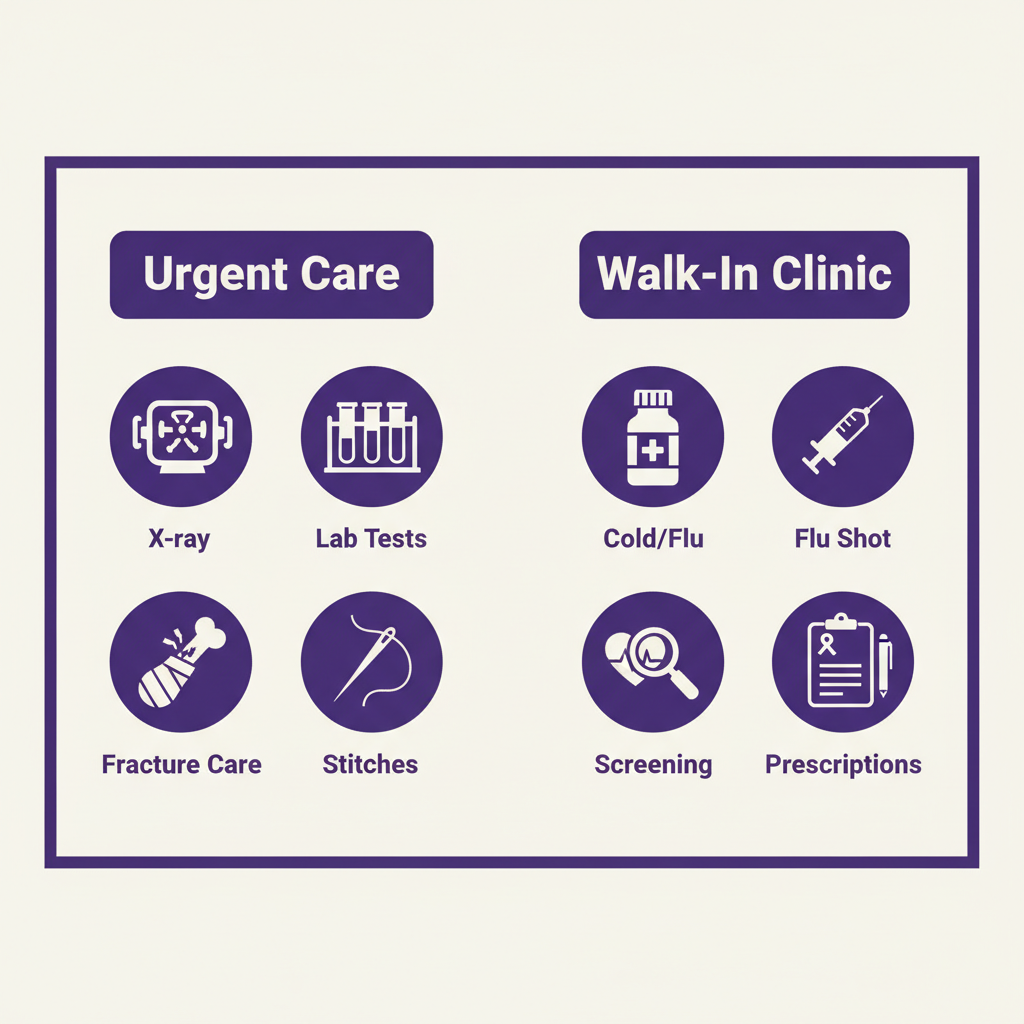
An urgent care center treats non-life-threatening medical problems that still need same-day attention. Think of it as the middle ground between your primary care doctor and the ER. Because these clinics employ physicians, physician assistants, and nurse practitioners, they handle a broader range of conditions than basic retail clinics.
Common reasons to visit urgent care:
- Sprains, strains, and minor fractures
- Cuts that may need stitches
- High fevers and flu symptoms
- Ear infections, sinus infections, and UTIs
- Mild asthma flare-ups
- X-rays and basic lab work
Urgent care centers typically stock on-site diagnostic equipment like X-ray machines and rapid testing kits. As a result, you get a diagnosis and treatment plan in a single visit. No bouncing between appointments.
What Is a Walk-In Clinic?
A walk-in clinic is any healthcare facility that sees patients without an appointment. In practice, that term covers a wide range of setups. Some operate inside pharmacies or retail stores. Others are standalone offices with full medical teams on staff.
Walk-in clinics work best for:
- Cold and cough symptoms
- Sore throats and minor infections
- Flu shots and routine vaccinations
- Basic wellness screenings
- Prescription refills
However, many walk-in clinics lack advanced diagnostic tools. Specifically, you may not find X-ray equipment or on-site lab testing capabilities. For this reason, they handle straightforward illnesses well but may fall short for injuries or complex symptoms.
Urgent Care vs Walk in Clinic: Key Differences That Matter
The confusion exists because these terms overlap. Every urgent care center is technically a walk-in facility since no appointment is required. But not every walk-in facility qualifies as urgent care. Here is how they differ in practice.
Scope of Services
Urgent care handles injuries, moderate illnesses, and diagnostic testing. Walk-in clinics generally focus on minor illnesses and preventive care. For example, if you twist your ankle, urgent care can X-ray it, check for fractures, and splint it on the spot. A basic retail clinic would likely send you somewhere else for imaging.
Staffing and Equipment
Urgent care centers employ physicians or mid-level providers and stock equipment like digital X-ray machines. In contrast, some walk-in clinics rely on nurse practitioners alone and may not have imaging tools. This gap matters when your condition needs more than a visual exam. Consequently, the provider you see can affect how quickly you get a clear diagnosis.
Hours
Both offer extended hours compared to a regular doctor’s office. Although hours vary, urgent care centers often stay open on evenings and weekends. Walk-in clinics at pharmacies may keep similar hours. Meanwhile, standalone offices sometimes close earlier in the evening.
Cost Comparison
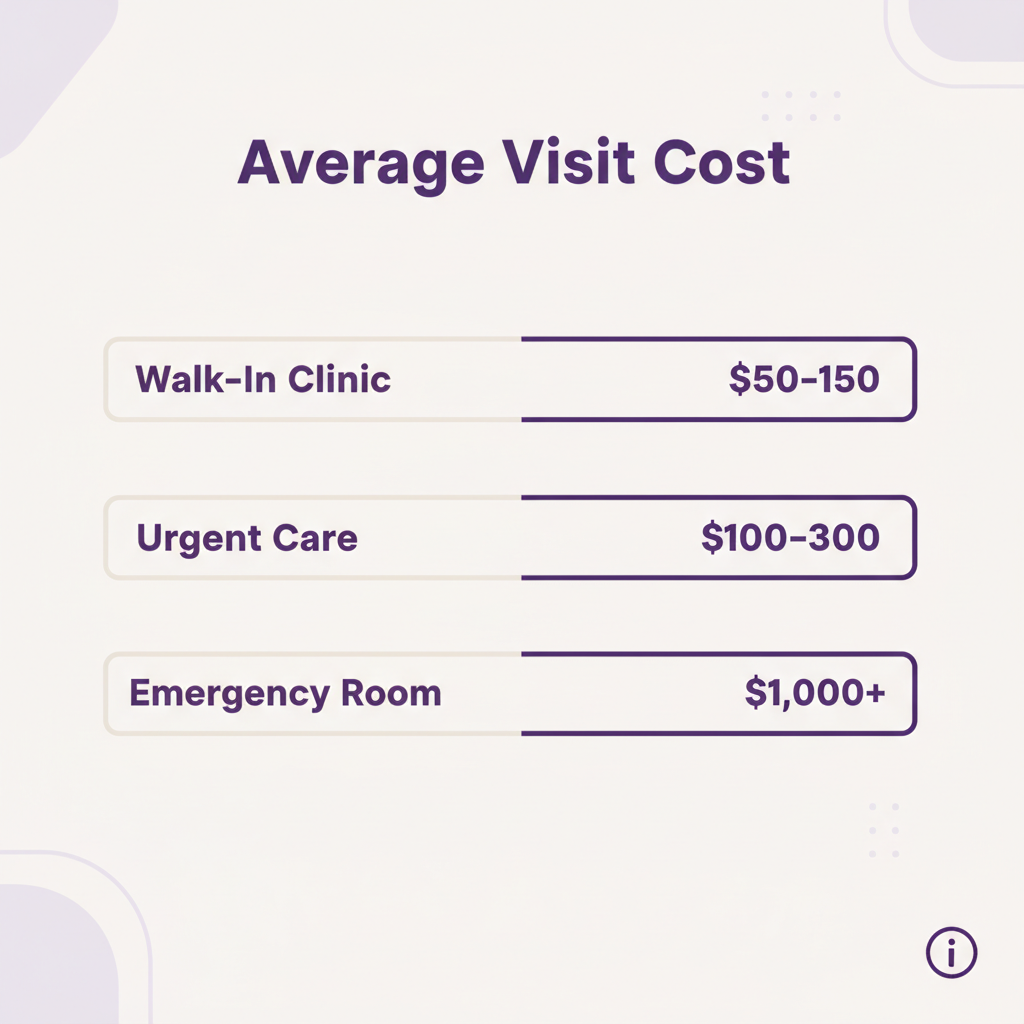
Cost depends on your insurance, the services you need, and the facility itself. A basic walk-in visit for a cold usually costs less because the scope of care is smaller. However, both options cost far less than an ER visit. Emergency rooms can charge $1,000 or more even for non-emergencies. According to the American College of Emergency Physicians, ERs must treat everyone regardless of ability to pay, but that does not guarantee an affordable bill.
When to Choose Urgent Care vs a Walk-In Clinic
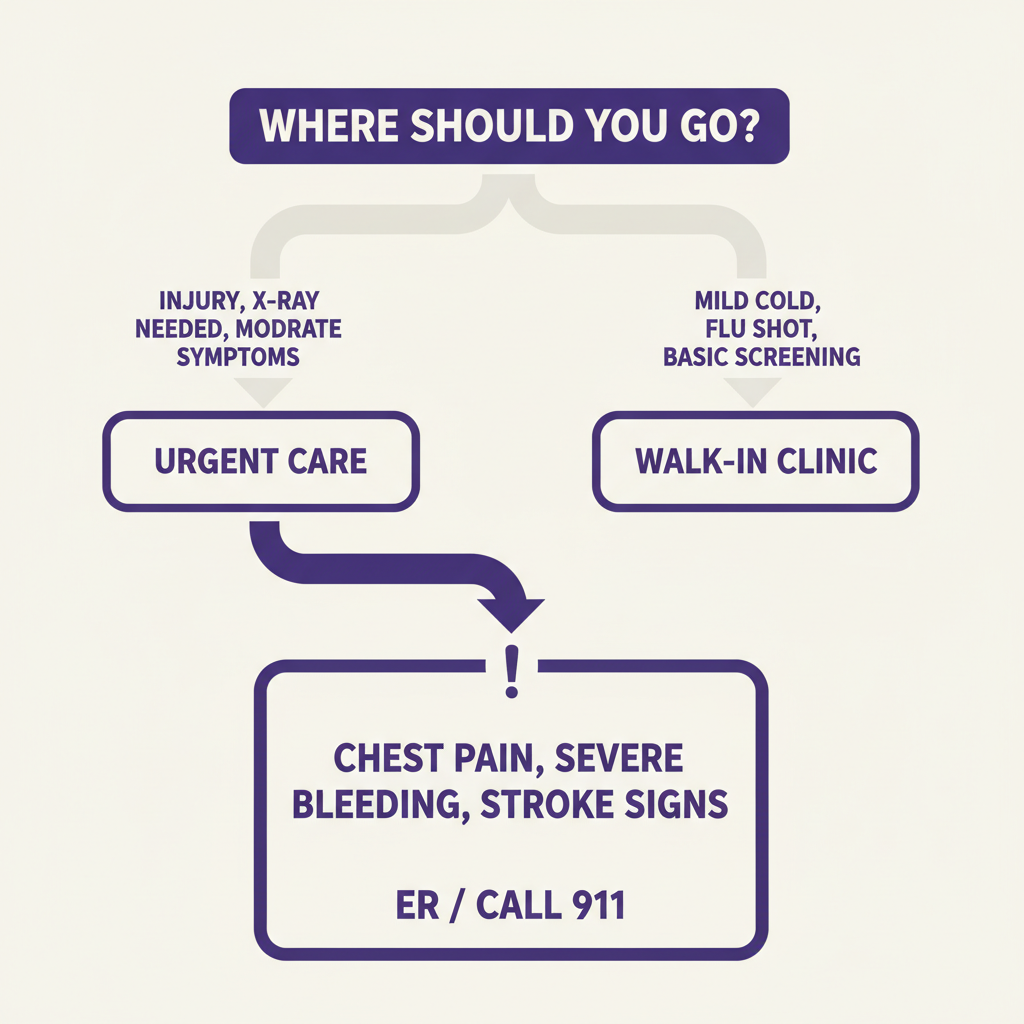
Go to urgent care when:
- You have an injury that might involve a fracture or deep cut
- You need an X-ray, lab test, or rapid screening
- Your symptoms are moderate to severe but not life-threatening
- You have a fever over 103 degrees with body aches
- You need stitches, a splint, or wound care
Go to a walk-in clinic when:
- You have a cold, mild cough, or sore throat
- You need a flu shot or routine vaccination
- You want a basic health screening
- Your symptoms are mild and you just need a prescription
Also keep in mind that neither replaces the ER. If you experience chest pain, trouble breathing, signs of a stroke, or severe bleeding, call 911 right away. Similarly, sudden confusion or loss of consciousness always warrants an emergency room visit.
Why CityHealth Gives You Both Under One Roof
At CityHealth Urgent Care in San Leandro and Oakland, you do not have to pick sides in the urgent care vs walk in clinic debate. We built our practice to combine walk-in convenience with full urgent care capabilities.
Here is what that means for you in practice:
- No appointment needed. Walk in any time we are open.
- On-site X-rays and lab testing. Get answers in one visit instead of scheduling follow-ups.
- Experienced providers. Our PAs and physicians handle everything from sore throats to fractures.
- Clear pricing. We accept most major insurance plans and also offer straightforward self-pay rates.
Because we function as both a walk-in clinic and an urgent care center, you get the right level of care without guessing which type of facility to visit first. For more on how walk-in visits compare to seeing your regular doctor, read our guide on walk-in clinic vs primary care.
Frequently Asked Questions
Is urgent care the same as a walk-in clinic?
Not exactly. Urgent care centers are a type of walk-in clinic, but they offer a wider range of services. Specifically, urgent care provides diagnostic tools like X-rays and lab testing that basic walk-in clinics lack. Therefore, all urgent care centers accept walk-ins, but not all walk-in clinics deliver urgent care-level treatment.
Is urgent care more expensive?
It can be, depending on what you need. A simple visit for a cold may cost less at a retail clinic. However, if you need an X-ray or lab work, paying for urgent care upfront usually saves money compared to getting referred out and paying for a second visit. In either case, both cost far less than the ER.
Can I go to urgent care for a cold?
Yes. Urgent care treats minor colds and moderate injuries alike. Although a walk-in clinic can also handle a cold, urgent care works better when symptoms are severe or persistent. Then providers can run rapid tests to rule out flu, strep, COVID, or other infections on the spot and start treatment the same day.
Do I need insurance?
No. Most urgent care centers and walk-in clinics see patients with or without insurance. At CityHealth, we accept most major insurance plans, including Medi-Cal and Medicare, and we also offer affordable self-pay options for uninsured patients. Regardless of your coverage status, you can walk in and receive quality care the same day you need it.
The Bottom Line
Choosing between these two options comes down to what you need treated. For minor illnesses and preventive care, a walk-in clinic works fine. For injuries, diagnostic tests, or anything beyond a basic exam, urgent care is the better fit. If you want a facility that handles both without making you choose, CityHealth Urgent Care in San Leandro and Oakland has you covered.
Walk in today or call us to learn more about the care options we offer at our San Leandro and Oakland locations.