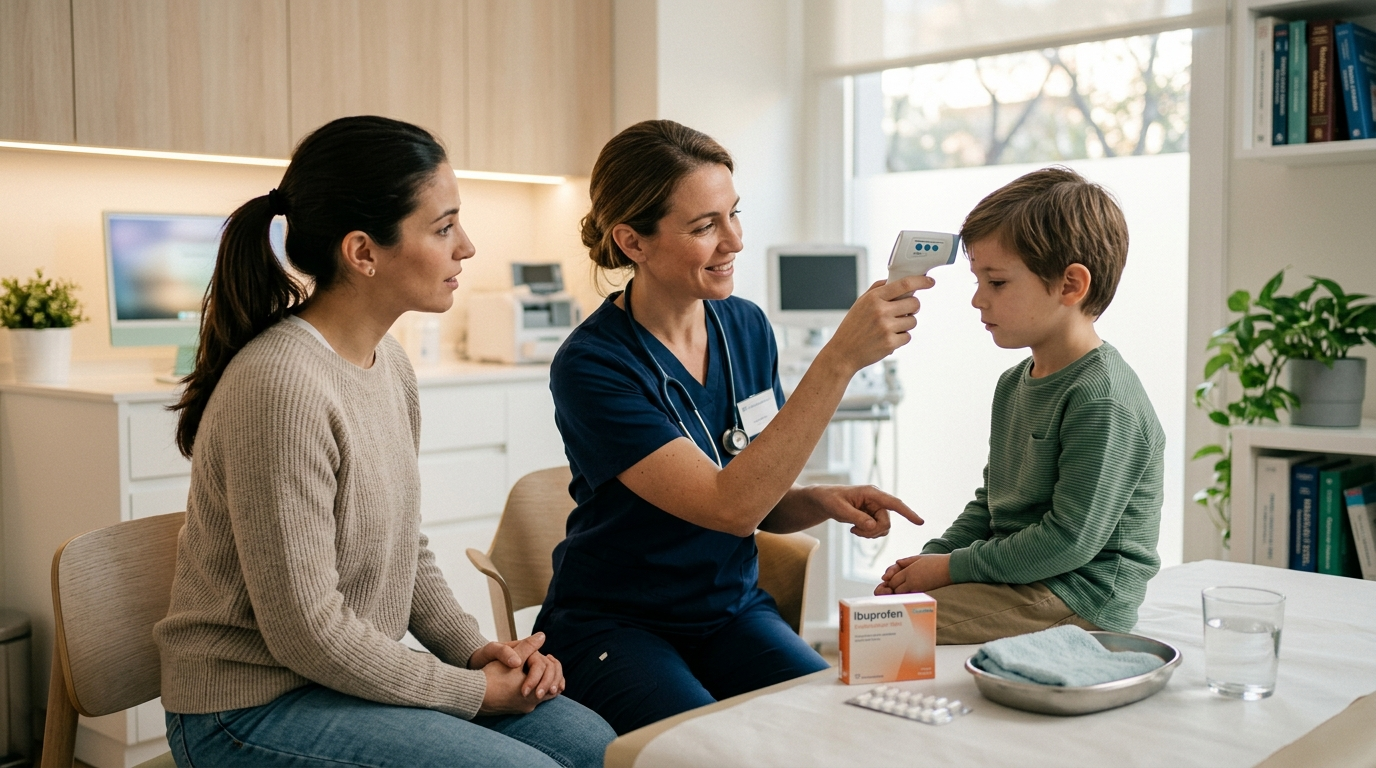

Your kid wakes up with a 102-degree fever on a Saturday morning. You call your pediatrician’s office and get a recording. The next available appointment? Tuesday. This is the exact moment when understanding urgent care vs primary care saves you hours of stress, unnecessary ER bills, and a whole weekend of worry.
Medically reviewed by Sean Parkin, PA, CEO & Founder — Urgent Care
Primary care and urgent care serve different purposes. However, they overlap more than most people realize. Your primary care physician (PCP) handles your ongoing health needs. In contrast, urgent care handles the stuff that can’t wait for your PCP. Both treat many of the same conditions. As a result, the real difference comes down to timing, availability, and what you need right now.
What Primary Care Actually Does
A primary care provider is your long-term health partner. Specifically, they track your medical history, manage chronic conditions like diabetes or high blood pressure, and coordinate referrals to specialists. Essentially, your PCP is the person who knows your full health story.
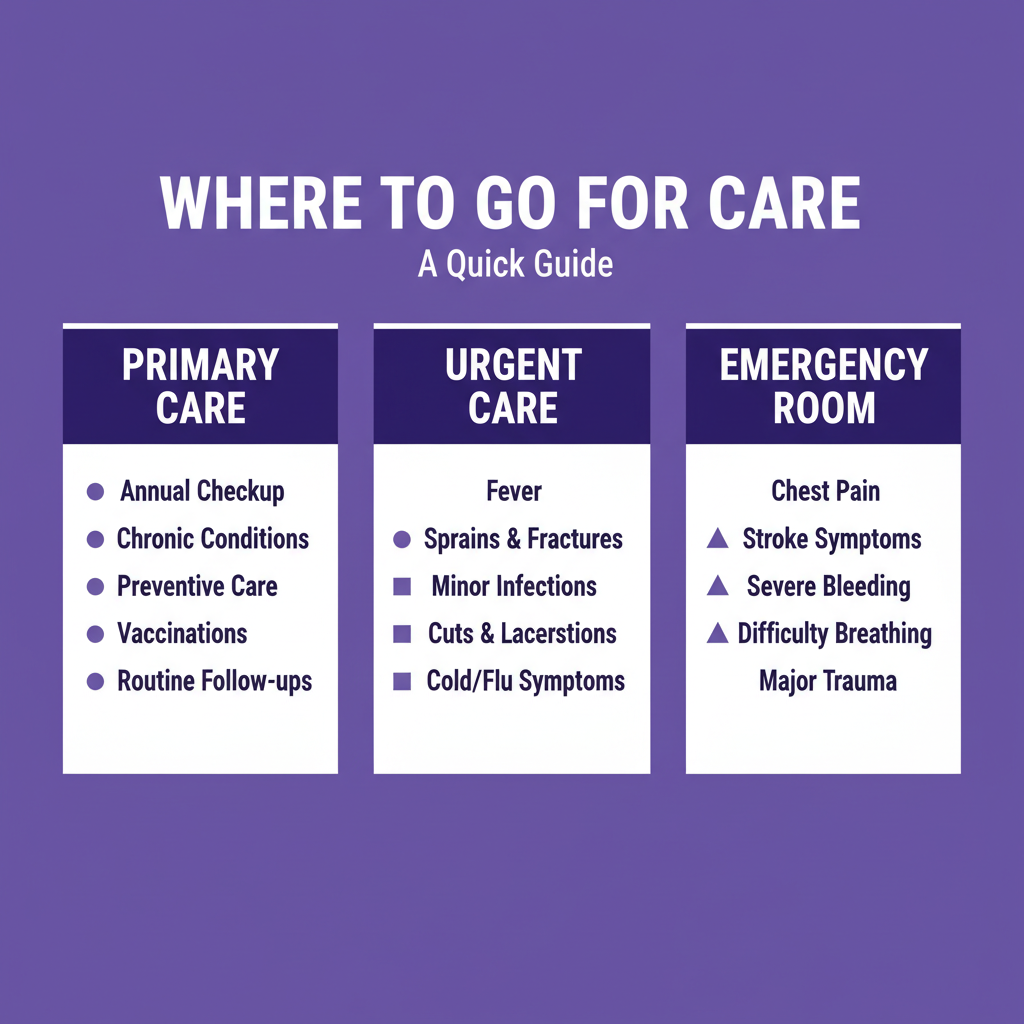
Primary care typically covers:
- Annual physicals and wellness checkups
- Chronic disease management for conditions like diabetes, asthma, and hypertension
- Preventive screenings such as cholesterol tests and cancer screenings
- Vaccinations and immunizations
- Mental health assessments and medication management
- Referrals to specialists when needed
Because your PCP knows your history, they can spot patterns. For example, they might notice your blood pressure creeping up over three visits and adjust your treatment early. Ultimately, that continuity is hard to replace.
What Urgent Care Actually Does
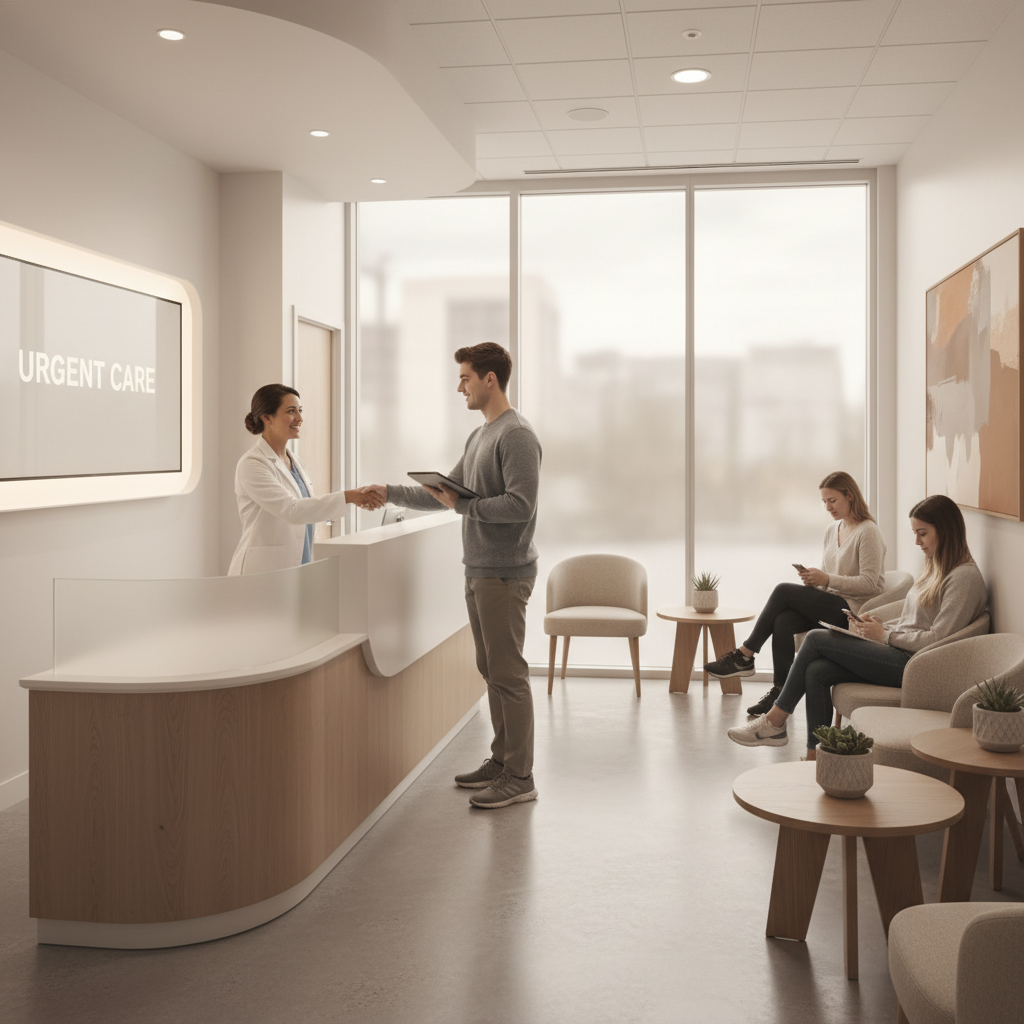
Urgent care clinics treat conditions that need attention today but are not life-threatening. They accept walk-ins, stay open on evenings and weekends, and handle a wide range of acute issues. Most importantly, you do not need an appointment.
Urgent care typically covers:
- Fevers, colds, and flu
- Ear infections and sore throats
- Sprains, strains, and minor fractures
- Cuts and lacerations that need stitches
- UTIs and other acute infections
- On-site X-rays and lab tests
- Sports and school physicals
- COVID-19 testing
Urgent care providers are board-certified physicians, physician assistants, and nurse practitioners. Consequently, they carry the same medical training as your PCP. In other words, the difference is structural, not about skill level.
Urgent Care vs Primary Care: Five Key Differences
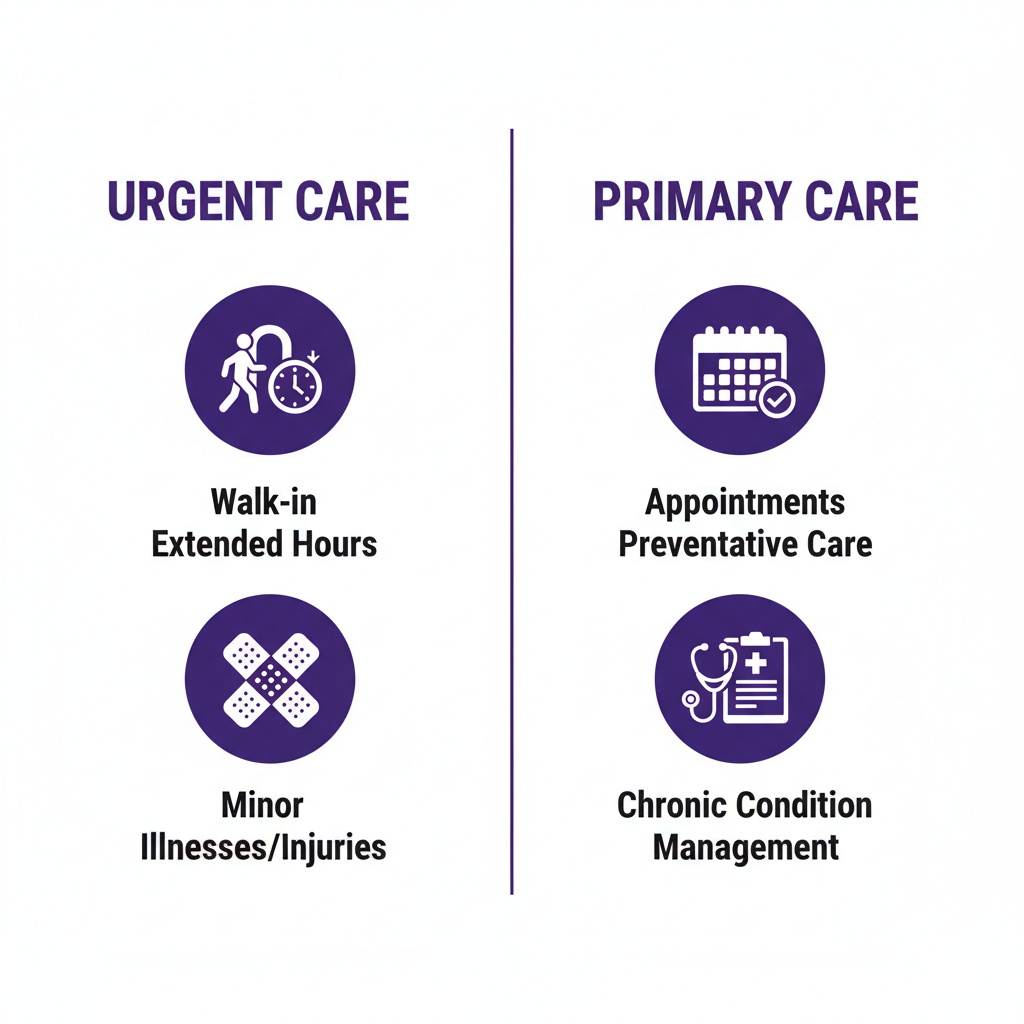
Here is where the urgent care vs primary care comparison gets practical. Below are five areas where these two settings differ.
1. Availability and Access
Primary care offices typically operate Monday through Friday, 9 AM to 5 PM. Furthermore, getting an appointment can take days or weeks. According to a Merritt Hawkins survey, the average wait for a new patient appointment with a family doctor is 38 days in major U.S. metro areas.
In contrast, urgent care flips that model. Most clinics accept walk-ins seven days a week with extended hours. At CityHealth Urgent Care in San Leandro and Oakland, for instance, doors open at 8 AM and stay open until 8 PM on weekdays. Weekend hours run from 9 AM to 5 PM.
2. Continuity of Care
Your PCP maintains a detailed record of your health over years. They know your allergies, your family history, and your medication list. Therefore, they can make better long-term decisions about your care.
On the other hand, urgent care visits are episodic. You may not see the same provider twice. However, good clinics document everything and send visit notes to your PCP so nothing falls through the cracks.
3. Cost Differences
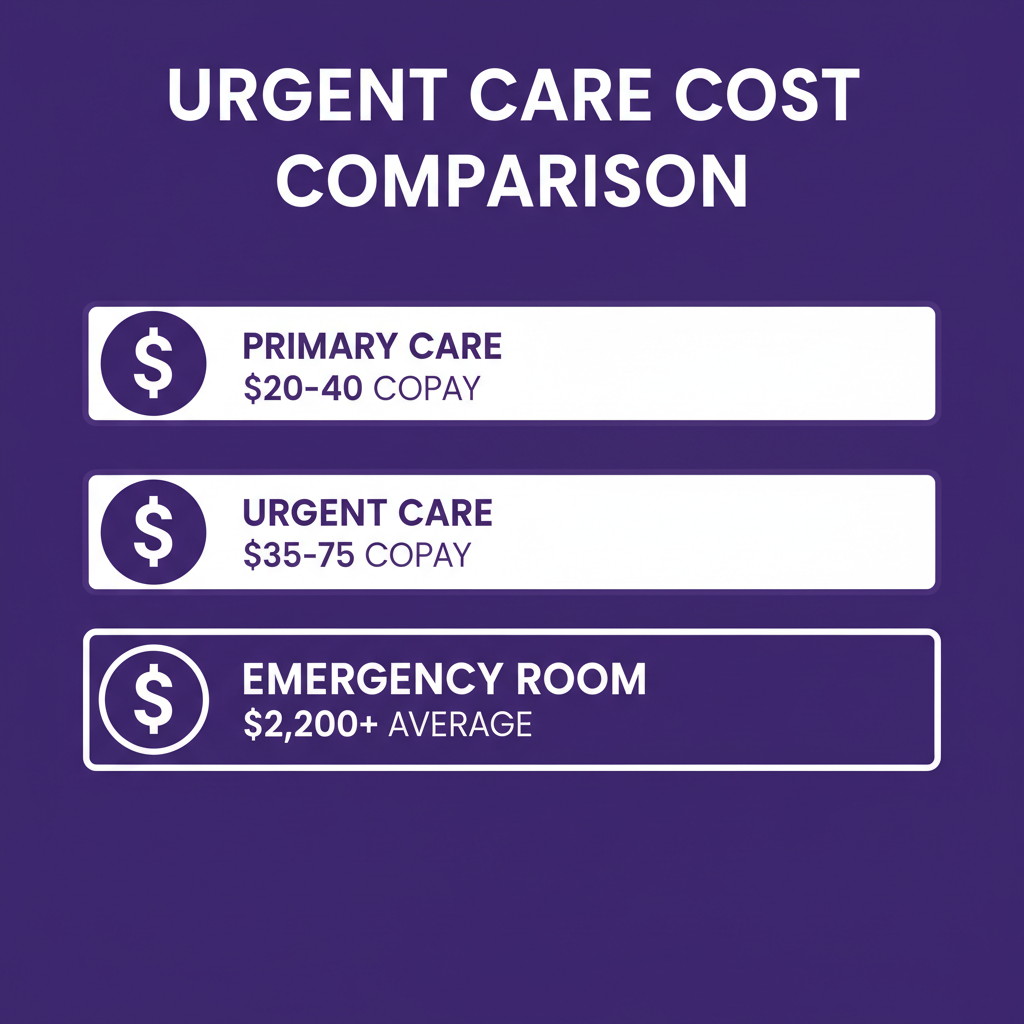
A primary care visit with insurance typically runs $20 to $40 as a copay. Meanwhile, urgent care copays range from $35 to $75, depending on your plan. Without insurance, urgent care visits generally cost $100 to $200. A PCP visit without insurance runs $150 to $300.
Regardless, both cost far less than an ER visit. The average ER trip costs $2,200, according to the Agency for Healthcare Research and Quality. If your situation is not life-threatening, choosing between urgent care and primary care will almost always save you money compared to the ER.
4. Scope of Treatment
Primary care handles both acute and chronic conditions. However, it excels at prevention and long-term management. Urgent care, in contrast, focuses on acute problems that need same-day attention. Neither setting handles true emergencies like chest pain, stroke symptoms, or heavy uncontrolled bleeding. Those require an ER.
5. Provider Relationship
A PCP who has treated you for five years will catch things a first-time provider might miss. Conversely, an urgent care provider who specializes in acute care may handle your sprained ankle faster than a PCP who sees one sprain per month. Essentially, both bring value, just in different ways.
When to Choose Urgent Care vs Primary Care
The decision usually comes down to three questions.
First, is it urgent? If you need care today and your PCP has no openings, then urgent care is the right call. A sore throat that started this morning, a child’s ear infection at 6 PM, or a sprained wrist from a weekend hike all qualify.
Second, is it ongoing? If you need medication adjustments for a chronic condition or want to discuss persistent symptoms, schedule with your PCP instead. They have the context to make those calls.
Third, do you even have a PCP? About one in four Americans do not have a primary care physician. If that describes you, then urgent care bridges the gap. You still get quality medical attention for your immediate concern.
Can You Use Urgent Care Instead of Primary Care?
This is one of the most common questions people search for. The honest answer is: partially. Urgent care can handle many of the same acute conditions your PCP would treat. For example, you can walk into an urgent care clinic for a sinus infection, a rash, or a sports physical and get the same quality of care.
However, urgent care is not designed for chronic disease management, preventive screenings, or building a long-term health record. If you have diabetes, high blood pressure, or another ongoing condition, you need a PCP tracking those numbers over time.
Even so, urgent care serves as a reliable backup when your primary care doctor is unavailable. Millions of Americans use it exactly this way, especially on evenings, weekends, and holidays when PCP offices close.
When to Skip Both and Go to the ER
Both urgent care and primary care have limits. Therefore, head to an emergency room if you experience:
- Chest pain or pressure
- Stroke symptoms such as sudden numbness, confusion, or trouble speaking
- Severe difficulty breathing
- Heavy, uncontrolled bleeding
- Loss of consciousness
- Severe allergic reactions like anaphylaxis
- Compound fractures or major trauma
For a deeper look at how walk-in clinics compare with primary care offices, check out our guide on walk-in clinics vs primary care. Also, if you need care but lack insurance, see our page on urgent care without insurance in Oakland.
The Bottom Line on Urgent Care vs Primary Care
Everyone should have a primary care provider. Your PCP is your healthcare home base. But life does not always cooperate with office hours. Kids get sick on Saturdays. You twist your ankle on a Sunday hike. Your throat starts burning at 7 PM on a Wednesday.
When that happens, urgent care exists for exactly that reason. No appointment needed, shorter wait times, and no ER-sized bill.
Can’t get in with your doctor? Walk in today. CityHealth Urgent Care in San Leandro and Oakland is open seven days a week with extended hours. We treat colds, injuries, infections, and dozens of other conditions. No appointment required. Find your nearest CityHealth location and walk in now.