A sprained ankle can happen in an instant — a misstep on a curb, a twist on the basketball court, or a stumble on a hiking trail. Knowing when you need urgent care for a sprained ankle helps you avoid complications, get proper treatment, and return to normal activity as quickly as possible.
This guide explains the different grades of ankle sprains, how to evaluate your injury at home, and when a visit to urgent care is the right call.

What Is a Sprained Ankle?
An ankle sprain occurs when the ligaments that stabilize the ankle joint are stretched or torn. Ligaments are tough, fibrous connective tissues that connect bone to bone. Therefore, when an ankle rolls inward — the most common direction — the outer ligaments are overstretched or damaged.
Ankle sprains are extremely common. According to the American Academy of Orthopaedic Surgeons, approximately 25,000 people sprain their ankles every day in the United States.
Grades of Ankle Sprains
Not all sprains are equal. Clinically, ankle sprains are classified into three grades:
- Grade 1 (Mild) — The ligament is slightly stretched with microscopic tears. Mild swelling and tenderness. You can still bear weight with some discomfort. Recovery: typically 1-3 weeks.
- Grade 2 (Moderate) — Partial tearing of the ligament. Significant swelling, bruising, and pain. Bearing weight is difficult and painful. Recovery: 3-6 weeks.
- Grade 3 (Severe) — Complete tear of one or more ligaments. Severe swelling, bruising, instability, and inability to bear weight. Recovery: several months, sometimes requiring surgery.
When Should You Go to Urgent Care for a Sprained Ankle?
Minor ankle sprains can often be managed at home with the RICE method (rest, ice, compression, elevation). However, several signs indicate you should visit urgent care for a sprained ankle promptly.
Visit urgent care if you experience:
- Inability to bear weight on the ankle — If you can’t put weight on your foot at all, or doing so causes severe pain, get evaluated
- Significant swelling and bruising — Especially if it develops rapidly within the first hour
- A popping sensation or sound at the time of injury
- Severe pain that doesn’t improve with rest and over-the-counter pain medication
- Numbness or tingling in the foot or toes
- Visible deformity of the ankle — This may indicate a fracture, not a sprain
- Pain or tenderness over the bony areas on the inside or outside of the ankle
- Symptoms that don’t improve after 48-72 hours of home management
At CityHealth Urgent Care in San Leandro, we can evaluate your ankle, order on-site X-rays to rule out fractures, and provide a proper diagnosis with a treatment plan — all during a same-day visit.
How to Treat a Sprained Ankle at Home (RICE Method)
For mild to moderate sprains, home treatment is an important first step. Even if you plan to visit urgent care, starting the RICE method right away helps limit swelling and pain.
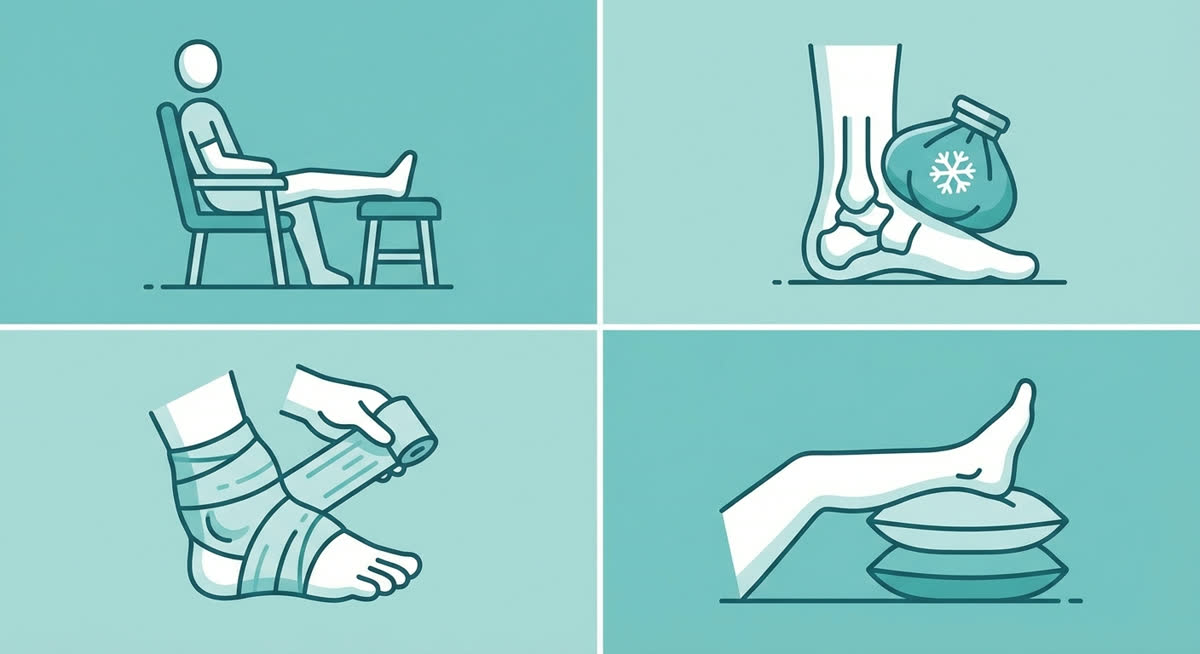
- Rest — Avoid putting weight on the ankle as much as possible. Use crutches if needed to stay mobile without worsening the injury.
- Ice — Apply an ice pack wrapped in a cloth for 15-20 minutes every 2-3 hours during the first 48-72 hours. Ice reduces inflammation and numbs pain effectively.
- Compression — Wrap the ankle with an elastic bandage (ACE wrap) to reduce swelling. Wrap snugly but not so tight that it cuts off circulation.
- Elevation — Prop your ankle above heart level whenever possible — while resting, watching TV, or sleeping. Elevation reduces swelling by helping fluid drain away from the injury site.
Additionally, over-the-counter NSAIDs such as ibuprofen or naproxen help manage pain and reduce inflammation. Follow package dosing instructions carefully.
What to Expect at Urgent Care for a Sprained Ankle
When you visit CityHealth for urgent care for a sprained ankle, your provider will take a detailed history of how the injury occurred and perform a physical examination of the ankle.
The exam typically includes:
- Palpation of the bones and ligaments to locate tenderness
- Range of motion testing
- Assessment of stability using specific stress tests
- Evaluation for nerve or vascular involvement
Treatment at urgent care may include:
- Prescription-strength anti-inflammatory medications
- Ankle splinting or bracing for more significant sprains
- Crutch fitting and instruction on protected weight bearing
- Physical therapy referral for Grade 2 or 3 sprains
- Follow-up instructions and criteria for returning to activity
Preventing Future Ankle Sprains
Once you’ve sprained an ankle, preventive measures help reduce re-injury risk significantly:
- Ankle strengthening exercises — Calf raises, resistance band exercises, and balance training build stability around the joint.
- Balance training — Single-leg standing and wobble board exercises improve proprioception — your body’s awareness of joint position.
- Proper footwear — Wear shoes appropriate for the activity. Avoid flip-flops for activities that involve uneven terrain.
- Brace or tape the ankle — For athletes returning to sports, an ankle brace provides additional protection during high-risk activities.
- Warm up before activity — Cold muscles and ligaments are more prone to injury.
Get Ankle Sprain Care at CityHealth
If your ankle sprain is significant enough to limit your activity or cause concern, don’t wait it out. Urgent care for a sprained ankle at CityHealth gives you a fast, professional evaluation with on-site X-rays — so you know exactly what you’re dealing with and what to do next.
We treat ankle injuries at both our Oakland Montclair and San Leandro locations, seven days a week. Book your appointment online or walk in — we’re ready to help you get back on your feet.
Sprained ankle?
CityHealth San Leandro treats sprains and strains same-day. Open 7 days a week. Book online or walk in to our San Leandro clinic.