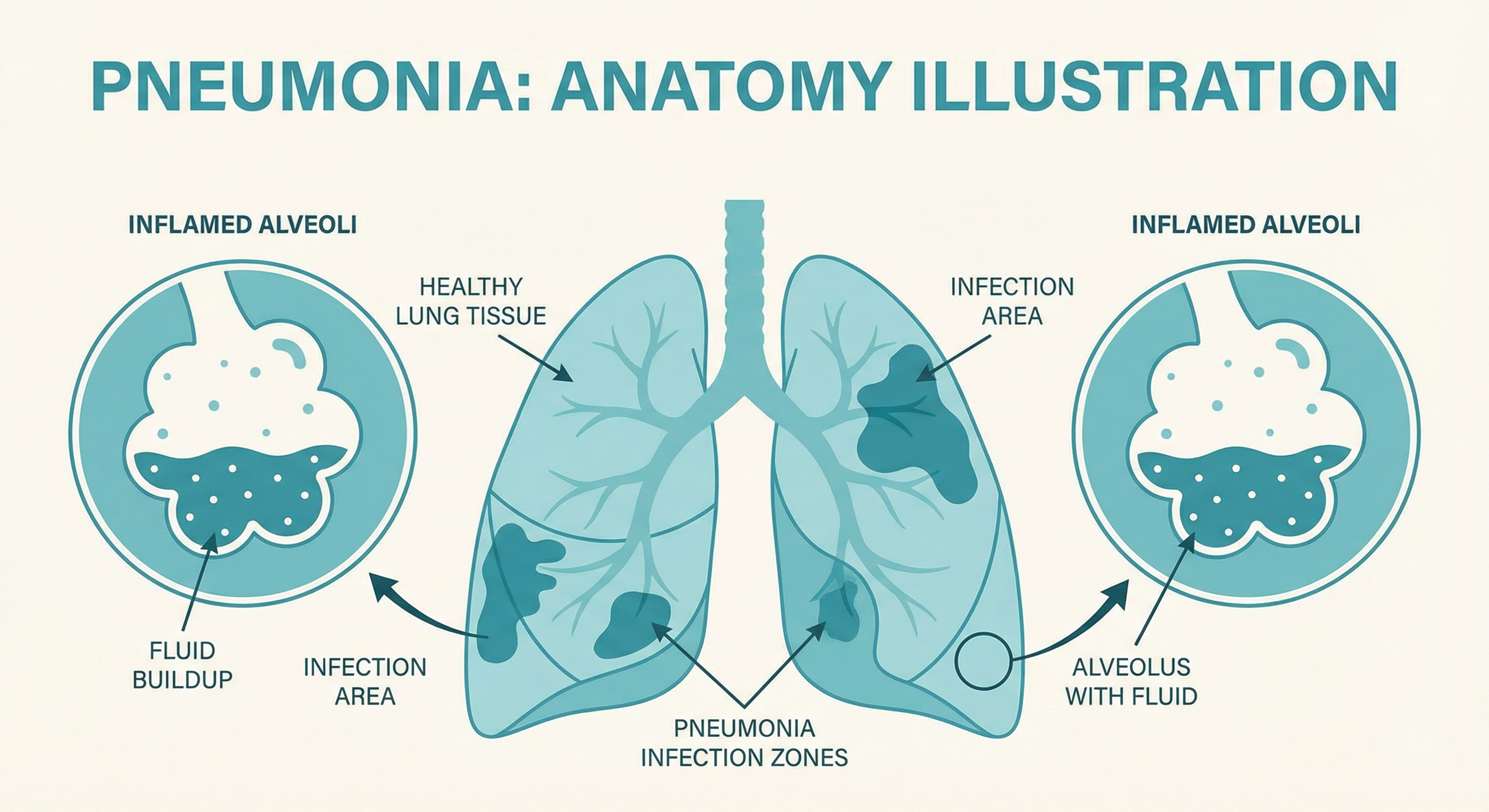

Pneumonia is an infection that inflames the air sacs in one or both lungs. Recognizing pneumonia symptoms early — and knowing when to visit urgent care versus the emergency room — can make a real difference in how quickly you recover. Every year, more than 1.5 million people in the United States are hospitalized with pneumonia, making it one of the leading causes of infectious disease death in adults over 65.
But not all pneumonia requires hospitalization. Mild to moderate community-acquired pneumonia in otherwise healthy adults can often be diagnosed and treated at an urgent care clinic. Understanding the warning signs helps you make the right call.
Common Pneumonia Symptoms
Pneumonia symptoms vary depending on the type (bacterial, viral, or fungal), the severity of infection, and your overall health. The most common symptoms include:
- Cough — Often produces thick, discolored mucus (yellow, green, or rust-colored). In some cases the cough is dry.
- Fever — Temperature typically ranges from 100°F to 105°F. Chills are common alongside fever.
- Shortness of breath — Breathing may feel labored or shallow, especially with physical activity.
- Chest pain — Sharp or stabbing chest pain that worsens when breathing deeply or coughing (pleuritic chest pain).
- Fatigue — Significant tiredness and weakness, often more severe than with a typical cold or flu.
- Sweating and shaking chills — Alternating between fever sweats and intense shivering is a hallmark of bacterial pneumonia.
- Confusion — Particularly in older adults, sudden mental confusion or altered awareness can be a sign of serious pneumonia.
- Nausea, vomiting, or diarrhea — More common in pneumonia caused by certain bacteria (such as Legionella or Mycoplasma).
Pneumonia Symptoms in Older Adults and Young Children
Pneumonia presents differently in vulnerable populations. In older adults (65+), classic symptoms like high fever and productive cough may be absent. Instead, watch for:
Concerned about pneumonia symptoms?
CityHealth San Leandro can evaluate respiratory symptoms same-day. X-ray on site. Walk-in or book online.
Book Online →
- Sudden confusion or worsening of existing dementia
- Unexplained falls
- Low-grade fever or no fever at all
- General weakness and reduced appetite
In infants and young children, pneumonia symptoms may include:
- Fast breathing or noisy breathing
- Flared nostrils with each breath
- Blue-tinged lips or fingernails (cyanosis) — this is an emergency
- Grunting with each breath
- Vomiting, especially after coughing
- Reduced feeding and extreme lethargy
Types of Pneumonia: Bacterial vs. Viral vs. Walking Pneumonia
Understanding the type of pneumonia helps explain the range of symptoms:
- Bacterial pneumonia — Often the most severe. Commonly caused by Streptococcus pneumoniae. Symptoms come on suddenly with high fever, chills, productive cough, and chest pain. Requires antibiotic treatment.
- Viral pneumonia — Caused by influenza, COVID-19, RSV, or other viruses. Symptoms develop more gradually. Antibiotics do not treat viral pneumonia, though antiviral medications (like oseltamivir for flu) may shorten the course.
- Walking pneumonia (atypical pneumonia) — A milder form, often caused by Mycoplasma pneumoniae. Symptoms are subtle enough that many people continue their normal activities, which is how it got its name. Includes fatigue, low-grade fever, persistent dry cough, and headache.
- Fungal pneumonia — Rare, typically affecting people with weakened immune systems. Can be caused by Coccidioides (Valley Fever) or other fungi.
When Is Urgent Care Appropriate for Pneumonia?
Urgent care is appropriate for mild to moderate pneumonia symptoms in adults who are otherwise healthy. Go to urgent care if:
- You have had a cough for more than a week that is not improving
- You have a fever above 100.4°F with cough and fatigue
- You have chest discomfort when breathing or coughing
- You suspect walking pneumonia based on persistent fatigue and dry cough
- Your doctor is unavailable and you need same-day evaluation
At urgent care, the provider can perform a physical examination, order a chest X-ray (if available on-site), measure your oxygen saturation with a pulse oximeter, and prescribe antibiotics if bacterial pneumonia is suspected. CityHealth’s Oakland urgent care clinic offers chest X-rays and same-day lab work to diagnose and begin treating pneumonia without the wait of an ER visit.
When to Go to the Emergency Room
Call 911 or go to the ER immediately if you or someone you are caring for has pneumonia with any of the following emergency warning signs:
- Severe shortness of breath or difficulty breathing at rest
- Oxygen saturation below 90% on a home pulse oximeter
- Lips, fingernails, or skin turning blue or gray (cyanosis)
- Confusion, disorientation, or difficulty staying awake
- Heart rate above 125 beats per minute at rest
- Blood pressure dropping significantly
- Inability to keep fluids down due to severe nausea or vomiting
- High fever (above 103°F) that is not responding to medication
These signs suggest severe pneumonia that may require hospitalization, IV antibiotics, supplemental oxygen, or intensive care. The Centers for Disease Control and Prevention (CDC) notes that pneumonia is particularly dangerous in adults over 65, children under 5, and people with underlying conditions such as heart disease, COPD, diabetes, or compromised immunity.
How Is Pneumonia Treated?
Treatment depends on the type and severity:
- Bacterial pneumonia — Treated with antibiotics. Common first-line options include amoxicillin or azithromycin (Z-Pak) for outpatient cases. Most patients begin to feel better within 3 to 5 days of starting antibiotics, though complete recovery can take several weeks.
- Viral pneumonia — Antibiotics are ineffective. Treatment focuses on rest, hydration, and fever management. Antiviral medications may be prescribed for flu-related pneumonia.
- Walking pneumonia — Often responds to doxycycline or azithromycin. Many patients recover without antibiotics, but treatment speeds recovery.
- Supportive care — Regardless of type, stay well-hydrated, rest, use a humidifier if helpful, and take over-the-counter fever reducers (acetaminophen or ibuprofen) as needed.
Book Same-Day Care at CityHealth
CityHealth San Leandro — open 7 days a week. Walk-ins welcome, most insurance accepted. On-site lab and X-ray.
Can You Prevent Pneumonia?
Yes. Vaccination is the most effective prevention method:
- Pneumococcal vaccines — PCV15/PCV20 and PPSV23 vaccines protect against the most common causes of bacterial pneumonia. Recommended for adults 65+ and high-risk adults of any age.
- Annual flu vaccine — Influenza is a leading cause of viral pneumonia. Getting your annual flu shot significantly reduces your risk.
- COVID-19 vaccine — COVID-19 can cause severe viral pneumonia. Staying up to date on COVID vaccinations reduces this risk.
Good hand hygiene, not smoking, and managing underlying chronic conditions also lower your pneumonia risk significantly.
Get Evaluated at CityHealth San Leandro
If you are experiencing a persistent cough, fever, and fatigue that is not improving, do not wait. CityHealth offers same-day urgent care with on-site diagnostics at our Montclair Village clinic in Oakland. Our providers can evaluate your symptoms, perform a chest exam, and begin treatment — often the same day.
Walk in or book online. Visit our urgent care page for hours and directions. For children, our team is experienced in treating pediatric respiratory illnesses quickly and compassionately.
Sources: CDC: Pneumonia | Mayo Clinic: Pneumonia | NIH: Pneumonia
CityHealth Urgent Care — San Leandro
Pneumonia evaluation, chest X-ray, and treatment same-day. Most insurance accepted.
Book Appointment →
Need same-day care?
CityHealth San Leandro offers walk-in urgent care 7 days a week with on-site lab and X-ray. Book an appointment online or visit our San Leandro clinic.