
Does Urgent Care Treat Cellulitis? Yes — Here’s What to Expect
You notice redness spreading across your leg. It’s warm, swollen, and growing. That’s cellulitis — a bacterial skin infection that needs antibiotics now. Does urgent care treat cellulitis? Yes. For most cases, it’s the faster, cheaper option than the ER. However, certain signs mean you need emergency care instead. Here’s exactly how to tell the difference and what to expect at your visit.
Medically reviewed by Sean Parkin, PA — CEO & Founder, CityHealth Urgent Care
What Is Cellulitis?
Cellulitis is a bacterial skin infection. It targets the skin and the soft tissue beneath it. The bacteria most responsible are Staphylococcus aureus and Streptococcus. Both enter through any break in the skin — a cut, bug bite, cracked heel, or wound.
For example, a small scratch can be enough. Even dry, cracked skin between the toes can let bacteria in. So any opening in the skin barrier is a risk. The lower legs are the most common site, accounting for about 70% of cases. However, cellulitis can affect the face, arms, or any other area. Importantly, it is not contagious. You cannot catch it from another person. Still, without treatment, it spreads.
Does Urgent Care Treat Cellulitis? What the Visit Looks Like
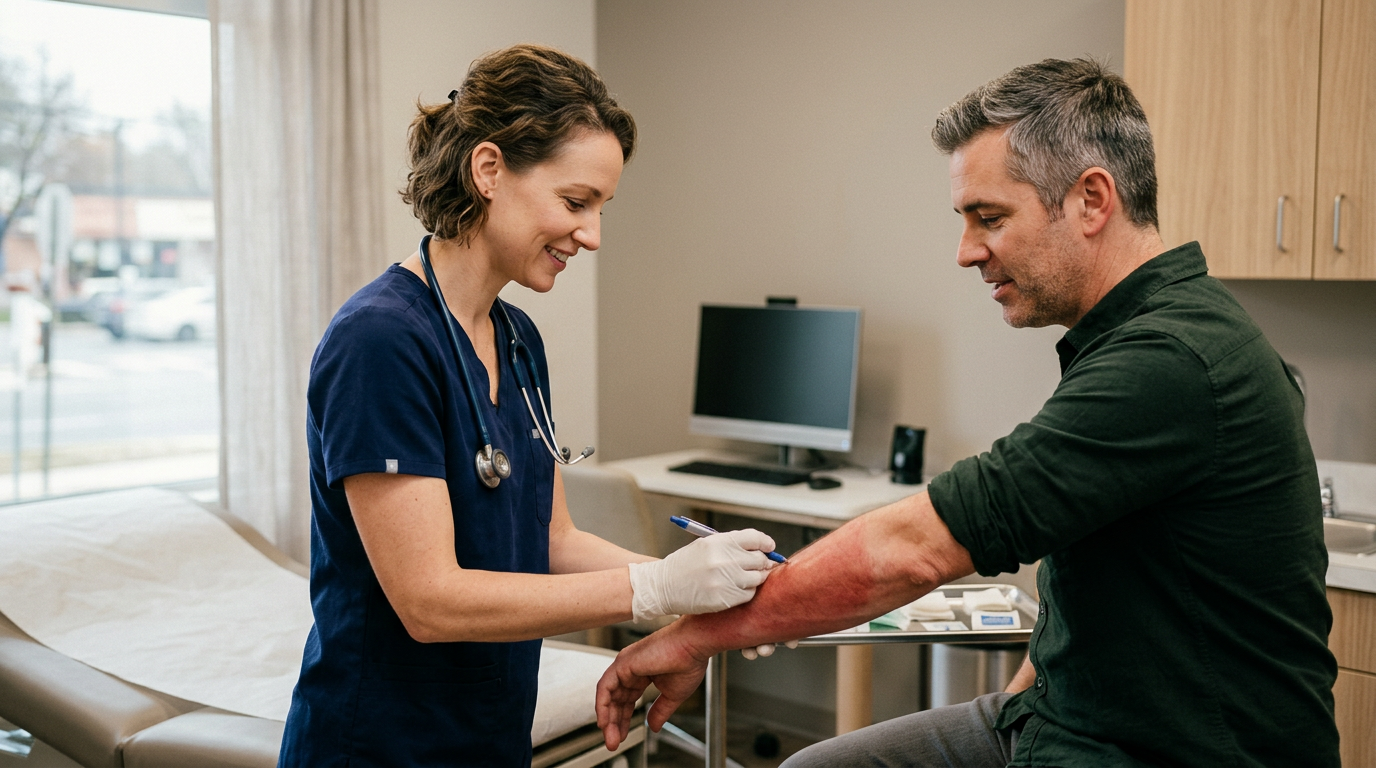
Yes — urgent care treats cellulitis effectively. First, a provider examines the affected area. They check the extent of redness, feel for warmth, and look for any spreading. Notably, no blood test is required to diagnose most cases. Because the diagnosis is visual, urgent care can confirm it and start treatment in the same visit.
Treatment at urgent care typically includes:
- Oral antibiotics — first-line for mild to moderate cases. Common choices include cephalexin (Keflex), or Bactrim when MRSA is suspected.
- Wound care — the entry wound gets cleaned and dressed
- Border marking — a pen line around the redness tracks whether it spreads
- Discharge instructions — when to return if things get worse
Generally, most people see improvement within 24–48 hours of starting antibiotics. At CityHealth Urgent Care in San Leandro, we see cellulitis every week. Walk in — no appointment needed. You’re typically in and out in under an hour.

Symptoms of Cellulitis to Watch For
Classic signs appear in a defined area. Specifically, look for:
- Spreading redness — a red or pink patch that grows larger over hours
- Warmth — the skin feels hot compared to surrounding tissue
- Swelling — the area looks puffy and feels tight
- Pain when touched — ranges from mild to sharp
- Skin texture changes — dimpled skin or red streaks running outward
Additionally, some people develop fever or chills. These are signs the infection has spread into your bloodstream. That changes where you should go for care — see the ER section below.
Cellulitis vs. Abscess
Cellulitis and abscesses are related but different. Cellulitis is a diffuse infection — redness spreads across a wide area of skin without a central pocket. An abscess, however, is a localized collection of pus that forms a painful bump. Both are treatable at urgent care. However, the treatment is different. An abscess needs drainage (a simple procedure called I&D). Cellulitis needs antibiotics. For example, you can have both at once — an abscess with surrounding cellulitis. So getting a proper exam ensures you get the right treatment. See also: Can Urgent Care Drain an Abscess?
Cellulitis and MRSA: What You Should Know
MRSA is a type of staph that resists common antibiotics. According to the CDC, MRSA is more widespread than most people realize. In fact, it often looks identical to regular cellulitis. However, your provider will assess your risk based on history. For instance, prior MRSA infections, recent hospital stays, or bites that look like spider bites are red flags. When MRSA is likely, we prescribe Bactrim or doxycycline instead of standard antibiotics. See: Urgent Care for Staph and MRSA.
When Does Urgent Care Treat Cellulitis vs. When to Go to the ER?
Urgent care handles the large majority of cellulitis cases. However, go to the ER when you have:
- Fever above 103°F with chills and confusion — possible sepsis
- Redness growing by the hour — very rapid spread
- Red streaks running up the arm or leg — this is called lymphangitis. It means bacteria have entered your lymph vessels.
- Cellulitis around the eye — this can threaten your vision. Go immediately.
- Facial cellulitis near the nose and mouth — can spread toward the brain
- No improvement after 48 hours on antibiotics — may be MRSA or a more serious organism
- Diabetes or weak immune system — infections spread faster in these situations
Still, if you’re not sure, start at urgent care. We’ll assess the severity and refer you to the ER if needed — quickly and directly.

What Happens Without Treatment?
Untreated cellulitis almost always gets worse on its own. Because bacteria don’t stop spreading without antibiotics, the infection can:
- Spread into deeper tissue — muscle and bone
- Enter the bloodstream and cause sepsis
- Rarely, progress to necrotizing fasciitis — a severe, life-threatening condition
- Damage the lymph system over time, causing swelling that doesn’t go away
Furthermore, one cellulitis infection raises your risk of another in the same spot. Treating it early — and fixing the entry wound — reduces that risk significantly.
How Much Does It Cost?
Without insurance, urgent care for cellulitis typically costs $150–$250 for the visit. Additionally, the antibiotic prescription is usually $10–$30 at most pharmacies. By contrast, an ER visit for a non-emergency averages over $1,000. CityHealth accepts Medi-Cal, Alameda Alliance, and most major insurance plans. If you’re uninsured, our self-pay rates are clear and posted upfront — no hidden or surprise bills.

Frequently Asked Questions
Can urgent care prescribe antibiotics for cellulitis?
Yes. Urgent care providers prescribe oral antibiotics — cephalexin, Bactrim, doxycycline — for cellulitis. Additionally, they identify when MRSA is likely and adjust the prescription. See: Can Urgent Care Prescribe Antibiotics?
Does cellulitis need IV antibiotics?
Most mild to moderate cases respond well to oral antibiotics. IV antibiotics are reserved for cases that don’t improve, spread rapidly, or when oral meds aren’t tolerated.
How do I know if cellulitis is getting worse?
Mark the border of the redness with a pen when you start treatment. If it grows beyond that line in 24–48 hours, return immediately. Also watch for fever, increasing pain, or new red streaks.
Can urgent care treat cellulitis near the eye?
No. Periorbital (around the eye) cellulitis is an emergency. Go to the ER directly — it can threaten your vision.
Walk In Today — No Appointment Needed
Cellulitis responds well to treatment when you catch it early. So don’t wait to see if it resolves — it won’t. Walk into CityHealth Urgent Care in San Leandro today. No appointment, no ER wait. We’ll assess your infection, prescribe the right antibiotic, and get you treated in one visit. Check in online to save time.