
Urgent Care for Broken Toe: X-Rays, Treatment, and When to Go
You stubbed your toe or dropped something on it. Now it’s swollen, bruised, and hurts to step on. Is it broken? Urgent care for broken toe injuries is the right first step — we have X-ray equipment on-site, and most toe fractures don’t need surgery or a specialist. Here’s what to expect and when the ER is a better call.
Medically reviewed by Paul Dwight, PA — Physician Assistant, CityHealth Urgent Care
Can Urgent Care for Broken Toe Provide a Same-Day Diagnosis?
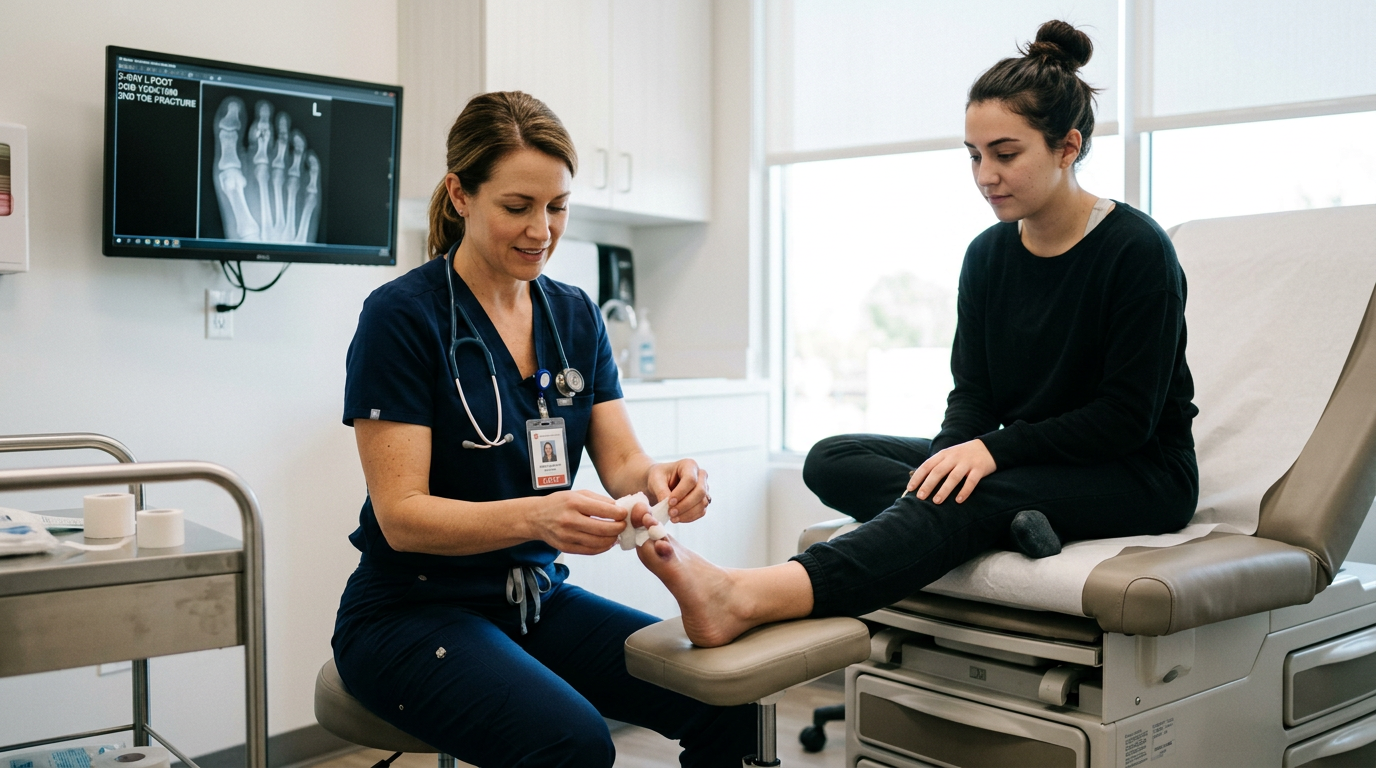
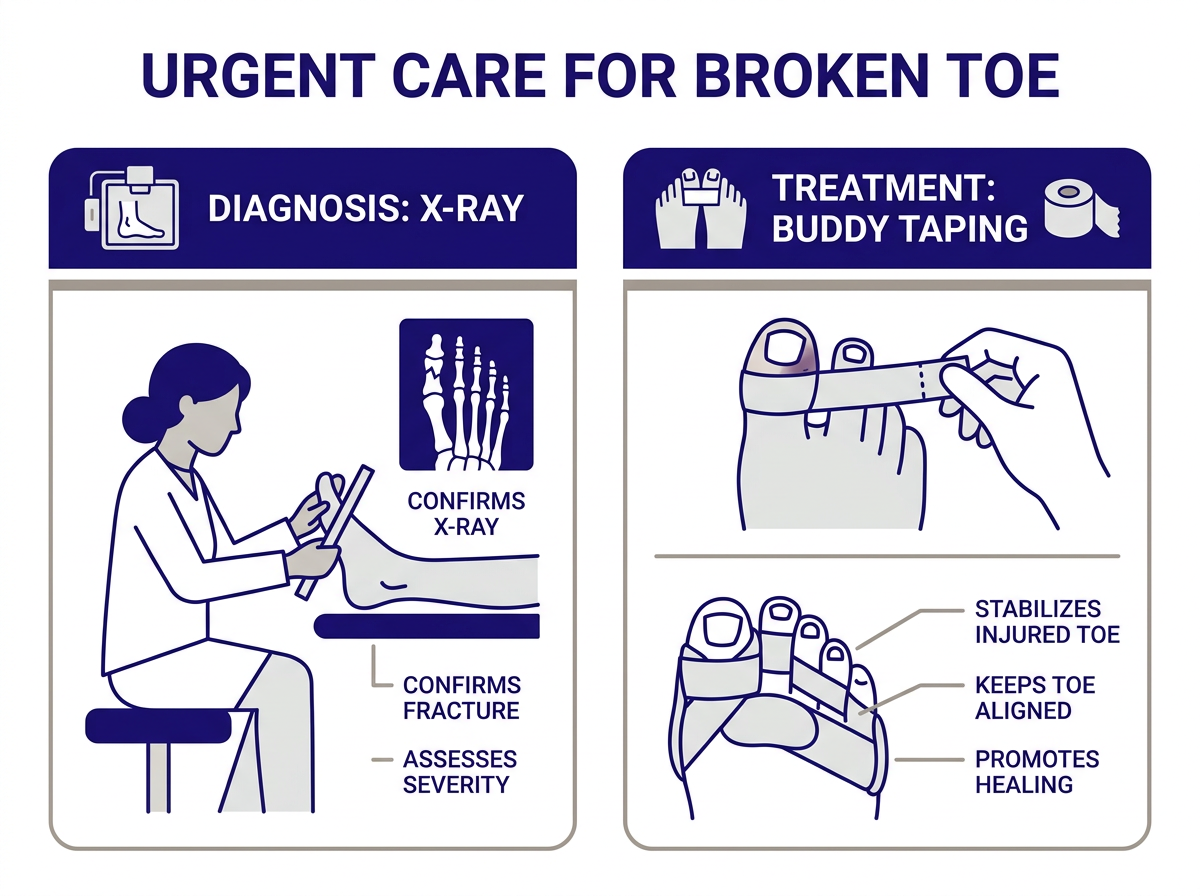
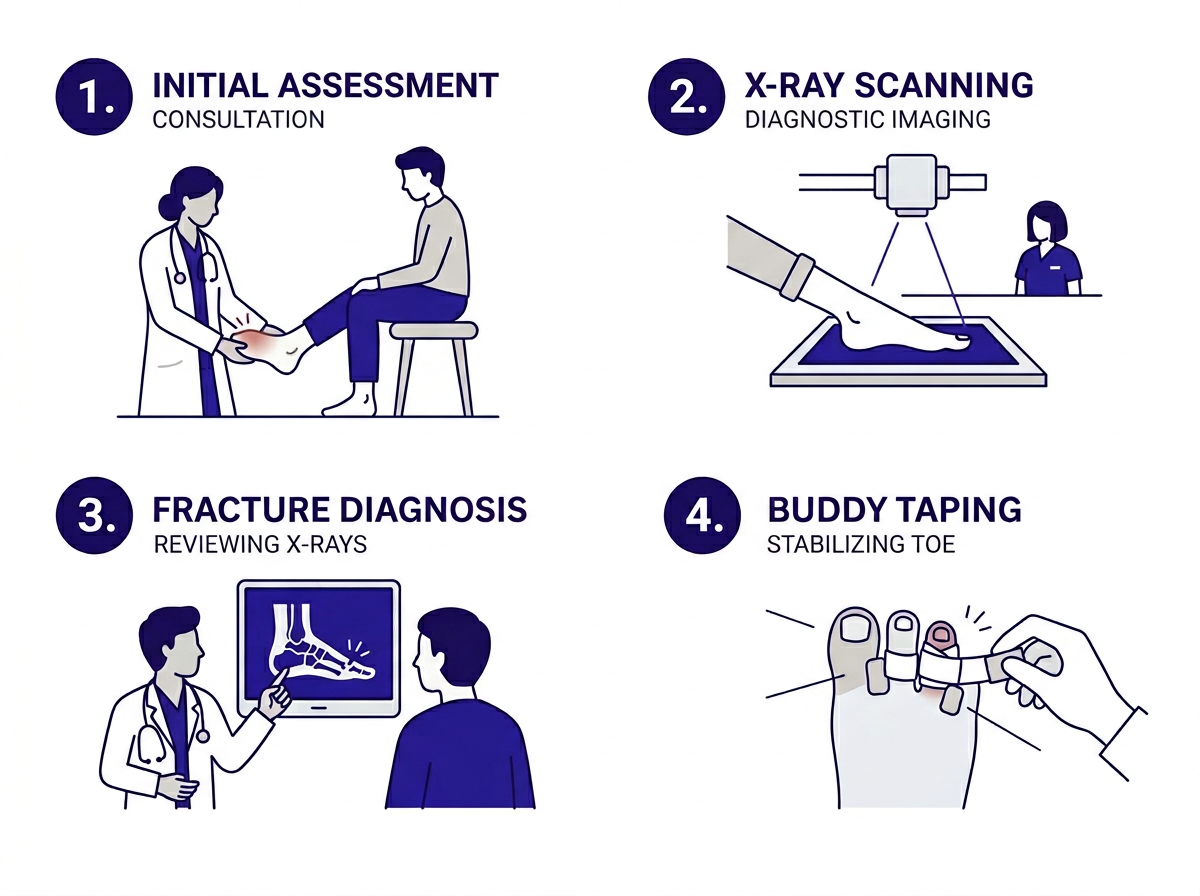
Yes — urgent care diagnoses broken toes every day. First, a provider examines the toe. They check for point tenderness, range of motion, and obvious deformity. Then, they confirm the fracture with an X-ray. Because imaging is done on-site, you leave with a confirmed diagnosis and treatment plan in the same visit.
At CityHealth Urgent Care in San Leandro, X-rays are done on-site. No separate radiology appointment, no waiting for next-day results.
Is It Broken or Sprained? How to Tell
The symptoms of a broken and a sprained toe look similar. Both cause pain, swelling, and bruising. However, a few signs suggest fracture is more likely:
- You heard a crack or pop at the time of injury
- The toe looks bent or rotated — obvious deformity
- Rapid swelling — especially within minutes of injury
- Significant bruising under the toenail or spreading quickly
- Can’t bear weight without sharp, focused pain
Still, the only way to know for certain is an X-ray. Because a fracture that goes undetected can heal crooked, getting it imaged matters even if symptoms seem mild. Additionally, ruling out a fracture gives you confidence to treat it correctly.
What Does Urgent Care Do for a Broken Toe?
Treatment depends on which toe is broken and how serious the fracture is.
For the Smaller Toes (2nd–5th)
The most common treatment is buddy taping — securing the broken toe to the next toe with medical tape and a small foam pad between them. The adjacent toe acts as a natural splint. Additionally, your provider will:
- Realign the toe if it’s slightly out of position
- Apply buddy tape and show you how to maintain it at home
- Recommend a stiff-soled or post-op shoe to protect the toe while walking
- Advise rest, ice, and over-the-counter pain relief (ibuprofen or naproxen)
Most smaller toe fractures heal in 4–6 weeks. Furthermore, follow-up with your doctor or a podiatrist confirms healing at the right time.
For a Broken Big Toe
The big toe carries more weight. So a fracture there is more significant. Urgent care still handles the initial evaluation and stabilization — typically a stiff shoe or walking boot. However, big toe fractures often need orthopedic or podiatric follow-up within a few days, especially if displaced.
Pain Management
Broken toes hurt. Fortunately, ibuprofen (Advil) and naproxen (Aleve) reduce both pain and swelling. Ice for 20 minutes at a time helps in the first 48 hours. Additionally, elevating your foot above heart level lowers swelling fast.
When to Go to the ER for a Broken Toe
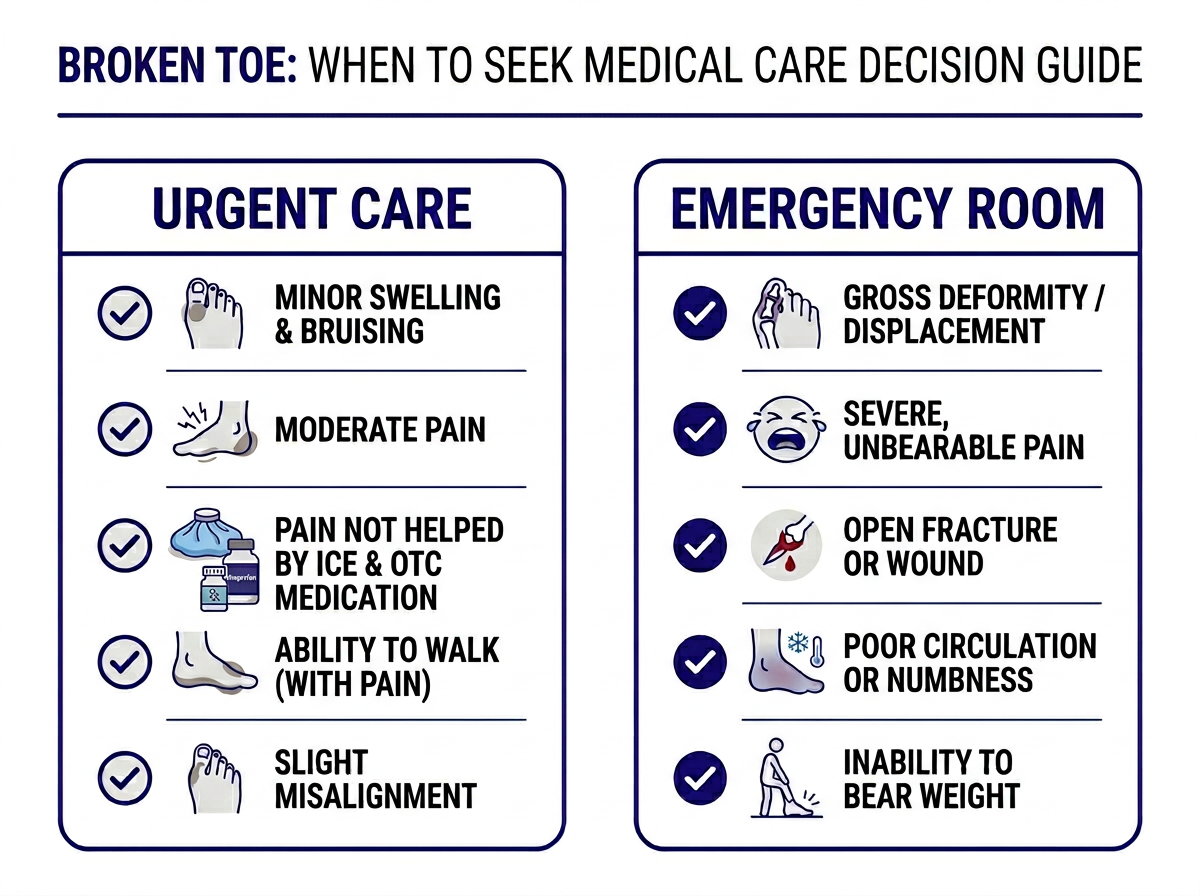
Urgent care handles most broken toes. However, go to the ER when you have:
- An open fracture — the bone has broken through the skin. This is an emergency due to infection risk.
- Severe deformity — the toe is dramatically displaced or rotated
- Cold, pale, or numb toe — possible blood supply problem
- Multiple fractures at once — several toes or foot bones broken together
- High-impact injury to the whole foot — could involve the midfoot joints
That said, if you’re unsure, come to urgent care first. We’ll assess it and send you to the ER if needed — with imaging already done.
Healing Timeline for a Broken Toe
Here’s what to expect week by week. According to the American Academy of Orthopaedic Surgeons, most smaller toe fractures heal with conservative care.
- Days 1–3: Most painful. Swelling peaks. Keep it elevated, iced, and buddy-taped.
- Week 1–2: Swelling improves. Pain with walking starts to decrease.
- Weeks 3–4: Most people walk normally in a supportive shoe. Buddy tape still on.
- Weeks 5–6: Bone largely healed. Return to normal footwear gradually.
- 6–8 weeks: Return to sports and higher-impact activities, depending on severity.
Importantly, returning to activity too soon is the most common mistake. Incomplete healing leads to re-injury — often worse than the original. So a clear return-to-activity plan from your provider matters a lot.
How Much Does Urgent Care for a Broken Toe Cost?
Without insurance, an urgent care visit for a broken toe typically costs $150–$250, which includes the exam and X-ray. By contrast, an ER visit for the same injury averages over $1,000. The cost difference is significant, and the care is equivalent for most toe fractures.
CityHealth accepts most major insurance plans including Medi-Cal and Alameda Alliance. If you’re uninsured, our self-pay rates are straightforward and posted upfront. Additionally, follow-up imaging at an outpatient radiology center costs far less than hospital-based imaging if you need a repeat X-ray during healing.
So if cost is a concern, urgent care is almost always the smarter choice for a toe injury. You get a complete evaluation, imaging, and a treatment plan for a fraction of the ER price. Most people are in and out in under an hour.
Common Questions About Toe Fractures
Here are a few things people often ask when they come in with a possible broken toe. Knowing these answers helps you make the right call faster.
Frequently Asked Questions
How long should I buddy tape a broken toe?
Most providers recommend keeping buddy tape on for 4–6 weeks while the bone heals. Check the tape daily. Replace it if it gets wet or loose. Also, keep a small foam pad between the toes to prevent skin irritation. Your provider will walk you through this at your visit.
Can urgent care treat a broken pinky toe?
Yes. The pinky toe (5th toe) is one of the most commonly broken. Buddy taping to the 4th toe is standard. So urgent care handles this routinely.
Should I go to urgent care or wait it out?
If it’s swollen, bruised, and painful to bear weight, don’t wait. Because an undetected fracture can heal badly, getting it imaged is worth it even if symptoms seem mild.
Does urgent care do X-rays for toes?
Yes — urgent care has digital X-ray equipment. At CityHealth, imaging is done on-site in the same visit.
Do broken toes always need a doctor?
Minor fractures are sometimes managed at home. However, you won’t know it’s minor until you’ve had an X-ray. Skipping the evaluation means walking on an unknown injury — and increasing the risk of it healing incorrectly.
Walk In Today — No Appointment Needed
A swollen, painful toe after an impact deserves same-day attention. CityHealth Urgent Care in San Leandro is open for walk-ins — X-ray on-site, treatment plan before you leave. Check in online to reduce your wait time.
Also see: Urgent Care for Sprained Ankle