Urgent Care Stitches Cost: What You’ll Pay With and Without Insurance
You’ve got a cut that won’t stop bleeding. Or a wound that’s clearly too deep to tape shut. You know you need stitches — but before you walk in, you want to know what this will cost. That’s a fair question. Here are the actual numbers for urgent care stitches cost.
Medically reviewed by Paul Dwight, PA — Physician Assistant, CityHealth Urgent Care
Stitches at urgent care cost $150–$400 without insurance. With insurance, most patients pay a copay of $25–$75. That’s a fraction of what the ER charges for the same procedure. And for a wound that doesn’t need emergency resources, urgent care is almost always the right choice.
Urgent Care Stitches Cost Without Insurance
Here’s a breakdown of typical self-pay prices:
- Simple laceration (1–2 sutures, small wound): $100–$200
- Standard laceration (3–6 sutures): $150–$300
- Complex wound (larger, deeper, or near a joint): $250–$450
- Wound closure with glue or strips (instead of stitches): $75–$150
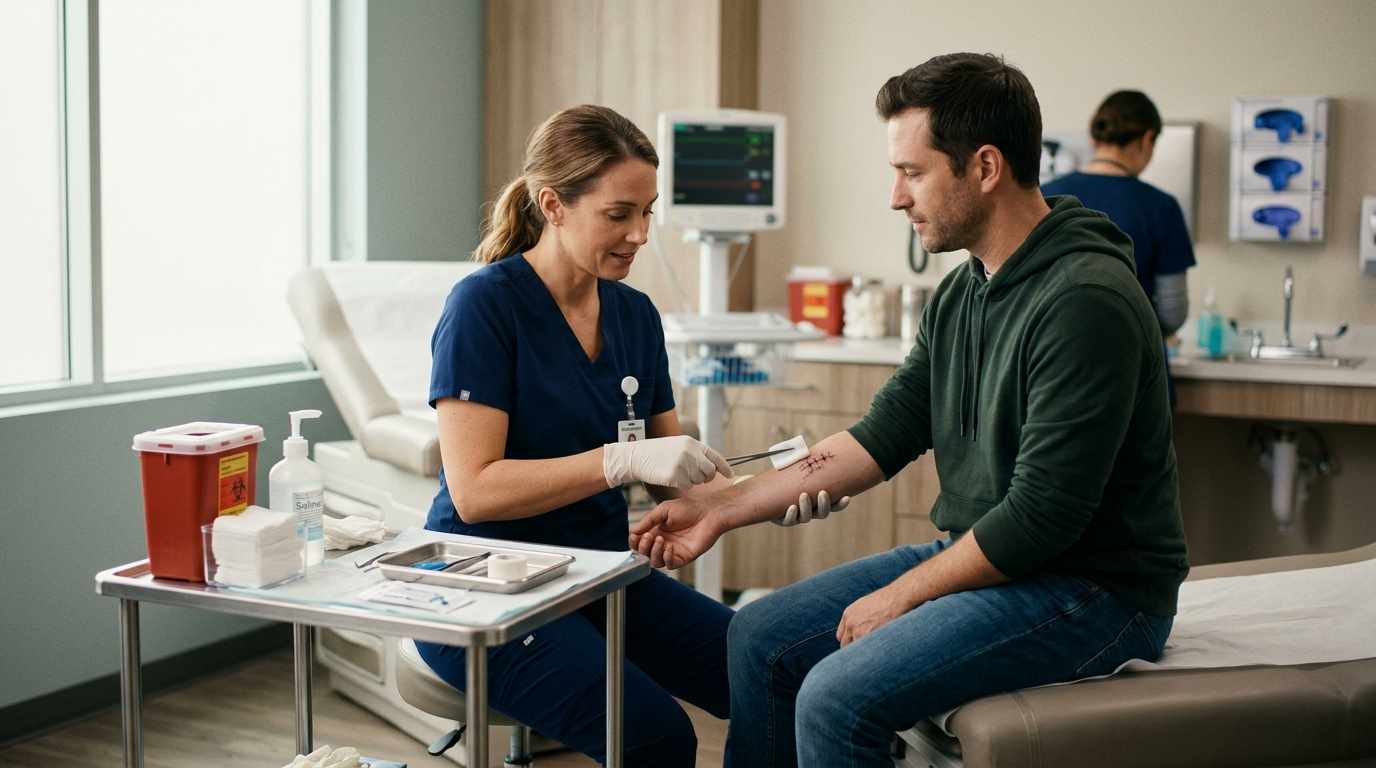
These figures include the visit fee and the procedure. However, the final cost depends on several factors:
- Wound depth and length — A clean half-inch cut is simpler than a 2-inch jagged tear
- Location — Wounds near joints, on the face, or on the hands require more precise repair
- Number of sutures — More sutures mean more time and materials
- Type of closure — Sutures, staples, tissue adhesive (Dermabond), or closure strips all differ in cost
- Need for imaging — If a foreign object or bone injury is suspected, an X-ray adds to the total
At CityHealth Urgent Care in San Leandro, we use transparent self-pay pricing. Ask at check-in for an estimate before treatment starts. Additionally, we accept major insurance plans, Medi-Cal, and offer self-pay rates for patients without coverage. So you can walk in regardless of your insurance situation.
Urgent Care Stitches Cost With Insurance
With most commercial insurance, an urgent care visit is billed as a specialty or facility claim. Typical out-of-pocket costs with insurance:
- Copay: $25–$75 — depending on your plan tier
- Coinsurance after deductible: If your deductible isn’t met, you may pay 20–40% of the allowed amount
- In-network vs. out-of-network: In-network urgent care dramatically reduces your cost
CityHealth accepts most major insurance plans, including Blue Shield, Aetna, Cigna, UnitedHealth, and Medi-Cal. Before your visit, confirm that urgent care is covered under your specific plan.
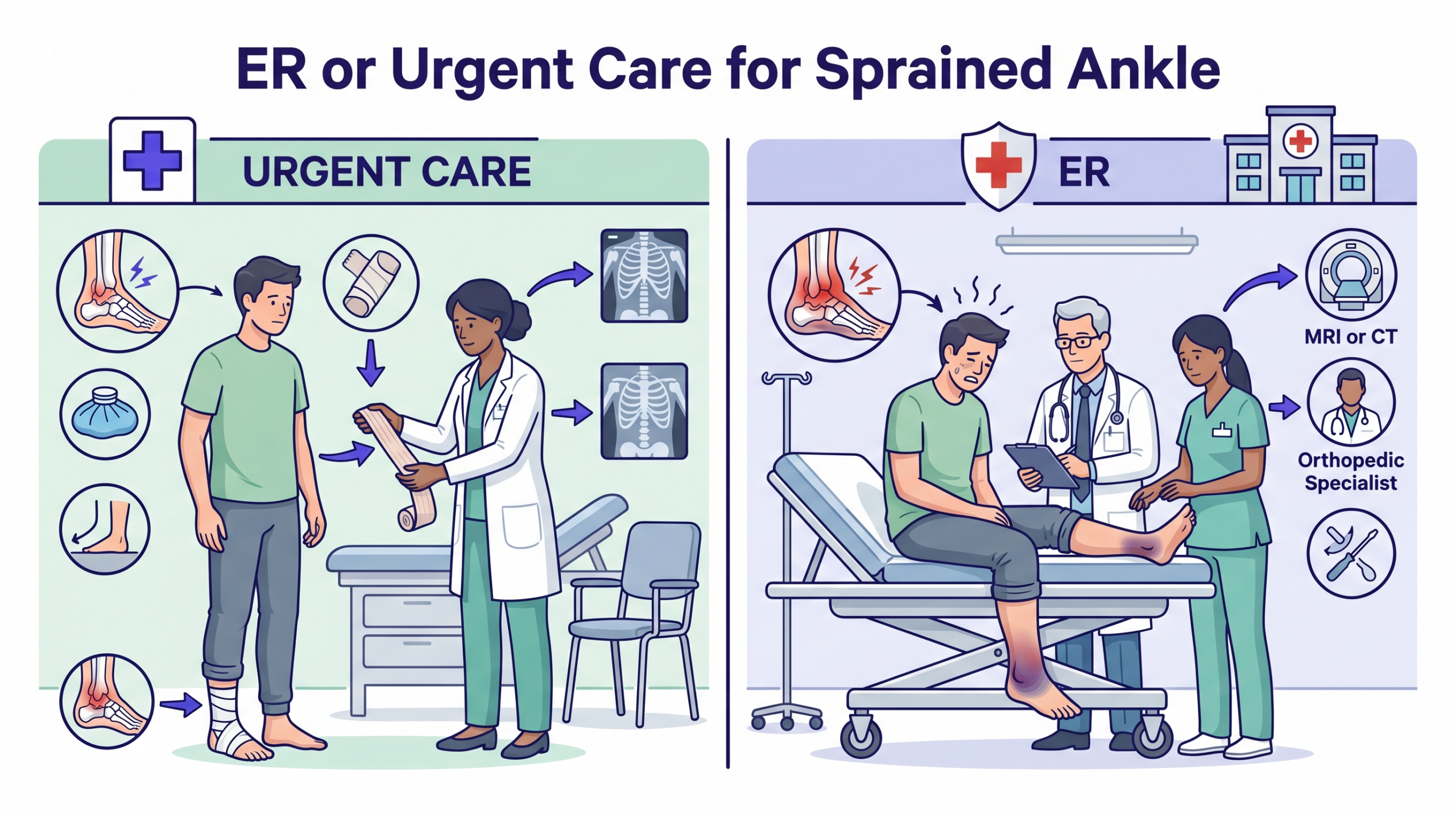
Urgent Care vs. ER for Stitches: The Cost Difference
This is where the numbers get striking. A simple laceration repair at an ER typically costs $700–$3,000. However, the procedure itself doesn’t cost that much. The real driver is the ER facility fee — which can be $500–$2,000 before a provider even sees you.
In contrast, urgent care doesn’t charge a facility fee. You pay for the visit and the procedure. That’s it. As a result, the same quality wound repair costs a fraction of the ER price.
For most cuts and lacerations, urgent care delivers the same clinical outcome at far lower cost. The exception is wounds involving severe bleeding, major artery damage, or severed tendons. Those belong in the ER.
Does Urgent Care Actually Do Stitches?
Yes. Laceration repair is one of the most common services at urgent care. At CityHealth, we have:
- Trained PAs and physicians experienced in wound repair
- Full suture and staple equipment
- Local anesthetic to numb the area before repair
- Tissue adhesive (Dermabond) for certain wound types
- Steri-Strip closure strips
- On-site X-ray if a foreign body or fracture is suspected
During the visit, the provider determines the best closure method for your wound. In some cases, staples are faster and equally effective. In other cases, tissue glue is the cleanest option. We’ll tell you directly which applies to your situation. Additionally, the provider will advise on wound aftercare, signs of infection to watch for, and when to return for suture removal.
When to Go to the ER for a Wound Instead
Urgent care handles most lacerations. However, go to the ER if:
- You can’t control bleeding after 10–15 minutes of firm direct pressure
- The wound is wide open and exposing bone, tendon, or deep tissue
- The injury is on the face and crosses the lip or eyelid
- You’re lightheaded or showing signs of significant blood loss
- The wound involved high-force trauma — machinery, car accident, or gunshot
- A possible severed nerve or artery is involved
In those cases, call 911 or go to the nearest emergency room. Don’t delay.
What to Do Before You Get to Urgent Care
While you’re in transit, here’s what to do. These steps reduce bleeding and infection risk before you arrive:
- Apply firm, direct pressure with a clean cloth or gauze
- Elevate the injured area above heart level if possible
- Rinse the surface with clean water — don’t clean inside the wound
- Cover but don’t wrap tightly enough to cut off circulation
- Note when the injury happened — timing matters for infection risk
Furthermore, coming in sooner yields better results. After 6–8 hours, infection risk rises — especially for bite wounds or wounds with dirt contamination. So come in as soon as you can. Additionally, the provider will ask about your tetanus vaccination status, since some wounds require a booster.
Urgent Care Stitches Cost: Suture Removal
Stitches are not permanent. That’s something many people forget. Most sutures need removal in 5–14 days depending on the location:
- Face: 4–5 days
- Scalp: 7–10 days
- Arms and legs: 7–14 days
- Over a joint: 10–14 days
If you got stitches at CityHealth, suture removal is a quick, low-cost follow-up visit. Additionally, if you got stitches elsewhere and need removal, we can handle that too. For more, see when you need stitches.
Bottom Line
Urgent care stitches cost $150–$400 without insurance and $25–$75 with a copay. That’s the same quality wound repair as an ER visit — at a fraction of the price. Because of this, urgent care is the right financial and clinical choice for most lacerations. However, go to the ER for severe wounds that require emergency resources.
CityHealth Urgent Care in San Leandro handles cuts and lacerations 7 days a week. Walk in — no appointment needed. In addition, if you need suture removal, we handle that as a quick, low-cost follow-up visit.
Check current wait times and walk in →
Frequently Asked Questions About Urgent Care Stitches Cost
How much do stitches cost at urgent care vs. the ER?
Stitches at urgent care cost $150–$400 without insurance. At an ER, the same procedure typically costs $700–$3,000. The difference is the ER facility fee, which can add thousands even before treatment starts. For this reason, urgent care is the better financial choice for most lacerations.
Does insurance cover stitches at urgent care?
In most cases, yes. Most commercial plans cover urgent care visits. You typically pay a copay of $25–$75. However, confirm your specific plan covers urgent care before you go.
How long does it take to get stitches at urgent care?
Most laceration repairs take 30–60 minutes total. In addition to the actual stitching time, that includes check-in, vitals, wound cleaning, and local anesthetic. So the overall visit is faster than an ER trip, which often involves hours of waiting.
Source: American Academy of Family Physicians — Laceration Repair