

If you’ve searched “internal medicine doctor near me,” you probably have a health issue that needs attention — and you want answers fast. The good news is that most conditions people see internal medicine doctors for can be handled at a walk-in urgent care. There’s no long wait for a new patient appointment. Here’s what you need to know about internal medicine, what those doctors do, and when urgent care is the right call.
Medically reviewed by Sean Parkin, PA, CEO & Founder — Urgent Care
What Is an Internal Medicine Doctor?
An internal medicine doctor — also called an internist — treats adults. They do three years of extra training after medical school. That training is all about finding and treating illness in adults. They don’t do surgery. Instead, they focus on complex health problems, long-term disease, and care planning.
However, many people mix up internists with family doctors. They are not the same. In fact, internists treat only adults, age 18 and up. Also, they tend to handle more complex or hard-to-pin-down health issues.
The American College of Physicians notes that internists train as both specialists and primary care providers. Because of this, they often serve as the main doctor for adults with diabetes, heart disease, or immune system problems.
What Does an Internal Medicine Doctor Treat?
Internists treat a wide range of adult health issues. For example, they see patients for lung infections, heart problems, gut pain, kidney disease, and hormone issues. Also, they are the doctor you call when something feels “off” but you’re not sure what’s wrong.
Here is a breakdown of what they handle:
- Lung issues: pneumonia, bronchitis, asthma, COPD
- Heart problems: high blood pressure, high cholesterol, fast or uneven heart rate
- Gut problems: acid reflux, IBS, stomach pain, nausea
- Hormone issues: diabetes, thyroid disease, adrenal problems
- Infections: UTIs, skin infections, flu, strep throat
- Kidney issues: kidney stones, chronic kidney disease
- Mental health: depression, anxiety — first screening and referral
- Checkups: annual physicals, blood work, cancer screenings, vaccines
In addition, internists often set up referrals when a problem needs more focused care. They act as the hub for your health plan. This is key for adults who manage more than one condition at a time.
Internal Medicine vs. Family Medicine: What’s the Difference?
This is one of the top questions people ask. The main gap comes down to age. Family doctors treat all ages — newborns to seniors. Internists treat adults only.
Beyond age, the training differs too. For example, family medicine training covers kids, pregnancy, and mental health. That’s because family doctors care for whole families. Internal medicine training, on the other hand, goes deeper into adult health and complex, multi-system illness.
However, in day-to-day practice, both handle many of the same issues for adults. Both can prescribe meds, order labs, manage long-term conditions, and do annual physicals. For most healthy adults, the label matters less than finding a provider who’s open and easy to reach.
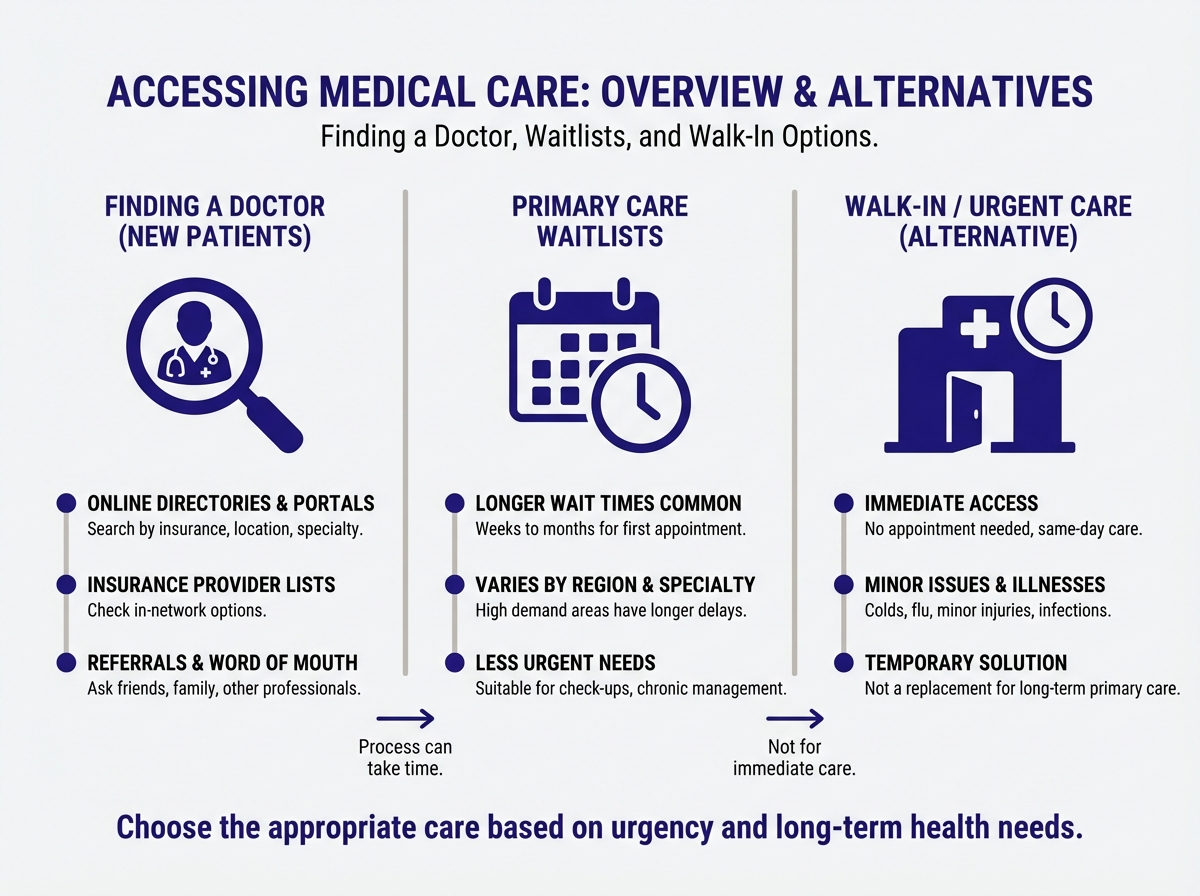
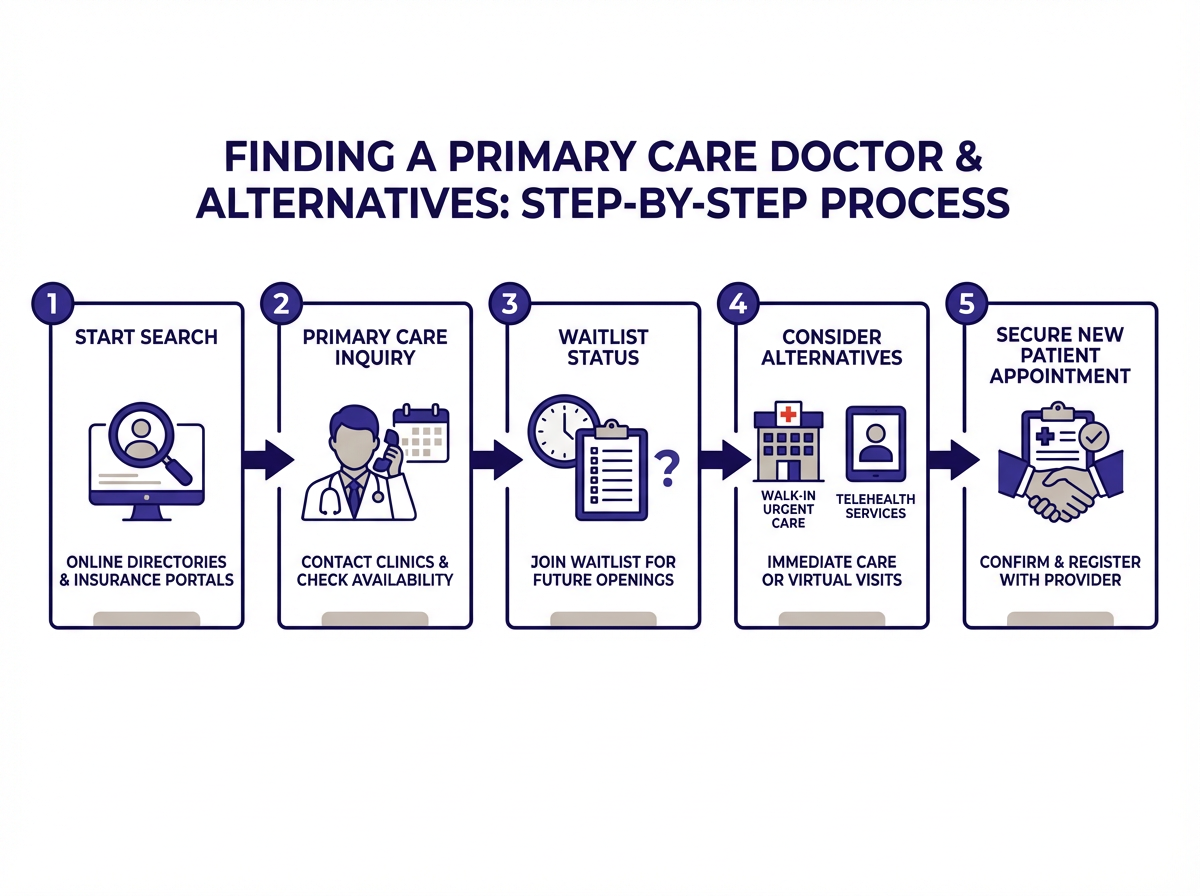
Similarly, both types of doctors can be hard to get into fast. New patient waits of two to six weeks are common. As a result, many people turn to urgent care for same-day needs while they search for a primary care provider.
Do You Need a Referral to See an Internal Medicine Doctor?
In most cases, no. You can call the office and book directly. However, some insurance plans do require a referral before they cover the visit. Because of this, call your insurance first to check.
Keep in mind that many internists act as primary care doctors, not specialists. Specifically, they serve as your main doctor for ongoing care, not just one-time visits. If you need a heart doctor or gut specialist, those referrals usually come through your primary care or internal medicine provider.
On the other hand, if you have an acute health issue right now, a referral isn’t required for urgent care. You can walk in and see a provider today without any paperwork, referral, or wait.
When an Internal Medicine Doctor Near Me Isn’t Available — and Urgent Care Is
Here’s the reality: getting a new patient appointment with an internal medicine doctor can take weeks. If you’re dealing with a health issue today — a bad cough, a UTI, chest pain, or high blood pressure — you shouldn’t have to wait.
Urgent care handles the majority of conditions that people go to internal medicine doctors for. For example, CityHealth sees adult patients for:
- Respiratory infections, including bronchitis and pneumonia
- Urinary tract infections and STI testing
- High blood pressure monitoring and medication refills
- Strep throat, flu, and COVID-19 testing and treatment
- Skin infections, rashes, and wound care
- Blood work and lab testing
- Annual physicals and preventive screenings
- Abdominal pain and gastrointestinal symptoms
Therefore, if you need care today and your internist can’t see you, urgent care is not a backup plan. It’s a full clinic with trained providers who can test, treat, and order labs on the spot.
In fact, CityHealth offers on-site lab work so you don’t have to make a separate trip. Blood panels, urinalysis, rapid strep, flu, and more are available the same day.
Internal Medicine vs. Urgent Care vs. the ER: Which Do You Need?
Knowing where to go can save you time, money, and stress. Here’s a simple breakdown:
- Internist: Best for long-term care of chronic issues, complex cases, and checkups. You need an existing spot and can wait for a visit.
- Urgent care: Best for same-day illness and injuries that aren’t life-threatening. No appointment, shorter waits, lower cost than the ER.
- ER: Best for chest pain, stroke signs, bad allergic reactions, major trauma, or anything that feels life-threatening.
However, the line between urgent care and the ER can blur. When in doubt, call 911. For anything else — infections, injuries, flare-ups, physicals, and lab work — urgent care is the smarter first stop.
How CityHealth Handles What Internal Medicine Doctors Handle
CityHealth is a walk-in urgent care built to handle the full range of adult health issues. No appointment, no referral, no long wait. Our providers are trained in urgent care. They see patients for the same types of problems an internist handles in a primary care office.
Specifically, at CityHealth you can get:
- Same-day diagnosis and treatment for acute illness
- Annual physicals and preventive screenings
- On-site lab work and rapid testing
- Prescription medications when clinically appropriate
- Referrals to specialists when you need a higher level of care
Moreover, CityHealth takes most major insurance plans. We also offer clear self-pay pricing. You can walk in during open hours with no need to schedule.
If you’re searching for an internal medicine doctor near you and need care now, CityHealth urgent care is open and ready to see you today. Come in and let us help.
Frequently Asked Questions
What is an internal medicine doctor?
An internist is a doctor who treats adults. They focus on finding and treating disease, not surgery. Many serve as primary care doctors for adults with diabetes, high blood pressure, or immune problems.
What’s the gap between internal medicine and family medicine?
Family doctors treat all ages, including kids. Internists treat adults only. However, both can serve as your primary care doctor, and both handle many of the same issues.
Do I need a referral to see an internist?
Usually, no. You can call and book directly. However, some insurance plans require a referral. For urgent care, no referral is ever needed.
Can urgent care replace an internist?
Urgent care is not a substitute for a long-term primary care provider. However, for acute illness, physicals, and lab work, urgent care handles the same issues. You can be seen today with no appointment.

